
White label clothes form the invisible backbone of countless apparel brands, gyms, and retail stores. They are high-quality, blank garments—t-shirts, hoodies, tracksuits, and more—manufactured by a factory without any branding. A brand or buyer then applies their own labels, tags, prints, or embroidery to create a finished, proprietary product. For a business, this model offers a faster, more cost-effective path to market compared to developing a garment from scratch, while still allowing for full customization of design and fit.
This guide cuts through the basics to explore what truly matters when sourcing white label apparel for custom production. We’ll examine the critical quality markers, production realities like minimum order quantities (MOQs), and the specific information you must communicate to your factory to ensure a successful run. Whether you’re a startup brand launching your first line or an established retailer expanding your activewear category, understanding these nuances is key to selecting the right blank and the right manufacturing partner.
The Core Concept: More Than Just a Blank T-Shirt
At its simplest, a white label garment is a pre-made, unbranded item. However, in a professional B2B context, it represents a strategic starting point. The factory has already invested in pattern development, fabric sourcing, grading for sizes, and initial sampling. Your role is to select the base template that best matches your brand’s aesthetic, performance needs, and price point, then customize it.
More advice: A Buyer’s Guide to Size 4 Soccer Balls: From Youth Play to Custom Sourcing
This is distinct from private label manufacturing, where a factory may produce a garment to a buyer’s exact specifications with no pre-existing style. White label leverages the factory’s existing “catalog” of proven styles, reducing development time and cost. For sportswear and activewear, this often means choosing from a range of proven fits—from a performance-oriented racerback tank to a heavyweight fleece hoodie—that have already been tested for construction and wearability.
Key Features & Quality Markers of Premium White Label
Not all blanks are created equal. The quality of the base garment dictates the ceiling for your final product’s perceived value. Here are the non-negotiable features to evaluate on any sample:
1. Fabric & Construction
- Fabric Composition & Weight: A 100% cotton t-shirt feels and performs entirely differently from a 60/40 cotton/polyester blend. For activewear, look for technical fabrics with moisture-wicking, four-way stretch, or antimicrobial finishes. The weight (measured in GSM – grams per square meter) indicates durability and feel. A 180 GSM jersey is lightweight; a 280+ GSM fleece is substantial and premium.
- Stitch Density & Seams: Examine the stitches per inch. Tighter, more uniform stitching indicates better construction and durability. Critical seams (shoulders, armholes, side seams) should be reinforced with twin-needle stitching or bartack stitches at stress points.
- Fabric Hand & Pre-Shrinkage: Does the fabric feel soft or scratchy? Has it been garment-washed or brushed for comfort? Crucially, ask if the fabric has been pre-shrunk or sanforized. Non-preshrunk fabrics can shrink up to 5-10% after the first wash, ruining fit consistency—a major issue for brands.
2. Fit & Pattern
- Pattern Grading Accuracy: A well-graded pattern means that a size Medium fits a medium body proportionally, not just larger than a Small. Check the consistency of fit across sizes on a sample set. Is the armhole depth appropriate? Does the body length scale correctly?
- Style Intent: Is the cut athletic (slim, longer torso), relaxed, or classic? The factory’s pattern block defines this. Ensure their “athletic fit” aligns with your brand’s definition.
3. Finishing Details
- Tags & Labels: Can the factory remove their main brand neck tape and replace it with your custom woven label? Can they add your care label with correct content and country of origin? This is a standard but critical service.
- Hem & Cuff Quality: Look for clean, even hems on sleeves and bottoms. For ribbed cuffs (on hoodies, sweats), check for adequate recovery—they should snap back after stretching.
Primary Use Cases & Customization Pathways
White label apparel serves diverse business models. Your customization approach will depend on your goal.
| Use Case | Typical Buyer | Primary Customization Method | Key Consideration |
|---|---|---|---|
| Brand Launch / Private Label | Fashion startups, influencer brands | Screen printing, DTG, embroidery, woven labels, hangtags | Focus on unique, high-quality decoration placement and premium packaging to differentiate. |
| Corporate / Team Apparel | Businesses, sports teams, universities | Embroidery (left chest, sleeve), screen printing (large logos), name/number customization | Durability of decoration is paramount. Need consistent color matching (Pantone) and accurate sizing for group orders. |
| Promotional / Event Wear | Event planners, marketers, charities | Screen printing (large, single-color often), basic DTG | Cost per unit is the driver. Choose a good-quality but cost-effective blank. Fast turnaround is often critical. |
| Retail / Resale | Boutiques, outdoor retailers, gyms | Minimal decoration (small logo) or none, focusing on custom labels and packaging | The blank’s inherent quality and brand-neutral aesthetic are the selling points. Fabric feel and fit are everything. |
Sourcing Realities: MOQs, Lead Times, and Communication
Moving from a single sample to bulk production introduces logistical and financial parameters. Success depends on clarity with your manufacturing partner.
Minimum Order Quantities (MOQs)
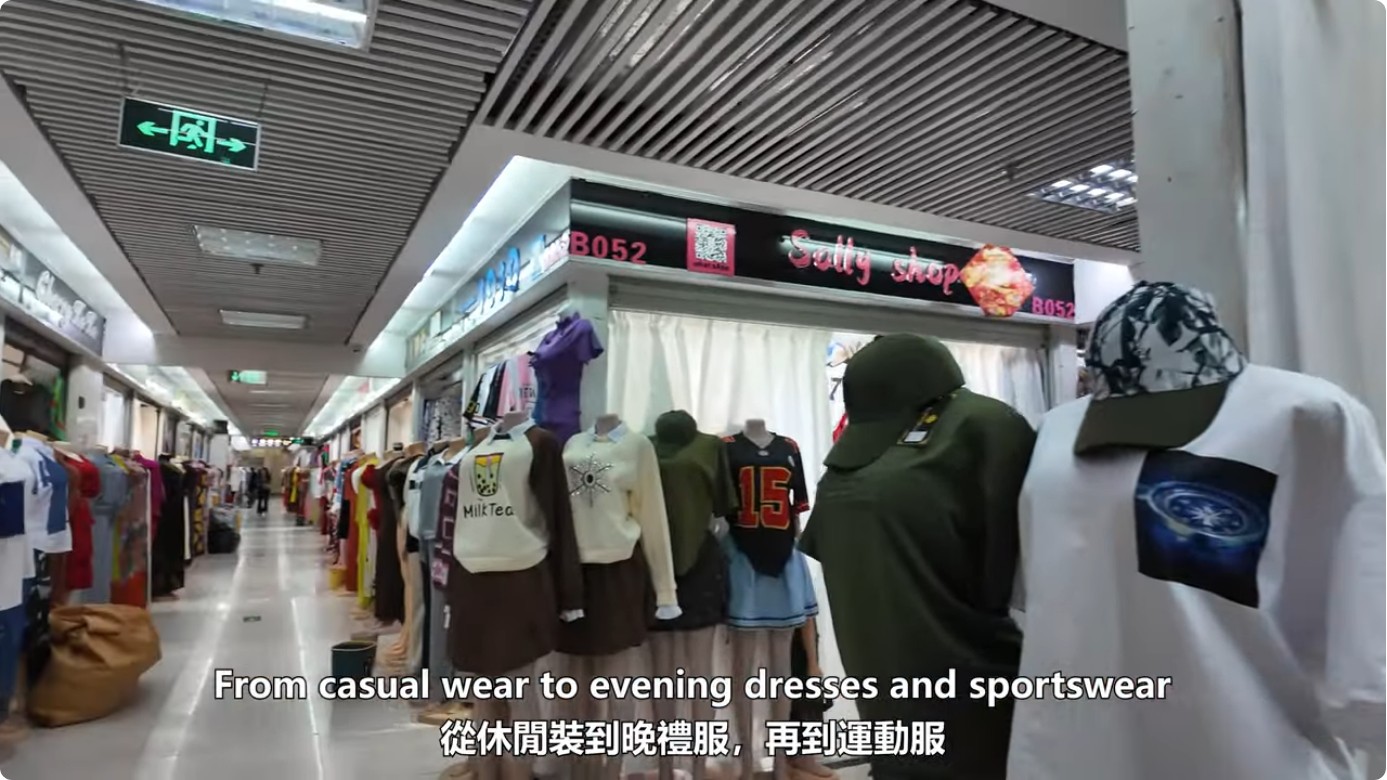
MOQs vary dramatically. For basic cotton t-shirts from a large-scale factory, MOQs can be 500-1,000 pieces per style/color. For technical activewear with special fabrics, MOQs might start at 2,000-3,000 due to fabric mill minimums. However, many B2B-focused factories, especially those offering ODM (Original Design Manufacturer) services, have lower MOQs for white label programs—sometimes as low as 50-100 pieces per style/color—to accommodate startups and test markets. Always confirm the MOQ structure: Is it per style? Per color? Does it include all sizes?
Related guide: What is Lycra Fabric? The Science of Stretch in Modern Apparel
The Essential Pre-Order Checklist
Before you place a bulk order, verify the following with your factory. This list transforms your vision into executable instructions:
- Finalized Sample Approval: You must have an approved pre-production (“PP”) sample. This is the physical golden rule that all bulk units must match.
- Tech Pack or Style Specification Sheet: Even for a white label style, you need a document detailing: your logo placement (measurements from seams), thread colors for embroidery, Pantone colors for printing, label types and placements, and any special washing instructions.
- Fabric & Trim Source: Confirm the exact fabric mill and composition for the approved sample. Ask for the fabric’s test reports for pilling, shrinkage, and colorfastness. For performance wear, request data on moisture-wicking rates or UPF ratings if claimed.
- Decoration Proofs: For screen printing, DTG, or embroidery, you must approve digital mockups or physical strike-offs (a sample printed on the actual fabric) before production begins.
- Packaging Instructions: How will garments be folded? Polybagged (clear, recycled, custom printed)? With or without hangtags? Bulk packed in cartons with specific dimensions?
- Advanced Payment & Production Timeline: Understand the payment schedule (typically 30-50% deposit, balance before shipment) and get a firm lead time count from sample approval to shipment.
Trade-offs & Decision Points: Navigating the Selection Process
Choosing a white label program is a series of calculated trade-offs. Use this framework:
- Price vs. Quality: The cheapest blank will have lower fabric quality, less precise construction, and fewer size options. It suits high-volume, low-margin promotional use. A premium blank (e.g., organic cotton, ring-spun, heavier fleece) costs more but supports a higher retail price and builds brand reputation.
- Flexibility vs. Efficiency: A factory with 200 white label styles offers immense flexibility but may have higher MOQs per style. A factory with 20 core, best-selling styles can offer very low MOQs and faster turnaround but limits your design options.
- In-House vs. Outsourced Decoration: Some factories offer full “turnkey” service (blank + all decoration). Others provide only the blank. The former simplifies logistics but may limit your choice of specialty decorators. The latter offers more creative control but requires you to manage a separate supplier.
A critical question to ask any potential factory: “Can you provide contact information for 2-3 current clients using the same white label program, so I can ask about their experience with quality consistency and order fulfillment?” A confident, reputable factory will oblige.
Making the Final Decision: Questions to Ask Your Factory
Before committing, get clear answers on:
- What is your standard quality control process for bulk orders? Is there a pre-shipment inspection stage?
- How do you handle color consistency across different production batches or dye lots?
- What is your policy on defective units? Is there a credit system for returns?
- Can you provide historical production data on shrinkage rates for this specific fabric and style?
- Do you hold stock of blank garments for faster fulfillment, or is every order made-to-order?
Need custom versions of any style covered here? Our sportswear factory handles everything from tech pack review to bulk delivery. Request a sample or quote.
You may also like: The LA Rams Home Jersey: A Buyer’s Guide to Design, Production, and Custom Sourcing