
For businesses entering or expanding within the activewear market, studying the world’s most famous sports brands offers more than just inspiration—it provides a critical blueprint for product development, quality standards, and consumer expectations. Brands like Nike, Adidas, Lululemon, and Under Armour didn’t achieve prominence by chance; they mastered the intersection of performance technology, cultural relevance, and scalable manufacturing. Understanding the DNA of these iconic names is essential for any wholesale buyer, gym chain, or emerging fashion label looking to source custom sportswear that competes on quality and perception. This analysis decodes the strategies behind these brands and translates them into actionable insights for your custom OEM/ODM partnership.
This article moves beyond a simple list of logos. We will dissect the core pillars that define a famous sports brand—from material innovation and design language to marketing synergy—and explore how each pillar informs the specifications, costs, and production conversations you must have with your manufacturing partner. Whether you’re producing a private-label line for a local sports team or launching a premium athleisure collection, these principles will guide your sourcing decisions.
Beyond the Logo: The Real Pillars of Brand Fame
Fame in sportswear is built on a foundation of tangible product attributes that create intangible brand loyalty. For a sourcing professional, these attributes are not marketing fluff; they are measurable specifications that must be engineered into the garment.
Related guide: French Terry Knit Fabric: A Practical Guide to Properties, Uses, and Sourcing
1. Performance Fabric Technology as a Core Product
The most famous brands are often synonymous with a specific fabric technology. Nike’s Dri-FIT, Adidas’s Climacool, and The North Face’s Futurelight are not just names; they are engineered material systems that solve an athlete’s problem (sweat management, weather protection). This is the first key takeaway for custom production: the fabric is the product’s primary feature, not its base.
When sourcing custom activewear, you must engage your factory in a conversation about fabric engineering, not just fabric selection. This involves:
- Fiber Composition: Is it a proprietary blend (e.g., poly-spandex for stretch, polyester-cotton for comfort)?
- Knitting/Weaving Construction: Jersey for t-shirts, French terry for hoodies, or technical weaves for compression wear. The construction dictates hand-feel, durability, and performance.
- Finishing Treatments: Moisture-wicking finishes, antimicrobial treatments (like those certified by AATCC for efficacy), UV protection, or brushed interiors for warmth.
Production Consideration: High-performance, proprietary-feel fabrics often have higher minimum order quantities (MOQs) due to specialized mill requirements. For a startup brand, a strategic move is to select a factory that offers a curated library of pre-qualified, high-quality base fabrics that can be customized with your branding and minor finishing tweaks, balancing innovation with accessibility.
2. Design Language & Silhouette as Identity
Famous brands have instantly recognizable cuts. Think of the oversized Adidas Originals track jacket, the form-fitting Lululemon Align leggings, or the classic Nike polo collar. This silhouette is a protected asset. For custom manufacturing, achieving a specific fit and proportion is a non-negotiable requirement that demands precise pattern-making and grading.
Your factory’s capability here is critical. You must provide:
- Technical Pack: A detailed document with measurements (points of measure), fit notes (e.g., “relaxed through hip,” “slim leg”), and construction details.
- Sample Approval Process: Insist on a prototype (often called a “counter sample” or “fit sample”) made in your chosen fabric. This is where you test the silhouette on a real body before bulk production.
- Grading Accuracy: The factory must flawlessly scale your sample pattern across all sizes (XS-XXL, etc.). Inconsistent grading is a primary cause of customer returns and brand damage.
Tradeoff: Highly specialized or fashion-forward silhouettes may increase pattern-making costs and require more sample iterations, impacting time-to-market and per-unit cost.
3. The Power of Branding Integration
Logos, labels, and tags are not afterthoughts. For famous brands, every touchpoint is an opportunity for brand reinforcement—from the embroidered chest logo to the branded neck tape inside a t-shirt, the custom hang tag, and the polybag.
When planning your custom order, audit your entire branding ecosystem:
Sourcing Checklist: Branding Elements
- Primary Logo Placement (embroidery, screen print, heat transfer)
- Secondary Markings (sleeve stripes, back neck tape, inside hem tag)
- Label Type (woven, printed, care label composition & location)
- Packaging (custom polybag, recycled paper hang tag, shipping box)
Communicate all of these to your factory at the quoting stage. Adding a branding element post-quote is a common cause of cost overruns.
Related guide: A Buyer’s Guide to Shirt Neck Types for Custom Sportswear
From Blueprint to Bulk: Manufacturing Realities for Custom Sportswear
Dreaming of the finished product is one thing; engineering its production is another. The gap between a famous brand’s retail item and your custom version is navigated through clear specifications and factory capability.
Material Sourcing: Your Factory’s Network is Your Supply Chain
A top-tier factory doesn’t just sew; it sources. Its relationships with fabric mills, trim suppliers (zippers, elastic, buttons), and label manufacturers define your product’s ceiling. When evaluating a potential OEM partner, ask:
- Can they source performance fabrics from reputable mills? (e.g., mill names like Teijin, Toray, or Invista are often indicators of quality).
- Do they have a fabric library with samples you can touch and test?
- Are they compliant with textile safety standards? (e.g., ISO 9001 for quality management, and specific chemical restrictions like OEKO-TEX Standard 100 for harmful substances).
If you have a specific “famous brand” fabric feel in mind (like the buttery-soft Nike Tech Fleece), you may need to work with your factory to source a comparable mill fabric, which requires clear communication about weight (GSM), composition, and finish.
The MOQ Equation: Why Famous Brands Can Do 10,000 Units
Global brands leverage colossal production volumes to achieve their per-unit costs. Your custom order will have different economics. The Minimum Order Quantity (MOQ) is driven by:
- Fabric & Trim MOQs: Mills have minimums for dyeing and knitting specific fabrics.
- Setup Costs: Pattern-making, machine setup for special stitches, screen print plate creation.
- Factory Efficiency: Factories prioritize runs that keep their lines full.
| Product Type | Typical Custom MOQ* | Key Driver |
|---|---|---|
| Basic Cotton T-Shirt | 500 – 1,000 units | Low fabric/trim cost; high factory availability |
| Performance Technical T-Shirt | 1,500 – 3,000 units | Specialized fabric mill MOQs |
| Embroidered Hoodie | 800 – 1,500 units | Multi-piece embroidery setup; fabric yield |
| ODM Custom Design (from scratch) | 3,000 – 5,000+ units | Pattern-making, tooling, and full production line commitment |
*MOQs are estimates and vary significantly by factory, fabric, and region. Always get a formal quote.
Quality Control: Where “Famous” is Made
The reputation of top brands is guarded by relentless quality control (QC). For your custom order, QC is not a single checkpoint but a system:
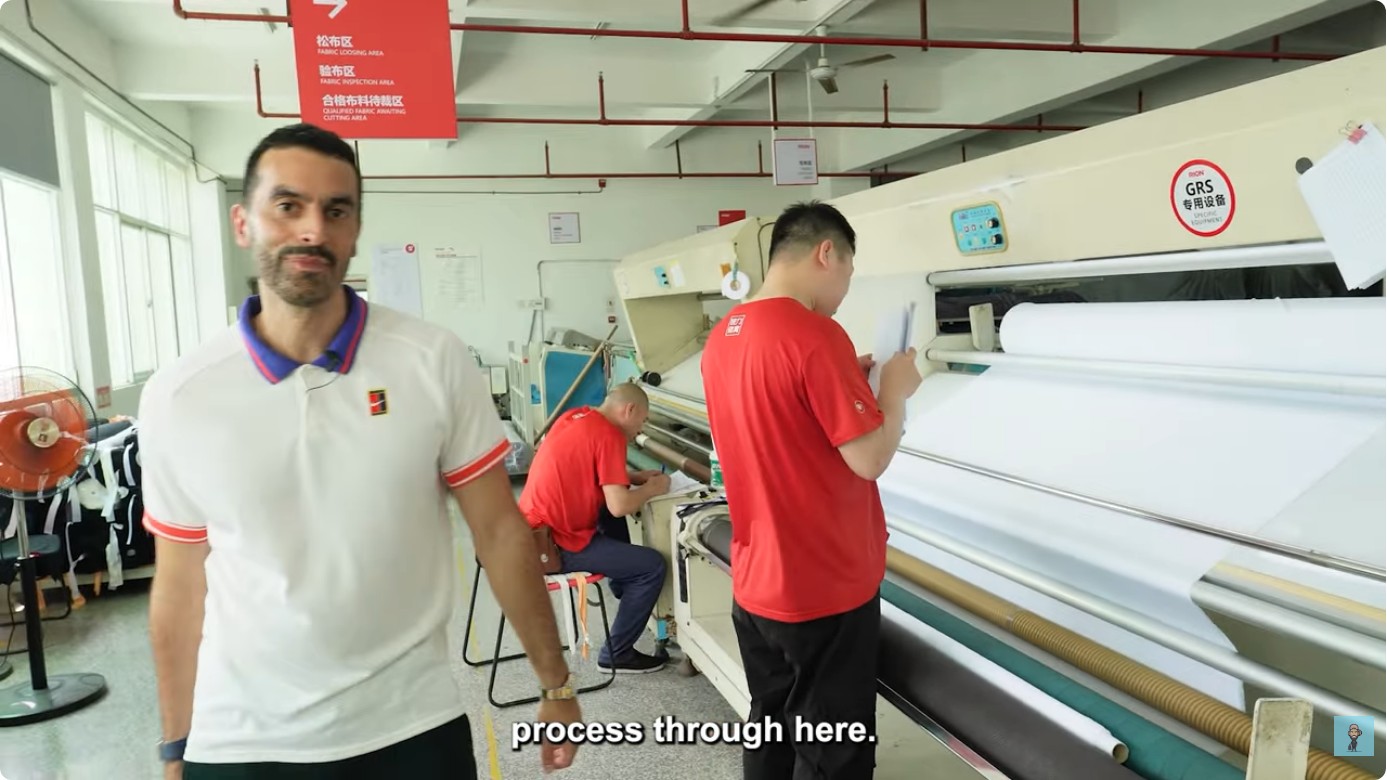
- Pre-Production: Approval of fabric swatches, color lab dips (the first small batch of dyed fabric), and fit samples.
- Mid-Production: In-line QC checks as the first 10-20% of the bulk order is sewn. This catches systematic errors early.
- Final Inspection: A random inspection (often AQL 1.0 or 2.5 standard) of finished goods before shipment. Never skip this. You are paying for finished goods, not work-in-progress.
A reputable OEM will have a dedicated QC team and a clear process for documenting and fixing defects. Request their QC checklist and inspection report templates.
Decision Points for Your Custom Sourcing Project
Translating the “famous brand” ethos into your custom line requires strategic decisions. Use this framework:
- Define Your Performance Tier: Are you making a fashion-forward leisure item (cotton/poly blend) or a true performance garment (need sweat-wicking, 4-way stretch)? This dictates fabric cost and technical factory requirements.
- Choose Your Branding Density: A single, small chest logo is cost-effective. All-over prints, multiple embroideries, and custom hardware increase unit cost exponentially.
- Balance Innovation with Cost: Do you need a proprietary fabric feel, or can you achieve your goals with a high-quality, mill-standard fabric that has a lower MOQ? The latter is the most common path for scalable custom production.
- Prioritize Fit vs. Feature: For basics like t-shirts, fabric quality and fit are king. For outerwear, technical features (waterproofing, insulation) become equally important. Allocate your budget and specification focus accordingly.
Key Questions to Ask Your Manufacturing Partner
To ensure your factory can deliver a product that feels like it belongs on a premium rack, move beyond price per unit. Ask:
- “Can you provide fabric samples that mimic the hand-feel of [specific famous brand item]? What are the MOQs for those fabrics?”
- “What is your standard process for fit sample revisions? How many are typically included in the development cost?”
- “Do you handle all branding applications in-house (embroidery, printing, labels), or do you subcontract? If you subcontract, who are your approved vendors?”
- “Can you provide copies of your latest mill certifications for fabric performance claims (e.g., wicking rate, UPF rating)?”
- “What is your track record for consistent color matching across large production runs?”
The answers will reveal their technical depth, transparency, and ability to be a true development partner.
Planning to add these styles to your collection? We produce custom versions with your branding, fabric choice, and sizing — from sample to bulk. Contact our team for details.
Also read: Brainrot Tower Defense Codes: How to Redeem and Current List (2025)