
If you’re sourcing custom activewear—be it hoodies for a streetwear line, sweats for a gym, or team jackets—you’ve likely encountered the term “500 GSM.” It’s a critical specification, but one that’s often misunderstood outside of textile manufacturing. Simply put, GSM stands for Grams per Square Meter, a standard measure of fabric weight. However, “500 GSM” isn’t just a number; it defines a category of heavyweight fabric with direct implications for durability, cost, production methods, and the end-user experience. This guide breaks down what 500 GSM truly means for your custom apparel project, from fabric selection to factory floor realities.
For wholesale buyers, brand owners, and sports team managers, understanding GSM is non-negotiable. It’s the primary determinant of a garment’s handfeel, insulation, and longevity. A 500 GSM hoodie is in a completely different league than a 280 GSMT-shirt. This article will serve as your technical decoder, translating this metric into actionable sourcing intelligence. We’ll explore where 500 GSM excels, its production trade-offs, and what you must communicate to your manufacturer to get the heavyweight result you need.
Decoding GSM: More Than Just a Weight
GSM is aISO-standardized measurement (ISO 9237:1995 for fabric density) indicating the mass of a one-square-meter piece of fabric. It’s calculated after weaving/knitting and before any garment washing or finishing treatments. A higher GSM means thicker, denser yarns and/or a tighter weave/knit structure. For context in activewear:
Also read: Understanding Sportswear Brands: A Manufacturing and Sourcing Guide for Buyers
- Lightweight (150-220 GSM): Typical for performance tees, singlets, and summer polo shirts. Focus on breathability and quick-dry properties.
- Mid-weight (230-320 GSM): The workhorse range for classic cotton t-shirts, crewnecks, and lighter hoodies. Balances comfort with reasonable durability.
- Heavyweight (330+ GSM): This is where 500 GSM lives. Characterized by substantial thickness, high durability, and superior warmth retention. Common in premium sweatshirts, winter track jackets, and heavy canvas-style cargo pants.
It’s crucial to note that GSM alone doesn’t tell the whole story. A 500 GSM 100% cotton fleece will feel and perform differently than a 500 GSM cotton-polyester blend or a 500 GSM French terry. The fiber composition and fabric construction (e.g., loopwheeled vs. standard knitting) are equally important variables.
The 500 GSM Profile: Characteristics and Applications
When you specify 500 GSM, you are ordering a garment with a distinct set of physical and performance traits. This weight is not for every application; it’s a deliberate choice for specific product categories.
Key Sensory and Performance Traits
- Substantial Handfeel: The fabric has a pronounced, dense, and often “plush” feel. It’s immediately recognizable as a heavyweight piece, conveying quality and durability to the touch.
- Exceptional Durability: The high yarn density and thickness make it highly resistant to tearing, pilling, and abrasion. This is ideal for workwear-inspired activewear, team uniforms that see frequent use and washing, and garments meant to last years, not seasons.
- Superior Warmth & Insulation: The dense structure traps body heat effectively. In fleece or brushed constructions, the loft created by the heavy weight provides excellent thermal retention, making it perfect for cold-weather outerwear, mid-layers, and lounging apparel.
- Drape and Structure: 500 GSM fabrics have a significant body. They don’t flow or drape like lighter knits; instead, they hold their shape, offering a structured, sometimes rigid silhouette that softens with wash and wear.
Typical Use Cases in Custom Sportswear
Your decision to use 500 GSM should be driven by the end-use. Here are the most common and successful applications:

- Premium Hoodies & Sweatshirts: The flagship application. A 500 GSM French terry or fleece hoodie is the benchmark for premium streetwear and athleisure brands seeking a “hefty” product.
- Winter Track Jackets & Tracksuit Tops: For teams or brands in colder climates, a 500 GSM tracksuit top (often with a smooth outer weave and brushed inner) provides essential wind resistance and warmth without needing a separate insulating layer.
- Heavyweight Crewnecks & Sweatpants: Matching bottoms to hoodies. The weight ensures the set feels cohesive and luxurious.
- Cargo Pants & Joggers (Heavy Twill or Fleece): For utility-focused or winter activewear, a 500 GSM cotton twill or heavy fleece jogger offers durability and warmth that lighter weights cannot match.
- Throw Blankets & Robes: If your product line extends beyond apparel, 500 GSM fleece is a popular choice for custom-branded lounge blankets and robes due to its plush, cozy feel.
Production and Sourcing Considerations for 500 GSM
Ordering a 500 GSM garment isn’t as simple as ordering a standard t-shirt. The weight impacts every stage of production, from fabric sourcing to final stitching. Here’s what you, as a buyer, need to know and discuss with your factory.
Fabric Sourcing and Minimums
Heavyweight fabrics are less universally stocked than mid-weight knits. Your manufacturer may:
- Use a dedicated heavyweight fabric supplier: This can extend lead times compared to using an in-house stocked lighter fabric.
- Have higher fabric minimum order quantities (MOQs): Mills often produce heavyweight fabrics in larger batch sizes to be economical. A typical fabric MOQ for a custom 500 GSM knit could be 800-1,500 meters or more, compared to 300-500 meters for a 280 GSM tee fabric.
- Require color matching and lab dips: Because heavyweight fabrics can dye differently (often requiring more dye due to density), rigorous color approval is critical. Budget for the time and cost of lab dip development.
Manufacturing Process Adjustments
Your factory will need to adjust its process for 500 GSM:
You may also like: Polo Assassin vs. Ralph Lauren: A Custom Sportswear Buyer’s Comparison
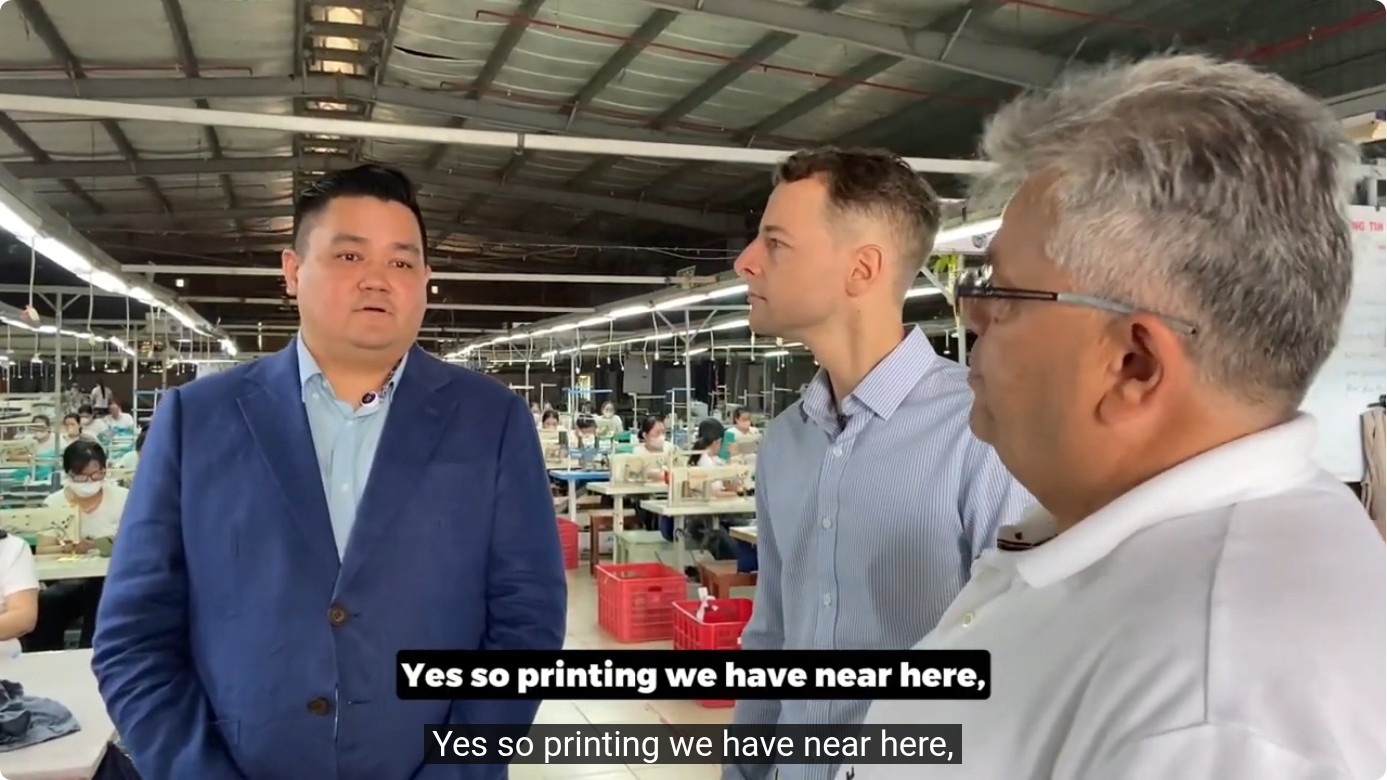
- Sewing Machines: Standard industrial sewing machines may struggle. Heavy-duty “walking foot” or “even feed” machines are often necessary to handle the fabric’s thickness and prevent shifting or skipped stitches. Confirm your factory has the right equipment.
- Needles and Thread: Larger needle sizes (e.g., 100/16 or 110/18) and heavier-duty thread are required. Using undersized needles can cause breakage, poor stitch quality, and fabric damage.
- Layup and Cutting: Thick fabric stacks are harder to cut precisely. Automated cutting (CNC laser or blade) is highly recommended for consistency. Manual cutting increases the risk of pattern piece variance.
- Pressing and Finishing: Final pressing requires more heat and pressure. Excessive heat can scorch or melt synthetic fibers in the blend. Skilled operators are needed to achieve a crisp finish without damaging the garment.
Customization: Print vs. Embroidery on 500 GSM
The choice between print and embroidery changes with fabric weight.

| Method | Suitability for 500 GSM | Key Considerations |
|---|---|---|
| Screen Printing | Very Suitable | The thick fabric provides a stable base. Ink sits on top, which can feel slightly stiff/resilient. Discharge or water-based inks are excellent for maintaining softness on cotton-based 500 GSM fabrics. High-density “plastisol” prints will add significant stiffness. |
| Direct-to-Garment (DTG) | Moderately Suitable | The fabric’s density can make it harder for the printer’st运营 to fully penetrate, potentially leading to less vibrant colors or a slightly “stamped” feel on the thickest fabrics. Pre-treatment is essential. |
| Embroidery | Highly Suitable | 500 GSM provides an excellent, stable canvas for embroidery. The weight supports the thread density without puckering. However, the thickness means the backing (stabilizer) used must be robust to prevent the fabric from stretching during stitching. The embroidered patch will feel very substantial. |
| weaving/Jacquard | Not Feasible | These are fabric-level constructions, not garment-level finishes. Not an option for customizing an existing 500 GSM garment. |
Quality Markers to Specify and Inspect
When ordering 500 GSM custom apparel, don’t rely on the GSM claim alone. Request and verify these tangible quality indicators:
- Fabric Swatch & GSM Certificate: Insist on a physical swatch of the exact fabric to be used, ideally with a lab report verifying the 500 GSM measurement. Feel it. Is it dense and even, or loosely packed?
- Yarn Count and Construction: Ask for the yarn count (e.g., 20/1, 30/2) and whether it’s a single jersey, double jersey, fleece, or French terry. Two 280 GSM fabrics layered don’t equal a 560 GSM fabric in hand or performance.
- Shrinkage Standard: Heavyweight fabrics, especially 100% cotton, can shrink significantly. Specify pre-shrunk or sanforized fabric, and clearly state the acceptable shrinkage tolerance (e.g., ±3% after home wash) in your purchase order.
- Stitching and Seam Allowance: On a sample, check seam allowances. They should be generous (at least 1.5cm) and neatly finished with a durable stitch (e.g., 3-thread overlock). Poorly finished seams on a thick garment are a major failure point.
- Weight Consistency: A finished garment should weigh close to your calculated estimate. A significant deviation suggests inconsistent fabric weight or cutting losses. Ask for the average garment weight in grams as part of your spec sheet.
Decision Guide: Is 500 GSM Right for Your Project?
Before you finalize a specification, run through this checklist. Your answers will clarify if 500 GSM is the optimal choice or if a slightly lighter (e.g., 380 GSM) or heavier (e.g., 600+ GSM) option is better.
- Climate & Season: Is this for winter, indoor wear, or mild climates? 500 GSM can be too warm for year-round wear in temperate zones.
- Target Price Point: 500 GSM fabric and its specialized sewing are more expensive. Can your retail price support this cost? For a “everyday” basics line, a 280-320 GSM may offer a better cost-to-value ratio.
- Brand Positioning: Does “heavyweight” align with your brand’s identity of durability and luxury? Or are you positioned as “lightweight performance”?
- Logistics: Heavier garments increase shipping costs (both from factory to you and from you to customers). Factor this into your landed cost.
- User Comfort Goal: Do you want a “cozy, heavy” feel or a “mobile, light” feel? 500 GSM prioritizes the former.
Key Questions to Ask Your Manufacturer
When requesting a quote for 500 GSM garments, a vague “heavyweight hoodie” will lead to ambiguity and potential disappointment. Be precise. Include these points in your inquiry:
- What is the exact fabric composition and construction? (e.g., “100% cotton, 500 GSM, 24/1 yarn, double-knit fleece”)
- Can you provide a physical fabric swatch and a GSM test report?
- What is the fabric MOQ, and is this weight in your standard stock or a custom knit?
- What specific sewing machine setup and needle type will be used?
- What is the expected garment weight (in grams) for my size spec?
- What is your recommended finishing method (print/embroidery) for this weight, and what are the associated setup costs?
- What are the expected shrinkage rates after the first wash?
Communicating these details ensures you and your factory are aligned on the “heavyweight” definition, preventing costly revisions.
Final Takeaway: 500 GSM is a powerful specification for building a premium, durable, and warm activewear line. It signals quality but comes with clear cost and production trade-offs. Success hinges on moving beyond the number to understand the underlying fabric construction, engaging in detailed technical communication with your manufacturer, and rigorously approving physical samples. When executed correctly, a 500 GSM garment delivers a tangible sense of value that lighter alternatives simply cannot match.
We manufacture all the styles discussed in this guide — with custom labels, fabric options, and print or embroidery finishing. Tell us what you need.
More advice: Direct-to-Garment (DTG) Printing: A Practical Guide for Custom Sportswear Buyers
[…] Also read: What Does 500 GSM Mean? A Guide for Activewear Buyers and Brands […]