Golf apparel has evolved far beyond the traditional tucked-in polo and khakis. Today’s golf clothing market is a dynamic blend of performance technology, refined style, and strict course dress codes. For brands, retailers, and team outfitters, this presents a complex sourcing challenge: finding a manufacturing partner who can deliver quality garments that meet functional demands, adhere to aesthetic trends, and remain cost-effective for custom production. Navigating this landscape requires understanding the product itself, the key differentiators in quality, and the practical realities of custom manufacturing.
This guide cuts through the noise. We’ll break down what defines modern golf apparel, the critical features that affect performance and perception, and—most importantly—what you need to know when vetting and collaborating with a golf clothing manufacturer. Whether you’re launching a private-label golf line, outfitting a corporate event, or supplying a pro shop, this overview will equip you with the questions to ask and the specifications to demand.
What Matters Most When Sourcing Golf Apparel
Before diving into styles and fabrics, focus on these foundational pillars. Your choice here will dictate your manufacturer selection, cost structure, and ultimate customer satisfaction.
- Fabric Technology & Construction: This is non-negotiable. Golf involves hours of walking, swinging, and exposure to the elements. The baseline is moisture-wicking, but consider UV protection, 4-way stretch, wrinkle resistance, and wind/water repellency. The construction (knit vs. woven) dramatically affects drape, durability, and movement.
- Fit & Silhouette: Modern golf fits range from classic (traditional, relaxed) to athletic (tailored, tapered) and modern (slim, shorter lengths). Your target customer’s body type and style preference must align with the pattern making. A poor fit is the fastest way to have unsellable inventory.
- Dress Code Compliance: Most private and public courses enforce specific attire rules, typically requiring collared shirts and prohibiting denim. Your products must inherently meet these standards unless marketed specifically for “golf lifestyle” off-course wear.
- Customization Capability: Can the factory handle your desired decoration—embroidery, screen printing, heat transfer, woven labels—without compromising garment integrity? What are the minimum order quantities (MOQs) per style, color, and decoration location?
Defining the Modern Golf Apparel Category
Golf clothing is a distinct subset of sportswear and athleisure. It must balance the athletic demands of the sport with a polished, “country club” aesthetic. Understanding the core categories helps you communicate clearly with manufacturers.
Essential Categories & Their Uses
- Performance Polos: The cornerstone. Look for fabrics with excellent moisture management and anti-odor treatment. Collar style (button-down vs. spread), placket length, and sleeve hem detail are key style points.
- Technical Knit & Woven Pants/Shorts: This includes traditional chinos, modern joggers, and hybrid shorts. Key metrics are stretch percentage, recovery (how well it springs back), weight (gsm), and wrinkle resistance for travel.
- Outerwear & Layers: Vests, quarter-zips, full-zip jackets, and windbreakers. Critical features include packability, breathability (often via mesh panels), and quiet, non-rustling fabrics.
- Accessories: Hats (performance visors, structured caps), belts (often with stretch), and socks (with targeted cushioning). These are high-margin add-ons that complete a head-to-toe look.
A key differentiator for serious golf brands is “all-season” versatility—garments that perform in 50-degree mornings and 90-degree afternoons through smart layering and fabric science.
Key Features Compared: Fabric & Fit Deep Dive
This is where specifications become your best friend. Vague requests for “good quality” will yield inconsistent results. Use this comparison to define your needs.
| Feature | Considerations for Buyer | Manufacturing Implication |
|---|---|---|
| Fabric Type | Knit (e.g., piqué, interlock): Softer hand, more stretch, casual drape. Common for polos. Woven (e.g., twill, plain weave): Crisper look, more durable, less stretch without added elastane. Common for pants. Ask for specific fabric compositions (e.g., 92% Polyester/8% Spandex). | Knit garments often have lower MOQs due to simpler patterning. Woven styles, especially with complex finishes (e.g., garment-dyed), may have higher MOQs and longer lead times. |
| Moisture Management | Not all wicking is equal. Specify desired dry time (e.g., < 30 seconds per AATCC test method). For premium lines, request hydrophobic vs. hydrophilic treatment details. | This is a fabric-level specification, not a garment finish. You must source from mills that produce performance knits/weaves. Factories typically don’t add this technology post-production. |
| UV Protection | Look for UPF 30+ or 50+ ratings. This is achieved through fabric weave density, composition, and sometimes chemical additives. Crucial for sunny climates and junior/amateur markets. | Requires specific yarns and fabric construction. Must be tested and certified by the fabric mill, not the garment factory. Ask for mill test reports. |
| Fit & Pattern | Provide a spec sheet with model measurements and desired ease (amount of room). Specify “classic,” “athletic,” or “slim” fit. For pants, detail rise (front/back), thigh width, knee width, and leg taper. | Pattern making is a core factory skill. A good manufacturer will have a pattern archive for standard fits but will charge for new pattern creation (a one-time cost). Approve a fit sample (a “white sample” or fit sample) in your approved fabric before bulk production. |
The Custom Manufacturing Process: OEM vs. ODM
Understanding these two models is crucial for your negotiation and IP strategy.
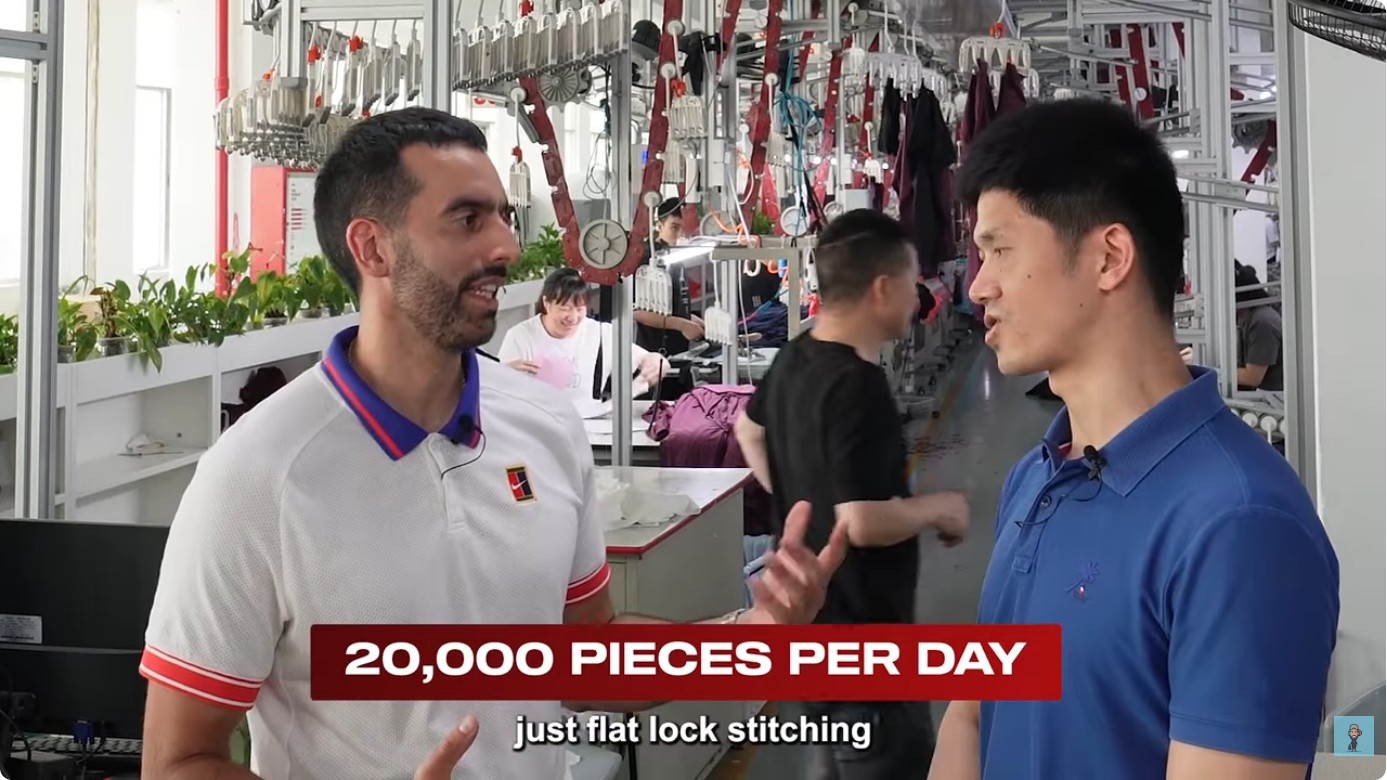
- OEM (Original Equipment Manufacturer): You provide the complete design—tech packs, fabric swatches, trims, and artwork. The factory executes your vision exactly. This is best for established brands with in-house design teams who want full control and ownership of patterns and specs. Key Sourcing Tip: You are responsible for fabric sourcing unless the factory has a trusted mill network. Verify their quality control on incoming fabric.
- ODM (Original Design Manufacturer): The factory or their design partner provides the garment design from their existing catalog or develops new styles based on your market brief (e.g., “we need a premium stretch twill pant for women, under $35”). You then customize it with your labels, colors, and branding. This is faster and has lower MOQs (often 100-300 units per style) since it uses existing patterns. Key Sourcing Tip: Scrutinize the ODM’s quality consistency across their catalog. Request samples of styles they’ve made for other brands (without branding) to assess construction standards.
Many “golf clothing manufacturers” operate on a hybrid model, offering both OEM and ODM services. Be explicit about which route you want.
Critical Production Questions & Communication Checklist
Your success hinges on clear communication with your factory partner. Use this checklist in your initial request for quotation (RFQ) and throughout the sampling process.
You may also like: A Buyer’s Guide to Shirt Styles: From Consumer Choice to Factory Floor
- Provide a Detailed Tech Pack: Even for ODM, create a brief. Include: flat sketches with all measurements, fabric composition & weight (gsm), trim details (buttons, zippers, labels), color standards (Pantone or physical swatch), and decoration specs (stitch count for embroidery, ink types for print).
- Clarify All Costs Upfront: Ask for a unit cost breakdown: fabric cost per yard/meter, cutting/sewing/labor, trims, decoration per piece/placement, and packaging. What are the overage/loss allowances (typically 3-5%)? Who pays for shipping and customs?
- Define Quality Control Milestones: Insist on: 1) Pre-production sample (“PP sample”) approved by you before bulk cut. 2) In-line inspection during production. 3) Final random inspection before shipment. Who conducts it? You, a third-party (like Intertek or SGS), or the factory’s QC team?
- Specify Test Requirements: For performance claims, require fabric tests from an accredited lab (e.g., for UPF, pilling, colorfastness). For general quality, specify AATCC or ISO standards for seam strength, shrinkage, etc.
- Negotiate Realistic MOQs: Standard MOQs for custom golf apparel can range from 500-2,000 pieces per style/color, depending on complexity. For first orders, be prepared for a “new style” surcharge for pattern making and sampling. Can they offer a “launch collection” MOQ that aggregates styles?
Navigating Tradeoffs: Cost, Speed, and Customization
No single manufacturer excels at everything. You must prioritize.
- Low MOQ & High Customization: Typically found in smaller, specialized workshops or ODM-focused factories. Expect higher per-unit costs and longer communication cycles. Lead times might still be 8-12 weeks.
- High Volume & Low Cost: Large-scale OEM factories in regions like Vietnam, Bangladesh, or Pakistan offer competitive pricing but often have high MOQs (5,000+ pcs/style) and rigid change processes. Customization beyond basic screen printing may be limited or expensive.
- Premium Quality & Quick Turn: Niche manufacturers in countries like Italy, Portugal, or even the USA offer superior fabric sourcing and craftsmanship. They can handle smaller runs (200-500 pcs) with high customization but at a significant price premium. They are ideal for luxury brands or limited-edition drops.
A common pitfall: underestimating the cost of a custom woven label or specialized embroidery on a performance fabric. Always request a physical sample of the final garment with your exact branding to avoid costly rework.
What to Ask Before You Commit
Arm yourself with these specific questions for any potential golf clothing manufacturer:
- Can you provide references from brands in a similar market segment (e.g., premium resort wear vs. value team apparel)?
- What is your standard fabric sourcing process? Do you work with specific mills that specialize in golf textiles?
- Show me examples of your garment construction: Are critical seams (like shoulder seams on polos) taped or covered? What is your stitch density per inch?
- How do you handle color matching between fabric dye lots and embroidery thread? What is your process if a bulk shipment is 10% lighter/darker than the approved sample?
- What is your track record on on-time delivery? What penalties or compensations exist for delays?
Selecting a golf clothing manufacturer is a strategic partnership. The right one acts as an extension of your design and quality team, offering input on feasibility, suggesting cost-saving alternatives, and reliably delivering garments that your customers will wear with pride—on and off the course.
We manufacture all the styles discussed in this guide — with custom labels, fabric options, and print or embroidery finishing. Tell us what you need.