
If you’re researching where to produce custom activewear—whether for a fitness brand, a sports team, or a private-label retail line—you’ve almost certainly encountered the name Dongguan. This city in China’s Guangdong Province is not just another manufacturing location; it’s a specialized ecosystem built for high-volume, high-flexibility apparel production. For wholesale buyers and brands, understanding what Dongguan offers—and how to navigate it—is critical to securing a reliable, cost-effective manufacturing partner for custom t-shirts, hoodies, tracksuits, and performance wear.
This guide moves beyond the simple label “Dongguan clothing manufacturer.” We’ll break down the real capabilities of the region’s factories, the structure of OEM and ODM services you can expect, the practical realities of minimum order quantities (MOQs), and the non-negotiable quality markers you must verify. Whether you’re a first-time sourcer or an established brand expanding your supply chain, this overview will equip you with the questions to ask and the criteria to evaluate.
- Dongguan is a vertically integrated hub for sportswear, offering fabric sourcing, sampling, and mass production under one roof.
- Factories primarily operate on OEM (your design) or ODM (their design modification) models—clarify which you need upfront.
- Expect MOQs to vary by garment complexity; basic tees may start at 500-1,000 units, while technical cargo pants often require 1,000+.
- Quality control must be proactive: request pre-production samples, audit for specific certifications (e.g., AATCC colorfastness tests), and define inspection points.
- Clear communication of fabric specs, trim details, and construction tolerances is the single biggest factor in avoiding costly sample revisions.
The Dongguan Manufacturing Ecosystem: More Than Just Sewing Lines
Dongguan’s dominance in custom apparel isn’t accidental. It’s the result of decades of clustering, where fabric mills, trim suppliers, embroidery digitizers, dye houses, and garment factories coexist in a dense network. For a brand sourcing custom sportswear, this means faster turnaround on materials and components. If you need a specific recycled polyester jersey, a contrasting rib knit for your hoodie cuffs, or a particular type ofYKK zipper, the supply chain is local.
Related guide: white short sleeve hoodie
This vertical integration reduces logistical complexity and cost. A factory in Dongguan can typically handle:
– Fabric Development & Sourcing: From basic cotton jersey to moisture-wicking polyester blends, moisture barriers, and brushed fleece.
– Trim & Accessory Integration: Custom labels, hangtags, packaging, reflective tape, and specialized zippers.
– Multiple Decoration Methods: Screen printing, DTG (direct-to-garment) printing, embroidery, heat transfer, and appliqué.
– Full Garment Assembly: From simple t-shirt panels to complex multi-layer tracksuits with functional pockets and adjustable features.
This one-stop capability is a major advantage for brands looking to consolidate their production. However, it also means you must be exceptionally precise in your specifications. A vague request for “a soft hoodie” can yield dozens of different interpretations of fabric weight, brushed vs. unbrushed interior, and rib knit quality.
OEM vs. ODM: Defining Your Customization Path
When engaging a Dongguan factory, you’ll encounter the terms OEM (Original Equipment Manufacturing) and ODM (Original Design Manufacturing). The distinction is fundamental to your project’s cost, timeline, and intellectual property (IP) ownership.
| Aspect | OEM (Your Design) | ODM (Factory’s Design) |
|---|---|---|
| Your Input | Complete tech packs, specs, and samples. | Describe target market, use case, and aesthetic; select from factory’s existing styles. |
| Factory’s Role | Precise replication of your design. | Suggests modifications to their proven patterns for fit, fabric, or trim to meet your needs. |
| Typical MOQ | Often higher (1,000+ units) due to unique pattern and material sourcing. | Can be lower (500-800 units) as factories use existing patterns and stock fabrics. |
| Time to Market | Longer (pattern making, sample approval cycles). | Faster, as base pattern and construction are already validated. |
| IP & Control | You retain full IP. Requires strong tech packs. | Factory’s base pattern IP applies. You own modifications, but clarity in contract is essential. |
Practical Scenario: A new gym brand with a specific logo placement and fabric feel should start with an OEM approach, investing in detailed tech packs. An established retailer wanting to add a performance polo to their line with minimal development risk might select an ODM style from a factory’s catalog and request minor tweaks (e.g., different color, swapped zipper).
Decoding Minimum Order Quantities (MOQs) in Dongguan
MOQs are not arbitrary. They are calculated based on fabric roll yields, dye lot minimums, and line efficiency. In Dongguan, you’ll encounter two primary MOQ structures:
- Per-Style MOQ: The minimum number of units for a single garment design (e.g., 1,000 pieces of a specific hoodie style).
- Per-Color MOQ: The minimum number of units per color within a style. A factory might have a 500-piece per-color MOQ on a 1,000-piece total order (e.g., 500 black, 500 navy).
These numbers directly correlate with your design’s complexity:
- Basic T-Shirts & Tank Tops: 500 – 1,000 units per style. Simple construction, standard fabrics.
- Standard Hoodies & Sweatshirts: 800 – 1,500 units. Involves more pattern pieces, rib knit sourcing, and hood assembly.
- Performance Outerwear & Cargo Pants: 1,000 – 3,000+ units. Multiple fabrics, trims (zippers, snaps, Velcro), and functional details drive MOQs up.
- Custom Knits (Jerseys, Performance Shirts): 1,000+ units. Minimum fabric knit batch sizes apply.
Quality Control: The Make-or-Break Factor
Sourcing from Dongguan requires a disciplined quality assurance (QA) process. Distance does not excuse vague expectations. Your QA plan must include:
1. The Pre-Production Sample (Golden Sample)
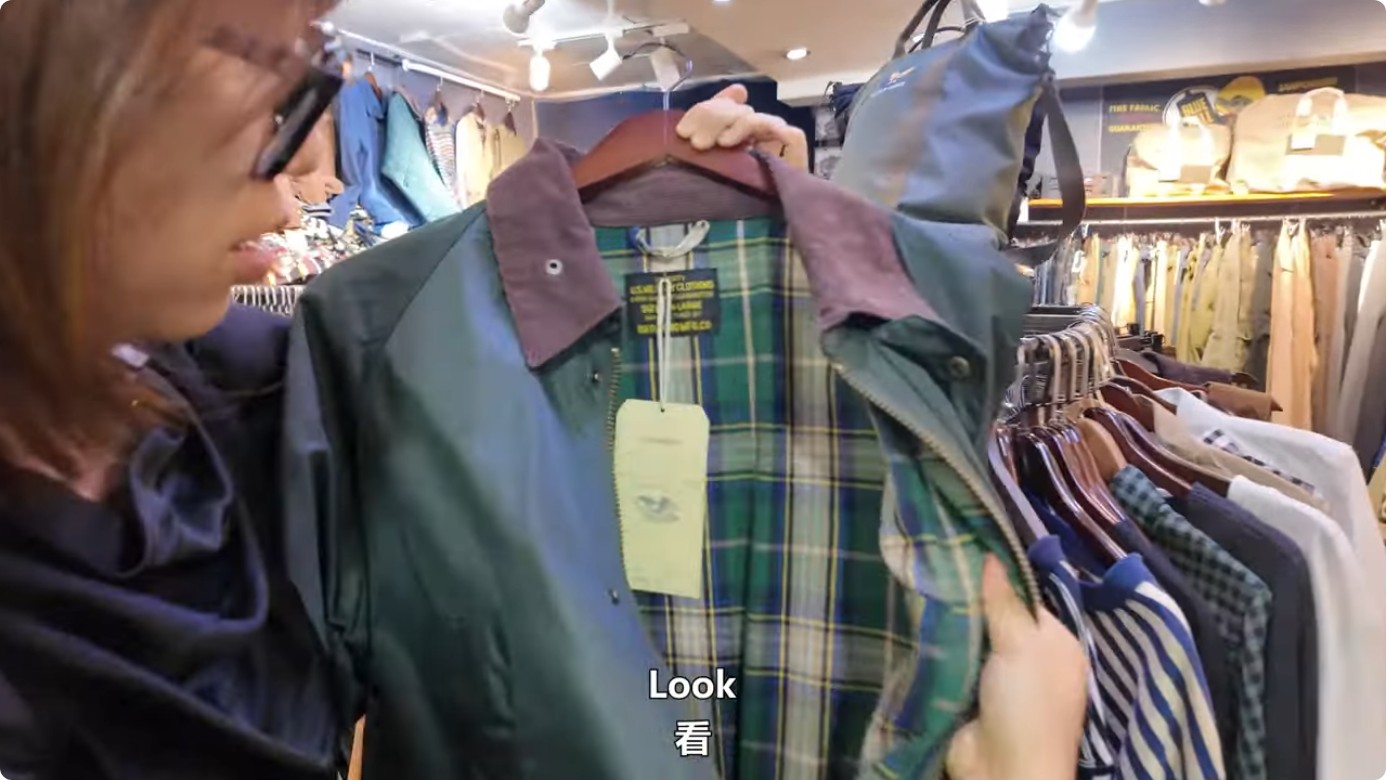
Never proceed to bulk without approving a pre-production (PP) sample. This sample should be made with the exact fabric, trim, and in the exact colors you’ve specified. It must be sent to you for physical approval. Do not rely on photos alone. Evaluate:
– Fit & Measurement: Against your spec sheet, modeled on a real person if possible.
– Fabric Hand & Weight: Does it match the swatch? Is the GSM (grams per square meter) correct?
– Stitching & Construction: Check seam integrity, stitch density per inch, and finish on raw edges.
– Print/Embroidery: Color matching, placement accuracy, and durability (scratch test).
2. In-Factory Audit
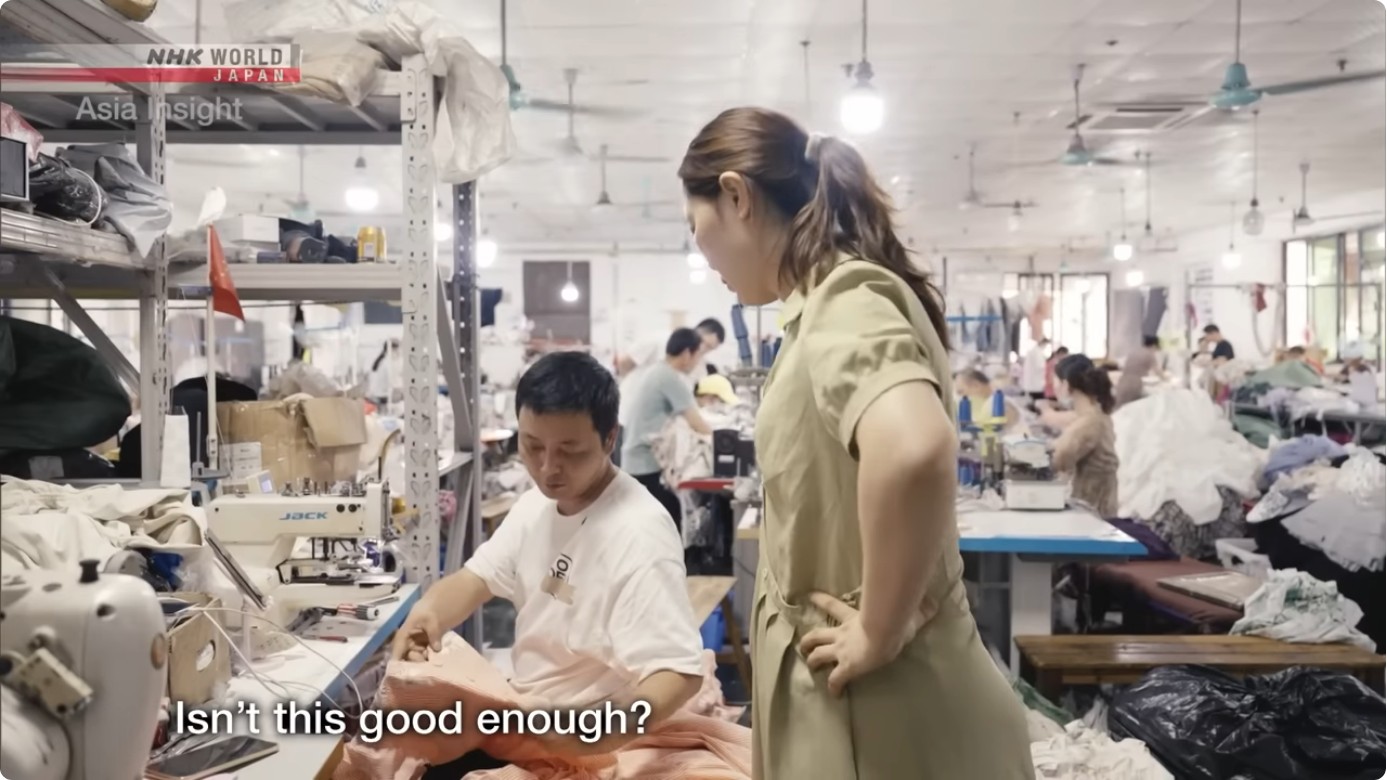
For first-time partners or large orders, consider a third-party audit (e.g., by SGS, QIMA, or Intertek) or a trusted agent. They will assess the factory’s:
– Certifications: Look for BSCI, WRAP, or ISO 9001 for ethical compliance and quality systems.
– Production Line Capability: Are they equipped for your garment type? Do they have the right type of sewing machines (e.g., coverlock for activewear)?
– Finished Goods Warehouse: How is stock handled? Is there a moisture-controlled environment?
3. During & Post-Production Inspection
Define inspection points in your contract:
– During Production (DUPRO): Check initial units coming off the line for major defects.
– Pre-Shipment: Randomly inspect 5-10% of the finished order. Check measurements, workmanship, and packaging against the approved sample.
Helpful tip: The Complete Guide to Embroidery Names on Shirts: From Design to Production
For performance wear, insist on specific test results. Ask the factory: “Can you provide lab reports for this fabric’s ASTM moisture wicking or colorfastness to perspiration?” Factories with legitimate testing partnerships will provide this.
What to Communicate: Your Factory Brief Checklist
Your initial inquiry email or brief is the foundation of a successful project. A vague brief leads to wasted samples and delays. Use this checklist to structure your request:
- Garment Type & Style Name: “Men’s Performance 1/4 Zip Pullover, Style #MPZ-2024.”
- Target Use & Market: “High-intensity gym training; mid-tier price point for EU/US market.”
- Fabric Specifications: Provide GSM, composition (e.g., 92% Polyester, 8% Elastane), and desired finish (e.g., brushed interior, DWR treatment). Attach a physical fabric swatch if possible.
- Trim & Details: Specify zipper brand/type (e.g., YKK #5 coil), label type (woven/satin), and placement. Include artwork for prints/embroidery in vector format.
- Color Standards: Provide Pantone (PMS) color codes. State if you require lab dip approval.
- Sizing & Fit: Provide a detailed spec sheet with measurements for each size (S-XXL). Include model stats and desired fit (slim, regular, relaxed).
- Packaging Requirements: Individual polybag? Hangtags? Master carton dimensions and weight limits for shipping.
- Quantity & Timeline: “Initial order: 1,200 units, 400 per color (black, heather grey, navy). Target ship date: 90 days from PO.”
Navigating Trade-offs: Speed, Cost, and Quality
In Dongguan, you rarely get all three maximized. Your decisions will involve trade-offs:
- Lower Cost vs. Quality: The lowest bid often uses inferior fabrics, fewer stitches per inch, and less rigorous QC. Define your quality floor before price shopping.
- Speed vs. Development: Factories promising 2-week production for complex activewear are either using existing ODM stock (limiting your customization) or will rush sampling, risking fit and construction errors.
- MOQ Flexibility vs. Unit Price: Negotiating a lower MOQ (e.g., 700 units instead of 1,000) will almost certainly increase your per-unit cost, as the factory absorbs setup and minimum fabric costs.
Frequently Asked Questions
Q: How do I verify a Dongguan factory is legitimate and not a trading company?
A: Request a video tour of their specific production floor. Ask for their business license (photocopy is fine) and look for factory-specific certifications (not just a trading company’s). A legitimate factory will discuss their machine brands (e.g., Brother, Juki), production line layouts, and in-house QC staff. Be wary of agents who cannot name their factory’s location or owner.
Q: What payment terms are standard?
A: 30% deposit via T/T (bank transfer) upon order confirmation, and 70% balance before shipment (or against a copy of the bill of lading). For new partners, some factories may request 50/50. Never pay 100% upfront.
Q: Should I use an agent or work direct?
A: For orders under $20,000 or if you lack experience, a reputable, fee-based sourcing agent (not a commission-based trader) can manage communication, QC, and logistics. For larger, repeat orders, direct relationships with a vetted factory yield better long-term pricing and control.
Q: What are the hidden costs?
A: Factor in: sample shipping (courier to you), quality audit fees, testing lab fees (if required), and inland freight from the factory to the port (often quoted separately). Always get a proforma invoice that itemizes all costs.
Q: Can I mix styles in one order to meet MOQs?
A: Often, yes. If a factory’s MOQ is 1,000 units per style, ask if they will accept 500 units of Style A and 500 units of Style B (using similar fabric/color) to reach a total 1,000. This is a common negotiation point.
We manufacture all the styles discussed in this guide — with custom labels, fabric options, and print or embroidery finishing. Tell us what you need.
Helpful tip: Divine Duality Elemental Tier List – Guide, Rankings & Team Building Tips