
When sourcing custom sportswear, the term “captain” refers to a specific, timeless style of athletic top—not a team leader. Typically a v-neck or crewneck sweater or jersey with ribbed cuffs and hem, the captain is a staple for team uniforms, casual athletic wear, and branded merchandise. Its simple, clean silhouette makes it a versatile canvas for logos and personalization. For wholesale buyers, fashion brands, gyms, and sports teams, understanding what defines a “good” captain-style garment is crucial for sourcing a product that balances cost, quality, and brand representation. This guide breaks down the key features, manufacturing considerations, and customization options to help you specify and source the right product for your needs.
We’ll move beyond basic definitions to explore the construction details, fabric choices, and production nuances that separate a budget-friendly bulk order from a premium custom piece. Whether you’re outfitting a local soccer club or launching a lifestyle apparel line, knowing these specifics ensures you communicate effectively with your manufacturer and receive a final product that meets your expectations for durability, fit, and visual appeal.
Defining the “Captain” Silhouette: Core Features & Variations
The classic captain style is rooted in traditional athletic wear. At its core, it features a knitted or jersey fabric body with a contrasting, often rib-knit, collar and sleeve cuffs. The most common variation is the v-neck captain, but crewneck (round neck) versions are equally prevalent. The sleeves can be set-in (sewn into the armhole) or raglan (seam running from collar to underarm), with raglan offering greater range of motion and a more athletic aesthetic.
You may also like: T-Shirt Neck Cut Types: A Buyer’s Guide to Styles, Fit, and Custom Manufacturing
Key identifying elements include:
- Collar & Cuffs: Typically made from 1×1 or 2×2 rib knit, which provides elasticity and a snug fit. The contrast color on the collar and cuffs is a signature look, though matching tones are also common.
- Hemline: Usually a straight, ribbed bottom hem, though some modern interpretations use a curved “dolphin” hem.
- Fabric: Historically cotton or cotton-polyester blends in jersey or interlock knit. The weight (measured in GSM – grams per square meter) dictates the feel and seasonality.
For a textile professional, the choice between jersey and interlock knit is a fundamental decision that affects drape, stability, and cost. Jersey is lighter and more fluid, while interlock is thicker, reversible, and more stable—ideal for heavier applications.
Fabric is Foundation: Weights, Blends, and Performance
The fabric is the single most important factor determining the garment’s quality, price, and suitability for its intended use. When sourcing, you must specify the desired GSM and fiber content.
| Fabric Weight (GSM) | Typical Fiber Content | Best For | Considerations |
|---|---|---|---|
| 180-220 GSM | 100% Cotton, Cotton/Poly (60/40) | Warm climates, summer team uniforms, lightweight casual wear | Less durable, may shrink more. Can feel sheer if too light. |
| 240-280 GSM | Cotton/Poly (60/40 or 50/50), 100% Polyester | All-season team wear, gym hoodies, promotional apparel | Good balance of durability, comfort, and moisture management. Standard for most custom orders. |
| 300+ GSM | Heavy Cotton/Poly, French Terry | Cold weather outerwear, premium streetwear, rugby-style captains | Substantial feel, excellent durability, higher cost and shipping weight. |
Performance Additives: For athletic teams, inquire about moisture-wicking treatments or blends with polyester that enhance dry-speed. For workwear or outdoor use, consider fabrics with UV protection or antimicrobial treatments. These features will impact both the garment’s function and its production cost.
Customization Scope: What Can You Actually Change?
As a buyer, your customization power varies by factory capability and order volume. A “good” captain for your brand is one where the manufacturer can reliably execute your design vision. Here’s a breakdown of common customization points:
- Color: Body fabric color, rib collar/cuff color (can be matching or contrasting). Minimums for custom-dyed fabric are significantly higher (often 5,000+ yards) than for stock fabric garment dyeing.
- Logo Placement & Method: Chest left, sleeve, back yoke, etc. Methods include screen printing (cost-effective for simple designs, high volumes), embroidery (premium feel, good for small logos), and heat transfer (for full-color, complex designs on polyester). Key Trade-off: Embroidery on thick rib collars can be tricky; a skilled factory will advise on stitch density and backing.
- Trim & Labels: You can often customize the woven neck tape (the internal collar label), the main size label (care label), and hangtags. For a fully private label experience, these must be specified.
- Sizing & Fit: Factories will have a standard “block” or pattern. Significant fit changes (e.g., athletic vs. relaxed) usually require a new pattern, which adds cost and is only viable for large volumes (e.g., 3,000+ pieces). For most buyers, selecting the closest existing pattern is the practical choice.
The Critical Role of Prototypes & Fit Samples
Never proceed to bulk production without approving a pre-production (PP) sample. This sample, made with your approved fabric, colors, and trims, is your final chance to check:
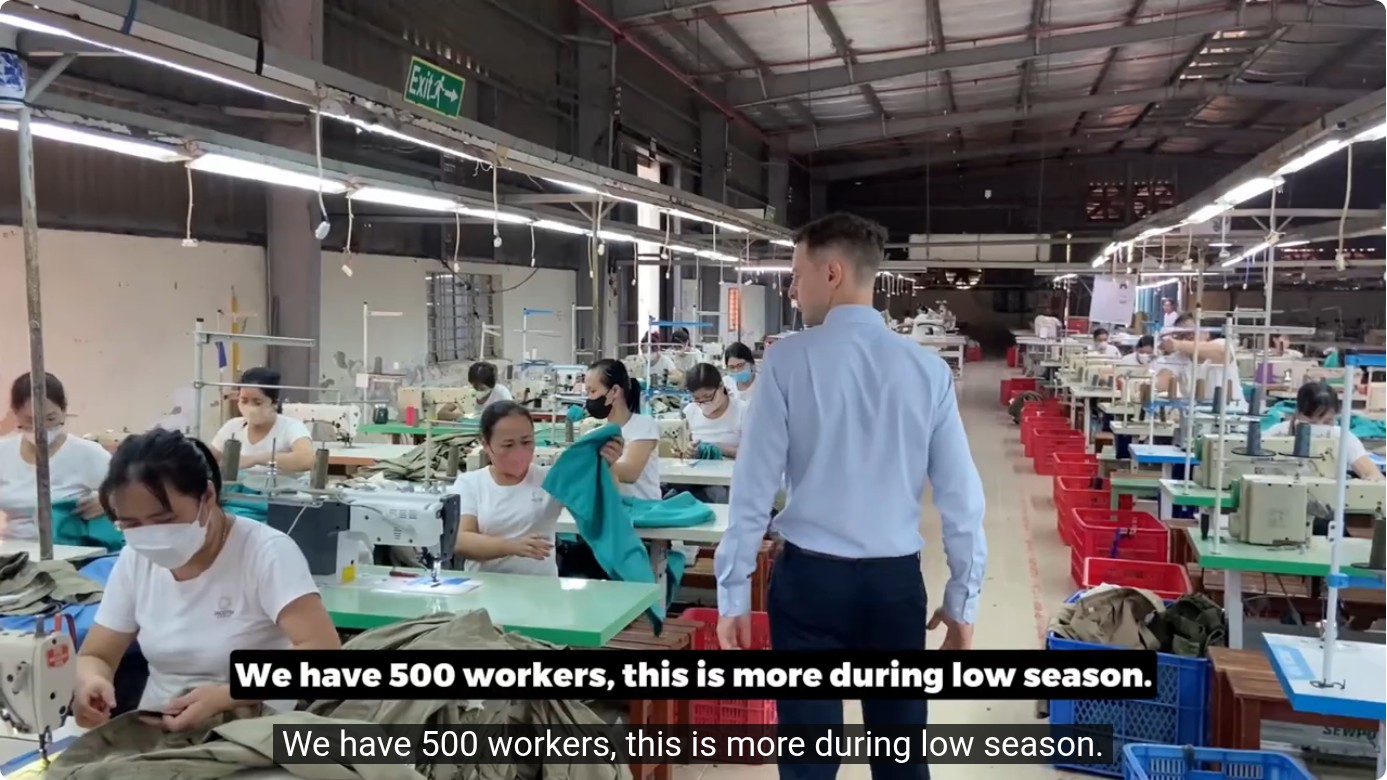
- Color Accuracy: How does the pantone color look on the actual fabric? Dye lots can vary.
- Stitch Quality: Check for loose threads, even stitching, and secure seam finishes (e.g., coverstitch on hems).
- Logo Execution: Is the print/embroidery sharp, centered, and durable? Request a wash test.
- Feel & Hand: Does the fabric feel as specified (e.g., soft vs. crisp)?
A good manufacturer will encourage this step and clearly communicate any limitations your design presents based on their machinery and expertise.
Sourcing & Production: Key Buyer Considerations
Navigating production requires understanding the tradeoffs between cost, speed, and customization. Your starting point should be a clear brief.
Essential Information to Communicate to Your Factory
Use a checklist to ensure your inquiry is complete and gets an accurate quote:
You may also like: German Sportswear Brands: A Manufacturing & Sourcing Guide for Buyers
- Target Retail Price Point: This helps the factory suggest appropriate fabrics and construction.
- Order Quantity (Initial & Potential Reorder): MOQs (Minimum Order Quantities) are the gatekeeper. A standard captain in a common size range might have an MOQ of 500-1,000 units. Custom-dyed fabric or intricate embroidery can push MOQs to 2,500-5,000.
- Specific End-Use: “For a tournament in July” or “for a premium retail launch” dictates fabric and quality needs.
- Design Artwork: Provide vector files (e.g., .ai, .eps) for logos with clear placement instructions.
- Size Range & Breakdown: Provide the full size chart (S-XXL, etc.) and the percentage breakdown for each size. This is critical for fabric yield calculation.
The MOQ Reality: If your total order is below a factory’s standard MOQ, ask about “mixed-size” or “assortment” orders. Some factories combine orders from multiple clients onto the same fabric dye lot, but this limits color customization. Alternatively, consider ODM (Original Design Manufacturer) options where you select from the factory’s existing styles and only add your logo—this dramatically lowers MOQs, sometimes to 100-200 units.
Quality Markers to Look For
How do you judge a well-made captain? Inspect these details on the sample:
- Seam Allowance: Should be consistent (usually 3/8″ or 1/2″) and neatly finished with an overlock stitch.
- Rib Knit Quality: Stretch it width-wise. It should recover quickly without distortion. Look for tight, even stitches. Cheap rib will look wavy and lose its shape.
- Neckline Stability: The rib collar should lie flat and not roll. A good factory will use a “neck tape” (a thin, soft band of fabric) behind the rib to prevent stretching and provide comfort.
- Hem & Cuff Finish: A double-needle coverstitch is the industry standard for a clean, durable, and flexible hem. A single-needle stitch is a major red flag for low-quality production.
- Fabric Feel: It should be consistent in hand (softness/weight) through the entire garment. No stiff or scratchy patches.
Making the Final Decision: A Practical Framework
To choose the right captain for your project, weigh your priorities:
- Budget-Conscious Bulk Order (e.g., community league): Prioritize a standard 240GSM cotton/poly blend from a stock fabric selection. Choose a simple screen-printed logo. Accept a standard factory fit. Focus on MOQ and unit cost.
- Brand-Launch Premium Item: Specify a finer, ring-spun cotton or a high-quality performance blend. Invest in a prototype. Use embroidery for a small, refined logo. Negotiate a custom woven label. Expect higher MOQs and per-unit cost.
- Functional Team Uniform: Prioritize moisture-wicking fabric, raglan sleeves for mobility, and durable print that won’t crack after washes. Get a sample and conduct a wash test.
Always request a bulk fabric swatch and a trim card (showing actual rib colors, labels, etc.) before committing. A transparent factory will provide these to manage expectations.
Frequently Asked Questions
Q: What’s the typical lead time for custom captain production?
A: From fabric sourcing to shipment, expect 6-10 weeks for standard orders. Custom-dyed fabric can add 2-4 weeks. Prototyping adds 1-2 weeks. Always build in buffer time.
Q: How do I ensure color consistency across multiple orders?
A: Use a standardized Pantone color code for all references. For critical color matches, order a lab dip (a small fabric batch dyed to your color) for approval before bulk fabric is dyed. This service may have a fee.
Q: I have a very small order (50 units). Is custom captain production possible?
A: Yes, but your options are limited. You must use a factory’s existing stock fabric styles (ODM) and simple decoration like digital print or small embroidery. MOQs for fully custom garments almost always exceed this volume.
Q: What’s the biggest cause of quality issues in captain-style tops?
A: Poor collar construction is the most common failure point. It leads to stretching, twisting, and discomfort. Ensure the factory uses quality rib knit and a stabilizing neck tape. Also, verify that print/embroidery placement avoids the ribbed areas’ seams and curves to prevent cracking.
Whether you’re a startup brand or an established retailer, we manufacture custom sportswear at competitive MOQs. Reach out to start your project.
Related guide: The Five Nights at Freddy’s Jacket: A Guide for Buyers, Brands, and Manufacturers