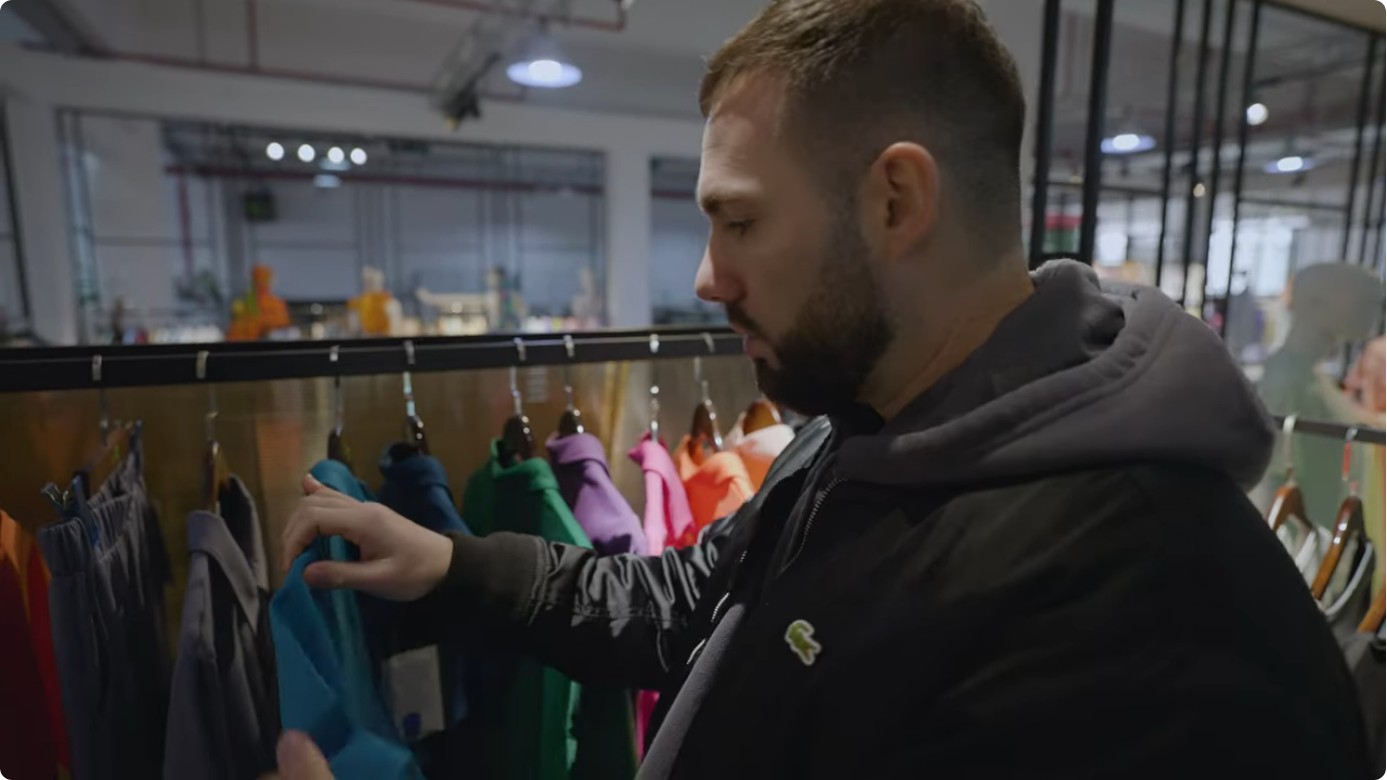
When you’re ordering custom sportswear—whether it’s a limited run of performance tees for a startup fitness brand or a bulk order of team tracksuits for a university—the approval stage is where ideas meet reality. Traditionally, this meant waiting for physical samples, a process fraught with delays, shipping costs, and the risk of miscommunication. Today, virtual proof services have revolutionized this critical step, offering a digital-first workflow that saves time, reduces waste, and provides unprecedented clarity for both buyers and manufacturers.
For wholesale buyers, gym owners, and apparel brands, understanding virtual proofing isn’t just about looking at a digital mockup. It’s about knowing what information you must provide, what level of detail to expect, and how these digital approvals translate into the final, physical product rolling off the production line. This guide cuts through the jargon to give you a practical, manufacturing-focused view of virtual proof services, helping you communicate more effectively with your factory and make smarter sourcing decisions.
What Are Virtual Proof Services? Beyond a Simple Mockup
A virtual proof in custom sportswear is a sophisticated, interactive digital representation of your garment before a single stitch is sewn. It’s not a static JPEG; it’s a dynamic tool that integrates your specific design assets—logos, graphics, text, color palettes—onto a 3D-modeled garment that accurately replicates the chosen style’s fit, fabric texture, and drape. The goal is to simulate the final product with high fidelity, allowing for confident approval without the need for multiple physical sample iterations.
You may also like: The Oversized Black Hoodie: A Style & Sourcing Guide for Brands & Buyers
This service is a core component of modern OEM (Original Equipment Manufacturer) and ODM (Original Design Manufacturer) partnerships. A factory offering robust virtual proofing is investing in technology that de-risks the custom production process for you. It bridges the gap between your design vision and their manufacturing capability.
What Matters Most for Buyers
Before diving into the types and mechanics, focus on these three pillars that determine the success of your virtual proofing experience:
- Fabric & Color Accuracy: The digital fabric must match the physical swatch’s texture, weight, and color. Ask your manufacturer about their Textile Exchange standards or color-matching processes (like Pantone). A proof on a ‘polyester mesh’ model won’t look like your final 100% cotton jersey.
- Placement & Scale: Virtual tools must allow you to see your logo on the actual pattern pieces—chest, sleeve, back yoke—not just a generic t-shirt shape. The scale should be true-to-size relative to the garment’s dimensions.
- Manufacturing Constraints: The proof should flag impossible designs. Can your all-over print be achieved with their available dye-sublimation process? Is that intricate embroidery design feasible on a thin, performance fabric? The best virtual proofs are built with the factory’s production capabilities as their foundation.
How Virtual Proofing Works: A Step-by-Step Breakdown
The virtual proof workflow is a tightly coupled dialogue between your design files and the manufacturer’s production system. Here’s a typical sequence:
1. Asset Submission & Tech Pack Review
You provide your logo (vector files like .AI or .EPS are ideal), design mockups, and a tech pack. The tech pack is your single most important document; it specifies the garment style number, fabric composition, color codes (e.g., Pantone TPX for fabrics), trim details, and exact placement instructions. A vague tech pack leads to a vague, unreliable proof. Manufacturers rely on this data to build the accurate 3D garment model and apply your graphics correctly.
2. 3D Garment Creation & Texture Mapping
The manufacturer’s design team selects or creates a 3D model of the base garment (e.g., a specific hoodie style from their catalog). They then apply high-resolution scans or calibrated digital textures of the exact fabric you’ve selected—down to the knit structure of a cotton jersey or the perforations in a moisture-wicking mesh. This step is what separates a basic mockup from a true virtual proof.
3. Design Application & Simulation
Your logos and graphics are mapped onto the 3D model. For all-over prints (AOP), the pattern is draped over the entire garment form. For embroidery, a simulation of stitch density and thread type (rayon vs. polyester) is rendered. Advanced systems can simulate how a print will look on curved surfaces like a sleeve or how embroidery will lay on a ribbed collar.
4. Interactive Review & Revision Cycle
You receive a link to an interactive viewer (often browser-based). You can rotate the garment, zoom in on seams, view it under different lighting, and sometimes even see it on a basic avatar. You submit feedback directly on the model—”logo on left chest is 0.5″ too high”—and the factory updates the proof. This cycle replaces 2-3 rounds of physical sampling.
Types of Virtual Proofs & Their Production Context
Not all virtual proofs are created equal. The level of detail directly correlates to the garment’s production complexity and your order’s value. Understanding these types helps you set the right expectation with your supplier.
| Proof Type | Best For | Production Insight | Typical Use Case |
|---|---|---|---|
| Flat Digital Mockup | Simple placements (chest logo, back print) on basic styles. | Lowest fidelity. Does not show fabric texture, drape, or 3D contours. High risk of scale/placement errors on curved areas. | Quick internal design validation for low-cost promo tees. |
| 3D Static Render | Most standard custom apparel (t-shirts, hoodies, joggers). | Shows accurate fabric texture, color, and graphic placement on a 3D form. Cannot be rotated. The industry standard for reliable pre-production approval. | Approving a batch of custom tracksuits with chest embroidery and sleeve prints. |
| Interactive 3D/AR Proof | High-value, complex, or all-over print projects. | Highest fidelity. Includes dynamic lighting, real-time rotation, and sometimes AR viewing on a mobile device. Can simulate fabric stretch and movement. Most resource-intensive to create. | Developing a custom performance line with seamless all-over sublimation prints and intricate panel designs. |
Key Applications: Who Uses Virtual Proofing and Why?
For Fashion Brands & Startups
You’re launching a collection with multiple SKUs. Virtual proofing allows you to finalize colorways, logo placements, and graphic layouts across all styles (tanks, hoodies, cargo pants) in a single digital workflow. It drastically reduces the time-to-market and the capital tied up in physical sampling, which is critical for small batches and seasonal drops.
For Sports Teams & Clubs
Accuracy is non-negotiable. A virtual proof lets coaches and team managers visualize the exact jersey, warm-up jacket, or track pant design from every angle. They can approve the final look for a full roster order, ensuring every player gets identical gear. It also simplifies the process of getting sign-off from multiple stakeholders (coach, athletic director, booster club).
For Corporate & Event Buyers
Ordering 500 custom polo shirts for a company retreat or 1,000 event tees for a marathon? Virtual proofing provides a single, shareable asset for internal approval committees. Everyone sees the exact same garment, fabric, and print location, eliminating debates over “what the sample looked like.” This streamlines procurement and budget approvals.
Sourcing & Production: What to Communicate to Your Factory
To get an accurate virtual proof, you must give your manufacturer the right inputs. Treat your initial request as a briefing for a critical project.
The Essential Checklist for Your Inquiry
When you contact a factory, have this information ready. The completeness of this data directly determines the accuracy and speed of your first proof.
- Garment Base Spec: Exact style name/number from the manufacturer’s catalog (e.g., “Style #HP-205 Heavyweight Fleece Hoodie”). Do not just say “a hoodie.”
- Fabric & Color Selection: Specify the base fabric (e.g., 100% Cotton, 8 oz) and the precise color from their available palette. If you need a custom color, be prepared for a lab dip process first, which will then feed into the virtual proof.
- High-Resolution Artwork: Provide vector files (.AI, .EPS, .SVG) for logos. For raster graphics, supply at least 300 DPI at the intended print size. Include all color separations if it’s a multi-color print.
- Exact Placement Map: Use a flat sketch or the manufacturer’s template to indicate position. Use measurements: “Chest logo, center point, 8″ down from neckline, 4″ wide.” For sleeves, specify distance from shoulder seam and armhole.
- Decoration Method: State the process for each element: screen print (specify spot colors or process), DTG (Direct-to-Garment), embroidery (stitch count estimate helps), heat transfer, or sublimation (for all-over).
- Quantity & Timeline: Your target order quantity (MOQ – Minimum Order Quantity) and desired ship date. This influences the factory’s resource allocation for proof creation.
Production Considerations & Trade-offs
Virtual proofing is powerful, but it has limits. A savvy buyer understands where the digital simulation ends and physical reality begins.
- Fabric Hand & Drape: A screen can show the texture of a piqué knit, but it cannot fully convey the weight, stiffness, or breathability. Ordering a physical fabric swatch is still a best practice for high-value orders or new fabric introductions.
- Color Shift: Monitor calibration varies. A virtual proof color is an excellent guide, but the final garment color must be approved against a physical lab dip or approved fabric swatch. Never approve color sight-unseen from a screen.
- Stitch & Seam Realism: Advanced 3D renders show seams, but they may not perfectly simulate how a heavy embroidery design will pull on a lightweight fabric or how a thick vinyl transfer will feel on a stretchy ribbed cuff. Discuss these potential issues with your factory manager.
- Cost & MOQ Impact: Highly detailed interactive proofs require more designer and software time. Some factories include 1-2 proof rounds in their sampling fee for orders above a certain MOQ. For very small orders (e.g., 50 pieces), the cost of a multi-round virtual proof process may be disproportionate. Clarify the proofing policy upfront.
Decision Guide: Is Virtual Proofing Right For Your Project?
Use this quick framework to assess your needs.
| Your Project Type | Recommended Proof Level | Key Reason |
|---|---|---|
| New brand launch, 500+ units, complex graphics | Interactive 3D / AR Proof | De-risks the entire collection. Investment in proofing is offset by avoiding a full-production batch error. |
| Team order, 100+ units, standard logos | High-Quality 3D Static Render | Provides clear, accurate visualization for team approval. Balances fidelity with cost and speed. |
| Corporate event, 250+ units, single-color chest print | 3D Static Render or Detailed Flat Mockup | Simple design allows for less intensive proofing. Focus is on placement and color match. |
| Very small batch (<50 units), simple design | Detailed Flat Mockup + Physical Swatch | Virtual proofing overhead may not be justified. Rely on clear flat art and a physical fabric/color sample. |
What to Ask Your Potential Manufacturer
Virtual proofing capability is a window into a factory’s overall technical sophistication. Vet them with these questions:
- “What software platform do you use for 3D virtual sampling (e.g., CLO3D, Browzwear)?”
- “How many rounds of proof revisions are included in your standard sampling fee? What is the cost for additional rounds?”
- “Can you provide a sample virtual proof for one of your standard styles so I can assess the fabric texture and graphic fidelity?”
- “How do you handle color communication? Do you use Pantone for both fabric and print?”
- “What is your process if the virtual proof is approved but the physical sample (made from the same digital specs) shows a discrepancy?”
A manufacturer with a polished, transparent virtual proof process is typically more organized, technologically adept, and invested in preventing production errors. This is a strong indicator of a reliable OEM/ODM partner.
Summary: Your Virtual Proof Action Plan
Virtual proof services are not a magic “approve and forget” button; they are a collaborative, information-rich phase of custom sportswear production. To leverage them effectively:
- Invest in your tech pack and assets. Garbage in, garbage out. Provide vector logos, precise measurements, and clear fabric selections.
- Demand fabric accuracy. Insist the proof uses the exact digital texture of the fabric you’ve selected or been swatched.
- Use it as a communication tool. Share the interactive proof link with your entire team or client to lock in consensus before production begins.
- Know the limits. Always approve final color against a physical swatch and understand that hand/drape are physical properties.
- Clarify the revision policy. Understand how many proof rounds are included and the cost structure for changes.
By treating the virtual proof as a critical engineering step—not just a sales preview—you dramatically increase the odds of your custom sportswear order being perfect the first time. It transforms sampling from a cost center into a strategic tool for quality control and design validation.
Ready to Streamline Your Custom Sportswear Production?
We manufacture all the styles discussed in this guide — with custom labels, fabric options, and print or embroidery finishing. Tell us what you need.
Related guide: A Buyer’s Guide to Embroidery Types for Custom Sportswear