
When you think of a jersey, the rounded, collarless neckline of a classic basketball shirt might come to mind first. But jerseys with a collar—whether a subtle ribbed crew, a structured polo-style, or a contrasting accent—represent a distinct and versatile category in sportswear and athleisure. For end consumers, they offer a more refined, traditional athletic look that often translates well into casual wear. For wholesale buyers, fashion brands, sports teams, and gyms, they present a key differentiator in a crowded market, allowing for unique branding and functional design choices. Understanding the nuances of collar construction, fabric pairing, and production considerations is essential for sourcing a product that meets your quality standards and brand vision.
This guide cuts through the basics to explore the practical realities of jerseys with collars from a manufacturing and sourcing perspective. We’ll break down collar types, fabric synergies, and common use cases, then dive into the critical conversations you need to have with your factory—covering customization capabilities, minimum order quantities (MOQs), and quality markers that separate a premium garment from a disappointment.
What Matters Most When Sourcing Jerseys with Collar
Before diving into styles, step back and define your core requirements. The collar isn’t just an aesthetic detail; it’s a functional component that affects fit, durability, and production complexity. Three pillars will guide your decision:
- Collar Style & Construction: Is it a functional placket with buttons (polo-style), a fixed crew neck, or a contrasting ribbed trim? The choice dictates construction steps, fabric requirements, and potential wear testing standards for collar stiffness.
- Fabric Compatibility: The collar must be made from a fabric with similar stretch, recovery, and shrinkage rates as the jersey body. A mismatched collar will pucker, gap, or become misshapen after washing. This is a primary technical point for your manufacturer.
- End-Use & Brand Positioning: A high-performance lacrosse jersey needs a different collar than a fashion-forward streetwear piece. Clarify the primary context: intense sport, gym casual, or hybrid lifestyle wear.
Prioritizing these elements early streamlines communication with suppliers and prevents costly sample revisions.
Quick Decision Guide: Primary Use Case vs. Collar Recommendation
| Primary Use Case | Recommended Collar Type | Key Reason |
|---|---|---|
| Professional Sports Team (e.g., basketball, baseball) | Contrast Ribbed Crew or Placket | Durability and clear team color blocking; withstands rigorous play and frequent laundering. |
| Fashion Brand / Streetwear | Contrast Placket, Mock Neck, or Unique Trim | Style statement; allows for bold color blocking and premium detailing (e.g., tonal stitching). |
| Gym / Corporate Apparel | Classic Ribbed Crew or Soft Knit Placket | Comfort and professional casual look; less technical, more focus on consistent branding. |
| Performance Outdoor / Hiking | Technical Placket with Snap Buttons | Ventilation control and sun protection; often paired with moisture-wicking, UPF-rated fabrics. |
Deep Dive: Collar Types and Their Manufacturing Implications
The collar style you choose sets the entire pattern and sewing process. Here’s a breakdown of the most common types you’ll encounter in custom production.
1. The Contrast Ribbed Crew Neck
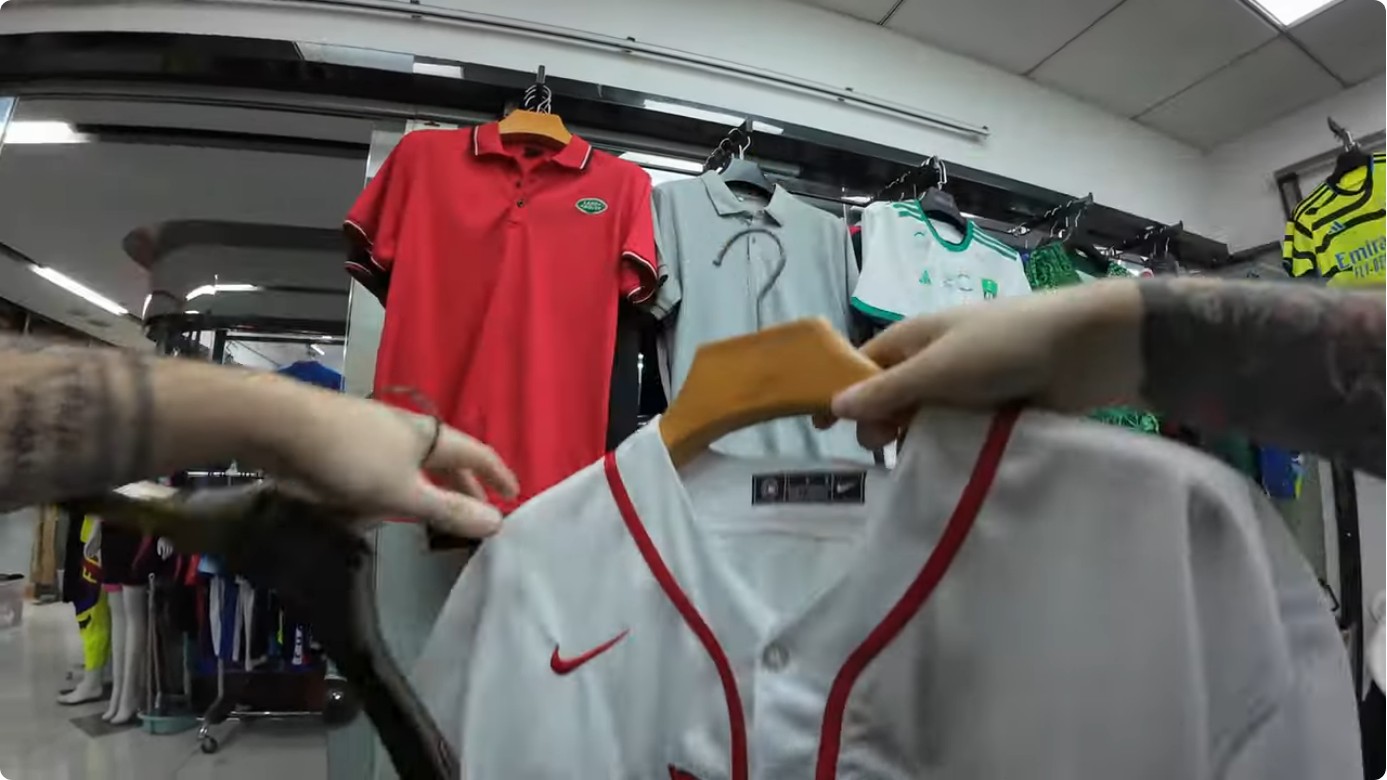
The most popular style for athletic jerseys. It’s a separate ribbed knit piece (often 1×1 or 2×2 rib) attached to the body of the jersey. The “contrast” means the collar color differs from the body fabric, creating a classic athletic aesthetic.
- Construction: The ribbed collar is cut as a ring, stabilized, and sewn to the neckline. Precision is critical—stitching must be even, and the collar must lie flat without twisting.
- Fabric Note: The rib knit must have high recovery (ability to snap back) to maintain neckline shape. Polyester/spandex blends are standard. Trade-off: Pure cotton rib feels softer but loses shape faster.
- Common For: Basketball, soccer, volleyball teams; retro-inspired fashion drops.
2. The Placket Collar (Polo-Style)
This features a full-button placket extending from the collar to the chest. It’s inherently more complex and carries a more traditional, preppy, or golf-inspired vibe.
- Construction: Involves attaching a placket piece (often double-layered for clean finish), inserting buttonholes, and sewing buttons. This adds significant labor time and cost compared to a simple crew neck.
- Key Quality Marker: Look for a ‘buried placket’ or ‘French placket’ where the placket fabric wraps the buttonhole edge for a clean, no-raw-edge look. This is a sign of higher-tier manufacturing.
- Common For: Golf teams, resort wear, elevated athleisure brands, corporate casual uniforms.
3. The Mock Neck / Turtleneck
A taller, folded-over collar that sits close to the neck without a button placket. It’s a cold-weather staple and a fashion-forward choice.
- Construction: Requires a longer, folded-over rib panel. The fold must be perfectly aligned, and the stitching at the fold line must be strong to prevent cracking.
- Material Critical: Needs a very soft, fine-gauge rib with excellent recovery. A stiff rib will feel restrictive. Request swatches specifically for the mock neck fabric.
- Common For: Cold-weather training gear, techwear, minimalist fashion collections.
4. The Self-Fabric Collar
The collar is cut from the same jersey fabric as the body, not a rib knit. It’s a simpler, cost-effective option but is less common on performance jerseys due to fit issues.
- Construction: The neckline edge is folded over and stitched. It requires precise cutting and folding to avoid bulk.
- Major Limitation: Standard jersey knit lacks the recovery of rib knit. This collar will stretch out and lose its shape quickly with wear and washing. Only suitable for low-sweat, casual-use garments.
- Common For:
Basic cotton jersey t-shirts, very low-cost promotional wear.
Fabric Selection: The Unsung Hero of Collar Performance
Your collar’s performance is 50% construction and 50% fabric. The most common mistake is specifying a collar fabric that doesn’t “play nice” with the body fabric.
Critical Factors to Discuss with Your Factory:
- Shrinkage Rate: The collar fabric and body fabric must have identical pre-washed shrinkage percentages. A 1% differential is the absolute maximum. Ask your mill for a shrinkage report.
- Stretch & Recovery: Performance jerseys need 4-way stretch with high recovery (ideally >90%). The rib collar must match this exactly. Test a sample by stretching it firmly and releasing—it should snap back instantly.
- Weight & Gauge: A heavy, stiff rib on a light, drapey body will look awkward. Aim for a collar weight within 10-15% of the body fabric’s GSM (grams per square meter).
- Composition: For team jerseys, a 92% polyester / 8% spandex or lycra is a durable, cost-effective workhorse. For premium fashion, consider a brushed-back poly/spandex or a recycled nylon blend for a softer hand feel. Always request a fabric swatch book from your OEM.
Use Cases: From the Field to the Street
Your target buyer influences every decision. Here’s how context changes the specification:
- Sports Teams & Leagues: Durability is non-negotiable. Reinforced stitching at the collar junction (often a “cover stitch” or “safety stitch”) is required. Colors must be team-accurate and colorfast. Sourcing Tip: For a large university team, prioritize a factory with experience in NFHS or team uniform regulations. MOQs can be as low as 50-100 pieces per style/color with a specialized OEM.
- Fashion & Streetwear Brands: The collar is a design element. Think contrasting colors, unique rib textures (like piqué rib), or branded buttons/buttonholes. Flexibility in small batches is key. Sourcing Tip: Seek an ODM partner who can provide design-forward collar samples and handle all-over sublimation printing or embroidery on the collar area.
- Gyms & Corporate Groups: Balance of professionalism and comfort. A classic ribbed crew in brand colors is a safe, scalable bet. Focus on consistent branding application (embroidered logo on left chest, perhaps on the collar tip). Sourcing Tip: For corporate orders of 250+, ask about package deals combining jerseys with collar and matching tracksuit bottoms to improve cost-per-unit.
- Retailers & Promotional Buyers: Price and speed dominate. A simple contrast ribbed crew on a lightweight, breathable polyester is the standard. Ensure the collar color options align with your seasonal palette.
Customization Capabilities: What Can You Actually Do?
Customization isn’t just about printing a logo. For jerseys with collars, the details matter.
Decoration Placement on Collars
- Logos on Collar: Small embroidered or woven labels on the back collar or placket button are common. Ensure the factory can match the logo placement precisely across all sizes.
- Collar Contrast: You can specify the collar as a separate color from the body. This is standard. For a more premium look, some factories offer “tone-on-tone” where the collar is a slightly different shade or texture of the same base color.
- Trim & Accents: Contrast stitching along the collar seam, branded buttons (with your logo etched in), or special collar stays (for placket styles) are possible with higher-tier ODM services. These require explicit approval on tech packs.
Fabric & Color Customization
- You are not limited to a factory’s standard color card. For orders typically above 500 yards of fabric, you can request custom-dyed fabric to your exact Pantone color. This adds 2-4 weeks to lead time.
- Performance finishes (e.g., antimicrobial, UV protection, moisture-wicking) can be applied to the collar fabric. Verify the finish doesn’t affect the collar’s stretch or recovery.
The Production Realities: MOQs, Sampling, and Quality
Navigating production requires understanding the trade-offs.
Understanding MOQs (Minimum Order Quantities)
- Fabric MOQ: The biggest driver. Standard polyester jersey fabrics have a mill MOQ of ~800-1500 yards. Your factory will need to order this much to get your custom color/dye.
- Style/Color MOQ: Once fabric is sourced, the garment MOQ per style/color combination can drop significantly with a flexible OEM. Expect 50-100 pieces for a basic style. For a complex placket style with custom buttons, it might be 200+.
- Strategy: To meet mill MOQs, consider grouping multiple styles (e.g., a jersey with collar and a matching tracksuit pant) in the same color fabric. This shares the fabric cost and can lower overall per-unit cost.
The Non-Negotiable: The Sampling Process
Never proceed to bulk without approving a pre-production sample (PP sample). This is a fully crafted garment using your final fabrics, trims, and specifications.

- What to Check on the Sample:
- Collar lie: Does it sit flat? Does it gap at the back neck?
- Stretch & recovery: Pull the collar sideways. Does it return to shape immediately?
- Placket alignment (if applicable): Are buttonholes centered? Is the placket straight?
- Seam comfort: Run your fingers inside the collar seam. Is it smooth, or are there raw edges or itchy stitching?
- Wash test: Ask the factory to wash and dry the sample once (per their standard care) and resubmit. This reveals shrinkage and collar deformation issues.
Your Checklist: What to Communicate to Your Factory
Provide this clear brief to get accurate quotes and avoid miscommunication.
- Style Reference: Provide a physical sample or high-res image of the exact collar style you want (e.g., “like this Nike Dri-FIT basketball jersey collar”).
- Tech Pack: A simple tech pack is ideal. At minimum, include: precise measurements for the collar (neck circumference, height, placket length), stitch type (e.g., 3-thread overlock for collar attachment), and any special trim details (button type, label placement).
- Fabric Specs: Specify body fabric and collar fabric composition, GSM, and stretch direction. State if they must be identical. Include any required certifications (e.g., OEKO-TEX Standard 100).
- Color Standards: Provide Pantone codes or physical color standards for body and collar. Specify if the collar is “contrast” or “self-fabric.”
- Decoration Details: Logo placement, embroidery thread color, print type (sublimation, screen print), and size.
- Performance Requirements: List any necessary tests (pilling resistance, colorfastness to perspiration) if the jersey is for high-sport use.
- Target MOQ & Timeline: Be upfront about your quantity needs and desired ship date. This allows the factory to assess feasibility and fabric sourcing.
Frequently Asked Questions (FAQs)
Can I mix and match collar fabrics within the same style order?
Technically yes, but it severely complicates production and increases cost. The factory must cut and sew multiple fabric types, manage separate inventory, and the collar/body shrinkage mismatch risk is high. It’s only economically viable for very large orders (1,000+ pcs) where the fabric cost savings justify the extra labor. For most buyers, standardizing one collar fabric per style is the prudent choice.
What’s the biggest cause of collar failures in custom jerseys?
Mismatched shrinkage between the collar rib and the body jersey. If the collar shrinks 3% and the body shrinks 1%, the collar will pucker and pull. Always insist on a wash test of the pre-production sample and request the mill’s shrinkage data for both fabrics before approval.
Is a placket collar always more expensive than a crew neck?
Yes, significantly. A placket adds at least 5-8 additional manufacturing steps: cutting the placket piece, folding and pressing, attaching, inserting buttonholes (a specialized machine operation), and sewing buttons. For budget-sensitive projects, the contrast ribbed crew is the most cost-effective collar style.
What’s a reasonable lead time for custom jerseys with collars?
From fabric approval to bulk shipment: 8-12 weeks is standard. This breaks down to: 2-3 weeks for fabric dyeing/mill MOQ, 1-2 weeks for sampling (including revisions), 4-5 weeks for bulk production and finishing. Plan for potential delays in fabric sourcing, especially for custom colors.
If you’re looking to source or customize any of the styles mentioned above, our factory offers low MOQ OEM/ODM production with full sampling support. Get a free quote today.