
When wholesale buyers, emerging fashion brands, or retailers hear the term “Madewell-style,” they’re often referencing a specific aesthetic: effortless, laid-back sophistication with a focus on high-quality basics and a lived-in, authentic feel. It’s the uniform of well-dressed casualness—think perfectly fitted jeans, soft worn-in tees, and crisp, relaxed shirting. For businesses, this represents a massively desirable and perennial market segment. But translating that consumer-facing vibe into a reliable, scalable custom manufacturing order requires a deep understanding of the product’s construction, material specifications, and the trade-offs involved in its production.
This guide bridges that gap. We deconstruct what makes the “Madewell look” from a factory floor perspective, profile brands with comparable DNA to help you define your target, and provide a practical framework for sourcing and customizing these staples. Whether you’re a gym branding a premium tracksuit line, a retailer developing a private-label denim collection, or a fashion startup building a core assortment, understanding these details is key to achieving the desired aesthetic, quality, and cost structure.
Defining the “Madewell Style” for Manufacturing
Before exploring similar brands, it’s essential to isolate the tangible product attributes that create the Madewell aesthetic. These are the levers a manufacturer pulls. The core pillars are:
Helpful tip: From Sketch to Sample: How to Create Fashion Clothes Sketches That Actually Get Made
- Fabric & Wash: A focus on natural and premium fibers (high-grade cotton, linen, silk blends) with special washes that achieve a broken-in, soft hand feel without compromising integrity. For denim, this means specific dyeing techniques (indigo, sulfur dyes) and wash processes (stone wash, enzyme wash) that create varied, non-uniform fading.
- Fit & Silhouette: Relaxed but not sloppy. Tailored casualness. For jeans, this often means a high-rise, straight-leg or wide-leg fit with a generous thigh. For tops, it’s about a slightly oversized, drapey cut that flatters various body types.
- Construction & Details: Reinforced seams, quality hardware (YKK zippers, specific button finishes), and minimal, intentional detailing. The garment should feel robust yet lightweight.
- Color Palette: A curated mix of timeless neutrals (off-white, navy, olive, black) and seasonal, muted tones (dusty pink, oat, clay). Color consistency and the ability to achieve specific, often “washed-out” hues are critical.
For a custom manufacturer, each of these pillars represents a decision point. Your request for a “Madewell-style tee” must specify the desired fabric weight (e.g., 180 GSM vs. 220 GSM), the wash technique, and the precise cut pattern. Vague requests lead to inconsistent results.
Brands with Comparable Aesthetics & What They Mean for Sourcing
Identifying brands with a similar vibe helps crystallize your target. Below is a comparison of key brands, their signature traits, and the direct implications for a custom buyer or OEM/ODM partner.
| Brand Profile | Signature Product Traits | Key Manufacturing & Sourcing Considerations |
|---|---|---|
| Everlane | Radical transparency, “clean” basics, minimalist aesthetic. Focus on fabric origin and cost breakdown. | Requires meticulous documentation on fabric mill source, factory certifications (e.g., Oeko-Tex Standard 100), and precise costing. Lower tolerance for aesthetic variation; consistency is paramount for their brand promise. |
| Reformation | Feminine, vintage-inspired, “sustainable” glamour. Uses a lot of silk, linen, and deadstock fabrics. Fit is often more curve-conscious. | Strong emphasis on sustainable fabric sourcing (Tencel™, recycled materials) and detailed wash development. Pattern making must account for a different fit block than a unisex relaxed fit. Higher MOQs may apply for proprietary sustainable fabrics. |
| Patagonia (everyday line) | Utilitarian, durable, outdoor-inspired basics. Focus on functionality, repairability, and proven environmental activism. | Specs demand durability testing (e.g., double-stitched seams, reinforced stress points). Fabric choices lean towards technical knits and durable weaves (like 100% organic cotton fleece). Requires communication of intended use-case for appropriate construction. |
| A.P.C. | Parisian minimalist chic. Iconic for their raw, selvedge denim that breaks in uniquely. Very specific, understated fits. | For denim, this involves sourcing specific Japanese or Italian selvedge fabrics, understanding raw denim shrinkage, and communicating the desired break-in process. Extremely high focus on cut, fit, and hardware branding (minimal leather patch). |
| Lululemon (non-athletic lines) | Elevated casual wear with technical fabric benefits (e.g., sweat-wicking, four-way stretch) in a lifestyle context. | Involves technical fabric specification (e.g., brushed fleece with specific grams/meter, stretch percentage, pill resistance). Requires understanding of performance textile suppliers and potentially higher per-unit cost for fabric R&D. |
Takeaway for Buyers: Your target brand isn’t just an aesthetic; it’s a technical specification sheet. Use these profiles to reverse-engineer your needs. Do you need the fabric transparency of Everlane or the technical feel of Lululemon’s casual line? This decision dictates your factory conversations and budget.
Core Product Category Deep Dive
The “Madewell look” is built on a few foundational categories. Here’s how to specify them for custom production.
1. The Perfect Tee
This is the cornerstone. The goal is a garment that feels like a favorite after one wear.
- Fabric: Typically 100% cotton or a cotton-slub blend. The weight (GSM) is critical: lighter (150-180 GSM) for a drapey, vintage feel; heavier (200-220 GSM) for structure and durability. For a premium feel, consider combed cotton or ring-spun cotton, which create a smoother, stronger yarn.
- Construction: Shoulder-to-shoulder tape, double-stitched hems, and a stable ribbed neckline (1×1 or 2×2 rib) are non-negotiable for quality. The neckline should be slightly wider than a basic tee.
- Wash: Garment-dyed vs. piece-dyed. Garment dyeing creates the nuanced, heather-like color variation and exceptional softness. This process has higher minimums and more color variation between batches.
2. Essential Denim
Fit and wash are everything. Madewell’s success is built on consistent, flattering fits and authentic-looking fades.
Helpful tip: The Collared Soccer Jersey: A Sourcing Guide for Teams, Brands & Buyers
- Fit: You must provide a physical sample or a very detailed tech pack with measurements for waist, thigh, knee, leg opening, and inseam. “Relaxed straight” means different things to different pattern makers.
- Fabric: 12-14oz rigid or sanforized denim is standard. Specify the origin (e.g., Japanese, Italian, Turkish) if you want a particular character. Stretch denim (1-2% elastane) is a different product category with different performance and break-in characteristics.
- Wash: This is a multi-step process (desizing, stone/enzyme wash, bleaching, sandblasting, hand-sanding). Each step adds cost and time. Clearly communicate the target: a uniform light wash vs. a heavily localized, distressed look. The latter requires skilled labor and increases cost.
3. Relaxed Shirts & Button-Downs
Think Oxford cloth, linen, or chambray. The look is effortless, slightly oversized, with a soft collar and cuffs.
- Fabric: Oxford cloth (often 40/1 or 30/1 count) for a classic casual feel. Linen for a slubbed, breathable, wrinkled aesthetic. The choice dictates care instructions and drape.
- Details: A “camp collar” (short, spread collar) vs. a traditional point collar. Button type (mother-of-pe pearl vs. plastic). Placket style (full front vs. hidden). These details must be specified on the tech pack.
- Fit: The pattern must include extra room in the body and sleeves. A “relaxed fit” pattern is not just a scaled-up slim-fit pattern; the proportions change.
Sourcing & Production: What to Communicate to Your Factory
Moving from inspiration to a production-ready order requires clear, technical communication. Use this checklist when engaging a potential OEM/ODM partner.
- Provide a Physical Reference Sample (Golden Sample): This is the single most important document. It eliminates ambiguity about fabric hand, color, fit, and construction. The factory will use this to create their own counter-sample for your approval.
- Develop a Detailed Tech Pack: This should include:
- Flat sketches with all measurements
- Fabric composition and weight specifications (e.g., “100% cotton, 180 GSM, combed, garment-dyed” for a tee)
- Hardware and trim specifications (button size, zipper brand/model, label type)
- Stitch type and seam allowance details
- Wash instructions (for the finished garment)
- Packaging instructions
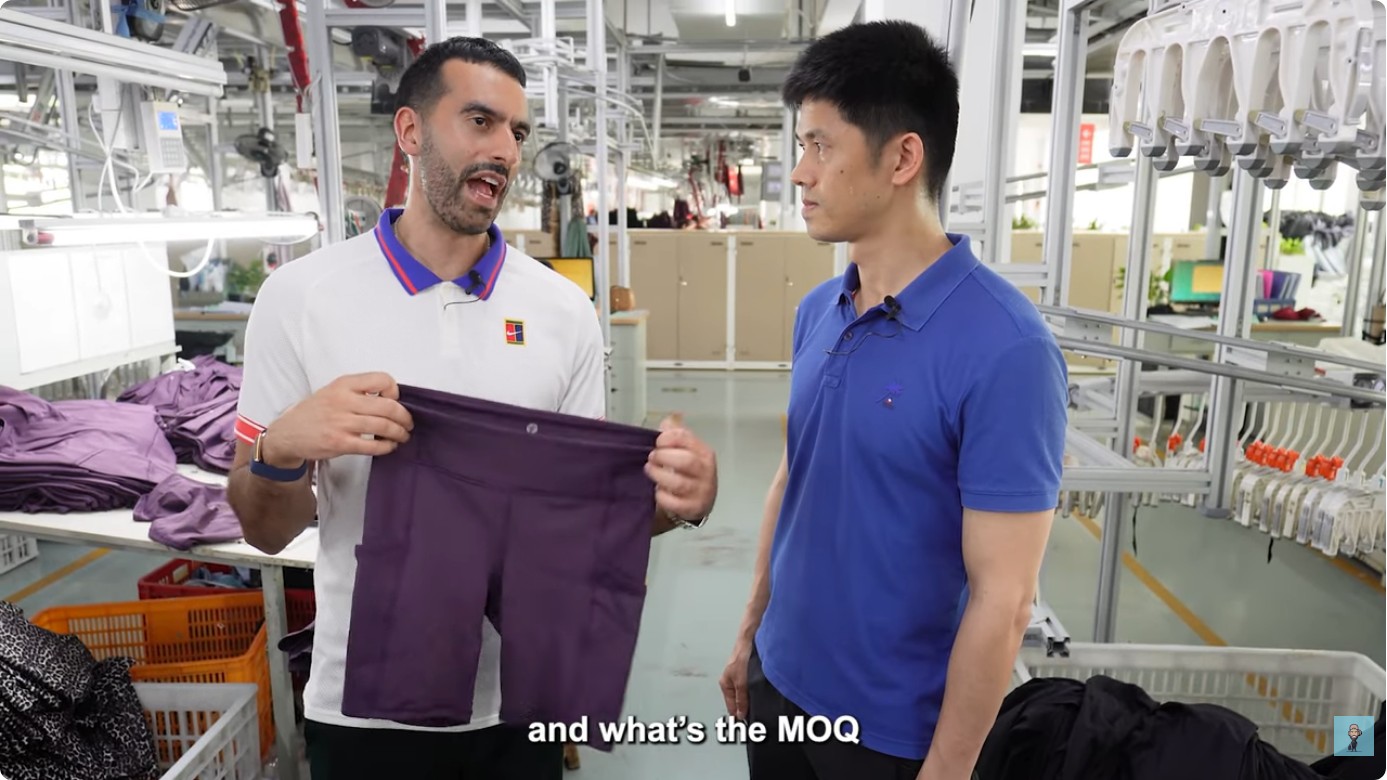
- Discuss Minimum Order Quantities (MOQs) Early: MOQs vary wildly by product and fabric. A simple jersey tee in a common color might have an MOQ of 500 units. A specialized selvedge denim style with a custom wash could have an MOQ of 2,000+. Be upfront about your volume needs.
- Ask About Their Fabric Sourcing Chain: Do they mill their own fabric or source from specific suppliers? Can they provide fabric swatches andensure consistency across large orders? For sustainable claims, ask for certification documents (GOTS, Oeko-Tex).
- Clarify Cost Breakdown: A good factory will break down cost by: fabric, cut/make/trim (CMT), wash/finishing, and quality control. This helps you identify where costs can be adjusted if needed.
- Understand Their Quality Control Process: What checks happen at the fabric stage, during production, and on the final packed goods? Who bears the cost of rejects?
Key Decision Points & Trade-offs
Sourcing this aesthetic involves balancing several competing factors. Here are the critical trade-offs to evaluate.
| Decision Point | Option A (e.g., Premium) | Option B (e.g., Cost/Efficiency Focus) | Primary Trade-off |
|---|---|---|---|
| Fabric Source | Imported specialty mill (Japanese denim, Italian yarn) | Local or regional mill, stock fabrics | Uniqueness/Story vs. Cost & Lead Time |
| Wash Technique | Hand-finished, enzyme/stone wash, garment-dyed | Piece-dyed, minimal finishing, pre-washed fabrics | Achieves authentic “lived-in” look vs. Lower cost, higher consistency, faster turnaround |
| Fit Development | Multiple fit samples, pattern maker collaboration, fit model sessions | Based on a provided sample with minimal adjustments | Perfect, brand-specific fit vs. Development cost & time |
| Quality Markers | Chain-stitched hem (for jeans), branded hardware, woven labels | Standard lockstitch, generic buttons, printed labels | Brand perception & durability vs. Cost savings |
A Critical Caveat on Sustainability: Terms like “sustainable,” “eco-friendly,” and “organic” are not interchangeable and have specific certifications. If this is part of your brand promise, you must define which standards you require (e.g., GOTS for organic textiles, bluesign® for responsible chemistry) and verify the factory’s ability to source certified materials. This often increases cost and MOQ.
Conclusion: Your Next Steps in Custom Manufacturing
Successfully sourcing “Madewell-style” apparel hinges on moving from a vague feeling to a precise specification. Your task is to translate the aspirational aesthetic into a tech pack that details fabric, fit, finish, and function. The factories best suited for this work are those experienced in premium casual wear, with strong capabilities in fabric development, wash treatment, and fit iteration.
Before you engage, ask yourself:
- Is my target the relaxed, garment-dyed softness of the tee or the rigid, selvedge authenticity of the denim?
- What is my non-negotiable quality marker (e.g., neckline stability, wash consistency)?
- What is my realistic annual volume to meet MOQ thresholds?
- Which sustainability claims, if any, are core to my brand identity and require third-party certification?
We manufacture all the styles discussed in this guide — with custom labels, fabric options, and print or embroidery finishing. Tell us what you need.
Related guide: Capital Style: Leveraging London EPL Team Aesthetics for Custom Sportswear Collections