
The debate over soccer’s Greatest Of All Time (GOAT) has moved from stadiums and social media into the marketplace. For brands, retailers, and teams, “Soccer GOAT” is no longer just a talking point—it’s a powerful design theme and commercial opportunity. This guide translates that cultural momentum into a practical sourcing framework. We’ll break down what “Soccer GOAT” apparel means as a product category, explore its key manufacturing specifications, and outline exactly what a wholesale buyer needs to know to get high-quality, custom-made pieces—from jerseys and t-shirts to tracksuits—that resonate with fans and perform on the pitch.
Whether you’re a fashion brand launching a limited-edition line, a sports team outfitting supporters, or a retailer curating fan merchandise, understanding the production landscape is critical. This article covers fabric technologies, customization techniques, minimum order quantities (MOQs), and quality control markers specific to this high-demand niche. Our goal is to equip you with the questions to ask and the specifications to provide to your manufacturing partner to ensure your GOAT-themed line is both commercially viable and technically sound.
What Qualifies as “Soccer GOAT” Apparel?
In a custom manufacturing context, “Soccer GOAT” apparel refers to any activewear piece—primarily jerseys, t-shirts, hoodies, and training gear—that features design elements explicitly referencing the GOAT concept. This typically includes:
- Numerical “10” or “7” (for Messi or Ronaldo) with GOAT branding.
- Graphic treatments incorporating goat imagery, horns, or the “GOAT” acronym.
- Jersey styles mimicking the kits of iconic players or national teams, often with a stylized twist.
- Slogans like “Greatest Ever,” “Legend,” or player-specific monikers.
For sourcing purposes, the core product is still a functional soccer or athleisure garment. The GOAT theme is the customization layer applied to standard garment templates. This distinction is crucial because it means you are primarily ordering a technical sports garment with a specific graphic application, not a novelty t-shirt. The base garment’s construction, fabric, and fit must meet performance standards first; the design is the value-add.
Key Performance Features: The Non-Negotiable Fabric & Construction
A fan will wear a GOAT jersey to a match or the gym, not just as a casual statement. Therefore, the underlying garment must perform. As a buyer, you must specify technical requirements to your factory. The industry standard for authentic-feel soccer jerseys is 100% polyester knit or high-performance polyester blends (e.g., polyester-spandex for stretch). Key features to mandate include:
- Moisture-Wicking (Dri-FIT, Climalite, etc.): The fabric must efficiently move sweat away from the skin. This is typically achieved through a brushed or mesh inner face and hydrophobic yarn treatments. Ask your manufacturer for the fabric’s wicking rate (grams per square meter per 24 hours) if they have lab data.
- Breathability: Look for micro-perforations, laser-cut vents, or ultra-lightweight knit structures (e.g., 130-150 GSM for jerseys). Heavier hoodies for casual wear may use French terry or fleece, but should still prioritize air permeability.
- Durability & Anti-Abrasion: For training gear and jerseys, seams must withstand repeated stress. Flatlock stitching is the gold standard for low profile and strength. For casual t-shirts, a standard coverstitch may suffice.
- Colorfastness: Vibrant team colors and graphics must not fade or bleed. Specify testing to standards like AATCC or ISO for wash and light fastness.
Fabric Selection Trade-Offs
| Fabric Type | Best For | Key Trade-Off |
|---|---|---|
| 100% Polyester (Jersey Knit) | Authentic match jerseys, high-performance training tops | Less soft than cotton; can feel synthetic to some consumers |
| Poly-Cotton Blend (e.g., 60/40) | Casual GOAT t-shirts, hoodies | Reduced moisture-wicking vs. pure polyester; heavier |
| Performance Mesh | Training vests, jackets with ventilation panels | Less opaque; not suitable for primary garment without lining |
| Brushed Fleece (for Hoodies) | Casual wear, post-game comfort | Not suitable for intense athletic activity; retains heat |
Customization Pathways: Print, Embroidery, and Sublimation
The GOAT graphic is your brand’s signature. How it’s applied determines cost, durability, and design complexity. Here’s a breakdown of the primary methods for custom sportswear manufacturing.
1. Dye Sublimation (All-Over Print)
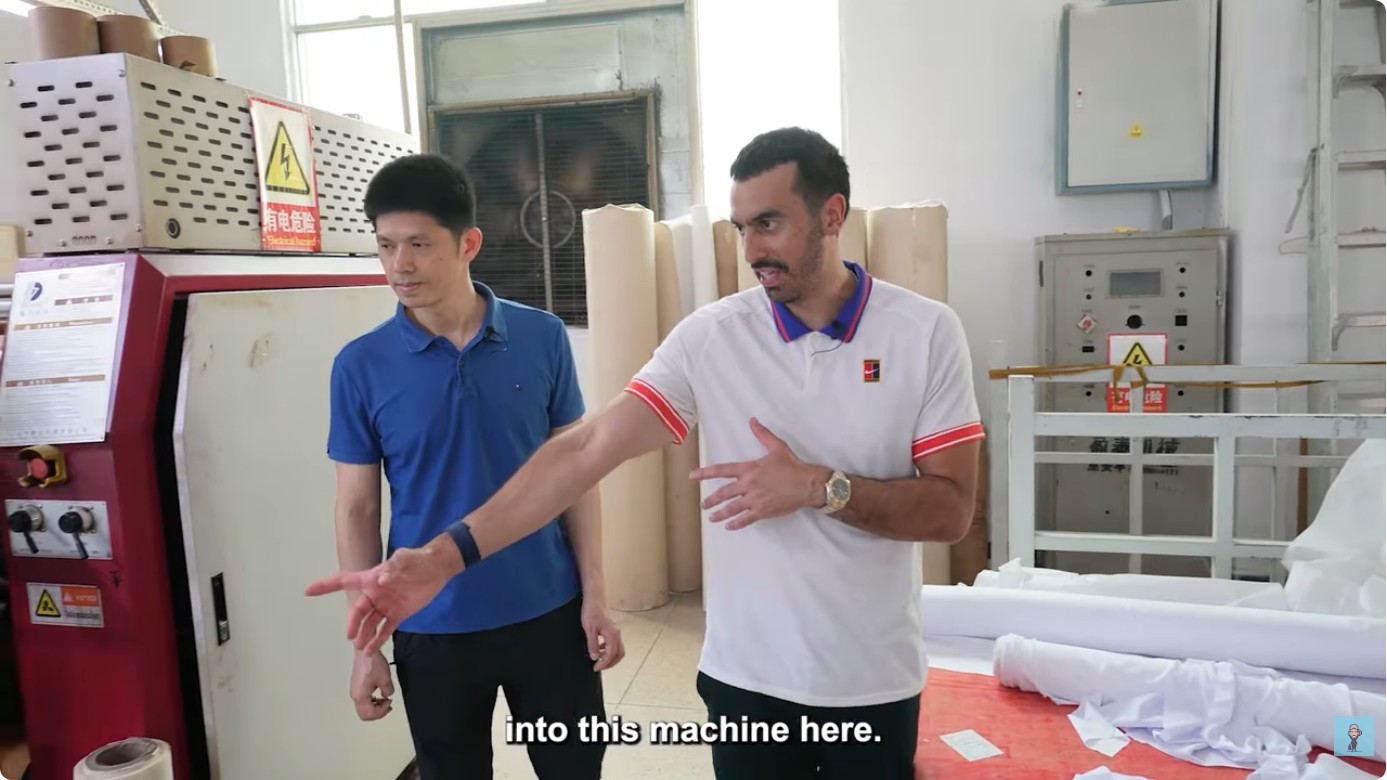
The industry standard for soccer jerseys. The design is printed onto transfer paper with dye-based inks and then heat-pressed into the polyester fibers, becoming part of the fabric itself.
- Pros: Unlimited color gradients, no feel (“hand feel”), incredible durability (won’t crack, peel, or fade), ideal for complex, multi-color GOAT graphics that cover the entire shirt.
- Cons: Requires 100% polyester or high-poly blends. Higher MOQs typically (often 50+ pieces per design/color). Design is fixed on a white garment base; cannot easily change one color without re-running the whole print.
- Best For: Authentic-style jerseys, full-body graphic t-shirts, and any design where visual impact and longevity are paramount.
2. Screen Printing (Plastisol/Water-Based)
Ink is pushed through a mesh stencil onto the garment. Best for simpler logos and text.
- Pros: Cost-effective for medium runs (50-500), vibrant opaque colors on dark garments, great for bold “GOAT” lettering or a single-color horn logo.
- Cons: Each color requires a separate screen (setup cost). Plastisol ink has a thicker hand feel. Not ideal for tiny details or photo-realistic gradients. Durability is good but not as permanent as sublimation; can crack over extensive wear/washing.
- Best For: Casual t-shirts, hoodies, and practice gear with 1-4 spot colors in the GOAT design.
3. Embroidery
Stitching the design directly onto the fabric with thread. Used for small, prestigious logos (e.g., a club crest on a chest).

- Pros: Premium, high-end look and feel. Extremely durable. Adds perceived value.
- Cons: Expensive per piece. Limited to simpler, low-color-count designs. Can be heavy and stiff on lightweight jerseys; may require a stabilizer backing that shows on thin fabrics. Not suitable for large, all-over graphics.
- Best For: Small GOAT logos on chest or sleeve of premium hoodies, jackets, or training polos. For a small embroidered patch, consider appliqué for more color complexity.
Sourcing Decision Points: OEM vs. ODM and Minimum Order Quantities
Your relationship with the factory defines the project. Understanding OEM (Original Equipment Manufacturer) and ODM (Original Design Manufacturer) is key.
Helpful tip: Cargo Pants: From Military Origins to Modern Custom Sportswear
- OEM: You provide the complete design (garment tech pack + graphic). The factory produces exactly to your specs. This gives you maximum control over fabric, fit, and graphics. Typical MOQ: 100-500 units per style/color. Lower for basic t-shirts (can be 50), higher for complex sublimated jerseys (often 100+).
- ODM: The factory offers their existing soccer jersey or t-shirt designs, and you apply your GOAT branding to them. This is faster and cheaper for market testing, as tooling is already done. Typical MOQ: Can be as low as 50 units for a simple t-shirt using their stock blank, but may have higher requirements for their proprietary sublimated jersey templates.
Critical Question for Your Factory: “What is your flexible MOQ for a sublimated jersey with a custom GOAT graphic across 3 colorways?” Many factories have a “total order” MOQ (e.g., 300 pieces total) that can be split across colors, which is vital for a balanced initial line.
Quality Control Checklist: What to Verify Before Production
Do not rely solely on a sample. Implement this checklist for your pre-production and bulk order review.
- Fabric Swatch Approval: Physically feel and test the wicking, weight (GSM), and stretch. Is it the same as the approved sample?
- Color Matching: Use a Pantone solid-coated guide for graphic colors. Screen prints and sublimation must match the provided chip within an acceptable delta-E (ask for their tolerance, typically ΔE < 2.0 is excellent).
- Graphic Placement & Scale: Confirm exact measurements from collar, sleeve hem, etc. on a sample garment. A 1-inch error on a chest logo can look unprofessional.
- Seam & Stitch Integrity: Check for straight, consistent stitches with no loose threads. For jerseys, ensure shoulder and side seams are flatlock and lie flat.
- Wash Test: Request the factory to wash a sample garment 5-10 times (following their care label instructions) and send it back. Check for fading, pilling, and graphic integrity (cracking/peeling for prints, thread breakage for embroidery).
Real-World Sourcing Scenarios
Scenario 1: A Fitness Brand’s First “GOAT” Launch.
You need a line of 3 performance t-shirts and 1 hoodie for a Fall drop. Recommended Path: ODM for speed. Start with the factory’s best-selling 100% polyester performance tee template. Use screen printing for bold, 1-2 color GOAT slogans (lower cost, lower MOQ of 100/color). For the hoodie, use a mid-weight poly-cotton blend and a combination: a small embroidered GOAT logo on the chest, with a larger screen-printed slogan on the back. Total MOQ: ~400 units.
Scenario 2: A Soccer Club’s Merchandise for a Major Tournament.
You need authentic-feel jerseys for a fan zone, including player-name “GOAT” variants. Recommended Path: OEM for control. Source a dedicated soccer jersey template with performance mesh sides and reinforced seams. Use dye sublimation for the full player-name/number graphic on the back, which includes a subtle GOAT horn motif in the number design. MOQ will be higher (200-300 per design), but authenticity is non-negotiable. Insist on twin-needle hemming on sleeves and bottom for professional finish.
How to Source Your Custom Soccer GOAT Gear?
Before you request quotes, finalize these core elements to get accurate, comparable proposals:
- Garment Base: Specify the exact style (e.g., “performance soccer jersey with mesh side panels”) or provide a reference sample from your factory’s catalog.
- Fabric Composition & Weight: e.g., “100% Polyester, 140 GSM, moisture-wicking knit.”
- Graphic Details: Provide vector art files (AI/EPS). Specify method (sublimation/screen/embroidery), placement, and size. For sublimation, confirm if it’s “all-over” or “left chest only.”
- Color Palette: Use Pantone codes for every color in the graphic and the garment base.
- Quantity Breakdown: Total units per style, per color, per size (e.g., 100 S, 100 M, 75 L, 25 XL for Style A in Black).
- Special Finishes: Tags (woven label vs. printed), neck tape, specific stitch types, packaging (polybag with hangtag?).
Communicating these points clearly from the start prevents costly sample revisions and production delays.
We manufacture all the styles discussed in this guide — with custom labels, fabric options, and print or embroidery finishing. Tell us what you need.