
Choosing between a home and away jersey is a foundational decision for any team, brand, or organization ordering custom sportswear. It’s not merely a matter of tradition; it impacts visibility on the field, fan merchandise strategy, production logistics, and cost. For buyers sourcing OEM or ODM manufacturing, understanding the strategic and practical differences between these two core uniform types is essential for placing accurate, efficient orders that meet both aesthetic and performance goals.
This guide breaks down the home and away jersey from a manufacturing and sourcing perspective. We’ll compare their typical roles, design constraints, fabric considerations, and production implications, providing the clarity you need to specify your custom order with confidence.
The Traditional Split: Function Drives Form
Historically, the “home” jersey is associated with a team’s primary colors and identity, while the “away” jersey provides a high-contrast alternative to prevent confusion during competition. In modern custom sportswear, this functional split remains critical, but it also presents a key design and production framework. For a custom manufacturer, these two styles are often developed as complementary systems, not isolated pieces.
Below is a direct comparison of their core characteristics from a buyer’s standpoint.
| Aspect | Home Jersey | Away Jersey |
|---|---|---|
| Primary Color Role | Dominant team identity color. Usually the darkest or most saturated primary hue. | High-contrast alternative. Typically the lightest color (often white) or a secondary color that starkly contrasts the home jersey. |
| Secondary Palette | Accent colors support the primary. Can be more extensive. | Accent colors are limited by the need for overall contrast. Often uses the same secondary colors as home but in inverted positions. |
| Typical Fabric Selection | Can feature premium, heavier knits for primary games. Full range of performance finishes. | Often prioritizes maximum breathability and lighter weight, as it may be used in varied conditions. Color (especially white) can influence fabric choice for opacity. |
| Fit Considerations | Standard team fit. May incorporate more design elements (stripes, panels). | Cleaner, simpler cut to maintain contrast. Excessive design can muddy the visual separation from the home kit. |
| Visual Purpose | Identity, fan connection, home-field advantage. | Clarity for officials, opponents, and broadcast. Prevents clash with home team. |
| Production Complexity | Higher. More design elements, color blocks, and branding placements. | Lower to moderate. Simpler design reduces pattern making and printing/embroidery setup. |
Color Strategy and Visibility
Color is the defining differentiator. The home jersey’s primary color must be the team’s signature, but the away jersey’s color is primarily dictated by contrast requirements. Most professional leagues have specific color contrast rules (e.g., one team must wear a predominantly white jersey). For custom orders, you must confirm these rules with your league or organizing body. The away jersey’s simplicity is a feature, not a limitation—it guarantees instant visual recognition.
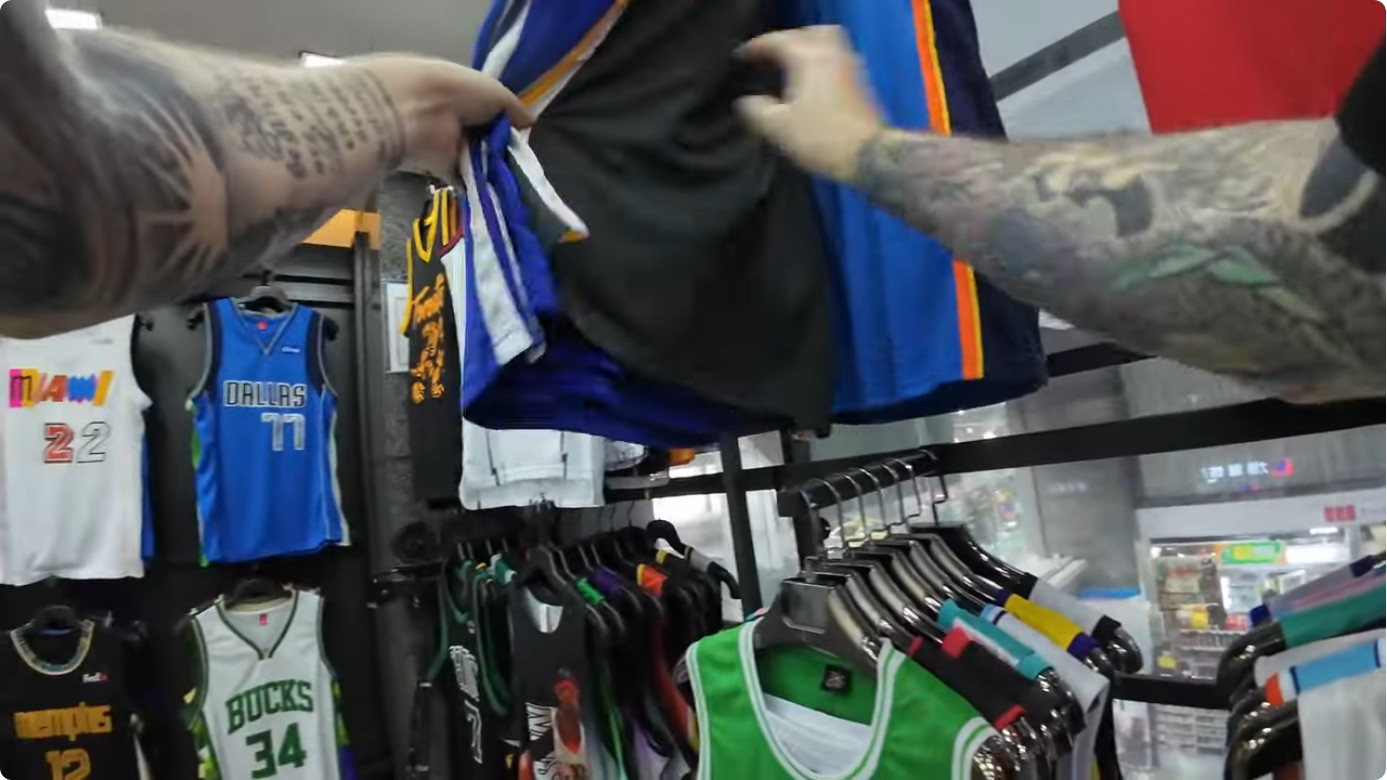
For fashion brands or non-competitive teams, this rule is flexible. You can creatively invert your color palette, using the home jersey’s accent color as the away jersey’s base. However, always consider how the two kits will look side-by-side in product photography and on the street.
Fabric Performance and Environment
While both jerseys should use performance fabrics (see guides on moisture-wicking fabrics), the away jersey’s often-lighter color can influence fabric selection. White or light colors may require a tighter knit or a specific fabric weight to ensure opacity and prevent see-through issues during play. This is a critical specification to discuss with your manufacturer.
Additionally, consider the primary use case. If the away jersey will be worn in hotter climates or for travel, a ultra-lightweight, highly breathable mesh might be optimal. The home jersey, worn for marquee games, might utilize a more substantial, premium-feel knit that better displays detailed sublimation prints or embroidery.
Design Complexity and Branding
The home jersey is your canvas for full brand expression. It can accommodate complex patterns, multiple sponsor logos, and intricate detailing. The away jersey, to maintain its contrast function, typically has a cleaner layout. This makes it an excellent opportunity for minimalist branding or a “vintage” reinterpretation of your logo.
Production Note: When ordering both, using the same fabric base for both jerseys is standard and cost-effective. However, if your away jersey is white, specify if you need an opaque white fabric versus a standard white, as this can affect material cost and sourcing.
Related guide: A Buyer’s Guide to Men’s Shorts Types: From Fit and Fabric to Factory Floor
Sourcing and Production Guidance for Buyers
From a manufacturing perspective, the home and away jersey are two sides of the same coin. Here’s what to specify and expect.
What’s More Commonly Ordered as Custom?
Virtually all team and brand custom orders include both a home and an away version. The home jersey is the primary design driver, but the away jersey is almost always a companion order. For retailers or brands doing capsule collections, you might order one style, but for any team-oriented line, pairing them is the norm.

Key Customization Variables That Matter Most
- Color Matching (Pantone): Provide exact Pantone codes for your home jersey’s primary color. For the away jersey, specify if it must be a specific light color (e.g., “off-white #PANTONE 11-0601 TCX”) or simply “high-contrast to home.”
- Fabric Consistency: Insist on the same fabric composition and weight for both unless there’s a specific performance need. This ensures identical fit, feel, and shrinkage.
- Design File Separation: Submit clear, separate artwork files for each jersey. Do not assume the manufacturer will simply invert colors—they need explicit instructions for pattern placement, logo sizing, and accent color positioning.
- League Compliance: If manufacturing for a sanctioned league, provide the official uniform regulations. This governs everything from sleeve stripe width to the placement of competition badges.
Checklist: What to Specify When Placing Your Order
- ✅ Final, approved design mockups for both home and away jerseys (front, back, sleeves).
- ✅ Pantone color codes for all colors used on both jerseys.
- ✅ Desired fabric type, weight (gsm), and finish (e.g., sublimation-ready, antimicrobial).
- ✅ Target fit model (athletic, relaxed, tailored) and full size chart.
- ✅ All branding placements: logos, player names, numbers, sponsor patches, care labels.
- ✅ Any league or association certification requirements.
- ✅ Order quantities for each style and size breakdown.
Common Buyer Questions
Can the away jersey be the same design as the home, just in a different color?
Yes, and this is very common. This is often called a “color-inverted” kit. However, you must approve how design elements (like stripes or panels) appear on the new background color. A detail that worked on a dark home jersey might get lost on a light away jersey. Request a sample proof.
Is there a cost difference between manufacturing home and away jerseys?
Generally, the away jersey is less expensive to produce due to simpler design and fewer color changes in the printing/embroidery process. However, if the away jersey uses a special fabric (like an opaque white), material costs could be higher. The biggest savings come from ordering both styles together in one production run, which reduces sampling and setup fees.
What’s the biggest mistake buyers make when ordering home/away sets?
Failing to specify color contrast under game conditions. A gray away jersey might contrast with a dark home jersey in your studio lighting but not under stadium lights. Always reference official league color standards if applicable, or request fabric swatches in the actual colors to assess contrast.
Need custom versions of any style covered here? Our sportswear factory handles everything from tech pack review to bulk delivery. Request a sample or quote.