
When you search for “sports brands names,” the immediate results are often lists of famous labels like Nike, Adidas, or Under Armour. But for a business owner, entrepreneur, or buying agent, the question usually runs deeper: How do I create a distinct, ownable, and marketable name for my own sportswear line? This guide shifts the focus from admiring established brands to the practical process of naming, securing, and launching a sports apparel brand—especially when your products will be custom-manufactured by an OEM or ODM partner.
Whether you’re a gym owner launching a private-label athleisure line, a fashion brand expanding into activewear, or a sports team seeking a unique identity for merchandise, your brand name is your first and most lasting piece of intellectual property. It influences everything from custom label design to trademark registration and marketing. This article breaks down the naming process, connects it directly to the realities of custom apparel production, and provides a actionable framework for making a decision that will scale with your business.
The Strategic Purpose of a Sports Brand Name
In the crowded activewear market, a name does more than identify—it signals. Your brand name communicates your niche (e.g., performance vs. lifestyle), your audience (youth, yoga enthusiasts, hardcore athletes), and your brand’s personality (innovative, rugged, minimalist). For a custom apparel buyer, this name becomes the anchor for all production specifications.
More advice: Decoding Nike’s Material Sourcing: Insights for Custom Sportswear Buyers
A strong brand name allows you to:
- Command premium pricing: A distinctive, ownable name separates you from generic “no-name” activewear and justifies higher margins.
- Build customer loyalty: It creates an emotional hook that turns a one-time buyer of your custom hoodie into a repeat customer.
- Secure your market position: A legally protected name is a barrier to entry for competitors and a valuable business asset.
- Streamline manufacturing: A final, trademark-cleared name means your factory can proceed with custom woven labels, printed neck tapes, branded packaging, and hangtags without fear of legal hold-ups.
The Critical Link Between Your Name and Your Manufacturer
Many new brand owners treat naming as a purely creative exercise. In custom production, it’s a supply chain milestone. Your manufacturer needs your exact, final brand name at the quote stage to accurately source or produce:
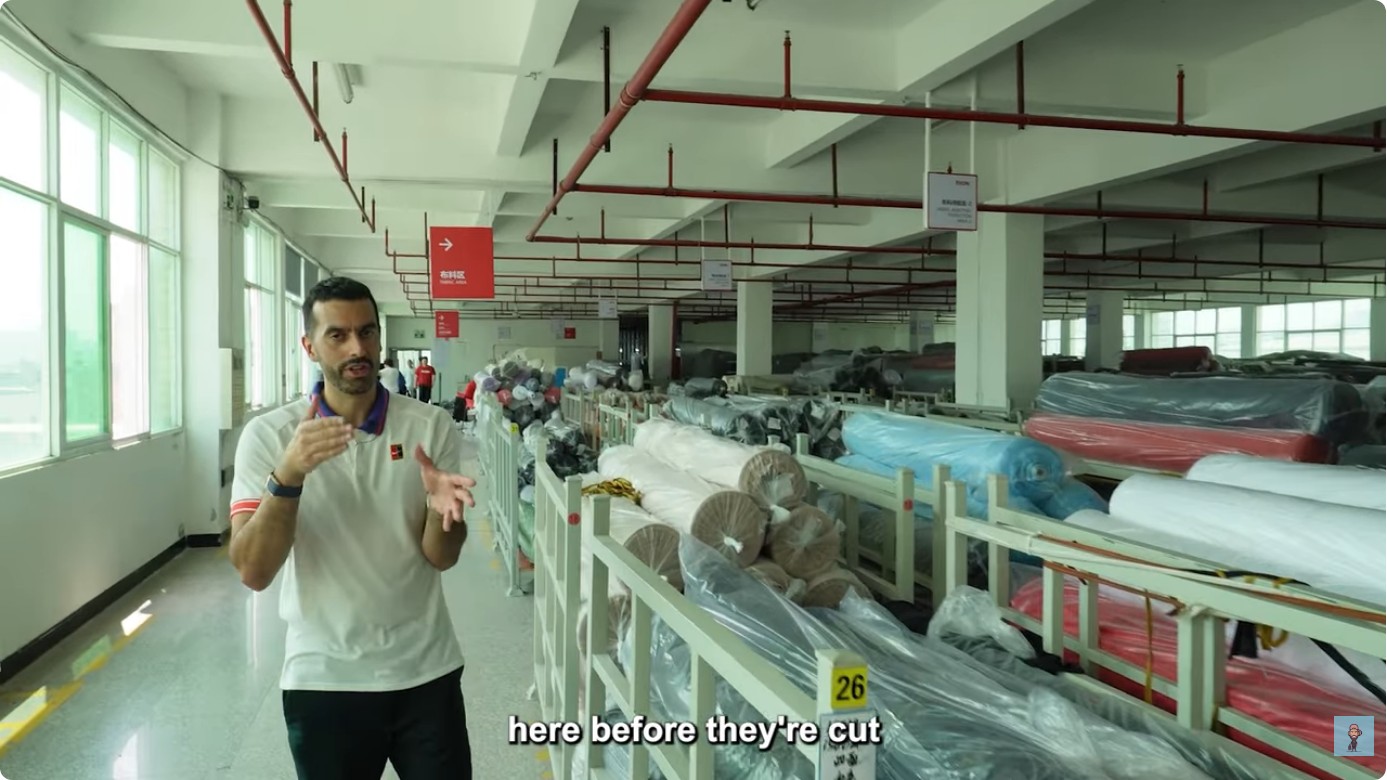
- Custom Labels & Tags: Woven labels (for care labels and main brand labels) and printed neck tapes require precise text, font choice, and sometimes logo artwork files. Changes after production begins can lead to scrapped inventory.
- Packaging: Polybag printing, custom boxes, and tissue paper often feature the brand name and logo. Minimum order quantities (MOQs) for these items are tied to your overall production run.
- Embroidery/Print Files: The digitized file for your logo (which usually contains your brand name) must be approved before any decoration starts on your custom t-shirts or tank tops.
Choosing a name that is difficult to spell, too long, or not trademark-available can cause significant delays and added costs. Factories may charge for re-tooling or re-artworking if name changes occur late in the process.
Four Primary Archetypes of Sports Brand Names
Understanding the common categories can help you position your brand. The choice often dictates your marketing strategy and even your factory’s ability to efficiently apply your branding.
| Archetype | Description & Example | Pros for Custom Sourcing | Considerations & Trade-offs |
|---|---|---|---|
| Descriptive | Names that directly describe the product or benefit (e.g., PerformanceWear, TrailGear). | Instantly communicates function. Easy for customers to understand. Often easier to get domain names. | Very hard to trademark (often considered “generic”). High competition for related keywords in digital marketing. |
| Invented/Abstract | Coined words with no prior meaning (e.g., Lululemon, Oiselle). | Easiest to trademark uniquely. Highly ownable. Stands out in a list. | Requires significant marketing investment to build meaning and recognition. No inherent SEO benefit. |
| Founder/Personal | Uses a person’s name (e.g., Champion, Reebok). | Conveys legacy, authenticity, and story. Can be powerful if the founder has a reputation. | Can limit scalability if the brand outgrows its namesake. Potential legal complexities if names are similar to existing people/brands. |
| Evocative/Experiential | Suggests a feeling or experience (e.g., Nike (Greek goddess of victory), Patagonia (evokes wilderness). | Creates strong emotional resonance and storytelling potential. Often highly trademarkable. | Meaning can be misconstrued or lost without consistent branding. Requires clear marketing to connect name to product benefit. |
The Non-Negotiable Legal Checklist Before Ordering Custom Apparel
Before you instruct your factory to produce a single custom sweatshirt, you must secure your brand name legally. This is not an area to cut corners. A cease-and-desist letter after you’ve invested in a 500-piece production run is a costly mistake.
Follow this sequence:
- Brainstorm & Narrow: Generate a list of 10-20 candidates based on the archetypes above.
- Preliminary Screening: Conduct a basic internet search for each name + “apparel” or “clothing.” Eliminate any with obvious conflicts.
- Formal Trademark Search: This is a critical step. Use the free databases of the United States Patent and Trademark Office (USPTO) or the World Intellectual Property Organization (WIPO) Global Brand Database. Look for live trademarks in International Class 25 (clothing, footwear, headgear). Consider hiring a trademark attorney for a comprehensive clearance opinion—this is a wise investment.
- Domain & Social Handle Check: Secure the .com (or relevant country domain) and primary social media handles immediately. This is part of your brand’s digital asset ownership.
- File the Trademark Application: Once cleared, file for your trademark. While pending, you can use the “™” symbol. Upon registration, you use the “®” symbol. Your manufacturer will ask for your trademark status if you claim exclusive rights.
What Your Manufacturer Needs to Know About Your Brand Name
When you request a quote for custom track pants or a bulk order of blank t-shirts for printing, be prepared to provide:
- The Exact Legal Entity Name: Is your brand “ActiveGear LLC” or just “ActiveGear”? The legal name on your trademark application should match what goes on labels.
- Trademark Status: Are you “trademark pending” or “registered”? Some factories require proof of registration before applying major branding like large printed logos to avoid infringing on another’s mark.
- Final, Approved Artwork: A vector file (like .ai or .eps) of your logo, with the brand name as part of the design, set to the exact dimensions it will appear on the product.
- Label Placement Instructions: Specify where the woven label goes (inside neck, side seam), the size (e.g., 1″ x 2″), and thread color.
Sourcing and Production Considerations Tied to Your Brand Name
The type of name you choose can subtly influence your sourcing strategy and minimum order quantities (MOQs).
MOQs and Brand Application Complexity
A simple, short name like “ZENITH” is cheaper and faster to produce in custom woven labels than a long, intricate name like “MOUNTAINTOP ADVENTURE CO.” The latter requires more yarn, larger loom setups, or finer embroidery digitizing, which can increase per-unit cost and may have higher MOQs from your factory. If you’re testing the market with a small initial run of 50-100 pieces per style, discuss simplified branding options (e.g., a small embroidered chest logo instead of a large woven back label) with your OEM partner.
The “White Label” vs. “Private Label” Distinction
This is a crucial sourcing term that directly impacts your brand name’s appearance:
- White Label: You sell a generic product (e.g., a blank hoodie from a factory’s catalog) with only your branding (your label, your print). The base product has no other identity. Your brand name is the sole identifier.
- Private Label: You sell a product that is manufactured for you, but it may use the factory’s own generic base (e.g., a specific fabric blend or cut that the factory also sells to others). Your brand name is added, but the underlying product is not unique to you.
For a brand building long-term equity, white label or fully custom ODM development is superior. It means the product itself, from fabric to fit, is unique to your brand name. This requires a larger investment and higher MOQs but creates a defensible market position. Discuss these models explicitly with potential ODM partners.
Practical Scenarios: From Name to Production
Let’s connect the dots with two common sourcing scenarios.
Scenario 1: The Fitness Launching a Membership Perk
The Business: A boutique gym, “Pulse Fitness,” wants to sell high-quality custom tank tops and leggings to members.
- Naming Choice: They use their existing business name, “Pulse Fitness,” to leverage existing member recognition. It’s a descriptive/founder hybrid.
- Sourcing Path: They approach an OEM with a clear spec: “We need 200 units of a women’s racerback tank in our brand colors, with our ‘Pulse Fitness’ logo embroidered on the left chest. Use your best-selling premium performance fabric.”
- Key Consideration: Since “Fitness” is a highly generic term, their trademark will likely be limited to a specific stylized logo. The factory’s main concern is the logo file’s stitch count for embroidery. They must ensure their business name registration covers apparel sales.
Scenario 2: The Streetwear Brand Expanding into Technical Outerwear
The Business: A fashion brand, “Aether Theory,” known for graphic t-shirts, wants to add a custom puffer jacket to its line.
- Naming Choice: “Aether Theory” is an evocative, abstract name. It’s ownable and trademarked.
- Sourcing Path: They work with an ODM to develop a new jacket style. They provide the ODM with their brand book, including logo usage rules. The ODM sources a specific recycled nylon fabric and produces the jackets with custom woven “Aether Theory” labels on the neck and a jacquard logo pattern on the inner lining.
- Key Consideration: This is a higher-cost, higher-MOQ custom development project. The abstract name is a strength—it allows the unique product design and fabric choice to define the brand, not just the name. The ODM’s ability to produce custom jacquard lining is a key selection criterion.
Final Questions to Ask Before You Commit
Use this checklist when evaluating your chosen brand name against your custom manufacturing plans.
- Is my name legally cleared for apparel (International Class 25) in my key sales territories? If not, can I afford to rebrand after production?
- Does my name work for all intended products? A quirky name for t-shirts might feel out of place on high-performance running shorts.
- How will my name be applied? Embroidered? Woven? Printed? Have I requested samples of each application from my factory to see how it looks on the actual fabric?
- What is my MOQ strategy? A complex, long name may force a higher MOQ for custom labels. Can I start with a simpler application (like a small print) and upgrade labels later?
- Have I shared my brand guidelines (logo clear space, color codes, font usage) with my manufacturer? Consistency is key to building brand equity, and your factory is your first production partner in that process.
Your sports brand name is the foundation of your business. Treat it with the same rigor as your product design. A well-chosen, secure name combined with a transparent manufacturing partner turns your custom apparel vision into a legitimate, scalable brand.
Ready to Bring Your Brand Name to Life in Fabric?
We manufacture all the styles discussed in this guide — with custom labels, fabric options, and print or embroidery finishing. Tell us what you need.
Provide us with your finalized brand name, logo artwork, and target product types (e.g., “custom hoodies and cargo pants”), and our OEM/ODM team will provide a detailed quote that includes branding specifications, realistic MOQs, and sample workflows.
Also read: Stretch Corduroy Fabric: A Practical Guide to Composition, Properties, and Sourcing