
The question of whether US Polo Assn (U.S. Polo Assn.) is a luxury brand is a common one, arising from its classic, preppy aesthetic and broad retail presence. For wholesale buyers, fashion entrepreneurs, and gym or team outfitters, understanding the true market position of a brand like U.S. Polo Assn is more than academic—it directly informs your sourcing, customization, and competitive strategy. This analysis breaks down the brand’s categorization, clarifies what “luxury” means in the modern apparel landscape, and translates those insights into actionable manufacturing and production considerations for your custom sportswear line.
Whether you’re looking to create a private-label alternative, understand quality benchmarks, or position your own brand, this guide provides the framework to evaluate construction, fabric, and branding elements that define market tiers. We will move beyond simple labels to examine the tangible production details that separate mass-market licensed goods from true luxury or premium custom apparel.
Demystifying the Brand: What U.S. Polo Assn. Actually Is
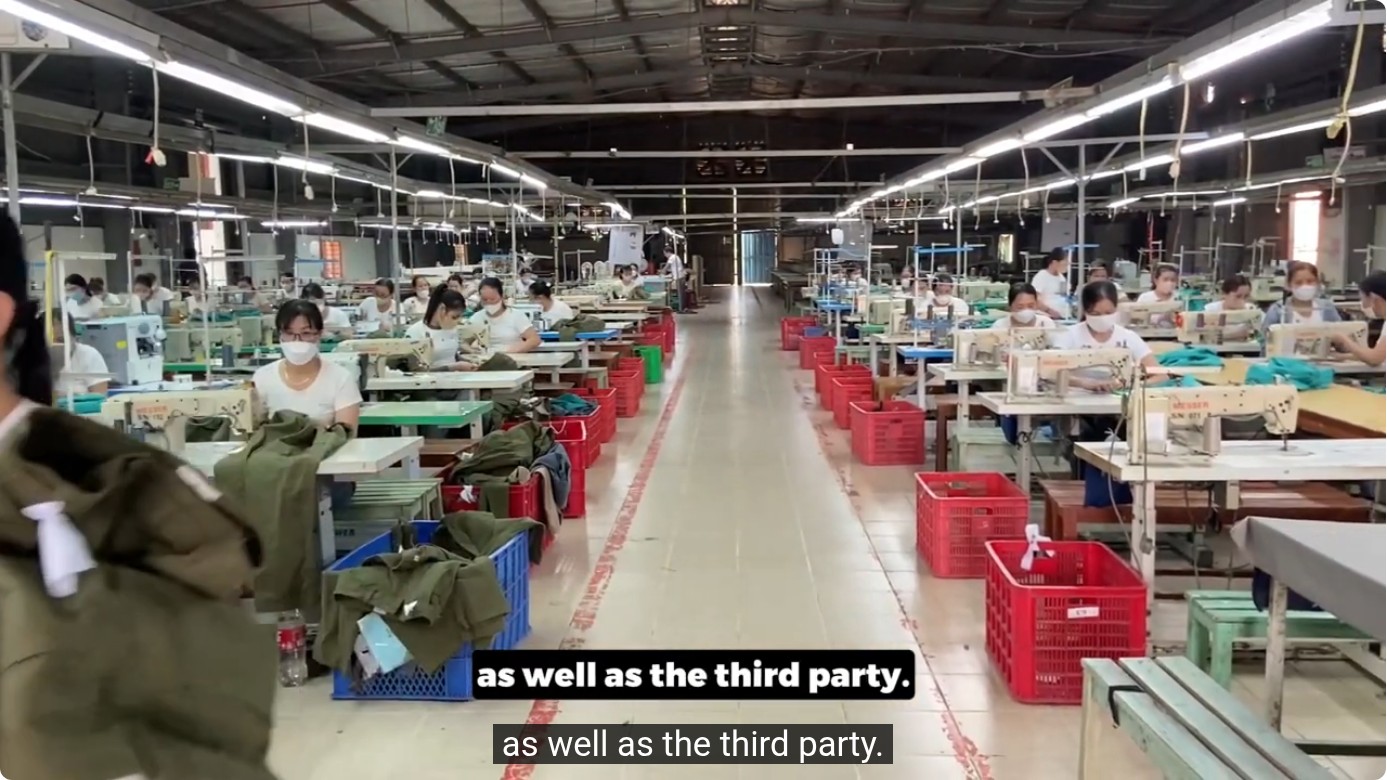
U.S. Polo Assn. is not an independent luxury fashion house. It is the official brand of the United States Polo Association (USPA), the non-profit governing body for the sport of polo in the U.S. The brand operates on a licensing model. The USPA licenses its name, crest, and equestrian motifs to various manufacturing and retail partners globally. This means the brand’s identity is applied to products made by third-party factories, with quality and construction varying by licensee and product category.
This model places U.S. Polo Assn. firmly in the mass-premium or accessible lifestyle category. It sits above basic fast fashion in terms of price and perceived quality but is widely accessible through department stores, outlet malls, and its own branded retail chains. Its appeal lies in classic, all-American styling (polo shirts, khakis, casual knitwear) rather than exclusive craftsmanship, limited distribution, or high-price points. For a custom sportswear buyer, this is a critical distinction: you are not competing with a vertically integrated luxury conglomerate, but with a licensed brand whose product specs are publicly replicable.
The Licensing Model and Its Production Implications
Because U.S. Polo Assn. does not own its factories, the brand establishes technical packages and quality standards that its licensees must meet. These standards dictate fabric compositions (e.g., pique knit for polos), stitch counts, and logo placement. However, enforcement and consistency can vary. This creates an opportunity for custom manufacturers: the “blueprint” for a classic polo shirt is well-known in the industry. A brand seeking a similar aesthetic can work with an OEM/ODM partner to source equivalent or superior fabrics and construction without paying for the brand license.
Defining ‘Luxury’ in Apparel: It’s More Than a Price Tag
To assess U.S. Polo Assn., we must define the benchmark. True luxury in apparel (e.g., Loro Piana, Brunello Cucinelli, high-end Tom Ford) is characterized by a convergence of factors that are often difficult to scale:
- Exceptional Materials: Use of rare, natural, or technologically advanced fibers (e.g., vicuna, extra-long-staple cotton, innovative performance fabrics) sourced with traceability.
- Artisanal Craftsmanship: Significant hand-construction, intricate detailing, and construction techniques that require skilled labor and time.
- Exclusivity & Narrative: Controlled distribution, high price points creating access barriers, and a compelling brand story rooted in heritage or innovation.
- Vertical Integration & Control: Ownership or close relationships with mills and ateliers, ensuring unwavering quality from fiber to finished product.
U.S. Polo Assn. excels in consistent, classic design and broad material quality suitable for its price point. It does not typically employ ultra-rare materials, extensive hand-finishing, or operate in an exclusive distribution model. Therefore, it does not meet the industry consensus for the luxury tier. The Textile Institute and similar bodies often classify such brands as “premium mass-market” or “accessible premium.”
The Custom Manufacturing Perspective: Replicating & Elevating the “Polo” Archetype
For your brand, the U.S. Polo Assn. polo shirt is a relevant product archetype, not a competitor to emulate directly. The question shifts from “Is it luxury?” to “What specific construction and material qualities define this archetype, and how can we source them or improve upon them for our own custom line?”
A factory producing garments to compete with or replace a U.S. Polo Assn.-style product will focus on:
- Fabric: 100% cotton pique is the standard. Key specs are yarn count (e.g., 30/1, 40/1—higher is smoother), weight (e.g., 180-220 GSM for a substantial feel), and whether it’s mercerized for sheen and strength. For a premium upgrade, consider long-staple cotton (like Supima®) or a cotton-spandex blend for stretch and recovery.
- Construction: Flatlock seams on shoulders and armholes for reduced bulk, a 2-button placket with a secure backing, a ribbed collar and cuff with high elastane content for shape retention, and a clean, finished hem.
- Details: Taped neck, branded buttons (often mother-of-pearl style), and a small, embroidered logo (the USPA shield) versus a larger printed graphic.
The opportunity for your brand lies in specifying better fabric (e.g., a tighter-knit, softer pique) and superior construction (e.g., double-needle stitching on all stress points) than the median licensed product, while maintaining a comparable price point through direct factory relationships.
Quality Markers Your Factory Must Understand
When requesting quotes or samples, communicate these precise metrics. A capable OEM partner will understand them instantly:
| Feature | Mass-Market/Licensed Standard (e.g., U.S. Polo Assn. baseline) |
Custom “Premium Equivalent” Target |
|---|---|---|
| Collar & Cuff Rib | Standard 1×1 rib, ~3% Lycra | 2×2 rib, 5-8% Lycra for better recovery and firmness |
| Seam Finish | Overlock stitch (serger) | Flatlock stitch for flat, smooth seam |
| Hem | Single-needle stitched | Double-needle stitched for durability |
| Logo Application | Embroidered (density: ~10,000 stitches) | High-density embroidery (>12,000 stitches) or printed with discharge ink for soft hand |
This table is a starting point for your spec sheet. The goal is to define the “premium equivalent” column as your standard, ensuring your custom product feels and performs a tier above the familiar licensed competitor.
Sourcing & Production Decision Guide for Buyers
Armed with this understanding, here is a practical checklist for your custom order. This ensures you and your factory are aligned on quality and cost expectations.
- Define Your Market Position: Are you aiming for “premium mass-market” (like U.S. Polo Assn.), “accessible luxury,” or “value-performance”? Your target price point dictates the fabric and construction specs you can afford.
- Request & Compare Physical Samples: Never rely on photos. Order a sample of a U.S. Polo Assn. polo (or a similar licensed brand) and a sample from your prospective factory. Compare GSM, fabric hand, and stitch quality side-by-side.
- Specify Fabric Mills When Critical: If consistent, high-quality fabric is your priority, work with a factory that sources from reputable mills (e.g., those compliant with OEKO-TEX® STANDARD 100 or Better Cotton Initiative (BCI) standards). Ask for mill names in your quote.
- Clarify Logo Application Costs: Embroidery pricing is per stitch and per piece. A complex logo will significantly increase cost. Digital printing or heat transfer may be cheaper for intricate designs but have different durability profiles. Get clear unit costs for each method.
- Understand MOQs (Minimum Order Quantities): For custom knitwear like polos, MOQs are often driven by fabric and yarn sourcing. A factory may require 500-1,000 pieces per style/color to make a custom knit viable. For cut-and-sew from stock fabric, MOQs can be lower (e.g., 100-300 units). Always ask.
- Audit for Compliance: Ensure your factory can provide documentation for customs (if exporting) and for your own brand’s compliance needs (e.g., factory audit reports, chemical testing certificates).
Key Questions to Ask Your Manufacturer
When finalizing your production agreement, these questions will uncover hidden costs and quality risks:
- “Can you provide a detailed tech pack with all fabric specs (GSM, composition, yarn count), stitch types, and tolerance measurements?”
- “What is your standard process for quality control at each stage: fabric cutting, sewing, and final inspection?”
- “Do you have a standard lab dip process for color matching, and is it included in the sample cost?”
- “What is your policy on defect rates during production? Is there a credit or replacement process?”
- “Can you handle our custom label, hangtag, and polybag packaging requirements, and what are the per-unit costs for each?”
The answers will differentiate a true ODM partner who can elevate your brand from a simple assembly shop.
We manufacture all the styles discussed in this guide — with custom labels, fabric options, and print or embroidery finishing. Tell us what you need.