
When a consumer asks, “Nike is made where?” they’re often curious about quality, ethics, or the origin of their gear. For a brand, gym, or wholesale buyer sourcing custom sportswear, the question is far more strategic. The answer isn’t a single country, but a complex map of manufacturing capabilities, cost structures, and logistical networks that directly impacts your product’s cost, timeline, quality consistency, and scalability. Understanding this landscape is the first step toward making informed sourcing decisions that align with your business model, brand values, and production volumes.
This guide shifts the perspective from end-consumer curiosity to B2B pragmatism. We will break down the major global sportswear manufacturing regions, not to catalog where a specific brand produces, but to arm you with the knowledge of what each hub offers for your custom apparel line. You’ll learn the critical trade-offs between cost, quality, speed, and minimum order quantities (MOQs), and how to effectively communicate your needs to a factory, whether you’re ordering 500 custom hoodies or 50,000 tracksuits.
What Matters Most: The Core Sourcing Decision Matrix
Before diving into geography, clarify your non-negotiables. The “where” of manufacturing is a proxy for these five key variables. Your ideal production partner optimizes for the combination that matters most to your business.
Related guide: The Foundation of Function: A Buyer’s Guide to Cargo Pants Fabric for Custom Sportswear
- Cost Structure: Is achieving the lowest possible unit price the primary driver, or are you willing to pay a premium for perceived quality, faster lead times, or “made-in” prestige (e.g., “Made in Portugal”)?
- Volume & MOQ: Are you a startup needing 200 units to test a market, or an established brand ordering 20,000 pieces? MOQs vary drastically by region and factory type.
- Lead Time & Agility: Do you need stock in 8 weeks for a seasonal launch, or can you plan 6 months ahead for a bulk order? Speed often comes at a cost.
- Quality & Technical Capability: Does your design require advanced moisture-wicking fabrics, seamless knitting, or intricate all-over prints? Not all factories have the same technical expertise.
- Compliance & Ethics: Your brand’s reputation may depend on verified certifications for labor practices (e.g., SMETA audits) and environmental standards (e.g., OEKO-TEX Standard 100, GOTS).
The following table provides a high-level comparison of the world’s primary sportswear manufacturing hubs through this decision matrix.
| Region | Typical Cost Position | Strength / Specialization | Typical MOQ | Lead Time (Production) | Key Considerations |
|---|---|---|---|---|---|
| China | Low to Medium | Unmatched scale, full supply chain, technical innovation (e.g., advanced synthetics, seamless). | High (often 1,000+ units/style) | Medium (4-8 weeks) | Logistics costs rising; best for large volumes. Due diligence on factory compliance is essential. Trade policies can shift. |
| Vietnam | Low to Medium | Strong in knitwear, cut & sew, growing technical capacity. Competitive alternative to China. | Medium-High (500-1,000+ units/style) | Medium (4-7 weeks) | Considered a stable, cost-effective hub. Quality is generally consistent for mid-range products. |
| Bangladesh | Very Low | Basic to mid-tier cotton knitwear (t-shirts, sweatshirts). Extremely high-volume capacity. | High (often 5,000+ units/style) | Medium (5-9 weeks) | Major focus on cost. Requires rigorous, ongoing social compliance auditing. Less suited for technical fabrics or small runs. |
| India / Pakistan | Low | Knits, denim, and woven cargo styles. Strong in cotton jersey and fleece. | Medium (500-2,000 units/style) | Medium-Long (6-10 weeks) | Quality can be variable. Excellent for cost-driven basics. Logistics and infrastructure can introduce delays. |
| Portugal / Turkey | Medium to High | Premium quality, shorter runs, fast fashion/trend responsiveness. Strong in cut & sew and finishing. | Low-Medium (100-500 units/style) | Fast (2-5 weeks) | “Near-shoring” advantage for EU/US brands. Higher labor cost but better for agile, small-batch, and quality-focused collections. European standards are a benchmark. |
| USA / Canada | High | Ultra-premium, “local” story, complex customization, small-batch, and rapid prototyping. | Very Low (can be 50-100 units/style) | Very Fast (1-3 weeks) | Highest cost. Ideal for brands where “Made in USA” is a core marketing pillar or for hyper-agile replenishment. Limited large-scale capacity. |
Decoding the “Made In” Label: What It Really Signifies for Custom Brands
The “Made in [Country]” label is a shorthand that carries assumptions. For your custom line, it communicates something to your customer, but its meaning is shaped by your control over the process. A garment assembled in Portugal from fabric knitted in Taiwan with yarn from Brazil is a global product. Your sourcing strategy determines where the most value and risk are concentrated.
The Fabric is Paramount: The performance of an athletic t-shirt or the feel of a heavyweight hoodie is determined 80% by its fabric. Major textile mills are often located separately from final garment assembly plants. A factory in Vietnam might source performance knits from Taiwanese or Korean mills known for innovation. When you source OEM, you must ask: “Where is the fabric sourced, and from which mill? Can I get a swatch and test report?”
The “Assembly” vs. “Origin” Nuance: For customs duty and labeling, the “country of origin” is typically where the last substantial transformation occurred. For a simple t-shirt, that’s usually where it was cut and sewn. However, a complex tracksuit with multiple fabrics, prints, and embellishments might see components made in three different countries before final assembly. Transparency with your manufacturer about this chain is crucial for accurate labeling and U.S. Customs or EU import compliance.
The Custom Manufacturing Perspective: OEM vs. ODM
This is where the conversation shifts from “where is it made” to “how is it made for me.”
- OEM (Original Equipment Manufacturer): You provide the complete design: tech pack, fabric specs, trims, and patterns. The factory executes your vision. This gives you maximum control over every detail but requires significant design and development resources on your end. The “where” is chosen based on which factory can best meet your specific tech pack requirements at your target cost.
- ODM (Original Design Manufacturer): The factory provides pre-existing designs or “reference samples.” You select a style and request modifications (color, fabric, logo placement). This is faster and requires less upfront design work, perfect for brands wanting to launch quickly with proven silhouettes. The “where” is tied to the ODM provider’s location and their established supply chain for those specific styles.
What to Communicate to Your Factory: A Practical Checklist
Your project’s success hinges on clear, comprehensive communication. A vague request for “1000 hoodies” will yield a vague and likely unsatisfactory quote. Prepare the following before engaging a potential manufacturing partner.
Also read: Boxy Fit vs. Oversized Hoodie: A Sourcing Guide for Brands & Buyers
- Tech Pack: This is your single source of truth. It must include: detailed flat sketches, fabric composition & weight (e.g., 280gsm 100% cotton fleece), trim specifications (zippers, drawcords, labels), color references (PANTONE codes), and precise placement instructions for prints/embroidery. This is non-negotiable for accurate quoting.
- Target Unit Price & Budget: Be transparent about your cost target. It allows the factory to immediately assess feasibility and suggest alternatives (e.g., a different fabric mill) to meet it.
- Order Volume & Timeline: State your initial order quantity and your forecast for repeat orders. This impacts the factory’s pricing (they offer better rates for committed volume) and their willingness to invest in your molds or patterns. Include your desired delivery date.
- Quality Benchmarks & Certifications: Specify any required certifications (e.g., ISO 9001, WRAP, BSCI). Request samples of their previous work on similar products. Ask about their internal quality control process at each stage: fabric inspection, cutting, sewing, finishing.
- Customization Details: For prints, specify technique (screen print, DTG, sublimation), placement, and number of colors. For embroidery, provide thread color codes and discuss stitch density. For labels, request samples of woven labels, care labels, and hangtags they can produce.
A professional factory will ask these questions of you. Their ability to answer them clearly is a key indicator of their reliability.
The Hidden Levers: Fabric, Finishing, and Logistics
Your final cost and product feel are controlled by choices beyond just “where it’s sewn.”
- Fabric Sourcing: You can often choose between the factory’s standard mill (cheapest) or specify a premium mill like Kanekalon for synthetic performance fibers or Long Sheng for recycled yarns. This is a primary lever for performance and price.
- Print vs. Embroidery: Embroidery typically has a higher minimum (due to digitizing and setup) but a lower per-unit cost on large runs. Direct-to-Garment (DTG) printing is ideal for small, colorful runs with high detail but has durability limits on dark fabrics. Screen printing has high setup costs but very low per-unit costs on large volumes.
- Freight & Incoterms: The “Ex-Works” (EXW) price from a factory in China is not your landed cost. You must budget for ocean/air freight, insurance, customs duties, and port fees. Clarify the Incoterm in your quote. A factory in Turkey shipping to Germany will have dramatically lower freight and tariff costs than one in Pakistan.
Conclusion: Making the “Where” Work for Your Brand
The question “Nike is made where?” reveals a complex truth: there is no single answer, and the optimal choice depends entirely on your product’s requirements and your business strategy. For your custom sportswear line:
- Start with your product’s purpose. A premium, performance-running singlet likely points to a factory in Vietnam or China with advanced knitwear capabilities. A basic, cotton gym tee for a local CrossFit box might be perfectly and more economically sourced from Turkey or even a local maker.
- Prioritize your constraints. Is it cost, speed, quality, or minimum order? You will likely have to compromise on one or two. Be honest about this with yourself and your potential partners.
- Demand transparency. A good factory will walk you through their fabric sources, their quality checkpoints, and the realistic timeline. They will not be defensive about their location but will explain why it’s suited to your project.
- Think in total landed cost. Always compare quotes on a “door-to-door” basis including all freight, duties, and taxes. The cheapest unit price from the farthest factory is often not the best deal.
Ready to Source Your Custom Collection?
Navigating the global manufacturing landscape requires a partner who understands these nuances. We specialize in OEM and ODM production for activewear, with strategic partnerships across key hubs to match your specific volume, quality, and cost targets. We handle the complexity of fabric sourcing, finishing, and logistics so you can focus on your brand.
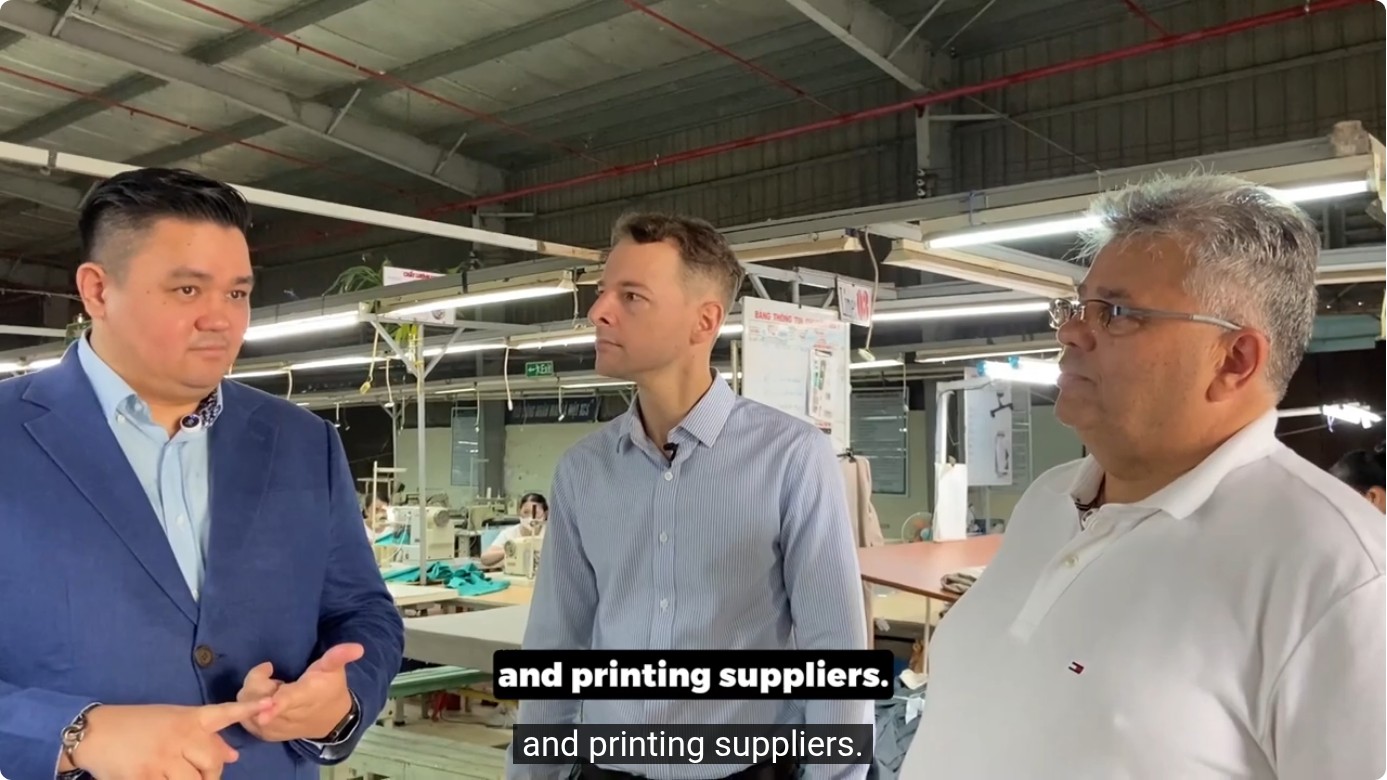
We manufacture all the styles discussed in this guide — with custom labels, fabric options, and print or embroidery finishing. Tell us what you need.
Also read: The Drop Shoulder Shirt for Men: A Sourcing Guide for Brands & Buyers