
When the term “luxury knitwear” comes to mind, images of fine cashmere sweaters and intricate handcrafted designs often follow. For wholesale buyers, fashion startups, and established brands, however, the concept extends far beyond the retail shelf. It represents a category of apparel where material provenance, construction integrity, and design nuance are paramount—and where custom manufacturing becomes a strategic lever for differentiation. This guide dissects luxury knitwear from the perspective of sourcing and production, translating high-end attributes into actionable specifications for OEM and ODM partnerships.
Whether you’re developing a proprietary line of premium activewear, outfitting a high-end sports team, or supplying boutique retailers, understanding the anatomy of luxury knitwear is your first step toward consistent quality and brand integrity. We will move beyond aesthetic descriptions to examine the tangible factors that define a garment’s position in the luxury segment and, crucially, how you can specify, source, and manufacture these items at scale.
What Matters Most: The Core Pillars of Luxury Knitwear
For a buyer, evaluating or specifying luxury knitwear hinges on three non-negotiable pillars. These are the foundational attributes that separate a premium garment from a standard one, and they must be clearly defined in your tech pack and factory communications.
- Material Quality & Provenance: The fiber is the starting point. Luxury is defined by rare, fine, or technologically advanced natural and man-made fibers (The Woolmark Company provides excellent standards for merino wool). This includes micron counts for wool, fiber length for cashmere, and the origin of alpaca. For performance wear, it also encompasses branded technical yarns with certifications for moisture management and temperature regulation.
- Construction & Craftsmanship: This is where manufacturing expertise shines. It includes the knitting technique (full-fashioned vs. cut-and-sew), stitch density (gauge), seam type (linking vs. sewing), and finishing details like ribbing consistency and handle. A fully-fashioned garment, where pieces are knitted to shape and seamlessly linked, is a hallmark of high-end production but comes with higher costs and minimum order quantities (MOQs).
- Design & Fit Precision: Luxury knitwear fits impeccably. This requires meticulous pattern grading, consistent size charts, and an understanding of how the yarn’s inherent drape and recovery interact with the design. For custom activewear, this also means engineering the knit structure for specific motion zones, which is an ODM-level design consideration.
The Buyer’s Key Takeaway
Your initial specification must answer: Which of these pillars is the primary driver for my brand? A brand built on ethical sourcing will prioritize certified organic or traceable fibers. A performance-focused label must put construction and technical yarns first. A luxury fashion house will demand flawless construction and fit. Communicating this hierarchy to your factory is the single most important step in aligning production with your brand’s value proposition.
Deconstructing the Product: Materials, Methods, and Details
To speak the language of knitting factories and assess sample quality, you need a working vocabulary of fibers and techniques. This knowledge empowers you to ask precise questions and evaluate options realistically.
1. The Fiber Spectrum: From Natural to Engineered Luxury
Luxury begins at the yarn stage. The choice here dictates cost, care requirements, performance, and hand feel.
| Yarn Type | Key Characteristics | Sourcing & Production Notes |
|---|---|---|
| Cashmere | Ultra-soft, lightweight, excellent insulator. Quality varies drastically by origin (e.g., Mongolian vs. Chinese) and fiber diameter (14-19 microns is premium). | High cost, low scalability. Often blended with wool or silk for durability and price point. Requires specific, gentle washing processes. MOQs can be very high for pure, traceable cashmere. |
| Fine Merino Wool | Soft, breathable, natural temperature regulation, odor-resistant. 17.5-micron or less is considered luxury. | More scalable than cashmere. Ideal for performance base layers. Look for Z.Q. or Responsible Wool Standard (RWS) certifications for ethical sourcing. |
| Alpaca | Silky, hypoallergenic, warmer than wool, lightweight. Suri vs. Huacaya breeds offer different textures. | Peruvian alpaca is the benchmark. Can be blended for softness and cost. Requires careful handling as it has less elasticity than wool. |
| Blended Technical Yarns | Merino blended with nylon, Lycra®, or polyester. Combines natural benefits with enhanced durability, stretch, and moisture wicking. | This is the sweet spot for luxury performance activewear. Specify the blend ratio (e.g., 80% merino / 20% nylon) and the brands of elastane (e.g., Lycra® vs. generic spandex). |
| Silk & Silk Blends | Luxurious drape, natural sheen, temperature regulating. Often blended with cashmere or wool. | Delicate, requires dry cleaning. Production can be trickier due to yarn strength. Ideal for lighter-weight, fashion-forward pieces. |
2. Knitting Construction: The Make-or-Break Process
The method of assembly is a critical quality marker that directly impacts fit, comfort, and durability.
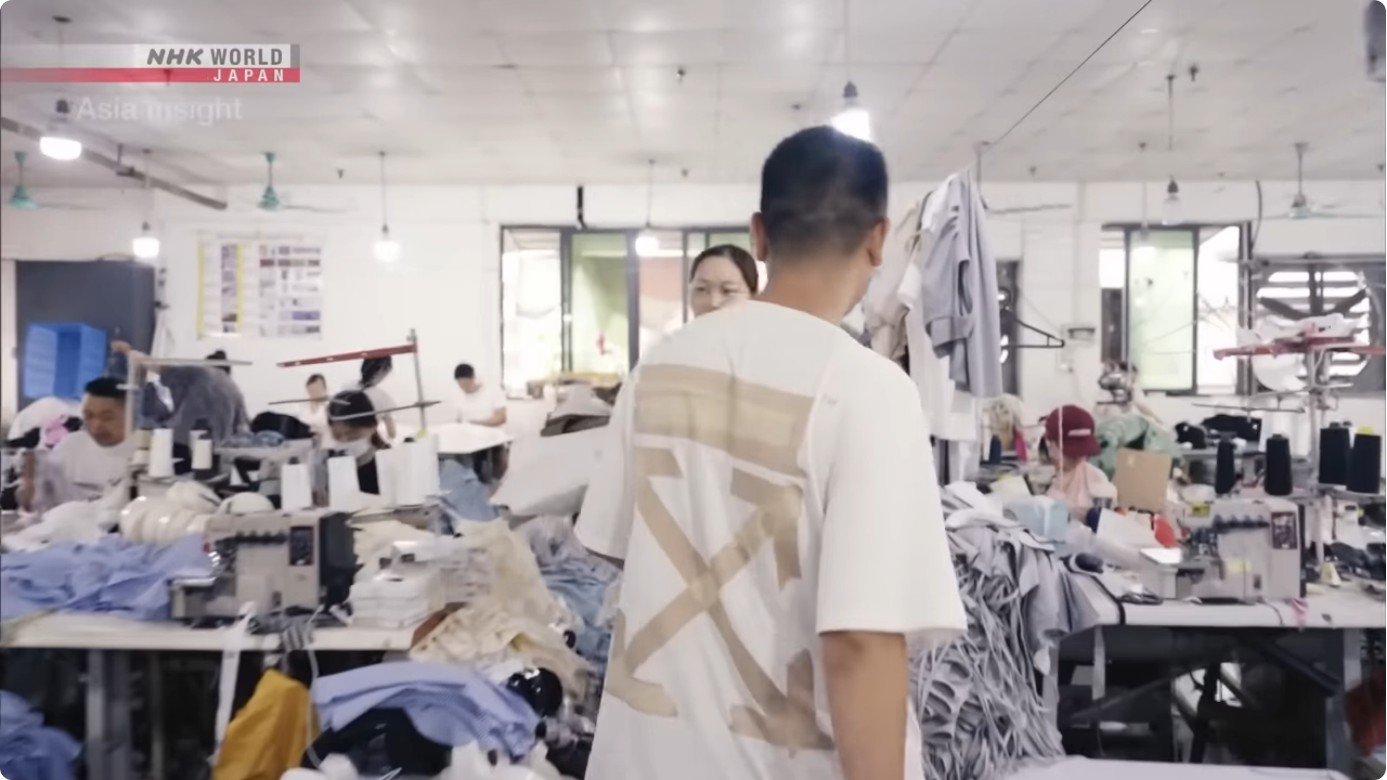
- Full-Fashioned Knitting: Each garment piece (front, back, sleeve) is knitted to its exact shape. Pieces are then linked together by hand or machine. This creates a seamless, clean finish with no fabric waste. It is the pinnacle of knitwear construction but is slow, requires highly skilled labor, and has high MOQs (often 500+ units per style/color).
- Cut-and-Sew (Woven-Like Construction): A large tubular or flat piece of knit fabric is cut according to a pattern and then sewn together. This is faster and allows for more complex patterning (like large color blocks) but results in seams that can be bulky and potential fabric waste. For luxury, look for factories that use linking to sew pieces, which creates a flatter, more flexible seam than standard lockstitch sewing.
- Seamless (Circular Knitting): The entire garment, including body and sleeves, is knitted in one piece on a seamless knitting machine (like a Shima Seiki or Stoll). This eliminates side seams and offers incredible comfort and drape. It is highly technical, perfect for performance wear, but design complexity is limited by machine capabilities. MOQs can be high due to machine programming time.
3. Finishing & Details: The Final 20%
Luxury is in the details. When reviewing a sample or specifying production, scrutinize:
- Ribbing: Is it tight, even, and recoverable? Does it lay flat without curling? Poor ribbing is a quick giveaway of low quality.
- Edges & Hemlines: Should be clean, without loose yarns or puckering. Look for a “clean cast” or “bound” edge on hems.
- Handle & Drape: Does the garment feel substantial yet fluid? Does it wrinkle easily or spring back? This is a function of yarn and knitting tension.
- Labels & Branding: For custom orders, consider branded woven labels, printed care instructions, and even custom hangtags. A luxury garment feels cohesive from inside to out.
Use Cases: Where Luxury Knitwear Fits in the Market
Luxury knitwear is not confined to high-fashion runways. Its applications are diverse, and understanding these use cases informs your material and construction choices.
- Premium Fashion Brands: Focus on exquisite fibers (cashmere, silk), intricate patterns (cables, jacquard), and innovative silhouettes. Full-fashioned and seamless constructions are prized.
- Luxury Performance & Activewear: Blended merino or alpaca with synthetic yarns for softness, breathability, and odor resistance. Seamless construction is popular for base layers and training gear to prevent chafing. Think of brands like Icebreaker or Smartwool as benchmarks.
- High-End Sports Team & Corporate Apparel: Elevating team uniforms or executive retreat gifts. Here, durability and branding consistency are key. A fine merino blend with a robust construction (like a dense, linked-seam crewneck) offers luxury feel with teamwear resilience.
- Boutique Retail & Department Stores: Private label lines that compete with designer brands. Often require a balance of luxury aesthetics and accessible price points, leading to smart blends (e.g., 30% cashmere / 70% wool) and efficient cut-and-sew with high-quality linking.
The Custom Manufacturing Pathway: OEM vs. ODM for Knitwear
This is the crux for buyers. Do you bring a complete design (OEM), or do you collaborate on development (ODM)? Your choice depends on your internal resources and ambition.
- OEM (Original Equipment Manufacturing): You provide the complete tech pack: yarn specs, knit construction, stitch patterns, colorways, measurements, and trim details. The factory executes precisely. Best for: Brands with strong in-house design and tech design teams who have solved the product development puzzle and simply need expert, scalable production.
- ODM (Original Design Manufacturing): You provide a concept, mood board, and performance requirements. The factory’s design team proposes yarns, knits, patterns, and fits based on their expertise and your budget. They develop samples for your approval. Best for: Brands entering the knitwear space, retailers launching a private label, or anyone wanting to leverage a factory’s deep material and construction knowledge to create a unique product efficiently.
Critical Communication: What to Provide Your Factory
Regardless of OEM or ODM, clear communication prevents costly errors. Prepare this checklist for your first serious discussion:
- A clear tech pack with detailed sketches or CADs, fabric swatches, and exact yarn composition and yarn count (Nm or Ne).
- Target price point per unit and your desired MOQ. Be prepared to negotiate; luxury yarns and complex knitting have higher MOQs (often 300-1000 units).
- Your target market and use case. “Luxury resort wear” vs. “high-performance training gear” will lead to wildly different material and construction recommendations.
- Any specific certifications required (e.g., OEKO-TEX® Standard 100, bluesign®, GOTS, RWS).
- Detailed packaging and labeling requirements.
Production Realities: Costs, Timelines, and Quality Control
Dream designs meet reality at the production stage. Here are the key trade-offs and considerations.
- MOQs and Cost Drivers: The primary drivers are yarn cost (especially for rare fibers), knitting machine time (complex patterns are slow), and labor intensity (linking is skilled work). A factory’s MOQ for a simple, cotton-blend hoodie may be 200 units, but for a fully-fashioned cashmere cardigan, it may be 800. Be transparent about your volume needs.
- Lead Times: Expect 8-16 weeks for a first production run after sample approval, depending on complexity and the factory’s schedule. Sourcing rare yarns (like specific micron-count cashmere) can add weeks.
- Quality Control Points: Do not rely on a final inspection only. Implement:
- Pre-production sample (PP Sample): Approved from the exact yarn and knit program to be used in production.
- Labor & Process Audit: For high-volume or first-time partners, consider an audit. Look for proper yarn storage (humidity/temperature control), calibrated machines, and organized workflows.
- Inline Inspection: Check first pieces off the line against the PP sample for stitch consistency, measurements, and color.
- The Sustainable & Ethical Factor: “Luxury” increasingly means “responsible.” Be prepared to discuss the factory’s policies on yarn sourcing (e.g., The Good Cashmere Standard), wastewater treatment, and worker welfare. This is a value-add for your end customer and a risk mitigant for your brand.
Key Questions Before You Source
As you evaluate potential manufacturing partners for luxury knitwear, asking these questions will clarify capabilities and alignment:
- Can you provide examples of previous work with [specific yarn, e.g., 15-micron merino or 100% Pashmina]?
- What is your standard MOQ for a fully-fashioned garment vs. a seamless garment in our desired yarn?
- Do you hold certifications for the specific ethical or sustainability claims I need to make (e.g., GOTS for organic, RWS for wool)?
- What is your process for color matching? Do you use in-house lab dip systems or external labs?
- Can you support our design with knitting program development, or do we need to provide fully engineered patterns?
- What is your typical defect rate for complex knit items, and how are replacements handled?
Answering these will separate factories with genuine luxury knitwear expertise from those who primarily produce basic knits.
Need custom versions of any style covered here? Our sportswear factory handles everything from tech pack review to bulk delivery. Request a sample or quote.