
The “baggy shirt” for men has evolved from a niche skate and hip-hop staple into a dominant force across streetwear, athleisure, and even elevated casual fashion. For brands and buyers, it represents a high-volume, versatile category with distinct production considerations. This guide breaks down the essential characteristics of the modern baggy shirt, explores its key markets, and provides actionable insights for sourcing and customizing this style at scale.
Understanding this garment goes beyond its loose silhouette. It’s about fabric behavior, fit engineering, and customization execution—all critical factors that determine whether a final product feels intentionally relaxed or poorly made. Whether you’re a brand launching a new line, a gym outfitting members, or a retailer curating a collection, this article equips you with the technical and commercial context needed to source baggy men’s shirts successfully.
What Defines a Modern Baggy Shirt?
A true baggy shirt is characterized by intentional excess fabric throughout the body, sleeves, and often the shoulders, creating a draped, non-form-fitting silhouette. It is distinct from simply sizing up a regular-fit tee; the pattern itself is cut with more room. Key features typically include:
- Silhouette & Fit: A boxy or relaxed drape with minimal taper. The shoulder seam often falls slightly off the shoulder or sits neutral, not tailored. The hem may be longer, hitting at the hip or below.
- Fabric Choice: The fabric dictates the drape and structure. Heavyweight cotton jersey (e.g., 300+ GSM) holds its volume, while lightweight viscose blends or French terry create a softer, more fluid drape. Fabric weight and composition are the primary levers for achieving the desired aesthetic.
- Construction Details: Often features a drop shoulder sleeve, a straight or slightly curved hem, and minimal seaming. The neckline (crew, scoop, or v-neck) is typically reinforced with rib knit.
Primary Markets & Contexts for Baggy Men’s Shirts
The appeal of the baggy fit spans multiple sectors, each with slightly different expectations:
- Streetwear & Fashion Brands: Here, the baggy shirt is a canvas for branding. Expect bold graphic prints, large logo placements, and intentional vintage or deconstructed washes. The aesthetic is key, often prioritizing drape and fabric hand over athletic performance.
- Gyms, Sports Teams & Athletic Facilities: Used as relaxed training tops or casual off-day wear. Here, moisture-wicking and breathable technical fabrics (polyester blends) are common. Branding is typically more subdued (chest logo, sleeve tape). Durability and movement are critical.
- General Retail & Wholesale: Serves the broad casual market. Fabrics are often standard mid-weight cotton or cotton/poly blends. The focus is on cost-effective production, consistent sizing, and versatile styling that appeals to a wide audience.
The Cross-Over Trend
A significant trend is the “athleisure crossover,” where technical fabrics (like lightweight nylon or polyester with stretch) are used to create baggy shirts that function in both gym and street settings. This blurs traditional category lines and opens new opportunities for brands to create hybrid collections.
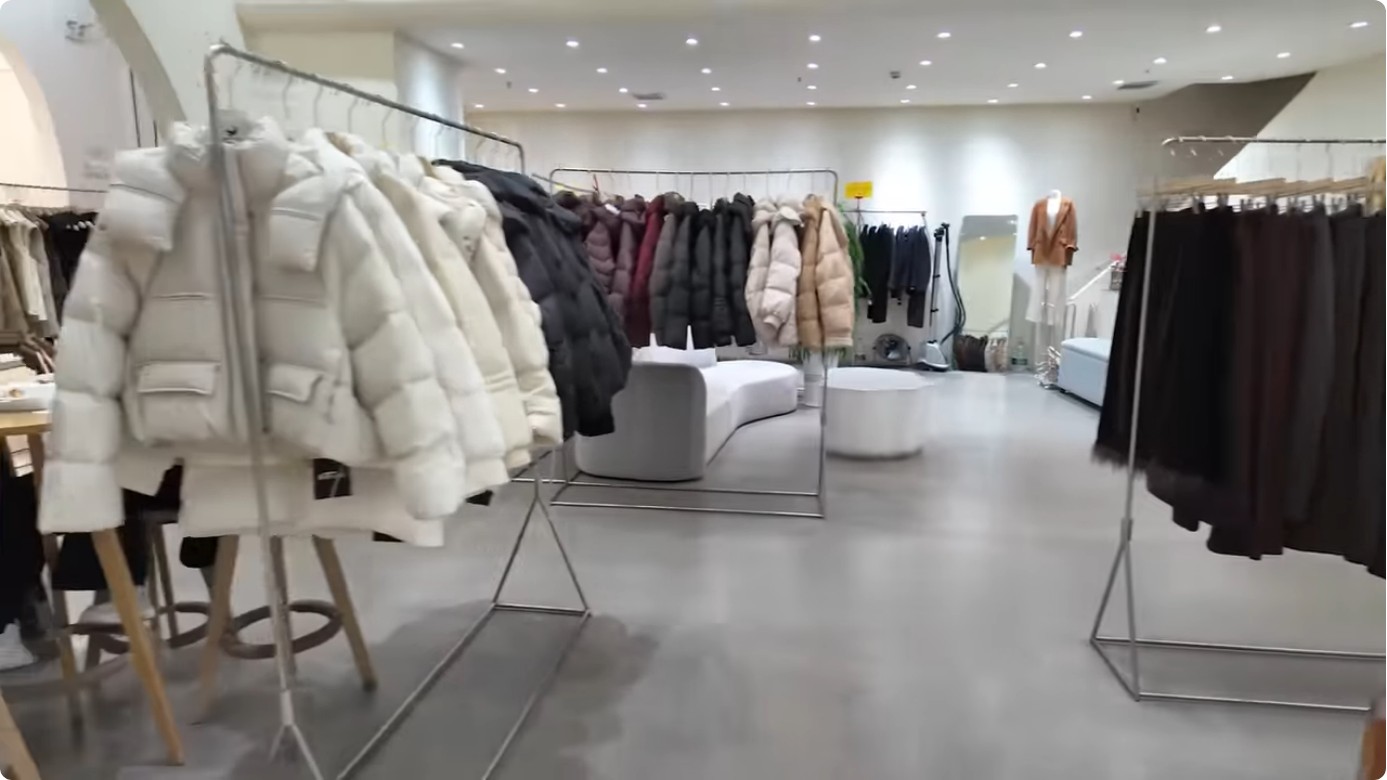
Custom Manufacturing: Key Options & Production Considerations
Sourcing a custom baggy shirt involves navigating a matrix of decisions. The “easy” option is branding a pre-existing blank, but true differentiation comes from OEM/ODM customization.
1. Fabric Selection & Sourcing
This is your first and most critical decision. The fabric dictates everything from drape and weight to cost and print compatibility.
| Fabric Type | Best For | Key Tradeoffs |
|---|---|---|
| Heavyweight Cotton Jersey (300-350 GSM) | Classic streetwear, premium feel, structure. | Higher cost, less breathable, heavier. |
| Lightweight Viscose/Poly Blend | Fluid drape, soft hand, summer collections. | Can be less durable, may shrink/wrinkle more. |
| French Terry | Textured look, cozy yet breathable, mid-weight. | Loop side can show through thin prints. |
| Performance Knits (Polyester/Spandex) | Athletic use, moisture-wicking, stretch, durability. | Less traditional “cotton” feel, print technique limitations (sublimation often required). |
Production Note: For custom fabric development (ODM), minimum order quantities (MOQs) can be significantly higher (often 5,000+ yards) and lead times extend by 8-12 weeks. Using a mill’s stocked fabric is faster and requires lower MOQs but limits your unique selling proposition.
2. Fit Engineering & Sizing
“Baggy” is subjective. A reliable manufacturer will work from a detailed tech pack specifying:
- Body Measurements: Chest width, body length, shoulder drop, sleeve length. Specify these as actual garment measurements, not body measurements.
- Fit Model Reference: Providing a reference garment (e.g., “similar fit to Brand X’s style #123”) is invaluable.
- Sizing Grading: Ensure the pattern grader knows to maintain the same *intended looseness* across all sizes. A size XL shouldn’t just be a scaled-up M; the excess ease should be consistent in proportion.
- Pre-Production Sampling: Always approve a fit sample (usually in a neutral color and fabric) before bulk cutting. Check the drape on a human form or model.
3. Customization Execution: Prints, Embroidery & Labels
Applying graphics to a baggy silhouette presents unique challenges:
- Print Placement: Because the shirt moves and drapes, large, centered prints can distort. Consider segmented designs, side-seam prints, or smaller chest/back logos that sit on stable areas. Test print placement on a sample garment.
- Print Technique: For cotton jerseys, screen printing is cost-effective for mid-size runs. DTG (Direct-to-Garment) works for full-color, small-batch designs. For polyester performance fabrics, sublimation or heat transfer is standard. Discuss fabric-print compatibility with your manufacturer.
- Embroidery: Works well on stable areas like the chest or sleeve. Be mindful of fabric thickness; heavyweight bags may require longer stitches or backing.
- Branding Labels: Consider tear-away or printed neck tapes for comfort, as traditional woven labels can irritate on loose-fitting necklines.
4. MOQs, Costs, and Lead Times
This is where planning pays off. Key variables include:
- Fabric: Custom knit fabrics have the highest MOQs. Stock fabrics from a mill’s catalog can drop MOQs to 500-1,000 units per style/color.
- Color: Each custom fabric color may have its own MOQ. Using stock colors reduces this burden.
- Print: Screen printing has a “per-color” setup fee, making multi-color designs more economical at higher quantities. DTG has low setup but higher per-unit cost.
- Typical Timeline: From approved tech pack and fabric to bulk shipment: 8-12 weeks for custom fabric; 4-8 weeks using stock fabrics.
Decision Checklist for Sourcing Your Baggy Shirt
Before committing to a manufacturer, verify the following:
- [ ] Fabric Library Review: Does the factory have swatches of fabrics that match the desired drape (heavy vs. fluid)? Can they provide GSM and composition specs?
- [ ] Pattern Approval: Is a fit sample (in your chosen fabric or a similar substitute) mandatory before bulk? Who bears the cost of the first sample revision?
- [ ] Print Capability Proof: Request samples of their print work on the *exact fabric type* you plan to use. Look for cracking, feel stiffness.
- [ ] Sizing Grade Consistency: Ask how they grade patterns for loose fits. Request the size chart for the specific style, not a generic chart.
- [ ] MOQ Flexibility: Can you mix sizes/colors within the MOQ? What are the penalties for changing an order after cutting has started?
- [ ] Quality Control Points: What checks are performed on fabric (pre-shrink?), cut pieces, and sewn garments? Is there a final inspection with a report?
Common Questions from Buyers & Brands
Q: Can I get a truly unique fabric without a 10,000-yard MOQ?
A: It’s challenging. For true uniqueness, you’ll likely need to meet a mill’s minimum for a custom knit. A practical alternative is to select a distinctive stock fabric from a manufacturer’s library (e.g., a specific slub cotton or heather blend) that is less common, offering differentiation without a full custom knit.
Q: How do I ensure consistent sizing across a loose fit?
A: Insist on receiving and approving a graded set of fit samples (S, M, L, XL) before production. The key metric is “chest flat” and “body length” measurements. These should increase proportionally, not just by a fixed inch amount, to maintain the same visual looseness across sizes.
Q: What’s the biggest mistake brands make when designing a baggy shirt?
A: Under-specifying the fit. Saying “baggy” is not enough. Providing precise garment measurements (e.g., “Chest: 26″ flat for size M”) or a reference garment eliminates ambiguity. The second common mistake is choosing a fabric with too much vertical stretch without accounting for it in the pattern, leading to a shirt that elongates unnaturally when worn.
Planning to add these styles to your collection? We produce custom versions with your branding, fabric choice, and sizing — from sample to bulk. Contact our team for details.