For anyone in the apparel business—whether you’re a new fashion brand, a gym chain, or a wholesale distributor—understanding where established brands manufacture is more than trivia. It’s a window into global supply chain strategies, cost structures, quality benchmarks, and the logistical realities of moving goods across borders. When you search “where is Tommy Hilfiger made,” you’re likely probing for insights you can apply to your own sourcing decisions: Which countries offer the right blend of cost, quality, and reliability for your product? What are the trade-offs? How do major brands structure their production, and what can that teach you about vetting your own manufacturing partners?
This article will answer the direct question about Tommy Hilfiger’s manufacturing footprint to provide that essential context. However, the more valuable takeaway for a buyer like you is the framework that follows. We’ll pivot from a specific brand’s example to the universal criteria that matter when selecting a factory for your custom sportswear—be it t-shirts, hoodies, or tracksuits. You’ll learn to evaluate factors beyond just the “Made In” label, such as minimum order quantities (MOQs), quality control systems, lead times, and the critical difference between partnering with a dedicated OEM/ODM factory versus a general trading company.
The Reality of Tommy Hilfiger’s Global Production Footprint
Tommy Hilfiger, as a global premium brand owned by PVH Corp., does not have a single factory. Its production is a distributed network spanning dozens of countries, strategically diversified to manage risk, cost, and capacity. The “Made In” label on a Tommy Hilfiger garment can vary significantly by product type, season, and collection.
Also read: Fashion Mood Board Examples: A Practical Guide for Custom Sportswear Buyers
Historically and currently, major manufacturing hubs for the brand include:
- Asia: Countries like China, Vietnam, Bangladesh, Cambodia, and India handle a massive volume of production. China, while still a hub for complex or high-tech garments, has seen some volume shift to other Southeast Asian nations for basic apparel due to evolving cost structures.
- The Americas: Mexico, Central American nations (like Honduras and Guatemala), and sometimes the United States or Canada are used for certain lines, particularly those targeting the North American market. This allows for shorter lead times and sometimes “near-shoring” advantages.
- Other Regions: Limited production also occurs in countries like Turkey, Italy, and others in Europe and North Africa, often for specific higher-end or specialized product lines where particular craftsmanship or fabric expertise is required.
It is crucial to understand that no single Tommy Hilfiger item is “from” one country in a pure sense. The supply chain is fragmented: yarn may be spun in one nation, fabric woven and dyed in another, cut and sewn in a third, and finished (washing, pressing, packaging) in a fourth. The final “Made In” tag typically refers to the country where the garment underwent its “substantial transformation,” usually the sewing stage.
What This Means for the “Made In” Label
For consumers, the tag indicates origin. For you as a sourcing professional, it’s a data point, not a definitive quality verdict. A “Made in Vietnam” t-shirt from a top-tier factory with rigorous PVH audits can far surpass the quality of a “Made in Italy” item from a subcontracted, poorly managed facility. The brand’s supply chain management, factory auditing protocols, and quality standards are the true drivers of consistency, not the geographic label alone. You can review PVH Corp.’s own sustainability and sourcing reports for their published standards, which are aligned with industry initiatives like the Ethical Trading Initiative.
From Brand Blueprint to Your Factory Floor: Key Sourcing Decision Factors
Observing a giant like Tommy Hilfiger highlights a principle: their model is built on managing a complex, multi-country network of dedicated manufacturing partners. This is the opposite of working with a random collection of small workshops. For your custom sportswear business, the parallel is clear. Your choice of manufacturing partner will define your operational success more than any single country of origin. Here are the core factors to evaluate, which transcend national borders.
1. Minimum Order Quantities (MOQs) and Production Scale
Global brands leverage massive scale to achieve low per-unit costs. Their factories are optimized for high volume. As a custom buyer, your reality is often different. You may need 500 custom hoodies for a team, 200 branded tank tops for a boutique, or 1,000 units for a new product launch. The factory’s MOQ policy is your first gatekeeper.
- High-Volume Factories: Often have MOQs in the thousands. They are efficient but may be inaccessible or economically unviable for smaller batches.
- Specialized OEM/ODM Factories: Many dedicated sportswear manufacturers, especially those set up for custom work, offer more flexible MOQs (sometimes as low as 100-300 units per style/color) because their business model is built on serving brands like yours. They use flexible production lines and may source fabrics in smaller bundles.
Trade-off: Lower MOQs almost always come with a higher per-unit cost. Your decision hinges on your capital, storage capacity, and sales projections. A factory that understands your scale is critical.
2. Quality Control Systems: From Fabric to Finish
Tommy Hilfiger’s reputation depends on consistent quality across thousands of units from different factories. They achieve this through:
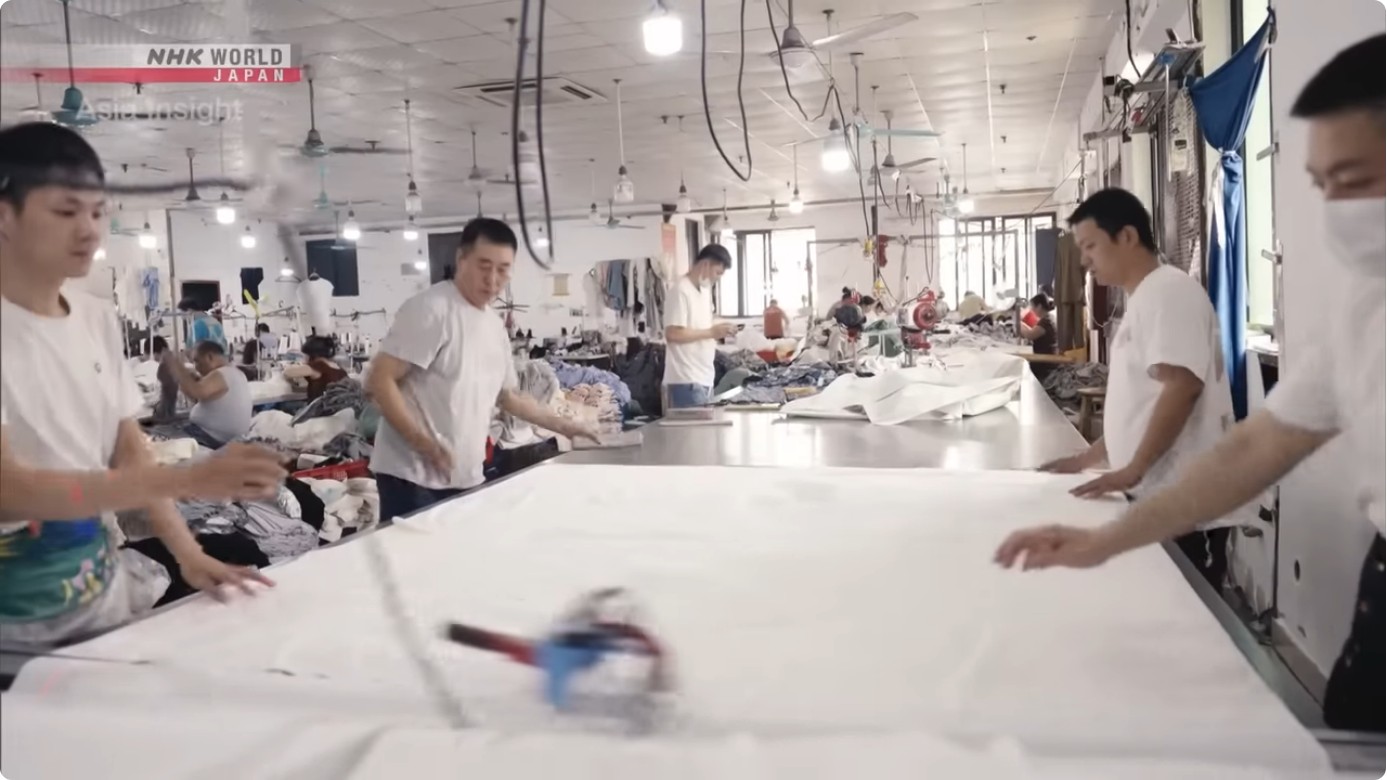
- In-house QC Teams: Dedicated quality managers at the factory, not just third-party inspectors.
- AQL Standards: Adherence to Acceptable Quality Level standards (commonly used in the industry, often based on ASTM or ISO guidelines for textiles).
- Process Controls: Checks at cutting, sewing, washing, and finishing stages.
- Pre-production Samples: Rigorous approval of fit, fabric, and color (using approved lab dips) before bulk production begins.
What to Ask Your Potential Partner: Request details on their QC process. Who conducts inspections? Can you approve a pre-production sample (often called a “counter sample” or “PP sample”) before green-lighting bulk? Do they have a system for tracking and addressing defects? A factory with a transparent, multi-stage QC protocol is non-negotiable for brand integrity.
3. Lead Times and Supply Chain Visibility
A Tommy Hilfiger order for Fall/Winter may be placed 9-12 months in advance. Their lead times are long but predictable, planned around fabric sourcing, factory capacity, and ocean freight. Your lead time needs are likely shorter and more variable.
Key considerations:
You may also like: The Blueprint for Bulk: Understanding Fashion Drawings for Custom Sportswear Production
- Fabric Sourcing: Does the factory stock common fabrics (e.g., cotton jersey, French terry, performance polyester), or do they source per order? Stock fabrics drastically reduce lead time.
- Production Scheduling: What is their current capacity booking window? A reliable factory will give you a realistic timeline, not an optimistic guess.
- Logistics: Do they handle shipping consolidation, customs documentation, and Incoterms® (like FOB or EXW) clearly? Clarity here prevents costly delays.
Red Flag: A factory that promises unrealistically short lead times without explaining how (e.g., by sacrificing quality control steps or using air freight at exorbitant cost) is a major risk.
4. Certifications and Compliance
Major brands require a suite of certifications to meet retailer and legal requirements. While you may not need all immediately, understanding the landscape is key.
| Certification | What It Verifies | Relevance to You |
|---|---|---|
| ISO 9001 | Quality Management System | Indicates a factory has documented processes for consistent quality. A strong baseline indicator. |
| WRAP (Worldwide Responsible Accredited Production) | Social compliance (labor practices, health & safety) | Often required by major US retailers. Demonstrates ethical working conditions. |
| BSCI (Business Social Compliance Initiative) | Social compliance, based on ILO conventions | Common requirement for the European market. Similar scope to WRAP. |
| OEKO-TEX Standard 100 | Testing for harmful substances in textiles | Critical for consumer safety, especially for basics and activewear in contact with skin. |
| GOTS (Global Organic Textile Standard) | Certification for organic materials, covering environmental and social criteria | Mandatory if you are marketing products as “organic.” |
| ICS (International Compliance Standard) | Social compliance audit program | Widely recognized, often used by French brands and retailers. |
Your initial orders may not need all these, but a factory that holds or is actively pursuing relevant certifications is signaling a commitment to meeting industry standards. Ask for copies of their current certificates.
The Critical Distinction: Dedicated OEM/ODM Factory vs. Trading Company
This is the most consequential “where” question for you: Where is your product actually being made, and by whom? A trading company or sourcing agent acts as a middleman, aggregating orders and subcontracting them to various small, often unvetted, factories. A dedicated OEM (Original Equipment Manufacturer) or ODM (Original Design Manufacturer) factory owns or leases its production facilities and manages the process end-to-end.
| Aspect | Dedicated OEM/ODM Factory | Trading Company / Agent |
|---|---|---|
| Control & Visibility | High. Direct communication with production managers, floor supervisors, and QC leads. | Low. You communicate with the agent, who communicates with the subcontracted factory. Information is filtered. |
| Quality Accountability | Clear. The factory is legally and operationally responsible for the output. | Diffused. The agent may point to the sub-factory, which may point to another sub-sub-contractor. Dispute resolution is complicated. |
| Intellectual Property (IP) Risk | Lower. You have a direct contract with the entity producing your unique patterns and designs. | Higher. Your design files and patterns are passed through multiple hands. Risk of leakage or copying is significant. |
| Cost Structure | Transparent. You pay the factory’s rate. No middleman markup. | Opaque. The agent adds a commission (often 10-20%) on top of the factory’s price. You rarely see the base cost. |
| Problem Resolution | Direct. You can escalate to factory management for urgent fixes, re-runs, or clarifications. | Indirect and slow. The agent must relay messages, which can take hours or days during a production crisis. |
The Takeaway: For any serious custom apparel business, establishing a direct relationship with a reputable, transparent manufacturing factory is a strategic imperative. It builds supply chain resilience, protects your designs, and gives you genuine control over cost and quality.
A Practical Checklist for Your Custom Sportswear Sourcing Journey
As you move from researching brands like Tommy Hilfiger to selecting your own partner, use this checklist to structure your evaluation process.
- Define Your Core Needs: What is your true MOQ per style/color? What is your target cost per unit? What are your non-negotiable quality standards (e.g., no shrinkage beyond X%, specific stitch density)?
- Verify Facility Capability: Request a virtual or physical factory tour (many serious factories now offer detailed video walkthroughs). Do they have the specific machinery for your product (e.g., flatlock sewing for performance wear, coverstitch for activewear hemming)? Is their workforce skilled in your garment type?
- Audit Their Process: Ask for a detailed explanation of their sample-making process, bulk production workflow, and QC checkpoints. Ask to see examples of their pre-production approval sheets.
- Confirm Fabric & Trim Sourcing: Do they work with approved fabric mills? Can they source sustainable or certified fabrics (e.g., GOTS organic cotton, recycled polyester) if needed? Do they have a network of reliable trim suppliers for zippers, buttons, and labels?
- Review Certifications & Compliance: Request current certificates for any claims they make (ISO, WRAP, OEKO-TEX, etc.). Verify their validity with the issuing body if possible.
- Clarify Communication Protocols: Who will be your main point of contact? What is their typical response time? Do they have English-speaking staff? What project management tools do they use?
- Understand Payment Terms: What is their standard deposit (typically 30%)? When is the balance due? Do they offer secure payment methods (e.g., Letter of Credit, verified platform payments)?
Final Thoughts: Your “Made In” is the Factory You Choose
The answer to “where is Tommy Hilfiger made” is a map of global specialization and risk management. For your brand, the answer is simpler and more profound: your products are made in the factory you choose to partner with. That factory’s location is a variable, but its management rigor, technical capability, and ethical standards are the constants that will determine your product’s success in the market.
Do not outsource your quality control to a middleman. Seek a manufacturing partner who offers transparency, respects your intellectual property, and has a proven system for delivering consistent quality at your required scale. The “Made In” label on your final product should be a source of confidence, not a mystery.
Ready to Build Your Own Sourcing Strategy?
If you’re looking to source or customize any of the styles mentioned above, our factory offers low MOQ OEM/ODM production with full sampling support. Get a free quote today.
Related guide: The See-Through Knitted Sweater: A Sourcing and Style Guide for Brands and Buyers