For many emerging brands, retailers, and sports teams, the question “where is Adidas manufactured?” is more than trivia—it’s a starting point for understanding the global activewear supply chain. The answers reveal a complex, diversified network spanning Asia, Europe, and the Americas. But for businesses looking to create their own custom apparel, examining a giant’s strategy provides crucial lessons on what to emulate, what to avoid, and why partnering with a specialized OEM/ODM manufacturer often offers a more practical and cost-effective path to market.
This article moves beyond a simple list of countries. We’ll break down Adidas’s manufacturing footprint, analyze the strategic rationale behind it, and then pivot to the practical realities you face when sourcing custom sportswear. You’ll learn the key factors—like minimum order quantities (MOQs), quality control systems, and supply chain agility—that separate a global brand’s model from a dedicated factory’s offering, and how to evaluate which approach aligns with your business goals.
The Adidas Manufacturing Footprint: A Global Network
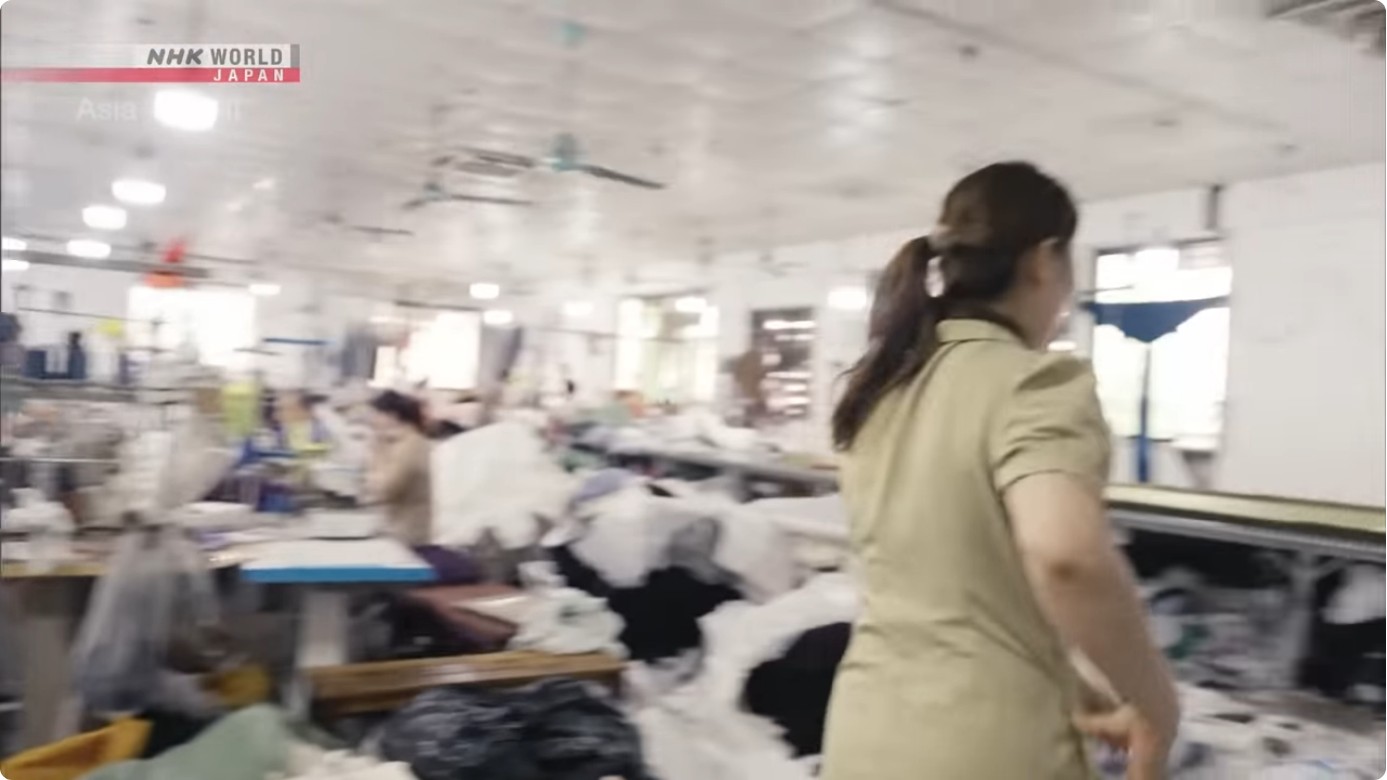
Adidas, like most major global sportswear brands, does not own and operate the vast majority of its factories. Instead, it employs a wholly outsourced supply chain model, working with hundreds of independent manufacturing partners. This network is strategically distributed to balance cost, expertise, speed, and risk mitigation.
Historically and currently, the bulk of production occurs in Asia:
- Vietnam: The single largest manufacturing hub for Adidas, accounting for approximately 40-50% of its global footwear and apparel production. The country’s skilled workforce, developed infrastructure, and favorable trade agreements make it a cornerstone of their strategy.
- China: While its share has decreased over the last decade due to rising costs, China remains a critical node for complex products, technical materials, and high-volume runs. Adidas maintains significant sourcing here for both footwear and apparel.
- Indonesia: A major hub for footwear assembly and apparel, known for competitive costs and a large labor pool.
- India, Cambodia, and Bangladesh: Important for specific apparel categories, particularly basic knits and woven items, often where cost optimization is the primary driver.
Outside Asia, Adidas maintains a smaller but strategically vital presence in:
- Europe (Germany, Portugal, Spain, Italy): These facilities are typically used for high-end, limited-edition, or “Speedfactory” initiatives that prioritize rapid prototyping, customization, and proximity to key markets. They often command a premium cost.
- The Americas (USA, Canada, Central America): Primarily for serving the North American market with quicker turnaround times on select items, though volume is a fraction of the Asian output.
This geographic spread is not random. It’s a deliberate hedge against geopolitical tensions, trade tariffs, natural disasters, and labor cost fluctuations. For a brand of Adidas’s scale, this diversification is a necessity, not a choice.
What This Model Means for Your Brand: The Trade-Offs
Understanding Adidas’s model highlights the fundamental trade-offs in activewear manufacturing. Their approach is optimized for mass scale, cost minimization, and risk distribution. For a small to medium-sized brand, team, or retailer, trying to replicate this directly is often impractical and counterproductive.
Here’s a comparison of the core differences between sourcing from a global brand’s indirect network and working with a dedicated custom manufacturer:
| Factor | Major Brand’s Diversified Network (e.g., Adidas) | Dedicated OEM/ODM Manufacturer |
|---|---|---|
| Primary Goal | Optimize for global volume, margin, and risk mitigation. | Optimize for your project’s specific needs: quality, lead time, customization. |
| MOQ (Minimum Order Quantity) | Extremely high; often requires hundreds of thousands of units per style to enter the supply chain. | Flexible; often in the hundreds or low thousands, making production accessible. |
| Customization Depth | Limited to brand-specific lines; your custom design would not fit their system. | Core business. From fabric selection and knits to cuts, prints, and labels, full control. |
| Communication & Control | Multiple layers (brand -> sourcing agent -> factory). Hard to access direct factory decision-makers. | Direct line to production managers, pattern makers, and quality teams. |
| Lead Time | Long (6-12+ months) due to complex planning cycles and consolidated shipments. | Agile; can be faster for mid-sized orders, especially with a single-factory relationship. |
| Quality Focus | Standardized across thousands of SKUs. Your niche product gets the same standard as any other. | Dedicated to your product. QC is concentrated on your batch, not diluted across global lines. |
The Critical Role of the “Trading Company” vs. The “Factory”
When you source, you often encounter two types of suppliers: trading companies and factories. Adidas primarily works through a sophisticated internal sourcing team that manages factories, a structure most buyers can’t replicate.
Trading Companies act as intermediaries. They can offer access to multiple factories and handle logistics, but they add cost, can dilute technical specification understanding, and often have minimums that are still too high for new brands. Quality control is outsourced to a third party.
Dedicated Factories (the OEM/ODM model) own the production line. They are the entity making your garment. Working directly with one, especially one that specializes in activewear, means:
- Better cost transparency (no middleman markup).
- Technical expertise is in-house (pattern masters, fabric developers).
- Easier to implement and enforce specific quality standards.
- Simpler, more accountable communication.
For a brand launching a tracksuit or a gym ordering custom hoodies, the factory-direct model is almost always the superior choice for orders under 50,000 units.
Sourcing Your Custom Sportswear: The Real Decision Points
Instead of asking “where is it made,” the more profitable question for your business is: “where should my product be made, and with which partner?” The answer depends on a checklist of practical factors:
1. Minimum Order Quantities (MOQs) and Budget Alignment
This is the first gate. Adidas’s factories operate on astronomical MOQs. Your potential factory’s MOQ must align with your sales channel. A direct-to-consumer brand might start with 500 units per style; a regional gym chain might need 200 custom tanks. Always clarify the MOQ per style, per color, and per size range. A good OEM partner will help you optimize fabric rolls and cutting layouts to meet these targets efficiently.
2. Material Sourcing and Technical Expertise
The “where” is less important than the “how” and “with what.” A factory’s value lies in its fabric library and R&D. Do they stock performance fabrics (moisture-wicking, four-way stretch, breathable)? Can they source certified organic cotton or recycled polyester? Can they develop a custom knit or print? Ask for physical fabric swatches, not just descriptions. Their ability to guide you on fabric performance vs. cost is a major value-add.
Also read: What Fabric Are Hoodies Made Of? A Guide for Brands & Buyers
3. Quality Control Systems
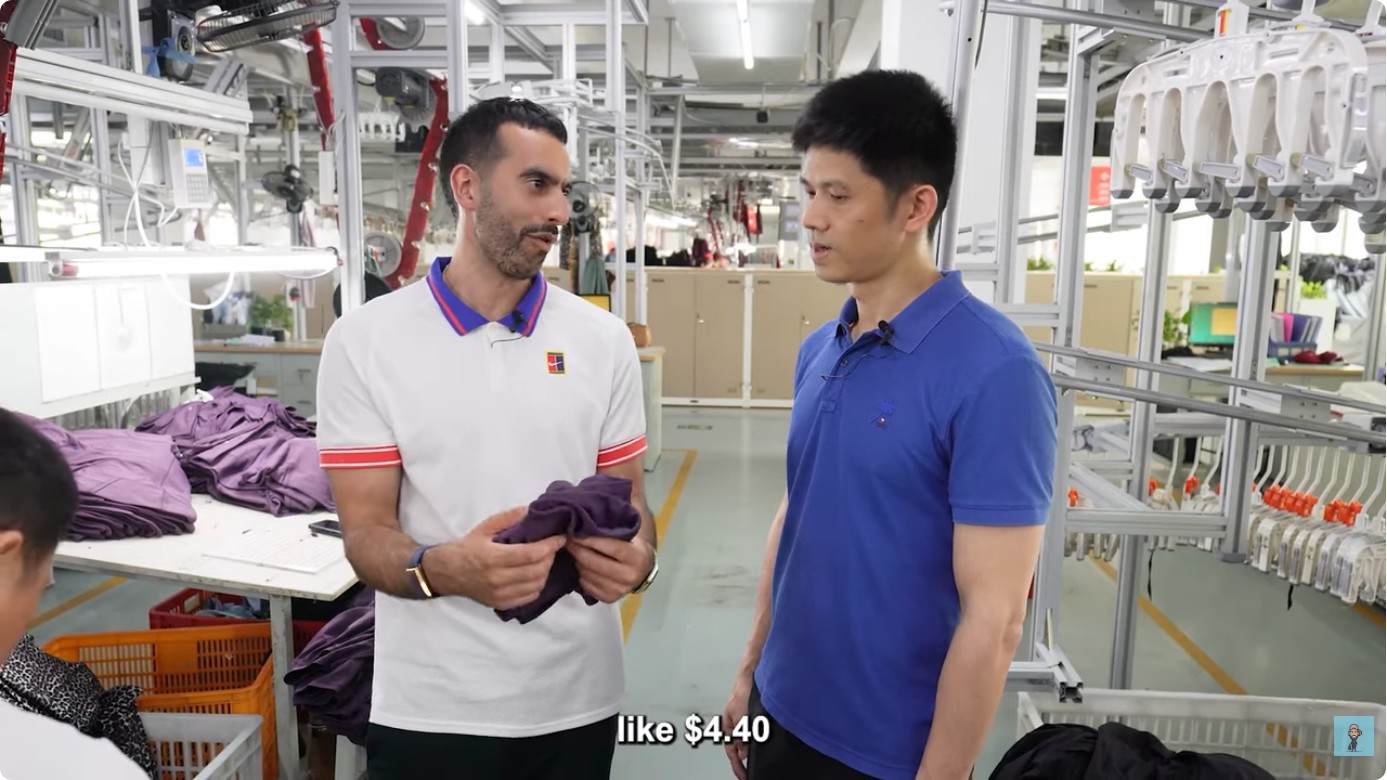
You are not visiting Adidas’s factories. You need your partner to have a robust, transparent QC process. This includes:
- Pre-production: Fit sample approval, color lab dip approval.
- In-process: Line checks during cutting, sewing, and finishing.
- Final inspection: AQL (Acceptable Quality Limit) standards, typically AQL 1.0 or 2.5 for major defects. Request their inspection report template.
Ask: “Who is my point of contact for QC issues, and what is your escalation process?” A factory that deflects this question is a red flag.
4. Lead Times and Production Scheduling
Lead time is the sum of fabric sourcing, cutting, sewing, washing (if applicable), finishing, and quality control. A specialized activewear factory in a hub like Vietnam or Bangladesh will have streamlined this process for performance garments. Get a detailed timeline. Be wary of promises that seem too short; quality takes time. Also, understand their capacity. Can they accommodate your required delivery window, especially during peak seasons?
3. Certifications and Compliance
This is non-negotiable for reputable business. Your factory should hold or be willing to obtain:
- Social Compliance: SMETA, BSCI, or WRAP audits to ensure ethical labor practices.
- Environmental: ISO 14001, or specific certifications for chemical management like ZDHC MRSL compliance.
- Product-Specific: For technical gear, certifications for specific fabric performance (e.g., UPF, antimicrobial).
Request current audit reports. A factory that is transparent about its certifications is signaling stability and accountability.
Why Location Matters (But Isn’t Everything)
While “Made in [Country]” carries consumer perception weight, your sourcing decision should prioritize the factory’s specialization and reliability over its postal code. A state-of-the-art factory in Portugal specializing in technical knitwear may be a better fit for a premium yoga line than a lower-cost general garment factory in Bangladesh. The expertise in handling technical fabrics, precision sewing, and smaller, complex orders is concentrated in certain regional clusters.
However, location does impact:
- Logistics & Tariffs: Factor in shipping costs and import duties. A factory in Mexico may offer faster and cheaper delivery to the USA than one in Vietnam, even if the unit cost is slightly higher.
- Communication: Time zone overlap and English proficiency at the management level are critical for smooth project execution.
- Travel: If intricate development is needed, consider the feasibility and cost of visiting the facility during sample stages.
Building Your Sourcing Strategy: A Practical Checklist
As you evaluate potential manufacturing partners, use this framework:
- Define Your Product First: Have a clear tech pack (spec sheet) with fabric composition, construction details, and trim specifications. This is your universal language.
- Shortlist by Specialization: Search for factories that showcase similar products (e.g., “performance hoodie manufacturer,” “track suit OEM”). Their portfolio is the best indicator of capability.
- Audit for Capacity & Compatibility: During talks, ask about their current client mix. Do they serve brands of your size? Ask for references from non-competing clients in your niche.
- Pilot with a Small Order: Never commit to a massive first run. Place a trial order of 200-500 units to test their production process, communication, and quality consistency.
- Visit or Inspect Virtually: If possible, conduct a factory audit. If not, use a third-party inspection agency for the pilot run.
- Negotiate Terms, Not Just Price: Clarify payment terms (typically 30% deposit, 70% before shipment), incoterms (FOB, EXW), and who bears cost for quality failures.
The Bottom Line: Control vs. Scale
The answer to “where is Adidas manufactured” reveals a system built for a specific purpose: producing billions of units across thousands of styles for a global market. That system is not designed for your custom order of 1,000 unique track pants with your brand’s specific fit and logo placement.
For your business, the goal isn’t to access Adidas’s supply chain; it’s to find a dedicated, expert partner who will treat your order as their priority. The “where” becomes the location of your chosen factory—a partner whose scale matches yours, whose expertise aligns with your product category, and whose communication is direct and clear. This partnership model delivers the customization, agility, and attention that a massive, diversified network simply cannot provide to a small or medium-sized buyer.
Is a Dedicated OEM Partner the Right Fit for Your Project?
If you’re launching a brand, outfitting a team, or scaling a retail line with custom activewear, the considerations above—MOQ flexibility, technical fabric expertise, direct quality control, and agile scheduling—are the real determinants of a successful production run. These are the advantages of working with a factory whose business model is built around your needs, not a global brand’s quarterly targets.
Need custom versions of any style covered here? Our sportswear factory handles everything from tech pack review to bulk delivery. Request a sample or quote.