
When you search for a “blue red jersey,” you’re tapping into a classic sports aesthetic with enduring appeal. But for brands, teams, and retailers, this isn’t just about a color combination—it’s about a versatile product category that spans performance athletics, casual streetwear, and everything in between. As a custom sportswear manufacturer, we work with buyers to translate this iconic look into high-quality, purpose-built apparel. Whether you’re outfitting a soccer team, launching a athleisure line, or sourcing promotional gear, understanding the nuances of jersey construction, fabric technology, and customization pathways is critical to getting a product that performs, looks right, and meets your cost targets.
This guide cuts through the ambiguity. We’ll break down what defines a modern jersey, explore the key decisions that impact fit and function, and outline the exact information you need to provide a factory to get accurate quotes and samples. Our focus is on the practical realities of sourcing and producing these garments at scale.
What Matters Most When Sourcing a Custom Blue Red Jersey
Before diving into styles, step back. The success of your custom jersey order hinges on three core pillars that you must define early in the process. These decisions cascade through material sourcing, production techniques, and final cost.
More advice: Beverly Hill Polo Club Shoes: Sourcing, Customization, and Production Guide for Brands
- Primary Use Case & Performance Needs: Is this for high-intensity soccer, basketball, or gym wear? Or is it for casual wear, fashion layering, or corporate events? The answer dictates fabric weight, moisture-wicking requirements, and durability needs.
- Target Fit & Silhouette: Do you need a tight, athletic compression fit, a standard relaxed team fit, or an oversized streetwear cut? This is a pattern-making decision that affects pattern cost, fabric consumption, and sizing consistency.
- Customization Scope: Will you be applying team logos, player names, and numbers? Or are you looking for all-over sublimation prints, tonal embroidery, or simple hem tags? The method of decoration directly influences the base fabric choice (e.g., sublimation requires polyester) and production sequence.
Clarifying these points with your internal team or client first will save weeks of back-and-forth with manufacturers and prevent costly sample revisions.
Deep Dive: Fabric, Weight, and Performance Characteristics
The “jersey” in “blue red jersey” refers to a knit fabric construction, not a specific material. This is your first and most important choice. The fabric determines the garment’s feel, performance, print compatibility, and cost.
Common Performance Knits for Custom Jerseys
For activewear, two fabric families dominate:
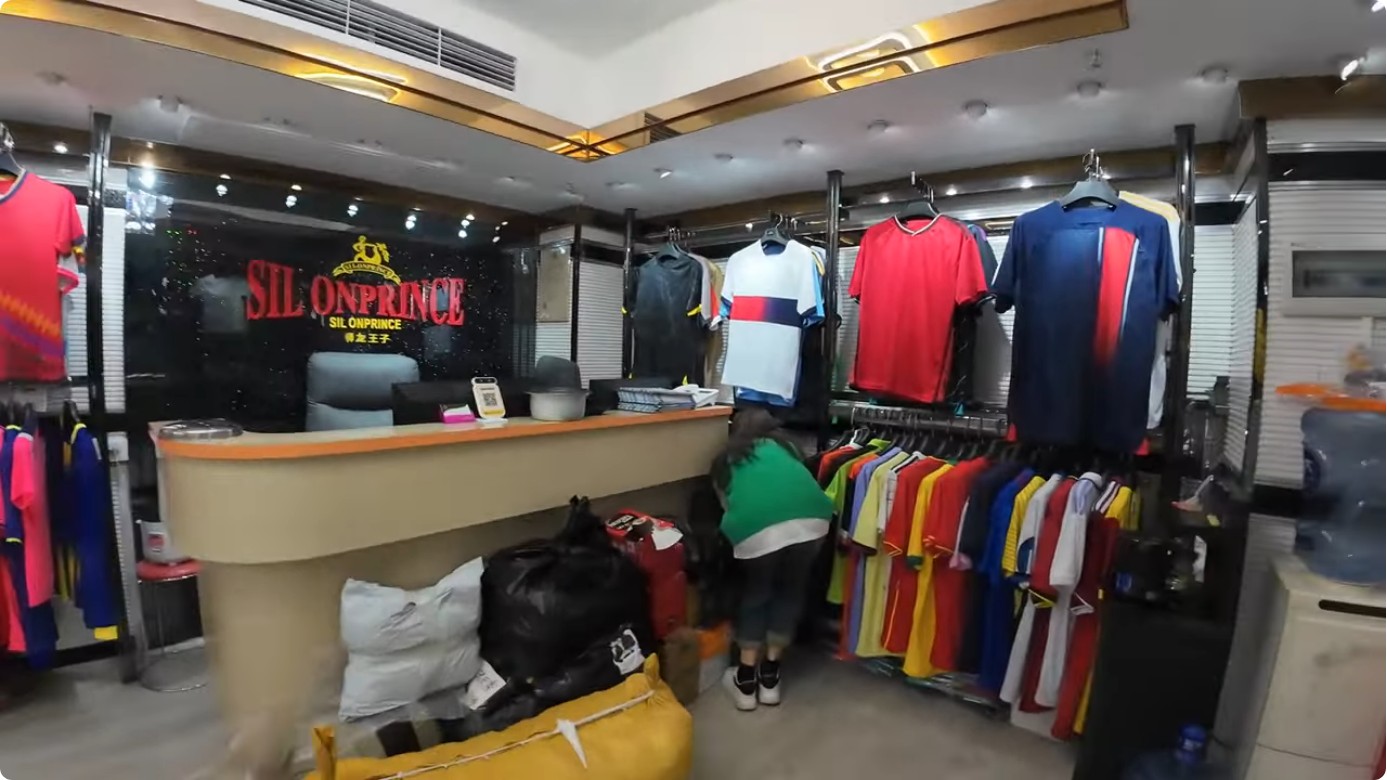
- Polyester Jersey (often with moisture-wicking treatment): The workhorse of performance apparel. It’s durable, colorfast, and excels at moisture management. Weights typically range from 140gsm (light, breathable) to 220gsm (more substantial, durable). It is essential for sublimation printing, where dyes are infused into the fibers for vibrant, all-over designs that won’t crack or peel.
- Spandex/Elastane Blends (e.g., Polyester-Spandex): Used when stretch and recovery are critical—think compression wear, basketball jerseys, or fitted yoga tops. A common blend is 92% polyester / 8% spandex. The higher the spandex content, the greater the stretch but also the higher the cost and the more delicate the care requirements.
Casual & Fashion Jersey
For a softer, more substantial feel suitable for everyday wear, cotton jersey or cotton-polyester blends are common. They offer breathability and a classic hand-feel but absorb moisture (sweat) rather than wicking it away. They are ideal for fashion brands, band merch, or casual team polo/tee variants. Note: 100% cotton is not suitable for sublimation.
For a detailed look at textile standards for moisture management, refer to AATCC (American Association of Textile Chemists and Colorists) test methods.
Fabric Comparison at a Glance
| Fabric Type | Best For | Key Properties | Customization Notes |
|---|---|---|---|
| 100% Polyester (Jersey) | Soccer, basketball, running, all-over print designs | Lightweight, durable, excellent wicking, colorfast | Ideal for sublimation. Can be screen printed with specialized inks. |
| Polyester-Spandex Blend | Compression wear, fitted basketball/volleyball, yoga | High stretch, excellent recovery, form-fitting | Sublimation compatible. Requires precise pattern making for fit. |
| Cotton-Poly Blend | Casual team wear, fashion, corporate events | Soft hand, breathable, less shiny than poly | Best for screen printing, embroidery, heat transfer. Not for sublimation. |
| 100% Cotton Jersey | Vintage-style fashion, basic tees | Natural feel, breathable, shrinks more | Screen print or embroidery only. Pre-shrinking is critical. |
Customization Methods: Matching Technique to Design
Your “blue red jersey” design likely involves some form of branding. The technique chosen must align with your fabric, design complexity, and budget.
- Sublimation Printing: The premier method for complex, all-over patterns with unlimited colors (gradients, photo-realism). The design is printed onto transfer paper and then heat-pressed into the polyester fibers. It is permanent, breathable, and allows for unique panel-by-panel color blocking—perfect for a bold blue and red design. Minimum Order Quantities (MOQs) for sublimated jerseys are typically higher (e.g., 50-100 pieces per style/color) due to the fixed setup costs of printing the full garment layout.
- Screen Printing: Cost-effective for simpler designs with 1-5 colors. Ink is pushed through a mesh stencil onto the fabric. Best for bold logos and text placed on the chest, back, or sleeves. The feel can be slightly raised (plastisol) or smooth (water-based). Works on cotton and polyester.
- Embroidery: The gold standard for a premium, durable look on logos and small text. It works on nearly all fabrics but adds stiffness and cost per stitch. Ideal for a small, elegant emblem on a chest or sleeve.
- Heat Transfer / Vinyl: Good for single-color names, numbers, and simple shapes. Can be applied to most fabrics. Quality varies significantly with the vinyl type and application skill—cheap vinyl can crack and peel.
Critical Sourcing Note: You must declare your chosen customization method to your factory before fabric selection. A factory can source the correct substrate for sublimation, but if you decide later you want to switch to embroidery, the base fabric may need to change (e.g., from a lightweight sublimation-friendly mesh to a tighter-knit fabric that holds stitches better).
Production Realities: MOQs, Sampling, and Quality Control
Navigating the manufacturing process requires understanding its stages and associated costs.
More advice: What Sets Top Athletic Companies Apart: A Sourcing and Manufacturing Guide
Minimum Order Quantities (MOQs)
MOQs vary by factory, technique, and fabric availability.
- Standard Cut & Sew: For simple screen-printed jerseys in common fabrics, MOQs can be as low as 30-50 pieces per style/color.
- Sublimated All-Over Print: Expect MOQs of 50-100+ pieces. The digital print setup is charged per garment layout, so splitting an order into many small sizes/colors skyrockets the per-unit cost.
- ODM (Original Design Manufacturer) Styles: If you select a factory’s existing jersey template and just change colors/logos, MOQs are often lower, as patterns and grading are already done.
Always ask: “Is the MOQ per style, per color, or per size?” A MOQ of 100 pieces could mean 100 total across all sizes/colors, or 100 of each, which is a massive difference.
The Sampling Phase: Non-Negotiable
Never proceed to bulk production without approving a pre-production (PP) sample. This sample should be made with your exact approved fabric, customizations, and trims (labels, tags, zippers if applicable). For a blue red jersey, check:
- Color Matching: Are the blue and red shades consistent with your Pantone references? Check in both natural and artificial light.
- Print/Embroidery Quality: Is the registration (alignment) perfect? Is embroidery dense and clean, without loose threads?
- Fit & Construction: Do seams lie flat? Is the stitching (e.g., flatlock for performance) secure? Turn the garment inside out to inspect stitch density—a minimum of 10-12 stitches per inch is a good benchmark for durability.
- Trims & Labels: Are care labels correct for the fabric composition? Are hangtags, neck tapes, and woven logos as approved?
Use Cases: Who Buys Blue Red Jerseys and Why?
This style transcends a single market. Here’s how different buyers approach it:
- Sports Teams & Clubs: Need durable, matching uniforms with space for player names, numbers, and club logos. Priority is on moisture-wicking, lightweight fabrics, and consistent color across a large roster. They often choose screen-printed or sublimated options for bold team identity.
- Fashion & Streetwear Brands: Use the blue/red palette for its visual impact and cultural resonance. They may opt for unique fabrications (e.g., slub jersey, recycled polyester), relaxed fits, and all-over tonal or graphic prints. Quality of feel, drape, and branding integration (like embroidered logos) is paramount.
- Corporate & Event Organizers: Seek a unified look for staff, volunteers, or attendees. Often choose simpler, cost-effective cotton-poly blends with a single, small embroidered logo on the chest. Color matching to corporate brand guidelines is critical.
- Gyms & Fitness Studios: Require breathable, odor-resistant fabrics for high-use environments. They may order in bulk for retail or as membership perks, often featuring the gym’s logo prominently.
The Buyer’s Checklist: What to Communicate to Your Factory
To get an accurate quote and avoid miscommunication, prepare a clear brief. Use this checklist:
Questions to Ask Your Manufacturer
Before committing, vet your potential partner. Ask:
- “Can you provide examples of previous blue/red sublimated or screen-printed jersey work?”
- “What is your standard lead time from approved sample to bulk delivery?”
- “How do you handle quality control for color matching and print registration across a large order?”
- “What are your policies for handling defective units or color variances in bulk?”
- “Do you hold stock fabrics for quicker turnaround, or is everything made-to-order?”
Need custom versions of any style covered here? Our sportswear factory handles everything from tech pack review to bulk delivery. Request a sample or quote.
You may also like: How to Tape Measure Your Body: A Sourcing & Production Guide for Custom Sportswear Buyers