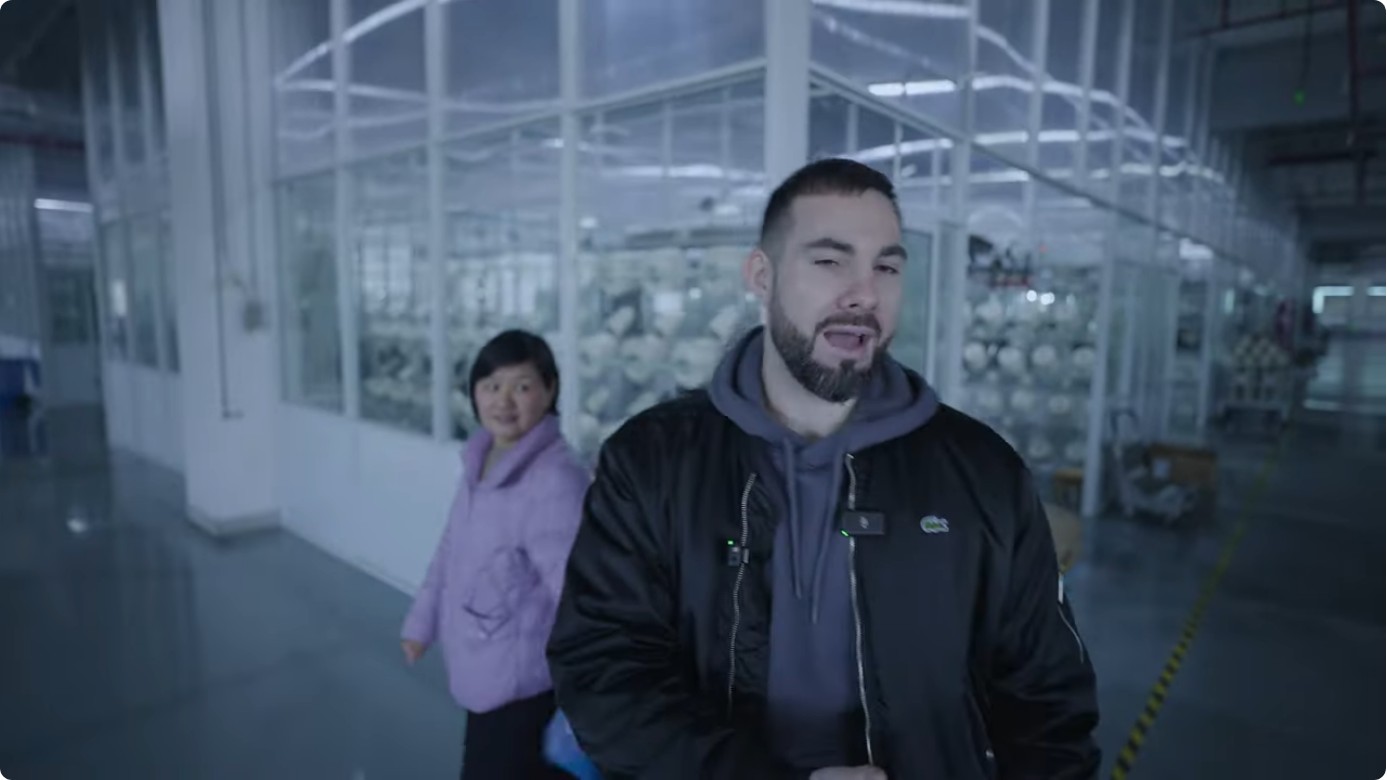
The phrase “Nike manufacturer in China” often conjures images of massive, proprietary factories churning out millions of identical sneakers and jerseys. For brands, gyms, and teams seeking to create their own custom apparel, this reality is both a clue and a distraction. The true opportunity lies not in accessing Nike’s specific supply chain, but in understanding the robust, sophisticated ecosystem of Chinese sportswear manufacturing that powers global brands—and how you can tap into it for your own OEM or ODM project.
China remains the world’s manufacturing nucleus for performance apparel due to its unparalleled combination of scale, technical expertise, and integrated supply chains. From high-tech moisture-wicking knits to durable fleece and specialized trims, the infrastructure exists to produce virtually any activewear design at various quality tiers. For a custom buyer, this means access to capabilities that would be cost-prohibitive to develop elsewhere. However, navigating this landscape requires shifting your perspective from “buying a product” to “partnering with a production system.” Success depends on knowing what specifications matter, how to communicate them, and what trade-offs to expect.
What Matters Most When Sourcing Custom Sportswear
Before diving into fabrics or styles, three core pillars define your sourcing strategy and final product success. These are the non-negotiable factors that separate a smooth project from a costly lesson.
Helpful tip: A Buyer’s Guide to Shirt Cuts: From Style Selection to Custom Manufacturing
- Quality Benchmarking: You must define your quality standard. Is this for a premium fashion-brand launch, a collegiate team requiring durability, or a promotional giveaway? Your target price point is a direct reflection of this. Chinese factories range from those producing for luxury European houses to those serving fast-fashion volume orders. Visiting a potential partner’s showroom and requesting samples of their previous work for brands at your intended quality level is the most critical step.
- Minimum Order Quantity (MOQ): This is often the first gate. MOQs are driven by fabric and trim sourcing, pattern making, and machine setup. For custom-dyed knitted fabrics (like performance tees or hoodies), MOQs typically start at 500-1,000 pieces per style/color. For simpler cut-and-sew items using stock fabrics, some factories may go as low as 200-300. Understanding these breakpoints upfront prevents wasted time.
- Technical Communication: A factory’s ability to execute your vision hinges on the clarity of your technical package. This is not just a sketch. It includes precise fabric specs, construction details (stitch type, seam finish), trim placements (labels, zippers, logos), and a completed sample (called a “counter-sample” or “fit sample”). Investing time in this documentation saves immense cost in sample revisions and production errors.
OEM vs. ODM: Choosing Your Production Path
These two acronyms define your relationship with the factory and significantly impact your project’s timeline, cost, and creative control.
| Factor | OEM (Original Equipment Manufacturer) | ODM (Original Design Manufacturer) |
|---|---|---|
| Core Model | You provide the complete design and specs; factory produces it. | Factory provides pre-existing designs/patterns; you select and customize (e.g., logo, color). |
| Creative Control | Full. You own the design. | Limited to modifications within the existing design framework. |
| Development Cost | Higher. You bear all pattern making, sampling, and testing costs. | Lower or none. Factory already has patterns and samples. |
| Timeline | Longer. Requires full development cycle (3-6+ months). | Shorter. Can move to production faster after customization (1-3 months). |
| Best For | Established brands with unique designs, proprietary fits, or specific performance requirements. | Startups, new entrants, or brands wanting to launch quickly with proven silhouettes. |
For a new brand, a hybrid approach is common: start with an ODM base for core items (like a proven jogger silhouette) to validate the market, then develop unique OEM styles as volume and capital grow.
Key Quality Markers: What to Inspect on Samples
When evaluating factory samples, move beyond the logo placement. scrutinize these details that separate professional sportswear from basic garments:
- Fabric Hand & Recovery: High-performance knits should feel smooth, lightweight, and have good elasticity that springs back. Test by stretching a sample and releasing it. Poor recovery leads to bagging.
- Stitching: Look for consistent, tight lockstitch or coverstitch (on seams like shoulders and crotch). No loose threads, skipped stitches, or puckering. Seam allowances should be appropriate for the fabric weight (e.g., 3/8″ for heavy fleece, 1/4″ for lightweight tees).
- Seam Finishes: For performance wear, seams should be either “flatlock” (minimal bulk) or “covered” (with a separate tape or binding) to prevent chafing. Raw edges on inside seams are a red flag for activewear.
- Labels & Trim: Check that care labels are properly affixed (no loose threads) and that printed logos are crack-resistant. Test zippers and snaps for smooth operation. For performance garments, ensure any reflective or thermal trims are securely attached.
For objective fabric performance data (e.g., UPF rating, moisture-wicking rate), request the factory’s test reports from accredited labs like AATCC or ASTM International. Reputable factories will have these on file for their standard fabric offerings.
Production Realities: MOQs, Lead Times, and Logistics
Understanding the mechanics of production helps in planning and setting realistic expectations.
More advice: Your Complete Guide to Sourcing Terry Cloth Material for Sale
- MOQ Drivers: The primary driver is fabric. Mill-minimums for custom-dyed jersey or fleece often start at 1,000-1,500 yards. A factory will aggregate orders from multiple clients to meet this. Your order’s MOQ is influenced by how well your style fits into their current production schedule. Simpler styles using stock fabrics (already dyed and in stock at the mill) have lower MOQs.
- Lead Time Breakdown: A typical custom order follows this phased timeline:
- Sampling & Approval: 2-4 weeks (fabric sourcing, pattern making, sample production).
- Fabric & Trim Procurement: 2-4 weeks (can overlap if fabrics are in stock).
- Cutting & Sewing: 3-6 weeks depending on style complexity and factory capacity.
- Finishing & QC: 1-2 weeks (laundry, pressing, inspection, packing).
Total: 8-16 weeks is standard. Delays often occur in the sampling approval loop or if fabrics need to be custom-dyed.
- Shipping & Incoterms: Most B2B orders use FOB (Free On Board) terms. This means the factory’s responsibility ends once goods are loaded onto the vessel at the port of origin (e.g., Shanghai, Ningbo). You are responsible for the main carriage, insurance, and all import clearance. For first-time importers, partnering with a freight forwarder is highly advisable.
Navigating the Trade-off Triangle: Cost, Speed, Quality
In custom manufacturing, you can only optimize for two of these three at once. A factory promising ultra-low cost and ultra-fast delivery will inevitably compromise on quality control or material integrity. Your project’s priority dictates your partner choice:
- Cost + Quality Focus: Accept longer lead times. This is the standard path for most quality-conscious brands.
- Speed + Quality Focus: Expect a premium price (for air freight and possible rush fees).
- Cost + Speed Focus: High risk. This often leads to using substandard fabrics, skipped quality checks, and production shortcuts. Suitable only for the lowest-tier promotional products.
How to Vet and Select a Manufacturing Partner
Due diligence is non-negotiable. Use this checklist during your evaluation:
- Audit Their Capabilities: Request a factory audit report (like a BSCI, WRAP, or ISO 9001) or hire a third-party auditor. Focus on cleanliness, organization, machine maintenance, and worker conditions. A well-run factory is a stable partner.
- Request Relevant Samples: Do not accept generic samples. Ask for samples made for other clients in the exact same fabric and construction you plan to use. Inspect them as if they were your final product.
- Assess Communication: Gauge their English proficiency and technical understanding. Do they ask insightful questions about your design? A responsive, detail-oriented sales/engineering team is a predictor of smooth project management. Time zone differences can be managed with clear communication protocols.
- Understand Their Supply Chain: Ask who their fabric and trim suppliers are. Factories with long-standing relationships with reputable mills (e.g., those certified by OEKO-TEX® for有害物质) have more control over quality and lead times.
- Payment Terms: Standard terms are 30% deposit via T/T (wire transfer) upon order confirmation, and 70% balance before shipment. Be wary of any factory demanding 100% upfront payment. Use a verified trade platform like Alibaba.com‘s Trade Assurance for initial orders to add a layer of payment security.
Final Questions to Ask Your Manufacturer
As you narrow down partners, these questions reveal their true operational depth:
- “What is your average first-pass yield rate (percentage of garments passing final QC without rework)?” (Aim for >95%)
- “Can you provide a detailed timeline with internal milestones for the sampling and production phases?”
- “How do you handle fabric or trim shortages? What is your contingency plan?”
- “What is your policy on minor defects discovered during final QC? (e.g., discount on affected units, remake, etc.)”
- “May I speak with one of your current clients in a similar product category as a reference?”
The answers will illuminate their transparency, experience, and commitment to partnership over mere transaction.
Whether you’re a startup brand or an established retailer, we manufacture custom sportswear at competitive MOQs. Reach out to start your project.
Related guide: Organic Terry Cloth Fabric: A Practical Guide for Buyers and Makers