
For brands, gyms, and retailers seeking to produce custom activewear, the name ‘Guangzhou garment factory’ represents a major node in the global apparel supply chain. This isn’t just about finding a producer; it’s about understanding a complex ecosystem where speed, scale, specialization, and communication intersect. Whether you’re launching a private-label athleisure line or outfitting a sports team, the capabilities and structure of factories in this region directly impact your product’s quality, cost, and time-to-market. This guide cuts through the noise to provide a actionable framework for navigating this landscape, focusing specifically on the production of t-shirts, hoodies, sweatshirts, cargo pants, tank tops, and tracksuits.
We’ll move beyond the broad label to examine the different types of manufacturing partners you’ll encounter, the critical specifications that define a successful custom order, and the tangible production considerations—from fabric sourcing to quality control—that separate a smooth project from a logistical headache. The goal is to equip you with the questions to ask and the details to communicate, transforming the daunting task of overseas manufacturing into a manageable, strategic process.
What Matters Most: The Core Sourcing Decision Triangle
Before diving into factory types, understand that every sourcing decision in Guangzhou balances three primary, often competing, factors:
Also read: The Soccer Cap: A Buyer’s Guide to Custom Headwear for Teams, Brands, and Fans
- Cost & Volume: Minimum Order Quantities (MOQs) and unit prices. Lower costs almost always require higher volumes and may involve longer lead times.
- Speed & Flexibility: The ability to produce smaller batches, accommodate design changes, and meet tight deadlines. This flexibility typically comes at a premium.
- Quality & Consistency: Fabric integrity, stitch density, color matching, and fit consistency. Achieving high, repeatable quality requires rigorous communication, clear specifications, and often, a higher unit cost for premium materials and labor.
Your ideal partner sits at the intersection of these three based on your specific business model. A fast-fashion brand might prioritize speed and moderate cost, accepting variable quality for trend turnover. A premium yoga brand must prioritize quality and fabric innovation, managing cost through brand pricing. A local sports team supplier needs a balance of decent quality and low MOQ for small, custom runs.
The Guangzhou Manufacturing Ecosystem: More Than Just ‘A Factory’
The term ‘Guangzhou garment factory’ is an umbrella for several distinct business models. Identifying which one aligns with your order size and technical needs is your first critical step.
1. Large-Scale Integrated OEMs
These are the giants, often occupying multi-story buildings in industrial zones like Haizhu or Tianhe. They typically have in-house cutting, sewing, and finishing lines, and sometimes even fabric knitting/weaving divisions. Their strength is volume—efficiently producing thousands of identical units for major international brands. For a custom sportswear buyer, they offer:
- Pros: Lowest per-unit cost for high volume (often 5,000+ pcs/style), established logistics, ability to handle complex fabric compositions (e.g., moisture-wicking polyester/spandex blends).
- Cons: Very high MOQs, less flexibility for design iterations, communication may be less personalized, longer lead times (60-90+ days).
- Best for: Established brands placing large, repeated orders for staple items like basic crewneck t-shirts or performance tracksuits.
2. Specialized Niche Workshops
Scattered throughout the city and its outskirts, these smaller factories (20-100 workers) often specialize in a specific product category or technique. You’ll find workshops dedicated to seamless activewear, technical outerwear, or garment dyeing. Their value is deep expertise.
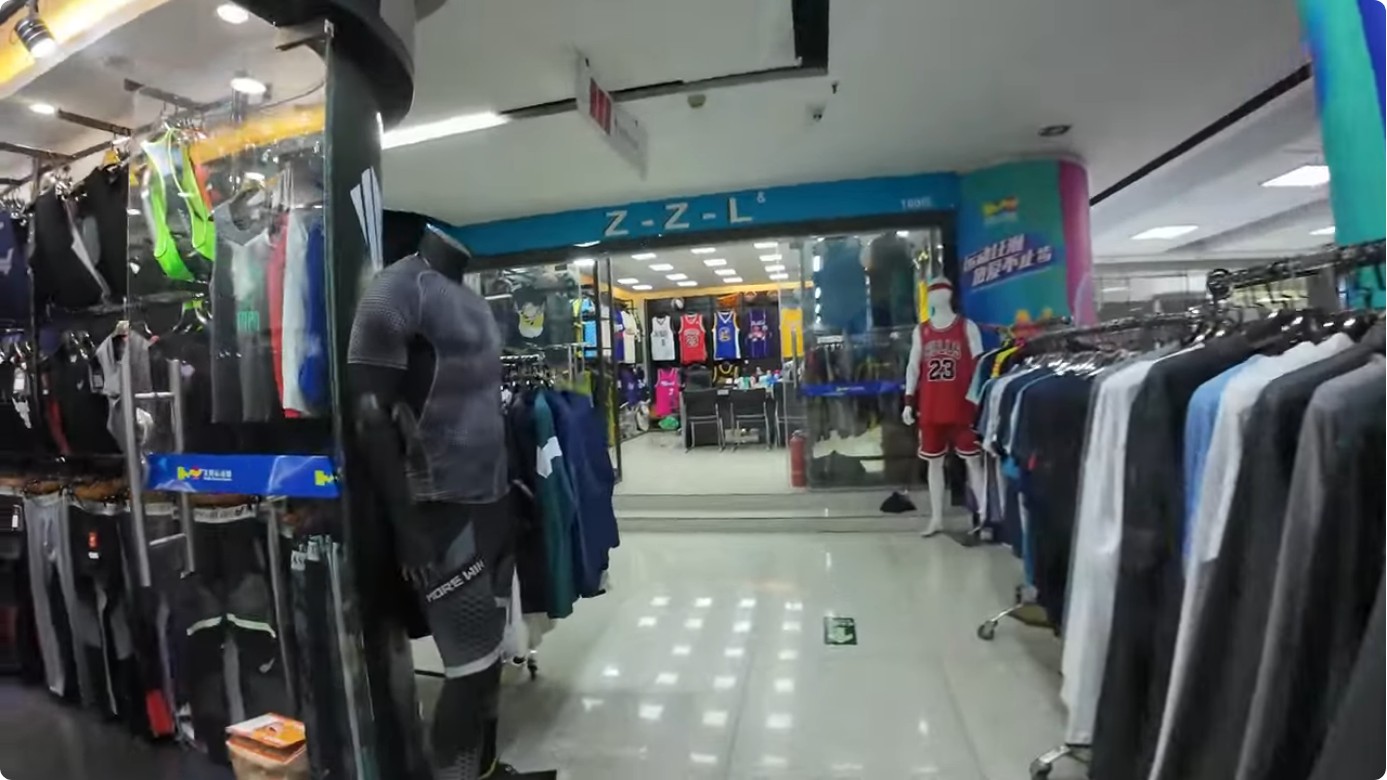
- Pros: Higher quality in their specialty, more adaptable to custom requests, lower MOQs (often 500-2,000 pcs), direct access to skilled technicians.
- Cons: Limited capacity for massive orders, may need to outsource part of the process (e.g., they sew but source knitting externally), requiring more project management from you.
- Best for: Brands with specific technical needs—like a gym needing durable, heavyweight hoodies with unique zipper placements, or a brand wanting garment-dyed cargo pants with a specific faded look.
3. Trading Companies & Sourcing Agents
These are not factories but intermediaries who manage the relationship and production process with a network of approved factories. They act as your on-the-ground representative.
- Pros: Handle language barrier, logistics, and quality control for you. Can aggregate smaller orders across multiple factories to meet MOQs. Ideal for first-time buyers without a local presence.
- Cons: Add 10-20% to the cost, can obscure the actual production source, communication quality depends entirely on the agent’s competence.
- Best for: Small to medium-sized businesses (orders under $50k), first-time importers, or those needing full project management from concept to container shipping.
| Factor | Large-Scale OEM | Specialized Workshop | Trading Company/Agent |
|---|---|---|---|
| Typical MOQ | 5,000+ pcs/style | 500 – 2,000 pcs/style | Varies; can combine orders |
| Unit Cost | Lowest | Moderate to High | Factory Cost + 10-20% |
| Lead Time | 60-90+ days | 45-70 days | Includes sourcing time |
| Flexibility | Very Low | Moderate to High | High (via agent) |
| Control | Direct | Direct | Indirect |
The Blueprint: What You Must Communicate Clearly
Vague requests lead to costly samples and production errors. Your technical package is your single most important document. It must be precise, visual, and unambiguous. Here’s a checklist of what to prepare before serious discussions begin.
The Essential Technical Package
- Tech Pack: A PDF or presentation with flat sketches (front/back), detailed construction notes, callouts for special features (e.g., “double-needle stitched hems,” “reflective tape at nape”), and a complete Bill of Materials (BOM). The BOM should specify fabric composition, yarn count, weight (e.g., 280gsm for a heavyweight hoodie), and source preferences (e.g., “Tong Hong or similar fabric mill”).
- Garment Specifications: Exact measurements for a sample size (e.g., Size M), including body length, chest width, sleeve length, and neck rib height. Include a tolerance range (e.g., +/- 1cm). Providing a physical sample or a AATCC-approved fit model spec sheet is ideal.
- Color Standards: Use a recognized system like Pantone TPX or TCX codes for every color in your design. Never rely on a verbal description like ‘navy blue.’ Provide a physical color swatch if possible.
- Label & Branding Artwork: Vector files (AI/EPS) for all logos, care labels, and size tags. Specify placement, stitch type (e.g., “tackle twill embroidery,” “sublimated print”), and thread colors.
- Packaging Instructions: How each garment is folded, whether it gets a poly bag, if hangtags are included, and how many units per carton. This affects your landed cost and retail presentation.
Quality Control: Beyond the First Sample
Approving a single sample is not quality control. It’s merely a prototype approval. True QC happens during production. Here’s what to implement:
- Pre-Production Meeting: Confirm all details with the head cutter and line supervisor before fabric is cut. Misunderstandings here are the most expensive.
- In-Factory Inspection: Schedule an in-person or video call inspection when 30-50% of the batch is sewn. Check for consistent stitching, color matching across panels, and alignment of prints/embroidery. Look for raw edges, loose threads, and correct label application.
- AQL Standards: Agree on an acceptable quality limit (AQL). The industry standard for apparel is often AQL 1.0 or 1.5 for major defects and 2.5 for minor defects. This defines how many defective units are tolerable in a random inspection of the finished goods. Do not assume ‘perfect’ quality; define it contractually.
- Final Random Inspection (FRI): Conduct this before the goods are packed. Inspect 5-10% of the total quantity based on the agreed AQL. Use a third-party service like QIMA or SGS if you cannot be there.
Key quality markers for sportswear include: stitch density (at least 10-12 stitches per inch on main seams), fabric hand feel (no stiffness or chemical residue), print durability (rub test on seams), and zipper functionality (smooth glide, no snagging). For moisture-wicking fabrics, request a capillary action test report from the fabric mill or your agent.
Navigating Tradeoffs: The Real-World Scenarios
Let’s apply this framework to common buyer situations:
- The Startup Brand (2,000 pcs total across 4 styles): You need flexibility and guidance. Target specialized workshops or a reputable sourcing agent. Your priority is a clean tech pack to get accurate quotes. Expect to pay $18-25/unit for high-quality, mid-weight hoodies at this volume. Negotiate a sample cost (usually $200-500/style) that is deducted from the bulk order.
- The Gym/CrossFit Box (300 Matching T-Shirts): Your challenge is low MOQ. Seek out workshops that do “small batch custom” or agents who consolidate orders. Be prepared for a higher per-shirt cost ($12-18 for a premium tee). Simplify your design—1-2 color screen print is cheaper than all-over sublimation. Order a sample fit in your size chart first.
- The Established Retail Chain (20,000 pcs of a classic track suit): You can engage directly with large-scale OEMs. Your leverage is volume and repeat business. Your focus is on fabric innovation (e.g., recycled polyester content), cost optimization through BOM engineering, and tight lead time management. You will have your own QC team on-site.
Key Questions for Your Potential Factory Partner
Use these questions to vet any Guangzhou garment factory or agent. Their answers reveal their experience and transparency.
- Can you provide examples of similar sportswear (e.g., performance wear, heavy fleece) you’ve manufactured for Western brands?
- What is your standard fabric sourcing process? Do you work with specific mills like Luthai or Canat? Can you provide fabric swatches and test reports for moisture-wicking, pilling, or colorfastness?
- What is your exact process for fit approval? How many rounds of fit samples are included in the cost, and what is the cost for additional rounds?
- How do you manage color matching between fabric dyeing, prints, and embroidery threads?
- What is your policy on production defects discovered during in-line or final inspection? Who bears the cost of rework or replacement?
- Can you provide references from clients with similar order sizes and product types?
- What is included in your FOB price? (Clarify if it covers fabric, trim, labor, and domestic freight to the port).
Planning to add these styles to your collection? We produce custom versions with your branding, fabric choice, and sizing — from sample to bulk. Contact our team for details.
Related guide: The Beverly Hills Ralph Lauren Polo: A Sourcing & Customization Guide for Apparel Buyers