
When wholesale buyers, emerging fashion brands, or retail buyers use terms like “shops like Abercrombie,” they are rarely just referencing a single store. They are describing a specific, high-demand aesthetic: premium casual with a focus on elevated basics, a relaxed yet put-together silhouette, and a perception of casual luxury. This style, often called “preppy,” “casual luxury,” or “modern basics,” dominates a significant segment of the activewear and lifestyle market. For a custom sportswear manufacturer, understanding this request is critical. It translates into concrete production requirements around fabric quality, garment construction, fit, and branding subtlety. This guide breaks down what “Abercrombie-style” apparel means in sourcing terms, the key features to specify, and the practical production considerations for creating your own version through OEM or ODM services.
This article serves two audiences: the consumer or designer researching the style’s characteristics, and the business buyer who must translate that aesthetic into a technical package for a factory. We will move from defining the look and feel to the nitty-gritty of fabric mills, minimum order quantities (MOQs), and the precise information a factory needs to deliver goods that meet this premium standard.
Quick Takeaway: “Abercrombie-style” sourcing prioritizes fabric hand-feel (softness, weight), clean construction, and a modern relaxed fit. For custom production, this means specifying garment washes, premium fabric types (like combed cotton or fleece), and low-profile branding. Expect higher MOQs for specialized fabrics and washes, and provide detailed tech packs to ensure factory consistency.
Related guide: The Tailored Hoodie: Sourcing a Flattering Fit That Avoids the Baggy Look
Deconstructing the “Abercrombie” Aesthetic for Manufacturing
The Abercrombie & Fitch aesthetic, particularly its revival in recent years, is built on a foundation of effortless sophistication. It’s not fast fashion; it carries an implication of durability and timelessness. From a manufacturing standpoint, this aesthetic is defined by three pillars: Fabric & Feel, Fit & Silhouette, and Finishing & Details.
Fabric & Feel: The First and Most Critical Signal
The moment a customer touches a garment, they judge its quality. For this style, the hand-feel is non-negotiable. Key fabric characteristics include:
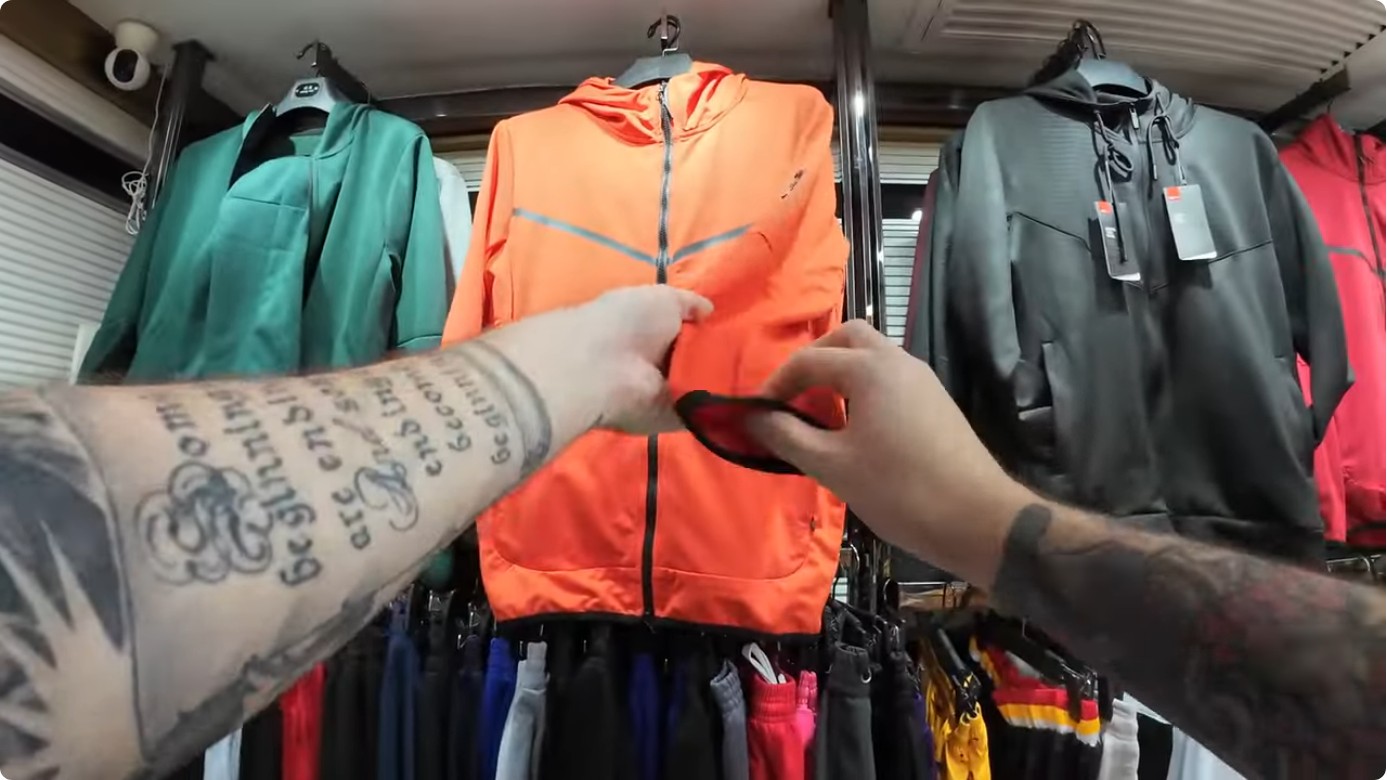
- Softness Through Processing: Not just fiber type, but mechanical or chemical finishing. Garment-dyed fleece, brushed cotton, and enzyme-washed fabrics create a lived-in softness that is a hallmark of the category. Specifying the wash type is as important as the fabric base.
- Substantial Weight: Lightweight, flimsy knits are avoided. For hoodies and sweatshirts, a 280-320 GSM (grams per square meter) fleece is common. For t-shirts, a 180-220 GSM jersey provides a premium drape and opacity.
- Natural & Blended Yarns: 100% combed cotton, cotton-polyester blends (often 60/40 or 80/20 for softness with shape retention), and high-quality ring-spun cotton are standard. Industry textile associations provide standards for yarn counts and fiber quality that factories reference.
Fit & Silhouette: The Modern Relaxed Standard
Gone are the tight, skinny fits of the early 2000s. The modern interpretation is a relaxed or generous fit with clean lines. Key points:
- Oversized but Tailored: Hoodies and sweatshirts often have a dropped shoulder, wider body, and longer sleeve. The cut is generous but should not look sloppy—clean shoulder seams and a straight hem are crucial.
- Proportional Lengths: T-shirts and tank tops are often slightly longer to accommodate a casual, tucked-or-untucked wear. For tracksuit bottoms, a tapered leg with a slight crop is modern.
- Consistency Across Sizes: A major differentiator for premium brands is how the fit scales. A size L should not feel like a box; grading must maintain the intended silhouette. This requires a factory with strong pattern-making and grading skills.
Finishing & Details: Where Subtlety Speaks Volumes
The details are where the premium feel is cemented or lost.
- Branding: Minimalist and often tonal. Small, woven labels, subtle screen prints, or delicate embroideries (like a small chest logo) are preferred over large, bold graphics. The brand label itself should be soft, printed, or a high-quality satin weave.
- Stitching & Construction: Double-stitched seams, clean-finished necklines (like a 1×1 rib or a “comfort cuff”), and reinforced stress points. French plackets on polo shirts, bar tacks on pocket corners, and consistent stitch density (e.g., 12-14 SPI) are markers of quality.
- Hardware: If present (e.g., on cargo pants or hoodie drawstrings), it should be functional and质感 (e.g., matte-finish metal or coated plastic zippers, flat, wide drawstrings).
Key Garment Types in This Category & Their Production Profiles
A “shop like Abercrombie” carries a core assortment of items. Each has different technical and sourcing implications. Here’s a breakdown for the custom buyer.
| Garment Type | Key Fabric & Fit Specs | Customization Complexity | Typical MOQ Considerations |
|---|---|---|---|
| Premium T-Shirt | 180-220 GSM combed cotton, garment-dyed or garment-washed for softness. Relaxed fit, crew neck or v-neck with ribbed collar. | Medium. Fabric sourcing and wash process are critical. Branding is usually minimal (small chest print/embroidery, branded neck tape). | Medium-High. Specialized fabric mills and wash facilities often have higher minimums (e.g., 500-1000 pcs/style). |
| Fleece Hoodie/Sweatshirt | 280-320 GSM fleece (brushed or unbrushed), garment-dyed for color uniformity and soft feel. Drop shoulder, kangaroo pocket. | High. The wash (enzyme, stone, garment-dye) dramatically affects final look/feel. Requires close factory communication and lab dips. | High. Wash facilities require volume to justify setup. MOQs of 800-1500 pcs/style are common for custom washes. |
| Cargo Pant/Short | Stretch twill (e.g., 98% cotton, 2% elastane) for comfort. Utility pockets with clean bar-tacking. Tapered fit. | Medium-High. Pattern making for functional pockets is precise. Fabric must have recovery for stretch zones. | Medium. May be integrated into existing factory cargo styles as an ODM base. |
| Tracksuit (Jogger & Hoodie Set) | Matching French terry or fleece sets. Ribbed cuffs and ankle, drawstring waist. Cohesive color across top and bottom is vital. | High. Requires coordinating production of two separate garments (top/bottom) with identical fabric batches and color matching. | High. Often sold as sets, so total piece count (tops + bottoms) affects MOQ negotiation. |
The Custom Production Roadmap: From Idea to Factory Floor
For a buyer wanting to create their own line in this style, the process is methodical. Here is a checklist of what you must prepare and communicate to a potential OEM/ODM partner.
Essential Pre-Production Checklist for Your Factory
- Tech Pack: This is non-negotiable. It must include detailed flat sketches with measurements, fabric & trim specifications (yarn count, GSM, composition, wash), branding placement (with mock-ups), and construction notes (stitch type, seam finish).
- Reference Garments: Providing physical samples or high-resolution images of existing “Abercrombie-style” garments you admire is the fastest way to communicate fit, weight, and detail expectations.
- Fabric & Trim Swatches: If you have specific mill sources or feel requirements, sourcing and sending approved swatches is crucial. Factories can source, but your approval on the exact hand-feel is key.
- Clear Branding Guide: Specify logo files (vector), placement dimensions, color codes (PMS or CMYK), and technique (embroidery thread type, screen print ink viscosity).
- Target Price Point & Volume: Be upfront about your target retail price and projected annual volume. This dictates fabric choices and factory allocation. A $25 retail hoodie requires a different cost structure than a $65 one.
Navigating MOQs and Production Tradeoffs
Minimum Order Quantities (MOQs) are the reality of custom manufacturing. For premium, washed styles, MOQs are higher due to the setup costs of dyeing and finishing machines. You will face key tradeoffs:
- Fabric Specialization vs. Cost: A unique, mill-spec fabric will have a higher MOQ (often 3000+ meters) than a generic, in-stock fabric. Using a factory’s existing “ODM library” of premium basics can drastically lower your MOQ (sometimes to 200-500 pcs) because you’re tapping into their standard fabric orders.
- Color Range: Each additional color in a garment-dyed line increases cost and MOQ complexity. Sticking to a core palette (white, black, heather grey, 2-3 seasonal colors) is more efficient.
- Sample Phase: Always budget for 1-3 rounds of pre-production samples (first sample, corrections, approval sample). This is where fit, fabric, and wash are finalized. Rushing this phase leads to costly bulk production errors.
Quality Markers to Specify and Inspect
When your order is in production, your quality control must focus on the elements that define the category. Use this as a guide for your factory’s QC checklist and your own incoming inspection.
| Aspect | What to Look For (Premium Standard) | Common Failure Points |
|---|---|---|
| Fabric Hand & Density | Consistent softness, no rough patches. Hold up to light; should be opaque (for tees/hoodies). Weight matches spec (check with scale). | Thin spots, inconsistent brushing, stiff or chemical-like feel (improper washing), lighter weight than spec. |
| Stitching & Seams | Straight, even stitches. No skipped stitches. Seams lie flat without twisting. Necklines and cuffs are firm and elastic, but not tight. | Uneven stitching, loose threads, puckered seams, neckline that rolls or is too tight/loose. |
| Color & Wash Consistency | Garment-dyed items should have a uniform, “well-worn” hue. No dark/lighter batches. Pre-shrunk fabric should have minimal shrinkage after wash. | Color batch variation, streaks or spots from dyeing, excessive shrinkage (more than 3-5%), residual dye on trims. |
| Branding Application | Embroidery is dense, clean, with no loose threads. Prints are crisp, evenly cured (no cracking), and aligned perfectly. Labels are securely stitched, not itchy. | Misaligned logos, embroidery that is too tight (puckering) or loose (floating), prints that feel stiff or plastic-like. |
Final Sourcing Decision: OEM vs. ODM for This Style
Your choice between Original Equipment Manufacturing (OEM) and Original Design Manufacturing (ODM) hinges on your starting point.
- Choose OEM if: You have a complete, detailed tech pack and specific fabric/trim sources. You want full control over every design element and are willing to manage the development timeline and costs. This is for brands with strong in-house design or a clear vision.
- Choose ODM if: You want to leverage a factory’s existing library of proven, premium basic styles. You can select a “base” hoodie or tee that already has the right weight, fit, and wash, then customize it with your branding, color, and minor fit tweaks. This drastically reduces development time, cost, and MOQ risk, as you are modifying a product the factory already makes at scale.
Many factories specializing in this category offer a hybrid: they present their ODM catalog, you select a style, and they adapt it to your brand’s specs—a practical middle ground for many new entrants.
Frequently Asked Buyer Questions
Q: Can I get a garment-dyed hoodie with an MOQ under 500 pieces?
A: It is challenging. Garment dyeing is a batch process; factories need enough volume to fill a dye vat economically. You might find smaller workshops or those using low-impact dyes willing to run smaller batches, but expect a significant price premium per unit. An ODM base style that is *already* garment-dyed is your most viable path for a lower MOQ.
Q: How do I ensure the “soft feel” isn’t just from chemical softeners that wash out?
A: Specify the construction-based softness. Request fabric that is mechanically brushed (fleece), made from long-staple combed cotton, or uses a stone/enzyme wash that alters the fiber surface. Ask the factory for a pre-production sample that has been washed 3-5 times to simulate consumer use.
Q: What’s the biggest mistake brands make when sourcing this style?
A: Under-specifying the fabric hand and wash. Saying “I want a soft, premium cotton tee” is subjective. Saying “180 GSM, 30/1 combed cotton, garment-dyed with enzyme wash, pre-shrunk” is a factory instruction. Vague specs lead to inconsistent bulk production and disappointed customers.
Q: Should I source fabric myself or let the factory handle it?
A: For first-time buyers or smaller volumes, leveraging the factory’s established fabric suppliers is more efficient and reduces liability. For larger volumes or if you have a proprietary mill relationship, you can source and provide fabric. In either case, you must approve a fabric swatch and a lab dip (dye color sample) before production begins.
Need custom versions of any style covered here? Our sportswear factory handles everything from tech pack review to bulk delivery. Request a sample or quote.
Understanding the language of “shops like Abercrombie” in manufacturing terms empowers you to communicate precisely, manage costs, and ultimately deliver a product that feels authentic to the premium casual category. Success lies in the details you specify and the partnership you build with a factory that understands the subtle difference between a basic tee and a premium one.
Helpful tip: What Material Are Jerseys Made Of? A Sourcing Guide for Brands & Buyers