
When you search for “Chinese sports brands,” your intent likely isn’t just to identify popular consumer labels like Li-Ning or Anta. For businesses like yours—whether you’re an emerging activewear label, a gym chain, a sports team, or a retail buyer—the term points to a far more critical reality: China remains the world’s epicenter for high-volume, flexible, and cost-effective sportswear manufacturing. This guide cuts through the noise. We’ll frame “Chinese sports brands” not as market-facing companies, but as the manufacturing ecosystem that powers them. You’ll learn what this ecosystem offers for custom production, the concrete factors that determine a successful partnership, and how to navigate the landscape to source quality t-shirts, hoodies, tracksuits, and cargo pants that bear your own brand.
The sheer scale of China’s apparel industry can be daunting. It offers everything from massive, automated plants producing millions of identical units to smaller, specialized workshops mastering technical fabrics and intricate embroidery. For a B2B buyer, this diversity is an opportunity—if you know how to speak the language of production. This article is your primer. We will demystify key capabilities, break down the practicalities of OEM versus ODM, outline what truly defines quality in a factory setting, and provide a clear checklist for your due diligence. Our goal is to transform a broad search term into an actionable sourcing strategy.
What “Chinese Sports Brands” Means in a Manufacturing Context
In the B2B sourcing world, the phrase is a shorthand for two interconnected realities:
- The Manufacturing Infrastructure: The dense network of factories, fabric suppliers, trim vendors, and skilled labor concentrated in provinces like Guangdong, Zhejiang, and Fujian. This network has decades of experience perfecting the construction of a seamless racerback tank or the cuffing on a heavyweight hoodie.
- The OEM/ODM Service Model: The standard business model where Chinese factories produce goods (OEM – Original Equipment Manufacturing) or design and produce them (ODM – Original Design Manufacturing) for foreign brands. The “brand” on the label is yours; the factory is the invisible engine.
This distinction is crucial. You are not typically buying from “a Chinese sports brand” as a consumer would. You are partnering with a manufacturer that may also produce for those very brands. Your negotiation is about your specifications, your tech pack, and your quality standards, not about choosing from a catalog of pre-made designs (unless you opt for ODM).
The OEM vs. ODM Divide: Where Does Your Project Fit?
This is your first and most important decision point.
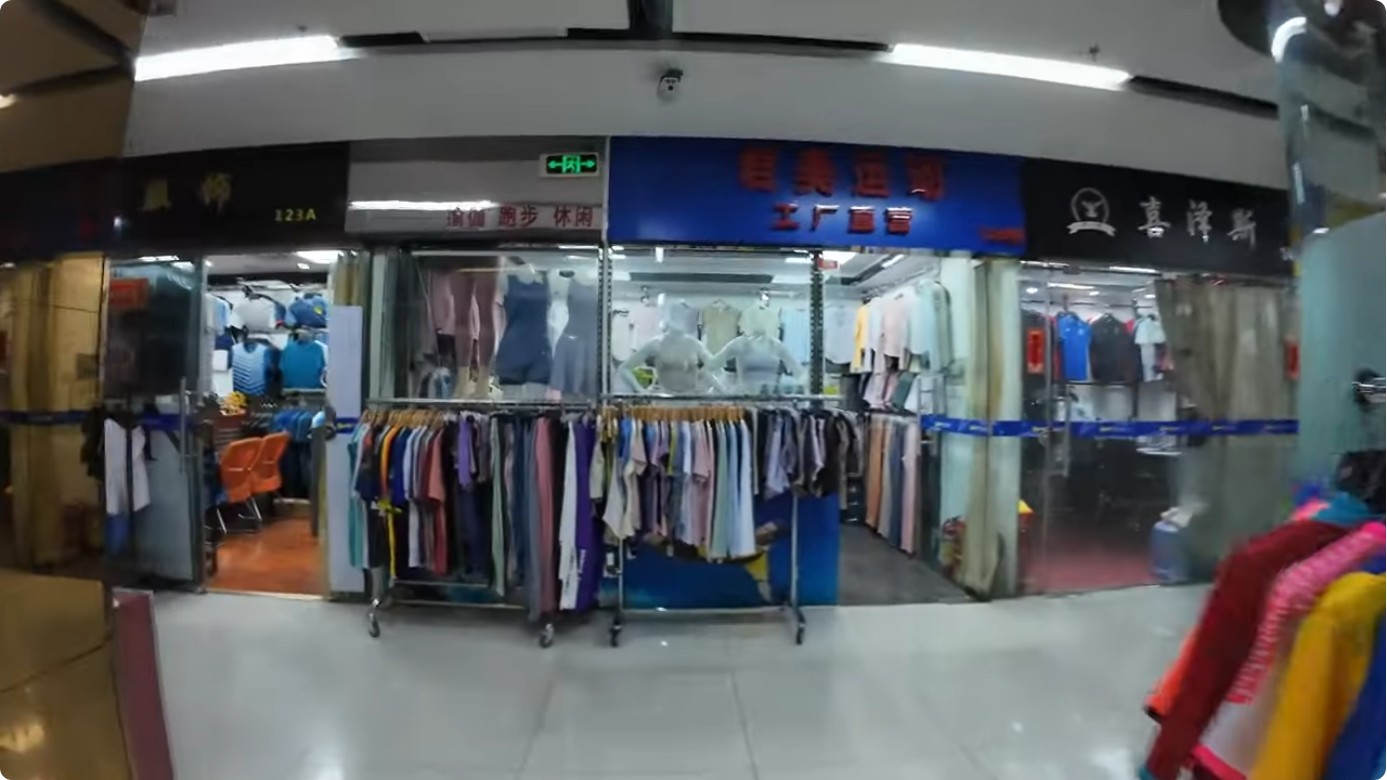
- OEM (Your Design, Their Production): You provide complete specifications—tech pack, fabric swatches, patterns, and samples. The factory sources materials and executes the build exactly as defined. This is ideal for brands with established design teams and unique IP. Trade-off: Higher upfront development cost and longer lead time for sampling.
- ODM (Their Design, Your Brand): You select from the factory’s existing library of styles, patterns, and fabrications. They adapt it with your logos, labels, and minor modifications. This is faster and cheaper for market entry. Trade-off: Less design uniqueness; you may see similar products from other brands using the same factory.
Many factories in China operate hybrid models. They might offer a core ODM catalog but are fully equipped for OEM work. Your initial conversations should clarify this spectrum.
Key Capabilities and Competitive Advantages
Why source from China? The advantages are tangible and specific to activewear production.
Unmatched Scale and Cost Efficiency
The cluster effect means a single factory can source zippers from a vendor 10 minutes away, have technical knit fabrics woven in a neighboring city, and access a workforce with specialized training in performance wear sewing. This vertical integration drives down cost per unit, especially at higher volumes (often 500-1000 pieces per style/color as a baseline MOQ). For basic cotton t-shirts or fleece hoodies, the cost differential versus local manufacturing can be 30-50%.
Material and Technical Mastery
Don’t assume “cheap” means “low-tech.” Chinese factories are at the forefront of processing advanced textiles. They have expertise with:
- Moisture-wicking knits and warp knits (for running singlets and cycling jerseys)
- Laminated and insulated fabrics (for jackets and cold-weather gear)
- Performance denim and twill (for stylish yet durable cargo pants)
- Seamless knitting technology (for compression wear and minimal-seam designs)
You can often request fabric from a specific mill (e.g., Taiwanese or Italian) and the factory will source and manage it, though this typically increases cost and MOQ.
Flexibility in Decoration and Assembly
The same workshops that handle screen printing for a major brand can also execute:
- High-density puff prints and silicone transfers
- Precision embroidery on tricky substrates like mesh or lightweight nylon
- All-over sublimation printing for vibrant, full-coverage designs
- Complex garment assembly with multiple panels, gussets, and specialized zippers
This allows for sophisticated branding that matches the quality of premium brands, provided your design files and placement instructions are precise.
Sourcing Scenarios: Who Benefits Most?
The model isn’t one-size-fits-all. Here’s who finds the most value:
| Sourcing Profile | Best Fit For | Key Considerations |
|---|---|---|
| The Startup Brand | New DTC activewear labels needing first inventory run. | Leverage ODM styles to validate market fit. Target mid-sized factories (100-500 workers) for better communication. Expect 60-90 day lead times. Minimums can be negotiated down to 300-500 pcs with strategic fabric choices. |
| The Established Brand Scaling Up | Brands hitting volume growth needing consistent quality and capacity. | Pursue OEM with rigorous tech packs. Audit for capacity and quality systems (e.g., ISO 9001). Negotiate longer-term pricing. Factor in 10-15% overrun allowance for quality control. |
| The Sports Team/League | Clubs, universities, or corporate leagues needing customized uniforms. | Simple customization (logos, names, numbers) on proven styles is ideal for ODM. Prioritize factories with sport-specific experience (e.g., soccer jerseys with reinforced seams). Confirm colorfastness and print durability for wash durability. |
| The Retailer/Wholesaler | Stores or distributors seeking private-label goods. | Focus on cost and trend alignment. Use ODM catalogs to select “winning” styles. Be extra vigilant on size chart accuracy and labeling compliance (e.g., care instruction language, country of origin tags). |
The Sourcing Checklist: What to Communicate and Verify
Success hinges on your preparation. Treat your initial tech pack and communication as the foundation. Here is a practical checklist for your first factory engagement:
Your Specification Package (The Non-Negotiables)
- Complete Tech Pack: Include flat sketches with all measurements (graded if possible), construction notes, precise artwork files (vector preferred), and fabric/trim specs with Pantone colors and weight (e.g., 280gsm fleece). A vague tech pack yields a vague sample.
- Fabric & Trim Requirements: Specify desired hand feel, performance (e.g., 4-way stretch, UPF 50+), and composition (e.g., 92% polyester, 8% spandex). Request fabric samples from the factory’s current stock. For critical performance, be prepared to source and ship fabric yourself (a “supplied material” order).
- Labeling & Packaging: Detail label type (woven, printed), label placement, hangtags, polybag requirements, and carton dimensions/markings. Compliance with destination market regulations (e.g., FTC Care Labeling in the US) is your responsibility.
Factory Vetting Questions
Ask these directly. A capable factory will have clear answers.
- What is your standard quality control process? Look for mentions of inline QC, final inspection (AQL 2.5 or 1.0 is common), and who bears the cost of rework.
- Can you provide customer references in my product category? (e.g., “Can you share a reference for a US brand you make leggings for?”)
- What is your typical defect rate, and how is it handled? A honest answer is 2-5%. The process for replacement or credit is key.
- Do you hold any relevant certifications? For performance wear, ask about OEKO-TEX Standard 100 for harmful substance testing. For ethical sourcing, look for BSCI or Sedex Memberships. OEKO-TEX is a globally recognized standard.
- What is your policy on intellectual property and design protection? Reputable factories will sign an NDA and have clear internal protocols. This is a major concern; do not work with a factory that dismisses it.
Critical Tradeoffs and Risk Mitigation
Sourcing from China offers immense value but carries specific risks you must manage.
- Lead Time vs. Flexibility: Production cycles are long (60-120 days from approval to shipment). Rushing adds significant cost and risk. Build buffer time into your calendar. Last-minute design changes are extremely costly and often impossible.
- Communication Nuance: Language and cultural differences can lead to misunderstandings on specifications. Use visuals, measurements in metrics, and be explicit. A sample approval process with written sign-off is mandatory. Do not rely on verbal agreements.
- Quality Consistency: The first sample can be perfect, but bulk quality may drift. Your solution is a robust QC plan: hire a third-party inspection agency (like QIMA, SGS, or Bureau Veritas) for pre-shipment inspection. The cost (a few hundred dollars) is negligible compared to a rejected container.
- Intellectual Property (IP) Risk: The risk of a factory copying your design for another client is real, especially with popular ODM styles. Mitigate this by: 1) Working with factories that have strong reputations to protect, 2) Using OEM with unique, complex constructions that are harder to replicate, 3) Registering your designs in key markets before production begins.
- Logistics and Tariffs: Work with a experienced freight forwarder. Understand all Incoterms (FOB is most common). Factor in potential duties and taxes based on your country’s trade policies. These can significantly impact landed cost.
Making the Final Decision: A Practical Framework
Before you commit, run through this decision framework:
- Define Your Priority: Is it lowest cost (favor simpler ODM, higher MOQ), speed to market (ODM or simple OEM on basic fabrics), unique design (complex OEM with supplied materials), or technical performance (deep ODM/ OEM collaboration on fabric tech)?
- Get Multiple Quotes: For a defined project, get quotes from 3-5 vetted factories. Compare not just price, but also MOQ, lead time, sample cost, and payment terms (typically 30% deposit, 70% against bill of lading).
- Order a Proto Sample: Never skip this. Even for ODM, pay for a custom sample with your logo. Evaluate fit, fabric hand, print quality, and stitching. Involve your target customer if possible.
- Audit (Physically or Digitally): For orders over $50k, a physical audit is best. For smaller runs, request a detailed video tour of the relevant production line and a list of their key clients. Look for organization, cleanliness, and modern equipment.
Summary: The Sourcing Mindset
Approaching Chinese manufacturing as a strategic partnership, not just a transactional purchase, is the ultimate key to success. Your ideal factory is a co-pilot in your product development. They should be able to advise on fabric alternatives that meet your cost point, flag potential construction issues in your tech pack, and communicate transparently about challenges. The tradeoffs—longer lead times, the need for meticulous communication, and IP vigilance—are the price of admission for unparalleled scale, technical capability, and cost structure. By preparing a rock-solid tech pack, asking the right vetting questions, and implementing a strict QC protocol, you unlock a production system that can fuel your business growth from a first run of 500 units to annual volumes of 50,000.
Ready to Source Custom Sportswear?
Need custom versions of any style covered here? Our sportswear factory handles everything from tech pack review to bulk delivery. Request a sample or quote.
[…] Also read: Chinese Sports Brands: A Sourcing Guide for Custom Activewear Manufacturing […]
[…] breadth; 70% of audited factories run embroidery + sublimation. However, RFID still rare. Our Chinese sports brands sourcing guide maps the OEM/ODM tiers there. Labor cost rose 11% in 2023, pushing some to […]