
When buyers and brands discuss the pinnacle of athletic and lifestyle apparel, Japanese sportswear consistently emerges as a benchmark for quality, innovation, and cultural nuance. For businesses in the custom apparel space—whether you’re a startup brand, a gym chain, or a retailer—analyzing these top Japanese brands provides more than just inspiration. It offers a concrete framework for understanding premium construction, fabric technology, and design philosophy that you can directly communicate to your manufacturing partner. This article moves beyond a simple list to dissect what makes these brands influential and, most importantly, how their approaches translate into actionable requirements for your own OEM or ODM projects.
We will explore the defining characteristics of leading Japanese labels, examine their signature material and construction choices, and outline the specific production considerations you must address when aiming to replicate a similar quality tier. The goal is to equip you with the vocabulary and technical insight needed to have a sophisticated conversation with a factory, ensuring your custom line meets the exacting standards that define this market segment.
What Defines a “Top” Japanese Sportswear Brand? Beyond Aesthetics
The reputation of Japanese sportswear is built on a foundation of monozukuri (the art of craftsmanship) and a deep, often technical, appreciation for material science. It’s not merely about minimalist design (though that is a common thread); it’s about a relentless pursuit of functionality, durability, and comfort that feels tangible. For a custom buyer, this means the value is in the details you cannot see at first glance.
Three pillars consistently differentiate these brands:
- Fabric Technology & Sourcing: Premium Japanese mills (e.g., Kaihara for denim, Toray for synthetics) are world-renowned. Brands often specify custom jersey weights, unique cotton-synthetic blends, or proprietary finishing treatments (like garment-dyeing or brushed fleece) for hand-feel and performance.
- Pattern & Fit Engineering: “Japanese fit” often implies a tailored, albeit athletic, silhouette. It’s less about baggy comfort and more about precise, anatomical patterning that allows for a full range of motion without excess fabric. This requires sophisticated pattern-making and grading.
- Construction & Finishing: Details like flat-felled seams, bar-tacking at stress points, specific stitch lengths, and branded hardware (zippers, snaps fromYKK or similar) are non-negotiable for the top tier. The inside of a garment is often as finished as the outside.
The Translation to Custom Manufacturing: CMRs
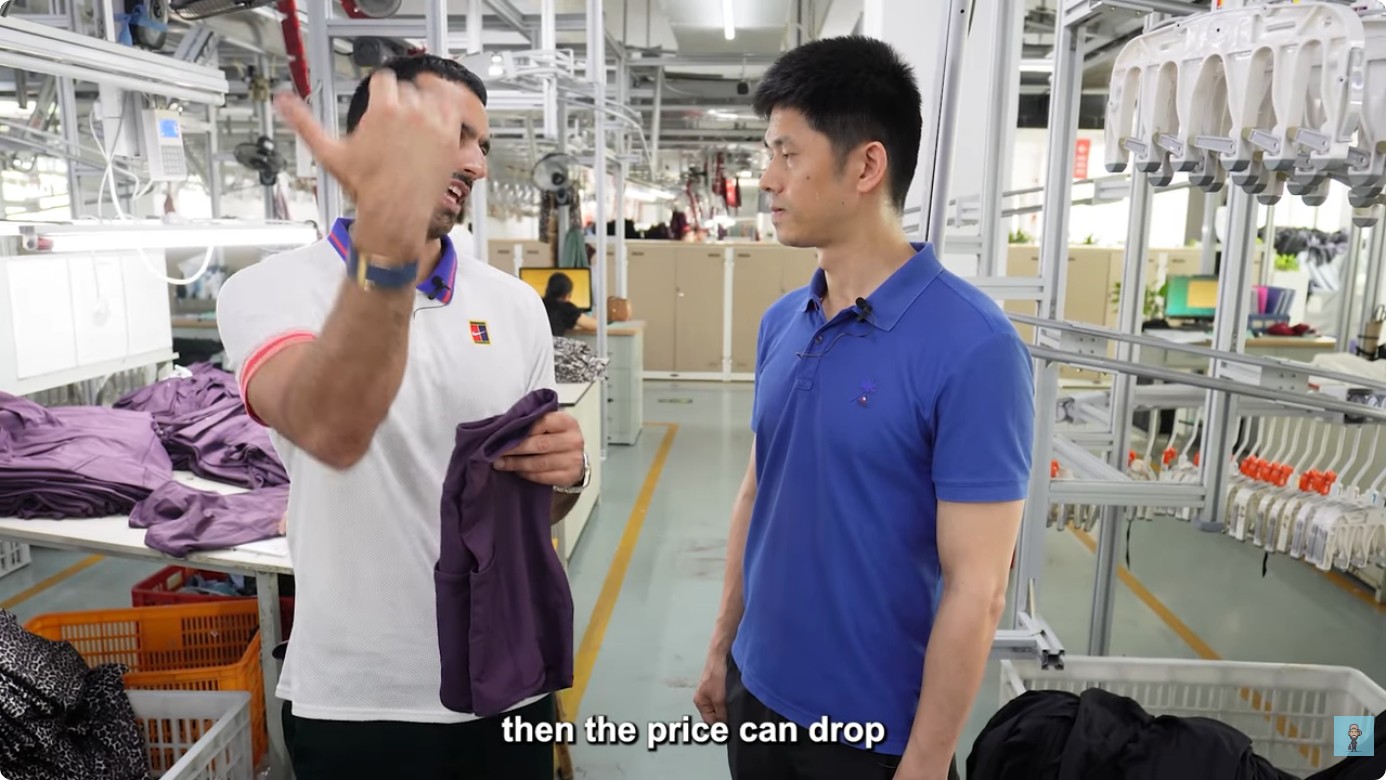
When you approach a factory with a goal inspired by these brands, you must move from subjective adjectives (“high-quality,” “premium”) to objective Custom Manufacturing Requirements (CMRs). A CMR is a specific, measurable instruction. For example:
- Instead of: “Use good fabric.”
- Use a CMR: “Fabric to be 100% cotton, 30 singles, 400gsm jersey, pre-shrunk, with a brushed interior finish. Source from a mill with GOTS certification or equivalent.”
This level of specificity is what separates a generic sample from a product that captures the essence of a top-tier Japanese construct.
Key Players and Their Manufacturing Signatures
Below is a non-exhaustive table of influential Japanese sportswear and lifestyle brands, focusing on the production elements that are most relevant for a custom buyer to note. This is not an endorsement list but a technical study.
| Brand Archetype | Representative Brands | Core Manufacturing Signature | Key CMRs to Note |
|---|---|---|---|
| Technical Sport Heritage | Engineered Garments, Nanamica | Advanced fabrications (membranes, thermal insulation), military-inspired construction, modular layering systems. | Seam taping specifications, fabric weight variances per panel, functionality of pockets (e.g., waterproof zippers), compatibility with mid-layers. |
| Minimalist Daily Wear | Beams, United Arrows & Sons (private label) | Exceptional fabric handle (often garment-dyed), clean finishing, precise but relaxed fits, subtle branding. | Garment-dye process control (color consistency), stitch density ( SPI – stitches per inch), clean inner labels (no itchy tags), precise pattern grading for “relaxed but not sloppy” fit. |
| Workwear & Utility | Snow Peak (for outdoor utility), Kapital | Heavy-duty textiles, reinforced stress points, functional pocket engineering, often unique dyeing/weaving techniques. | Bar-tack placement and density, fabric abrasion resistance (test requests), hardware quality (pull strength of zippers), selvedge denim detailing if applicable. |
| Court & Track Heritage | Onitsuka Tiger (heritage lines), some Mizuno lines | Legacy silhouettes with modern updates, emphasis on sole technology (for footwear) and flexible, breathable uppers for apparel. | For apparel: mesh panel placement and quality, rib knit specifications for cuffs/hem, color blocking accuracy to vintage specs. |
Manufacturing & Sourcing Considerations for Your Project
Adopting the philosophy of these brands in your custom order has direct implications for production.
1. Minimum Order Quantities (MOQs) and Cost
Authentic replication of premium traits comes at a cost and scale challenge. Factories specializing in fast-fashion basics operate at low cost and high volume with standard materials. To achieve a custom 400gsm jersey with a specific brushed finish or a garment-dyed batch, you are likely dealing with mid-tier or specialized factories.
- Typical MOQs: For custom fabric development or special dye processes, expect MOQs of 500-1,000 pieces per style/color as a starting point. Standard blanks with premium upgrades may have lower MOQs (200-500 pcs).
- Cost Impact: These CMRs can increase your FOB (Free On Board) cost by 20-50% compared to a standard blank. The value must be justified by your brand positioning and target retail price.
2. The Critical Role of Sampling
You cannot judge a CMR from a spec sheet alone. The sampling phase is where you validate every claim.
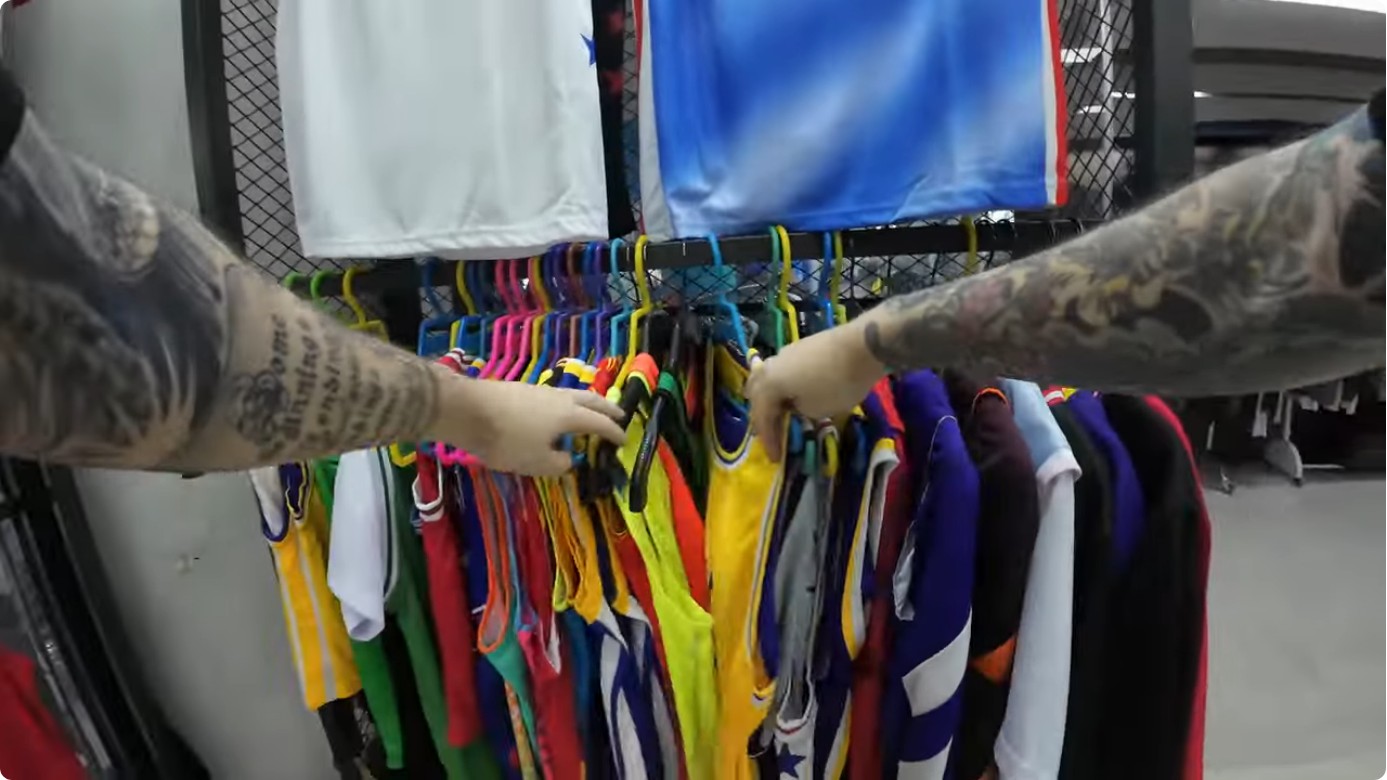
- Pre-Production (PP) Sample: Must be made with the actual planned production fabric and trims. Test it rigorously: wash it 3-5 times, check for pilling, shrinkage, colorfastness.
- Fit Sample: Conduct a fit session with models representing your target demographic. Japanese-inspired fits can run small or precise; confirm sleeve length, shoulder drop, and body length.
- Ask your factory: “Can you provide a mill reference for the 30-singles cotton jersey? Can we see a previous garment-dyed sample from the same dye house?” A confident factory will have these resources.
3. Communication is Key: The Tech Pack Blueprint
Your tech pack is the single most important document. For a Japanese-quality project, it must be hyper-detailed.
Essential components for your tech pack:
- Illustrated Design: Clear flat sketches with all callouts.
- Point of Measure (POM) Diagram: Every measurement point (body length, chest, sleeve, etc.) with exact tolerance (±0.5cm).
- Fabric CMRs: Fiber content, weight (gsm), construction (knit/weave), finish (brushed, peached, etc.). Include mill name if you have a preference.
- Trim CMRs: Label type (woven/printed), care label content (must meet destination market regulations), zipper brand/model (e.g., YKK #5 Vislon), thread type (e.g., bonded nylon).
- Construction CMRs: Stitch type (e.g., 4-thread overlock), seam finish (e.g., flat-felled), bar-tack locations (draw with red lines), special washing instructions.
- Color Standards: Provide a physical Pantone TCX or TPX standard, not just a number. For garment-dye, provide a pre-approved dyed fabric swatch.
Trade-offs and Decision Points
Pursuing this quality tier involves conscious trade-offs. A table can help visualize these decisions.
| Decision Point | Premium Path (Japanese-Inspired) | Standard Path (Basic Blank) |
|---|---|---|
| Fabric | Custom-developed, higher GSM, specialty finishes. Higher cost, longer lead time, higher MOQ. | Off-the-shelf stock fabrics from mill catalog. Lower cost, faster, lower MOQ. |
| Construction | Complex seams, reinforced bar-tacks, premium thread. Slower production, requires skilled labor. | Standard seams, minimal reinforcement. Faster production. |
| Fit | Pattern-making from scratch or extensive modification of a block. Requires multiple fit samples. | Using the factory’s standard block with minor adjustments. Fewer samples needed. |
| Target Market | DTC brands, premium retailers, boutiques. Price point: $60+ for a tee, $150+ for a hoodie. | Promotional wear, budget-friendly basics, large-volume uniform programs. Price point: $15-$30 for a tee. |
Practical Scenarios: Applying This Knowledge
Scenario 1: You are a new DTC athleisure brand.
Your goal is a minimalist, heavyweight hoodie that feels substantial and drapes well. Action: Your tech pack should mandate a 100% cotton, 14oz (approx. 420gsm) fleece with a tight-knit outer shell and a heavy, brushed inner loop. Specify a 2-needle flat-felled seam on the hood and neck tape. Plan for a 700-piece MOQ to justify the custom fabric. Request 3 fit samples before approval.
Scenario 2: You are a gym chain ordering performance tanks.
Your priority is moisture-wicking and durability through frequent washing. Action: Focus on fabric CMRs: a 100% polyester, 4-way stretch, 180gsm knit with a proven moisture management treatment (ask for test reports). Specify a double-needle stitch on all bindings. MOQ may be lower (300 pcs) as you use a standard performance fabric, but do not skip the wash test sample.
Final Assessment: Is This Path Right For You?
Before initiating a project with these ambitions, ask yourself and your team:
- Does our brand story and price point authentically support the added cost of premium construction and fabrics?
- Do we have the budget for a minimum of 3-4 rounds of samples to get the fit and fabric right?
- Can we commit to a longer production lead time (often 90-120 days for custom fabric orders)?
- Is our target customer likely to perceive and value the subtle differences in stitch density, fabric weight, and finishing?
If the answer is “yes” to most, then you are aligned with the philosophy that elevates the top Japanese brands. Your next step is to find a manufacturing partner who not only accepts your detailed CMRs but also proactively suggests improvements based on their expertise with similar builds.
Whether you’re a startup brand or an established retailer, we manufacture custom sportswear at competitive MOQs. Reach out to start your project.