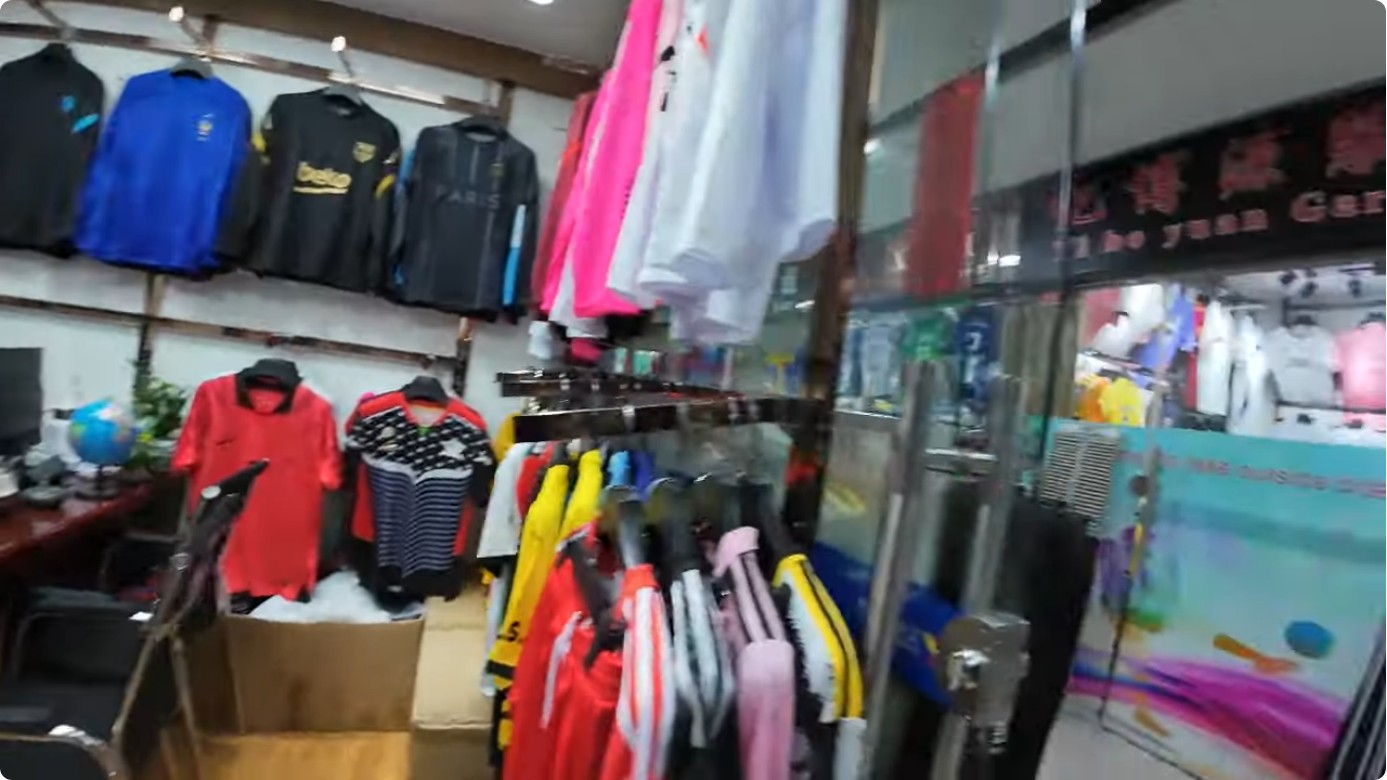
When you see the iconic crocodile logo, you might wonder about the journey of that polo shirt or pair of sneakers. The question “where is Lacoste made” isn’t just about geography; it’s a window into global supply chains, brand strategy, and manufacturing quality. For businesses sourcing custom sportswear—whether you’re a startup fashion label, a gym chain, or a wholesale distributor—understanding where and how established brands produce their apparel provides crucial context for your own sourcing decisions. It highlights the trade-offs between cost, quality, control, and scalability that every brand must navigate.
This article will transparently detail Lacoste’s current manufacturing footprint based on public corporate information, then pivot to the practical realities of sourcing from a dedicated custom manufacturer. We’ll break down the key factors—like minimum order quantities (MOQ), quality control protocols, and production lead times—that separate a trading company from a specialized factory, and help you evaluate what matters most for your project.
- Lacoste, like most major global brands, uses a diversified manufacturing strategy across multiple countries, primarily in Asia, Europe, and North Africa.
- Their production is handled through a network of independent, approved factories, not owned by Lacoste itself.
- For custom brands, the key lesson is that factory selection is about partnerships, certifications, and aligning production capabilities with your specific product needs (e.g., lightweight knits vs. heavyweight fleece).
- Sourcing directly with a specialized OEM/ODM factory offers greater control, customization, and potential for lower per-unit costs at scale compared to working through a general trading intermediary.
Lacoste’s Manufacturing Network: A Transparent Overview
Lacoste S.A., as a publicly-traded company, discloses certain supply chain information in its annual reports and corporate social responsibility (CSR) documents. The brand does not own its manufacturing facilities. Instead, it maintains a tiered supplier network of independent factories that meet its strict quality, ethical, and technical standards. This is a standard model for premium apparel brands.
Based on Lacoste’s latest published supplier lists and industry analyses, their production is concentrated in several key regions:
- Asia: This is the largest production region, with significant manufacturing in countries like China, Vietnam, Cambodia, and Bangladesh. These locations offer scale, developed textile infrastructure, and cost efficiencies for core items like piqué polos, t-shirts, and basic tracksuits.
- Europe: A smaller but strategically important segment, particularly for France, Portugal, and Italy. European factories are typically used for higher-end collections, products requiring specialized craftsmanship (e.g., certain leather goods, refined knitwear), and to serve the European market with shorter lead times. This also supports the brand’s “Made in France” heritage marketing for specific lines.
- North Africa & Turkey: Countries like Tunisia and Morocco (and Turkey) are utilized for their proximity to Europe, competitive pricing, and expertise in certain garment types, often serving the European market.
It is critical to note that a single Lacoste product style is rarely made in just one country. The brand employs a multi-sourcing strategy to mitigate risk (political, logistical, natural disaster), manage capacity, and optimize costs. The “Made in” label on your garment will indicate the country of final assembly, but components like fabrics, trims, and embroidery may originate from various global sources.
The Importance of Approved Factory Lists
Brands like Lacoste do not work with just any factory. They conduct rigorous audits—covering quality systems, social compliance (e.g., no child labor, fair wages), environmental practices, and security (for customs compliance like C-TPAT). Factories must pass these audits and be added to an approved supplier list (ASL). This vetting process is a major operational undertaking for a brand. For your custom brand, this underscores the importance of partnering with a manufacturer that already has robust, verifiable compliance systems in place, saving you from having to audit every single sub-factory from scratch.
From Brand Buyer to Custom Sourcer: Shifting Your Focus
Now, let’s reframe this. You are not Lacoste. You likely do not have a global team of sourcing agents, a multi-year production forecast, or the leverage to demand factory-wide audits. So, what does “where it’s made” mean for your custom hoodie or tracksuit order?
The core shift is this: For a custom brand, the question evolves from “Which country is best?” to “Which specific factory, with which specific capabilities and certifications, is best for my product and my business model?” A dedicated OEM (Original Equipment Manufacturer) or ODM (Original Design Manufacturer) is not a trading company; it is the factory itself, or a direct representative with deep engineering and production control.
Key Differentiators: Trading Company vs. Dedicated Factory
This is a fundamental decision point. Many businesses start by contacting trading companies or sourcing agents because they are easy to find online. Here’s a comparative look:
| Aspect | Trading Company / Agent | Dedicated OEM/ODM Factory |
|---|---|---|
| Control & Communication | Indirect. You communicate with an intermediary who then relays specs to the factory. Risk of miscommunication is higher. | Direct. You work with the production team, pattern makers, and quality managers. Changes are communicated and implemented faster. |
| Technical Expertise | Often generalists. May lack deep knowledge of specific activewear constructions (e.g., raglan sleeves for mobility, moisture-wicking knit structures). | Specialists. Engineers and technicians who understand fabric behavior, stitch types for performance, and construction nuances for items like performance jersey or fleece. |
| Minimum Order Quantity (MOQ) | Often higher, as they aggregate orders from multiple clients to meet a factory’s MOQ. | Can be more flexible, especially with factories that have multiple production lines. Some specialize in low-Moq niche production. |
| Cost Transparency | Markups are added at each stage. The true factory cost is opaque. | Pricing is based on direct factory costs (materials, labor, overhead). More transparent for negotiation. |
| Problem Resolution | The agent is a middleman. Resolving quality issues can be slow and bureaucratic. | You engage directly with the decision-maker. Quality issues can be addressed on the spot during production. |
| Intellectual Property (IP) Risk | Higher. An agent works with many clients; your design could be inadvertently shared. | Lower. The factory has a direct contractual relationship with you. Reputable factories take client confidentiality seriously. |
For a custom brand, especially one developing unique designs or technical fabrics, the control, expertise, and direct relationship of a dedicated factory are usually superior. The trade-off is that you must manage more of the communication and specification details yourself.
Critical Sourcing Factors: Beyond the “Made In” Label
So, if you’re evaluating a custom manufacturer, what should you ask and verify? Here is a practical checklist, moving from foundational to advanced.
Also read: Stone Washed T-Shirts: Style, Sourcing, and Custom Manufacturing Guide
- 1. Certifications & Compliance:
- Does the factory hold ISO 9001 (Quality Management)?
- Do they have WRAP, BSCI, or SMETA certification for ethical labor practices? (These are standard audits for Western brands). You can verify certificates on the respective organization’s portal.
- For performance apparel, do they have OEKO-TEX Standard 100 certification for their chemical management? This ensures harmful substances are absent from the final product.
- Are they compliant with c customs-TPAT or similar security programs if shipping to North America?
- 2. Sample Development Capability:
- Can they produce a fit sample and a pre-production sample (PP sample) that matches your tech pack?
- Do they have an in-house pattern maker? A good pattern is the foundation of fit and quality.
- What is their sample iteration process? How many revisions are included in your cost?
- 3. Production Capacity & Specialization:
- What is their average monthly capacity for your product category (e.g., hoodies)?
- Do they specialize in knits (t-shirts, sweatshirts) or wovens (cargo pants, tracksuit bottoms)? A factory great at t-shirts may not be ideal for complex cargo pants with multiple pockets and reinforcements.
- What is their typical lead time from approved PP sample to shipment? (This varies by product complexity and order volume).
- 4. Quality Control (QC) Process:
- Do they have an in-house QC team? What is their inspection checklist (fabric, stitching, measurements, packaging)?
- Can they provide photos/videos during production (mid-line inspection)?
- Do they offer a final inspection report before shipment?
- 5. Material Sourcing:
- Do they work with specific fabric mills? Can they source certified fabrics (e.g., organic cotton, recycled polyester with GRS certification)?
- What is their minimum fabric order quantity? This can be a hidden cost driver.
- 6. Financial & Operational Stability:
- How long have they been in business?
- Can they provide references from clients in your market (e.g., USA, EU)?
- What are their payment terms? (e.g., 30% deposit, 70% upon shipment). Be wary of terms requiring 100% upfront payment.
The Strategic Advantage of Working Directly with a Specialized Factory
When you cut out the trading company layer and engage a factory with deep expertise in activewear, several strategic benefits emerge for your brand:
- Cost Efficiency: You pay for production, not for a middleman’s margin and risk buffer. This is particularly impactful on larger orders where margins are already thin.
- Faster Time-to-Market: Direct communication eliminates lag. A design change can be discussed with the cutter and sewer in hours, not days. This agility is vital for seasonal collections or fast-fashion models.
- True Customization: Want to modify a standard hoodie pattern for a better athletic fit? Need a special seam tape for a waterproof tracksuit? A factory engineer can work with you on these ODM-style adaptations. A trading company will likely say “that’s not our standard style” or pass the cost and complexity back to you.
- Built-in Quality Partnership: A good factory views your success as their success. They invest in their equipment and training because they want repeat business. This alignment of interest is the foundation of a sustainable supply chain.
This model is how private label brands and major retailers scale. They identify a manufacturing partner whose capabilities match their product vision and build a long-term relationship. The “where” becomes less about a country’s generic reputation and more about the specific factory’s track record with your type of garment.
What About “Made in USA” or “Made in Europe” for Custom Brands?
The “Made in” label carries significant marketing weight. For custom brands, producing domestically (e.g., USA, Italy, Portugal) offers compelling advantages:
- Shorter Lead Times: Critical for quick replenishment and reducing inventory risk.
- Simpler Logistics & Lower Carbon Footprint: Fewer shipping complexities, potential for lower tariffs, and a strong sustainability story.
- Perceived Quality & Heritage: Certain markets associate “Made in Italy” or “Made in USA” with premium craftsmanship.
However, the trade-offs are significantly higher unit costs and often higher MOQs due to higher labor costs. The capacity for basic t-shirts or hoodies might be limited compared to Asia. For a custom brand, the decision is a strategic one based on your price point, brand narrative, and operational needs. A hybrid strategy—core basics from Asia, premium items from Europe—is common.
Conclusion: Your Sourcing Checklist
So, “where is Lacoste made?” In a distributed global network of vetted factories. But the more important question for your business is: Which factory should make your products?
When evaluating a custom sportswear manufacturer, prioritize direct factory relationships over trading agents. Scrutinize their certifications, ask to see their sample development process, and understand their quality control checkpoints. Look for a partner with demonstrable experience in your specific product category—whether that’s moisture-wicking tank tops, rugged cargo pants, or heavyweight fleece hoodies. The goal is to build a transparent, controllable, and quality-focused production pipeline that scales with your brand.
Ready to Build Your Own Manufacturing Partnership?
If you’re looking to source or customize any of the styles mentioned above, our factory offers low MOQ OEM/ODM production with full sampling support. Get a free quote today.