
For wholesale buyers, fashion brands, gyms, and sports teams, the phrase “China factory clothing” represents a vast and complex landscape of opportunity. It’s not about buying off-the-shelf garments; it’s about partnering with manufacturing hubs to create custom-branded apparel that fits your exact specifications. This guide cuts through the noise, providing a practical roadmap for navigating OEM and ODM production in China’s activewear sector. We’ll cover the why, how, and what to watch for, transforming the daunting task of overseas sourcing into a manageable, strategic process.
Whether you’re launching a new athleisure line, outfitting a franchise gym, or ordering team uniforms, understanding the ecosystem of Chinese sportswear manufacturing is your first step toward a successful project. This article serves as a foundational reference, detailing production capabilities, quality markers, and the critical communication points between you and your factory partner.
Why China Remains a Hub for Custom Sportswear Manufacturing
The dominance of China in global apparel manufacturing isn’t just about low cost; it’s about an unparalleled ecosystem built over decades. For custom sportswear, this translates into specific advantages that are hard to replicate elsewhere.
Related guide: The Loose Fit Long Sleeve Shirt: A Sourcing Guide for Brands and Buyers
Scale, Speed, and Supply Chain Integration
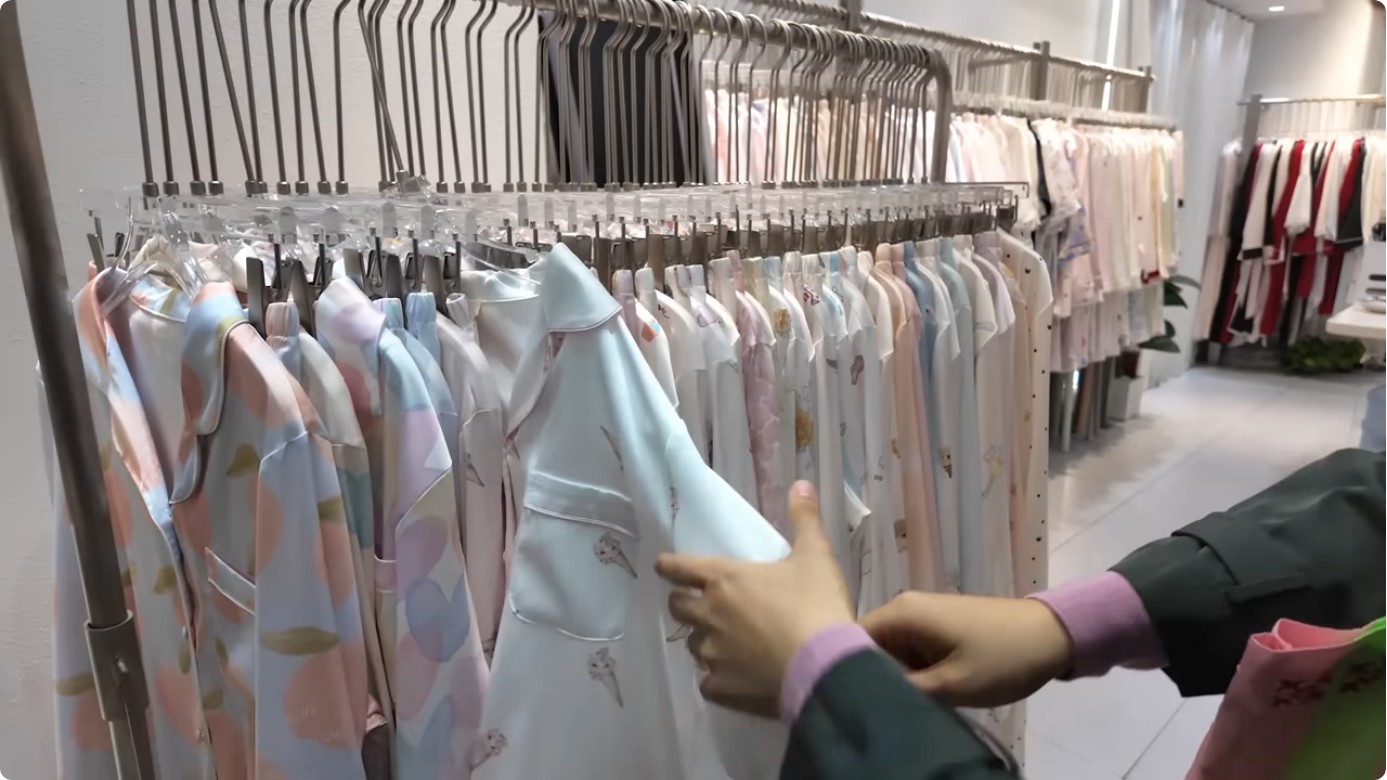
China’s manufacturing infrastructure for textiles is deeply integrated. A factory in Guangdong or Zhejiang can source technical fabrics, performance knits, zippers, and prints from specialized suppliers within a few hours’ drive. This vertical integration shortens lead times and allows for flexible material sourcing—crucial for brands needing specific stretch ratios, moisture-wicking finishes, or recycled polyester blends. For a buyer, this means faster prototyping and the ability to iterate on fabric choices without extending timelines by months.
The Cost Structure: Beyond the Unit Price
While cost competitiveness is a primary draw, it’s essential to understand what drives pricing. The “China factory” model thrives on high-volume efficiency. Your order quantity directly impacts your unit cost. A factory’s minimum order quantity (MOQ) isn’t arbitrary; it’s the threshold at which they can efficiently run their cutting tables, sewing lines, and finishing departments. Small-batch custom work often commands a significant premium. Furthermore, costs are comprised of:
- Material Cost: The base fabric, trims, and labels.
- Labor Cost: The complexity of construction (e.g., a simple t-shirt vs. a multi-panel raglan hoodie with zippered pockets).
- Tooling/Mold Cost: One-time fees for custom screens (screen printing), molds (rubber patch), or digital files (embroidery).
- Overhead & Profit: The factory’s operational margin.
Transparency in this breakdown is a key indicator of a reputable supplier.
The B2B Sourcing Journey: From Concept to Container
Sourcing custom sportswear is a phased process. Approaching it systematically prevents costly revisions and delays. Here is the typical workflow for an OEM (Original Equipment Manufacturer) or ODM (Original Design Manufacturer) project.
1. The Tech Pack: Your Single Source of Truth
Before you ever email a factory, you need a tech pack. This is the comprehensive blueprint of your garment. A weak tech pack is the single biggest cause of production errors and budget overruns. It must include:
- Flat Sketch: A clean, front-and-back drawing with all design details marked (stitch types, hem finishes, label placements).
- Spec Sheet: Precise measurements for each size in your range (chest, length, sleeve, etc.), including tolerance allowances (e.g., ±1.5cm).
- Fabric & Trim Specs: Exact material composition (e.g., 92% polyester, 8% spandex), weight (e.g., 280gsm), and construction (e.g., French terry, single jersey). Specify brand names if you require a specific mill’s fabric.
- Color Standards: Pantone color codes or physical color lab dips (small fabric swatches dyed to your color).
- Construction Details: Notes on seams (e.g., flatlock, coverstitch), closures (e.g., YKK #5 coil zipper), and any special techniques.
- Artwork Files: Vector files (.ai, .eps, .svg) for prints/embroidery, with clear placement diagrams.
Pro Tip: If you don’t have a design, many Chinese factories offer ODM services. They have existing patterns and styles they can modify with your branding. This is a faster, lower-risk path for brands without an in-house design team. Always request to see the factory’s ODM catalog first.
2. Sampling and Validation
Never proceed to bulk production without approving a pre-production (PP) sample. The process typically involves:
- Fabric Swatch Approval: Factory sends a dyed fabric swatch for color and hand (feel) approval.
- Fit Sample: A sample made in one size (usually a medium or size M) from the approved fabric, often with temporary stitching and no final prints/embroidery. You fit this on a model or mannequin to check proportions.
- PP Sample: A final, production-intent sample made exactly as the bulk garment will be. This is your last chance to catch any discrepancies in color, embroidery density, print feel, or stitching quality. Approve this sample in writing before production begins.
3. Production and Quality Control
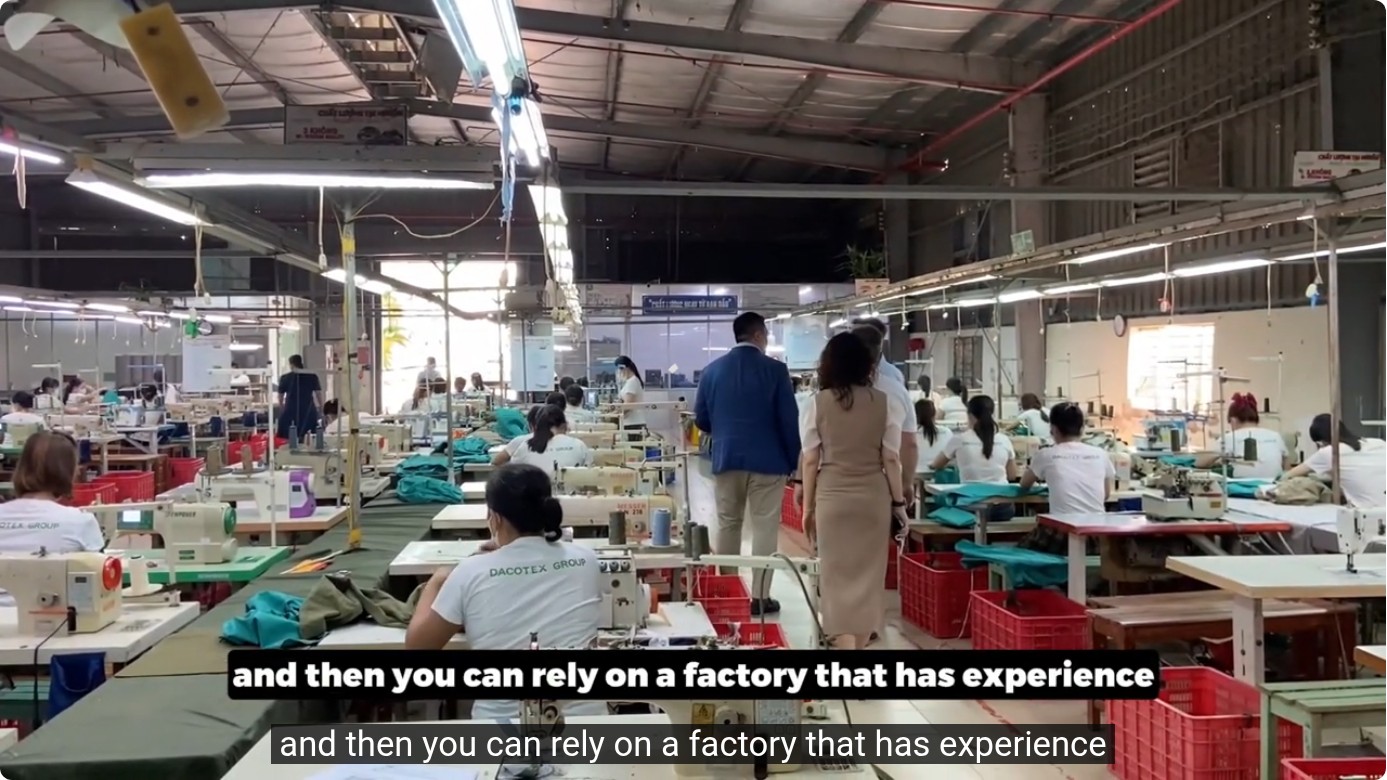
Once the PP sample is approved, the factory sources materials and schedules production. For orders over ~500 pieces, an in-process quality check is wise. This involves a QC inspector checking garments mid-production to catch sewing defects or fabric issues early. Final inspection (AQL 1.0 or 2.5 standard) is standard before shipment. You can hire a third-party inspection company like SGS, Intertek, or QIMA to conduct this for you, providing an unbiased report with photos.
Decoding Quality: What Separates Good from Problematic
“Made in China” no longer equates to poor quality, but quality varies wildly by factory. Your ability to discern quality markers is critical. Focus on these elements:
| Quality Area | What to Look For (Good) | Red Flags (Problematic) |
|---|---|---|
| Fabric & Dye | Even color tone, no streaks or spots. Fabric feels consistent in hand, not stiff or overly soft in patches. No loose yarns or slubs (unless it’s a slub-knit design spec). | Color bleeding between fabric panels. Rough or inconsistent texture. Fabric feels thin, see-through, or overly heavy for its stated gsm. |
| Stitching | Straight, even stitch lines. No loose or broken threads. Seam allowances are consistent. Stitch density is appropriate for the fabric (e.g., more stitches per inch on stretch fabrics). | Skewed seams (garment twists).chain-stitch loops on the inside. Puckering around curves. Raw edges not covered with a serger/overlock stitch. |
| Trims & Finishing | Zippers glide smoothly, pullers are secure. Labels are straight, stitched down neatly. Prints/embroidery are crisp, with sharp edges and good color opacity. No loose ink or embroidery threads. | Zippers catch or are misaligned. Labels are crooked or puckering the fabric. Print feels cracked, rubbery, or stiff. Embroidery is loopy, sparse, or has gaps. |
| Fit & Symmetry | Left and right sides are mirror images. Sleeve lengths match. Hem is even all around. Shoulder seams sit correctly on a hanger. | One sleeve is longer. Hem is wavy. Shoulder seams droop forward or backward. Garment hangs straight on a hanger. |
For performance apparel, ask for fabric test reports. Reputable factories can provide documentation for claims like moisture-wicking, antimicrobial treatment, or UPF protection, often referencing standards from bodies like Oeko-Tex for chemical safety or specific AATCC test methods.
Customization Spectrum: What’s Possible and at What Cost
The level of customization you require dictates your factory choice and budget. Here’s a breakdown of common techniques for sportswear.
- Decoration (Applied Branding): This is the most common. Includes screen printing (best for large, simple designs, cost-effective at volume), digital printing (full-color, complex designs, higher per-unit cost), embroidery (premium look for logos, cost based on stitch count), and heat transfer vinyl (HTV) or rubber patches. Your design’s colors, size, and placement will determine the optimal method.
- Fabric & Construction: True OEM/ODM. This involves selecting the base fabric (e.g., 4-way stretch, brushed fleece, lightweight nylon), the knit/weave structure, and the garment’s pattern. Changing a neckline from crew to V-neck, adding thumbholes, or altering pocket configurations falls here. This is more complex and has higher MOQs (often 1000+ units per style) than simple decoration.
- Advanced Tech Integration: For brands targeting the high-performance market. This includes bonding seams (for chafe resistance), laser perforation for ventilation, reflective taping, or integrating conductive threads for smart apparel. These require factories with specialized equipment and expertise, usually with significant MOQs and longer development cycles.
Key Trade-off: The more you customize the product itself (fabric, cut, construction), the higher your MOQ, development cost, and per-unit price will be. Starting with a standard factory style and adding your branding via decoration is the lowest barrier to entry.
Critical Considerations and Common Pitfalls
Sourcing overseas is a high-stakes game. Avoiding these common pitfalls saves time, money, and reputation.
- Communication Gaps: Language and cultural differences are real. Use simple, unambiguous language in your tech pack. Confirm understanding in writing. Use visuals (annotated images) liberally. A local sourcing agent can be invaluable for bridging this gap, but vet them thoroughly—some are just middlemen adding cost.
- The “Trading Company” vs. “Factory” Question: Many suppliers are trading companies, not factories. They manage the project but outsource production. This isn’t inherently bad—good trading companies handle QC and logistics expertly. However, for highly complex or proprietary tech garments, working directly with a factory with the relevant R&D and machinery is preferable. Always ask: “Are you the actual manufacturing facility? Can we have a video call tour?”
- Intellectual Property (IP) Protection: The risk of design theft is a top concern. While China’s IP laws have improved, enforcement can be inconsistent. Mitigate risk by: 1) Registering your trademarks and designs in China first. 2) Using Non-Disclosure Agreements (NDAs) with your factory, though their enforceability is a challenge. 3) Splitting critical components (e.g., having fabric dyed at one mill, sewing at another) to make copying harder. 4) Building a relationship with a single, trusted factory for long-term work.
- Logistics and Tariffs: Your quote should be clear on Incoterms (e.g., FOB Shanghai, EXW factory). Factor in international freight, customs clearance, duties, and inland trucking to your warehouse. The U.S. Section 301 tariffs apply to many Chinese goods; confirm the HTS code for your apparel and its current duty rate. Many buyers now use freight forwarders to manage this complexity.
Decision Checklist: Are You Ready to Source?
Before you commit, run through this checklist. A “no” to any item signals a need for more preparation.
- [ ] I have a finalized tech pack with precise specs, measurements, and fabric details.
- [ ] I understand my true cost targets and have factored in all landed costs (production, shipping, duties, inspection).
- [ ] I have defined my required quality standards and have a plan for QC (in-process/final inspection).
- [ ] I know my exact order quantities and understand how they affect MOQs and pricing.
- [ ] I have considered lead time (typically 8-16 weeks from PP sample approval) and have a sales/marketing plan that aligns.
- [ ] I have a strategy for protecting my IP (trademark registration, careful partner selection).
- [ ] I have budgeted for potential quality issues (typically 2-5% overrun/underrun is allowed in contracts).
- [ ] I have a clear communication protocol with the factory (single point of contact, weekly updates).
Is “China Factory Clothing” the Right Path for Your Brand?
For brands and businesses looking to scale, create a unique product line, or outfit large groups with custom apparel, manufacturing in China offers unmatched scale and capability. However, it is not a passive, hands-off process. Success demands meticulous preparation, clear communication, and active project management. The initial investment in a detailed tech pack and a robust sampling phase pays dividends in avoiding production nightmares. For smaller runs or test markets, consider exploring local manufacturers or Vietnam/Bangladesh as alternatives to balance cost, quality, and lead time.
The relationship with your factory partner is paramount. Look for transparency, a willingness to ask questions, and a track record (ask for client references). A factory that flags potential issues with your design early is a far better partner than one that simply says “yes” to every request.
Need custom versions of any style covered here? Our sportswear factory handles everything from tech pack review to bulk delivery. Request a sample or quote.
You may also like: The Complete Guide to 100% Cotton Corduroy: Properties, Sourcing, and Applications