
For soccer teams, athletic brands, and retailers, understanding the delivery timeline for custom soccer kits is as critical as the design itself. A missed deadline can disrupt a season launch, a marketing campaign, or a retail restock. While “soccer03 delivery timre” might be a common search query, it points to a fundamental B2B concern: how long does it realistically take to get custom-made soccer uniforms from a factory, and what factors influence that schedule? This article breaks down the entire production journey, from design finalization to your door, providing wholesale buyers and brand owners with the context needed to plan accurately and avoid costly delays.
We’ll move beyond vague estimates to examine the specific phases of manufacturing, how customization choices alter the clock, and what you must communicate to your factory to get a reliable quote. Whether you’re ordering 50 kits for a local club or 5,000 for a retail line, the principles of timeline management remain the same, but the strategies for acceleration differ.
What’s in a Custom Soccer Kit? Breaking Down the Components
Before discussing time, you must define the product. A standard soccer kit typically includes a jersey, shorts, and socks. However, custom production allows for a wide array of configurations and additions. Each component and feature adds layers to the production process.
More advice: A Buyer’s Guide to Types of Hoodies for Custom Sportswear
Core Garment Components
- Jersey: The centerpiece. Construction can be seamless (knitted in one piece) or traditional cut-and-sew. Fabric choice (polyester, polyester-cotton blend, moisture-wicking tech) is the first major decision.
- Shorts: Often made from the same fabric as the jersey for a unified look, but can be a different material (e.g., lighter mesh). Features like built-in liners, drawstrings, and pocket styles add complexity.
- Socks: Can be knitted or ribbed. Customization often involves heel/toe colors, cuff designs, and logos. Sock production is frequently a separate, specialized process.
Common Add-Ons and Their Time Impact
Brands and teams often add these elements, each requiring additional production steps:
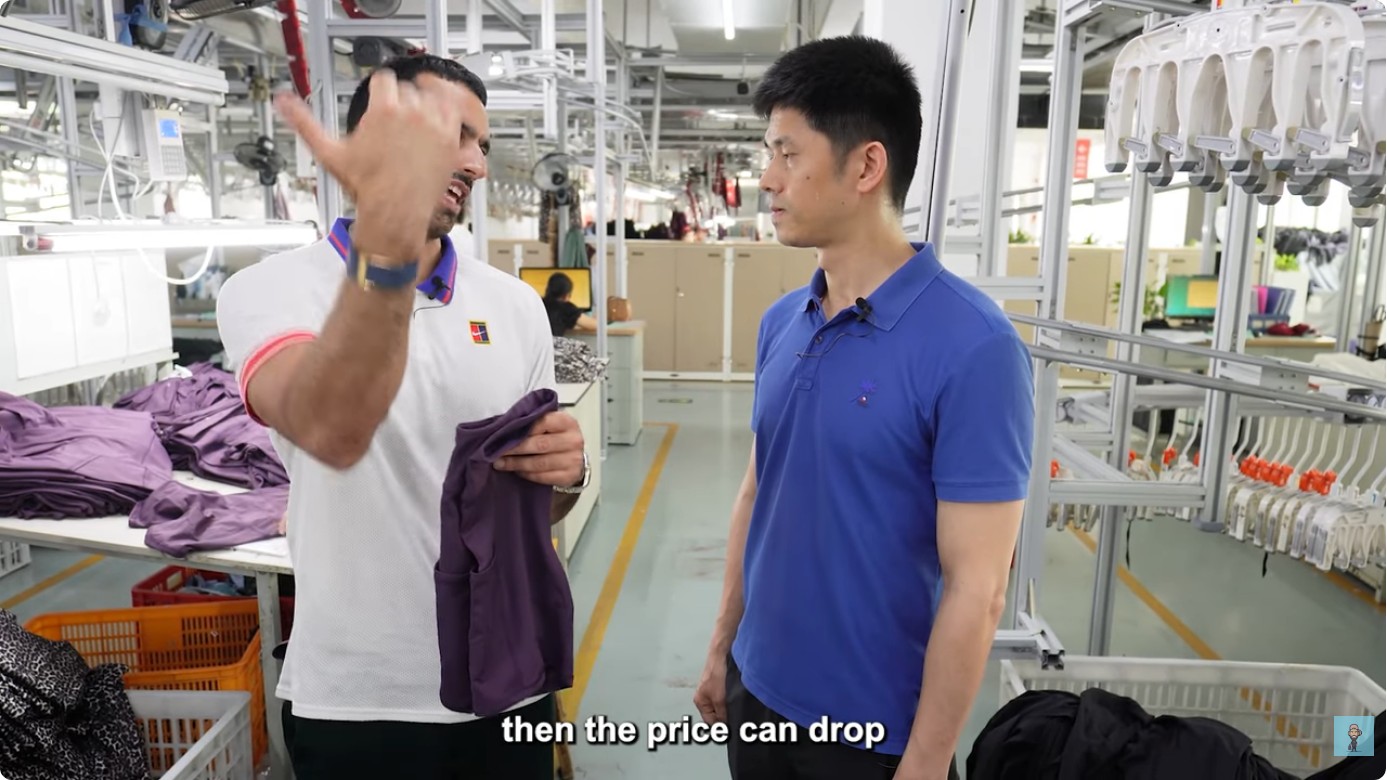
- Sublimation Printing: The dominant method for modern soccer kits. The design is dyed into the fabric before cutting. Allows for unlimited color and intricate all-over patterns. This is a pre-fabrication step.
- Embroidery: For logos on chests, sleeves, etc. Requires digitizing the artwork and stitching onto pre-made garments. Can be done post-sublimation.
- Heat Transfer Vinyl (HTV): Applied after garment construction. Faster for small runs but less durable than sublimation or embroidery.
- Number/Name Sets: Often provided as separate, sew-on or iron-on patches for roster changes. This is a separate production and packing step.
- Matching Track Suits/Warm-Up Sets: A common bundle. Producing these alongside the kit in the same factory can streamline logistics but adds garment types to the line.
The Custom Soccer Kit Production Timeline: A Phase-by-Phase Breakdown
A realistic delivery clock starts when you approve final artwork and specs, not when you first contact a factory. Here is a typical sequence for a mid-sized custom order (500-2,000 units) using sublimation printing.
| Production Phase | Typical Duration | Key Activities & Buyer Inputs |
|---|---|---|
| 1. Tech Pack & Sample Approval | 1-3 weeks | Factory creates a detailed tech pack (specs, measurements, construction notes). They produce a pre-production sample (PP sample) for your physical approval. Your delay here is the most common timeline killer. |
| 2. Fabric Sourcing & Dyeing (for Sublimation) | 1-2 weeks | White or neutral base fabric is sourced. For sublimation, the fabric is then digitally printed with your design and heat-set. Special performance fabrics (e.g., with Oeko-Tex Standard 100 certification) may have longer lead times. |
| 3. Cutting & Sewing | 1-2 weeks | The printed fabric is cut according to pattern pieces. Pieces are sewn together into complete garments. This is where the garment’s shape and fit are finalized. |
| 4. Final Trimming & Inspection | 3-5 days | Adding labels, hangtags, accessories (like number sets). A final quality control (QC) check is performed, often against the approved PP sample. |
| 5. Packaging & Logistics | 2-5 days | Garments are folded, bagged, and boxed (often individually poly-bagged). Freight forwarding is arranged. This is where air vs. sea freight creates massive timeline differences. |
Total Estimated Factory Production Time (FOB): 4.5 – 9.5 weeks
Note: This is time from approved tech pack/PP sample to goods ready at the factory (Free On Board). It does not include ocean/air transit time to your warehouse.
Key Factors That Accelerate or Delay Your Soccer Kit Delivery
Understanding these variables allows you to negotiate realistic timelines and identify potential bottlenecks.
1. Customization Method & Complexity
- Sublimation: While the printing is fast, complex all-over patterns with many color breaks can slow the digital printing process. Simpler, larger color blocks are faster.
- Embroidery: High-density stitching (e.g., on a crest with many details) takes longer per piece. Simple, single-color logos are quickest.
- Multiple Decoration Types: A jersey with both sublimated body and embroidered sleeve logo requires coordination between print and embroidery stations, extending the line time.
2. Fabric and Material Availability
Standard polyester knits are usually in stock. Specialized performance fabrics (e.g., with AATCC-certified moisture management, specific grammage, or recycled content) may need to be ordered and dyed, adding 1-3 weeks. Always ask your factory for their standard fabric lead times.
3. Order Quantity (MOQ)
The Minimum Order Quantity (MOQ) directly impacts timeline. A factory’s MOQ for sublimation is often tied to their fabric roll length (e.g., 500m per roll). A 50-kit order might require waiting for a “lot consolidation” with other orders, delaying start. Larger orders (2,000+) typically move through production faster per unit, as the line is kept running consistently.
4. Factory Capacity and Seasonality
Leading up to major soccer seasons (pre-season summer, winter holiday), factories in regions like China, Vietnam, or Pakistan operate at peak capacity. Orders placed during these peaks (March-July for Northern Hemisphere kits) face longer queues. Planning 6-9 months in advance for seasonal launches is standard.
5. Shipping Method
| Shipping Method | Transit Time (Port to Port) | Cost vs. Time Tradeoff |
|---|---|---|
| Sea Freight | 30-45 days (e.g., China to US West Coast) | Most cost-effective for bulk. Adds significant time. Requires customs clearance. |
| Air Freight | 5-10 days | Expensive. Best for urgent, small-medium orders or samples. Not economical for full container loads. |
| Express Courier (DHL/FedEx) | 3-7 days door-to-door | For samples or very small urgent orders. Prohibitively expensive for production volumes. |
6. Approval Loops and Communication
The single biggest variable you control is the speed of your feedback. A factory will pause for days or weeks waiting for your approval on the tech pack, fabric swatch, or PP sample. Designating one decision-maker and using clear, visual feedback tools (annotated PDFs) is crucial for on-time delivery.
Sourcing Custom Soccer Kits: What to Communicate for an Accurate Quote & Timeline
To get a realistic delivery estimate from any factory, you must provide a complete picture. Use this checklist when requesting a quote:
- Detailed Artwork: High-resolution vector files (AI/EPS) with Pantone color codes for each color. For sublimation, provide the full repeat pattern.
- Spec Sheet: Include desired fabrics (with performance specs like GSM, moisture-wicking rating), garment measurements (size chart), and construction details (e.g., “flatlock seams on shoulders,” “ribbed cuff”).
- Quantities per Size: Provide a breakdown (e.g., S: 100, M: 150, L: 120, XL: 80). This helps the factory plan cutting efficiency.
- Decoration List: Specify exactly where each logo, stripe, or number will go and the method (sublimation, embroidery, HTV). Include stitch counts for embroidery if known.
- Accessories: List all non-garment items: number sets, matching socks, specific hangtags, packaging (individual poly bags? bulk in cartons?), and any licensing tags (e.g., FIFA authorized badges).
- Target Delivery Date: State your required in-hand date. A good factory will work backward from this to tell you if it’s feasible and when you must place the order.
- Shipping Destination: Your warehouse address vs. a port. This affects final freight quoting and logistics planning.
Pro Tip: Ask the factory for their proposed production schedule in writing, with milestone dates for PP sample approval, fabric cut, and cargo ready. This creates accountability.
Real-World Scenarios: How Timeline Plays Out
Scenario 1: The Local Amateur Club
Order: 50 custom sublimated jerseys and shorts for a fall season.
Priority: Cost-effective, decent quality.
Timeline Strategy: Use a factory with a low MOQ (some offer 30-50 pieces). Accept a standard fabric from their stock. Choose simpler designs with fewer color breaks to keep print speed high. Opt for sea freight, but plan for a 10-12 week total timeline (5 weeks production + 6 weeks sea + 1 week customs/delivery). Order by early June for a late August season start.
Scenario 2: The Emerging Activewear Brand
Order: 2,000 full kits (jersey, shorts, socks) + warm-up track suits for a Spring/Summer collection.
Priority: Premium feel, consistent branding, on-shelf date.
Timeline Strategy: Source a specific recycled performance fabric (adds 2 weeks). Invest in a high-quality PP sample to avoid fit issues. Plan for a 7-8 week factory production time. Use air freight for the first 500 units to hit flagship stores on launch date, and sea freight for the remainder to fill distribution centers. Total lead time: 4 months from final design approval.
Frequently Asked Questions About Soccer Kit Production Time
Can I get custom soccer kits faster than the standard timeline?
Yes, but at a significant cost premium. You can pay for:
- Expedited factory scheduling: Some factories will prioritize your order for an extra fee, bumping other jobs.
- Air freight: The single biggest time-saver post-production.
- Simplified design: Using stock fabrics and fewer decoration methods (e.g., only HTV instead of sublimation) can shave 1-2 weeks.
- Pre-existing samples: Some ODM factories have near-ready styles that only need your logo added, drastically reducing development time.
What is the biggest reason for delivery delays?
Unrealistic buyer expectations compounded by slow feedback on samples. A factory’s production clock often stops waiting for you to approve the PP sample. Rushing the approval stage leads to fit or color errors discovered only after bulk production, causing even longer delays for corrections. Rushing to sign off on a sample is the fastest way to miss your final delivery date.
How do I ensure quality doesn’t suffer if I need a faster turnaround?
Focus your scrutiny on the pre-production sample approval. This is your last chance to catch fit, fabric, color, and construction issues. For urgent orders, be extra meticulous here. Then, implement a robust incoming QC process at your warehouse. Check for consistent stitching, color matching to the sample, and correct logo placement on at least 10% of the cartons.
The Bottom Line: Planning is Everything
Your soccer kit delivery time is a function of design complexity, material sourcing, factory schedule, and your own responsiveness. There are no true “rush” orders in custom apparel—only trade-offs between cost, speed, and quality. The key is to understand the sequence, ask for milestone dates in writing, and protect your timeline by being a decisive partner in the approval process. A transparent conversation with your manufacturer about your true deadline allows them to advise the best path—whether that’s a slower, more cost-effective sea shipment or a pricier air freight push.
Need custom versions of any style covered here? Our sportswear factory handles everything from tech pack review to bulk delivery. Request a sample or quote.
Also read: Sourcing Apparel for the Modern Soccer Field: A Guide for Teams, Brands, and Buyers