

Custom Teamwear Manufacturer — Uniforms & Jerseys
OEM & ODM teamwear for clubs, leagues, school teams and sports brands in 30 countries. In-house knitting, cut-and-sew, sublimation and QC — from sketch or tech pack to labelled, packed cartons.
Fexwear is a custom teamwear manufacturer producing OEM and ODM uniforms and jerseys for clubs, leagues, school teams and sports brands in 30 countries. Founded in 2010, we run our own in-house knitting, cut-and-sew, sublimation and quality-control lines, and we take a teamwear programme from a rough sketch or a finished tech pack all the way through to labelled, packed cartons — with minimum order quantities starting at 10 pieces.
Teamwear is the most detail-driven category we make, because a single order has to satisfy a whole roster rather than one customer. Fifteen players, fifteen names, fifteen numbers, and one design that has to look identical on every body in the squad. The number of personalised variables is where most teamwear orders go wrong: a name spelled wrong on one shirt is a return, and a number set printed in the wrong order is a reprint of the entire run.
We build teamwear around three things: a repeatable block graded across the full size run, name and number placement specified once and applied identically across the order, and a decoration method that survives washing. This guide covers what we actually run across six sport categories, the fabrics behind them, decoration methods, sizing, minimum order quantities, and the questions buyers ask most.
Sport Categories We Manufacture
Six core sports categories, all produced in-house with your artwork, colours, names and numbers.

Basketball
Reversible and single-layer basketball jerseys, plus shooting shirts, warm-ups and shorts. Full sublimation available, with names and numbers applied in the same production run as the garment.

Baseball & Softball
Wholesale custom jerseys for men and women in sizes from youth to adult, with full sublimation, tackle twill and embroidered options. Button-front and pullover constructions.

Soccer
Full sublimation soccer kits, cut-and-sew options, goalkeeper kits in contrast colours, and training wear. The most repeated order in this category, because clubs reorder the same kit every season.

Rugby
Rugby uniforms for men, women and kids, in a range of constructions. Heavyweight cotton blends for traditional looks and lightweight performance knits for the modern game.

Cricket
Custom-made cricket teamwear including whites, coloured kits, pads and practice wear. Whites need a different fabric spec entirely — see below.

Fishing Wear
Breathable fishing apparel designed for long hours on the water: anti-UV finishes, quick-dry fabrics and UPF protection in a range of tops.
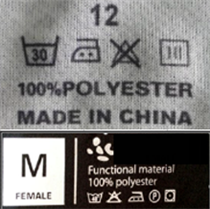
Customized Labels
Create your own private label with options for heat transfer labeling, sublimated logos, and woven sew labels.
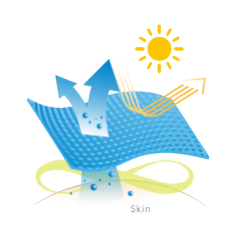
Anti-UV Protection
Stay shielded from harsh winds in winter and unbearable heat in summer with our advanced anti-UV fabrics.
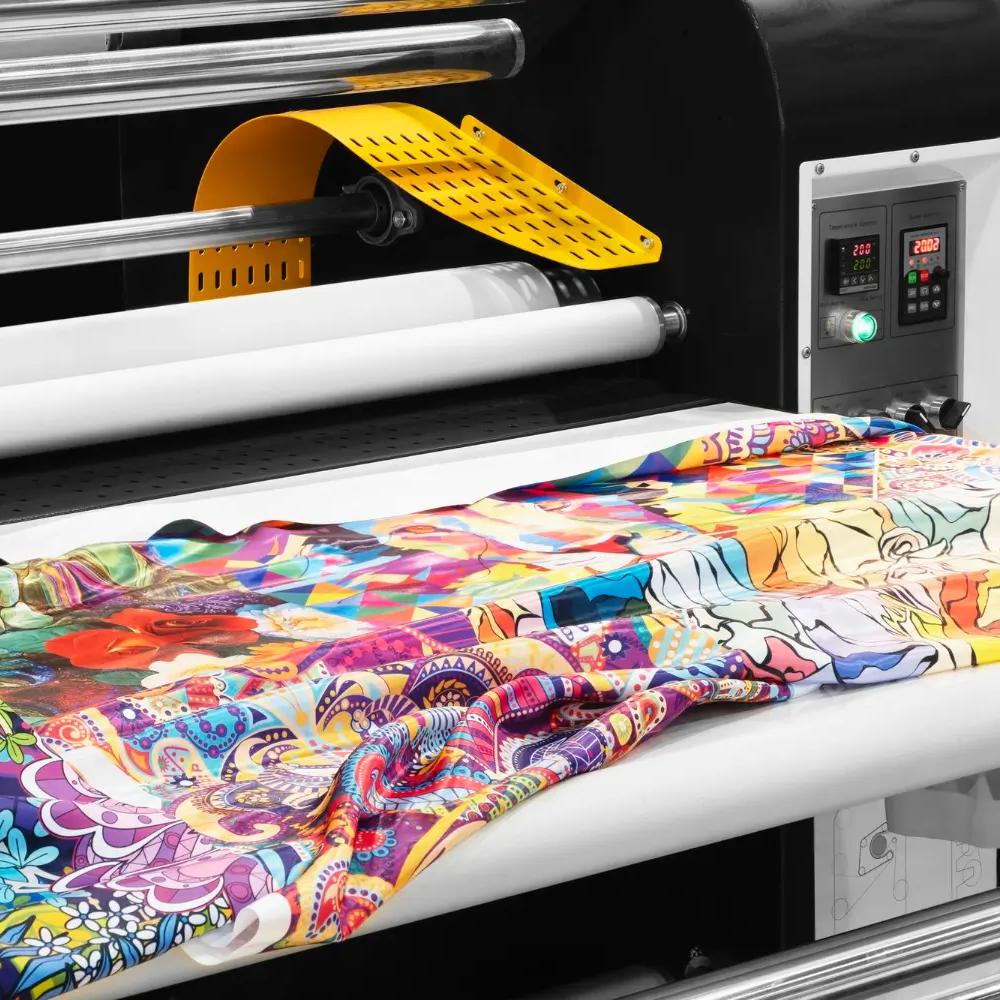
Sublimation Printing
We utilize cutting-edge sublimation printing techniques and equipment to enhance your sports team wear with vibrant, durable graphics that will not crack or peel.
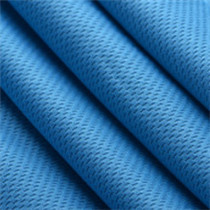
Functional Fabric
Experience the benefits of antimicrobial technology that eliminates odors. Our lightweight, ultra-soft brushed fabrics keep their hand after repeated washing.
Teamwear Fabric Specifications by Sport
Jersey fabrics for basketball, soccer and rugby
Polyester-spandex (Polyester 78 / Elastane 22)
The default for any performance kit. Lightweight, holds a vivid print, and available in any team colour. The elastane versus nylon trade-off applies here: 22% elastane gives four-way stretch and rapid recovery, which is what keeps a jersey from clinging when a player is sprinting.
Birdseye and mesh knits
Basketball and training kits are often specified as reversible, which needs an open knit structure so both sides read as a finished face. The main constraint is that a reversible garment is sewn from two panels, so it costs more and takes slightly longer than a single-layer jersey. More on how jersey knit is constructed.
Cotton-rich rugby and baseball knits
For sports where the tradition matters — rugby, cricket whites, some baseball styles — a cotton-rich blend is the right answer. It breathes better than polyester in hot conditions and takes an embroidered crest well, at the cost of drying slowly and pilling over a long season. Our fabric selection guide covers how to spec these without over-ordering the wrong weight.
Sport-specific fabric requirements
Finishes worth specifying
Moisture-wicking
Pulls sweat into the fabric rather than leaving it on the skin. Standard on performance knits, but specify it explicitly because it is not universal.
Antimicrobial / anti-odour
Our antimicrobial technology eliminates odours through antimicrobial treatment. A silver-zinc or quaternary finish typically survives 30 to 50 washes before needing renewal — ask what the wash count actually is.
Anti-pilling
Important on brushed and cotton-rich fabrics, which is where pilling shows first on the cuff and elbow. A team wears the same shirt 50 to 80 times a season.
Certified fibres
Recycled polyester (rPET), recycled nylon or bio-based elastane. We hold BSCI, WRAP, SEDEX and SMETA for labour and social audit, OEKO-TEX for material safety, and ISO-based quality management. If a league or retailer requires documented sustainability credentials, ask which certificate covers which fabric.
Names, Numbers and Decoration
Sublimated names and numbers
Our cutting-edge sublimation printing techniques and equipment enhance your sports team wear with vibrant, durable graphics that will not crack or peel. Because the ink bonds into the fabric, a sublimated name and number has no hand-feel at all — which is the only correct answer if the kit is close-fitting. It also means there is no limit on font, colour or number of names, and reordering a player mid-season costs nothing in setup. Full comparison in our printing methods guide.
Decoration methods compared
- Best for
- Full-kit graphics and names/numbers on a fitted jersey
- Why
- Ink bonds into the fabric, so zero hand-feel, zero cracking, and unlimited names at no extra setup cost
- Limit
- Requires polyester-dominant fabric; cannot be used on cotton whites
- Best for
- Baseball and American football lettering and numbers
- Why
- The traditional look, and the only method that reads as “real” on a baseball jersey
- Limit
- Heavier, adds cost per unit, and needs a base fabric with enough body to support the stitching
- Best for
- Club crests and sponsor logos on chest and sleeves
- Why
- Premium perceived quality and survives everything the washing machine can do
- Limit
- Needs backing behind the stitch on stretch fabric so it does not puck. See our embroidery types guide
- Best for
- Number patches on shorts, and club badges on bags
- Why
- Lowest per-unit cost at volume, and they can be reordered separately from the kit
- Limit
- Adds a layer, and cheap patches will crack. We use heat transfer for woven labels at low minimums
Locking the specification
Before production we confirm three things in writing: the font (name and number), the placement (front, back, sleeve, and for baseball whether front or back), and the roster list with exact spelling. Send the roster as a spreadsheet rather than a list typed into an email — it eliminates the single most common cause of a reprint. If a player joins mid-season, a separate small order at the same specification is almost always faster than holding the whole kit.
Sizing and Grading for a Roster
Youth to adult, in one run
Most club and school orders mix youth and adult sizes in the same delivery. That means the block has to grade cleanly across a wide range, which in turn means the base block has to be built on a body that sits between the two — too close to the adult block and the youth garments look baggy, too close to the youth block and the adults cannot take them. We build a dedicated youth-adult grading block for school and club programmes, and our sizing and measurement blueprint covers the measurements to send us.
Specify the fit by sport
Slim / fitted
Skims the body so the fabric and graphics read clearly. Standard for soccer, basketball and rugby kits. Expect a tighter tolerance across youth to adult.
Standard retail fit
Follows the body with a small ease allowance. The right choice for baseball, and the safest when the sizing is not the priority.
Relaxed / loose
Deliberate ease through the body, and what most rugby and cricket whites are built to. Comfortable, and it hides a grading error better than a fitted cut.
Grading and measurement
Standard grading follows XS through 3XL with roughly 4–5 cm chest and waist increments, but a roster usually needs fewer sizes with more units in the common ones. Tell us the actual size distribution if you have it — ordering a standard even spread across five sizes and then discovering that four of your players wear an L leads to a reorder. We can also work from your existing block, or reverse-engineer it from a finished garment if you send one.
Quality Control and Compliance
Run-level checks
Physical tests
- Colour consistency across the run — every panel in an order is compared against the approved sample under daylight, which is what catches a shade drift between dye lots.
- Measurement audit — a spot-check across the size run, not just on one size, because grading errors appear at the extremes.
- Stretch recovery test — stretch and release each fabric, measuring residual deformation. Under 3% residual is our floor for a fitted kit.
- Opacity test — critical for cricket whites and for any pale colour, tested on a light table.
- Seam and embroidery check — skipped stitches, missed bar tacks and embroidery without backing behind it all fail here.
Packing & delivery
- Individually folded and named — where the order requires it, each piece is packed against the roster so distribution at the club is a matter of handing them out in order.
- Set packing — shirts, shorts and socks packed as a set per player, which is what most clubs and schools actually want on delivery day.
- Retail-ready packing — polybagged, tagged with size and care labels, and barcoded with GTIN or UPC where the retailer requires it.
Minimum Order Quantity, Pricing and Volume Tiers
What actually drives unit price
Sublimation of a full kit is comparable to a single screen print, but tackle twill and dense embroidery add real cost per unit. A rugby crest embroidered on 30 shirts costs more than the shirts.
A heavyweight cotton-rich rugby knit costs meaningfully more than a lightweight polyester soccer kit at the same weight, before finishing.
A reversible basketball jersey is sewn from two faces, so it costs more and takes longer than a single-layer equivalent.
A five-size run costs more per piece than a two-size run because setup time and panel changes both grow — which is why we recommend ordering the sizes you actually need.
Packing shirts, shorts and socks per player adds a small cost that most clubs would rather pay than sort it themselves on delivery day.
Volume tiers
The drop in unit price happens in steps, not smoothly, and the biggest step is usually at a few hundred pieces per style. The wholesale buyer guide covers how buyers structure these tiers and where the real breakpoints fall. Practical advice for teamwear specifically: get the design and fit approved on a sample, and confirm the roster spreadsheet before you approve production.
Private Label and Supplier Capabilities
Create your own private label to establish and grow your brand. Choose from heat transfer labeling, sublimated logos, and woven sew labels — all produced in-house. A complete private label programme also covers size and care labels in your own wording, hangtags, retail packaging, barcodes and a branded polybag, so a league programme arrives looking like a commercial product rather than a team order.
How to vet a teamwear supplier
Most buyers start by comparing unit price, and most regret it. The three questions that actually predict whether an order goes well are simple: can you show me a previous order from a club like ours, what happens if one name is spelled wrong, and will the shade of blue on shirt twelve match the eleven before it. If a supplier cannot answer all three, the price will not matter.
Order Timeline: Enquiry to Delivery
Working backwards from a season start date
We review your design, confirm the sport and fabric, give a costed quote, and confirm what is achievable at your roster size.
From sketch to sample: you send artwork or a sketch, we produce a sample for approval. Allow three to five days for a standard sample, longer for reversible or heavily embroidered ones.
Samples come back with your written approval, and the roster spreadsheet is locked. This is the week to catch a name spelling error, because after production starts it becomes a reprint.
Knitting, cutting, sewing, printing, numbers and finishing. Two to four weeks is typical for a moderate order; reversible kits and dense embroidery run longer.
Run-level colour and measurement audit, set packing if requested, and dispatch. Air freight is around a week; sea freight to Europe or the US runs three to five weeks.
Plan on roughly ten to twelve weeks from enquiry to delivery. Club seasons have fixed start dates, so if your date is immovable, tell us in the first conversation — we would rather decline a rushed order than ship something that arrives without time for your own check.
Best Custom Sportswear Manufacturer – Fexwear.com
What we do
- Clothing Design — transform your ideas into professional designs.
- Material Sourcing — access premium-quality fabrics tailored to your needs.
- Sample Making — perfect your designs with precision-crafted samples.
- Bulk Production — seamless and efficient manufacturing for orders of all sizes.
- International Shipping — reliable and hassle-free global delivery.
Why teams choose us
- Over 15 years manufacturing sportswear, with MOQ from 10 pieces per style.
- In-house knitting, cut-and-sew, sublimation, embroidery and QC — one supplier, one responsibility.
- We supply 30+ countries, with retail-ready packing and barcoding where a market requires it.
- Our teamwear programme for a uniform retailer is a worked example of a full supply-chain build.
With Fexwear, you can establish or expand your stylish sportswear brand in the USA, UK, Canada, Australia, and beyond. We help bring your vision to life within just a few months. Partner with Fexwear to produce high-quality, custom sportswear that sets your brand apart! Clubs that also sell cycling kit or activewear can usually share blocks across those ranges.
Frequently Asked Questions
What is your minimum order quantity for custom teamwear?
Minimum order quantities start at 10 pieces per style and colour, genuinely per design rather than per order, so you can test a design on ten pieces before committing to a full squad. Practical minimums rise once you add a full size run or several colourways.
How do you handle names and numbers on a team order?
We confirm the font, the placement and the exact roster spelling in writing before production starts, and we ask for the roster as a spreadsheet rather than a list in an email. Sublimated names and numbers add no hand-feel and no per-name setup cost, and a mid-season replacement shirt can be produced at the same specification quickly.
Can every shirt in the order be the exact same colour?
That is a run-level audit, not a per-garment check. We compare panels against the approved sample under daylight viewing, which is what catches a shade drift between dye lots. It is one of the reasons we ask for a physical sample rather than approving from a screen.
What artwork file format do you need?
Vector files — AI, EPS or PDF — give the best results. For full sublimation kits, a high-resolution raster file at 300 dpi at final size is acceptable. Send the roster as a separate spreadsheet from the artwork so neither gets lost.
Can you do cricket whites?
Yes, and whites need a different fabric spec from a coloured kit — a cotton or cotton-rich blend that survives bleaching without yellowing, with much higher opacity than a coloured design. We test whites on a light table before bulk, because a white uniform is the hardest opacity test in teamwear.
How long does sampling take?
Three to five working days for a standard sample, longer for reversible or heavily embroidered kits. Sample cost is credited against your first bulk order.
Do you supply youth and adult sizes in the same run?
Yes, and most club and school orders need exactly that. We build a dedicated youth-adult grading block so the whole roster looks uniform, and we ask for the actual size distribution rather than assuming an even spread across five sizes.
Can you ship to our country?
We ship to 30 countries and can arrange both air and sea freight. We produce retail-ready packaging and barcodes where your market requires them, and set packing where the club wants shirts, shorts and socks bagged per player.
Can we reorder the same kit next season?
Yes, and reorders are the easiest part of the process. If the fabric is stocked or routinely sourced in our in-house production, lead times are predictable and reorders match the original run. We keep your pattern, trims, artwork and roster template on file. Our embroidery and badge guide covers the crest options if the club badge changes.
Contact Us
|
|