
Cargo pants are no longer just for the job site. Today, they are a staple in athleisure collections, tactical gear lines, and urban fashion. For brands, retailers, and team outfitters, understanding what cargo pants are made of is a critical first step in sourcing. The fabric choice dictates not only the pant’s performance, feel, and durability but also its customization potential, production cost, and final retail price. This guide breaks down the most common materials, blends, and technical finishes used in modern cargo pants, translated into the practical considerations of custom manufacturing.
We’ll move beyond simple material names to explore how fabric composition affects printing, embroidery, shrinkage, and lead times. Whether you’re developing a high-mobility athletic line or a heavyweight workwear collection, this analysis will help you specify the right fabric for your OEM or ODM project.
The Core Fabric Families: Cotton, Polyester, and Nylon
At their foundation, cargo pants are woven from three primary synthetic or natural fibers. Each brings a distinct set of properties that align with different market segments and use cases. Understanding these base materials is essential for communicating with your manufacturer.
Also read: The Best Swimsuit Material: A Manufacturer’s Guide to Performance, Customization, and Sourcing
Cotton: The Classic Choice
Cotton, often in the form of canvas (a densely woven, plain-weave fabric) or twill (a diagonal weave like denim), is the traditional material for rugged cargo pants. It’s breathable, comfortable against the skin, and highly absorbent.
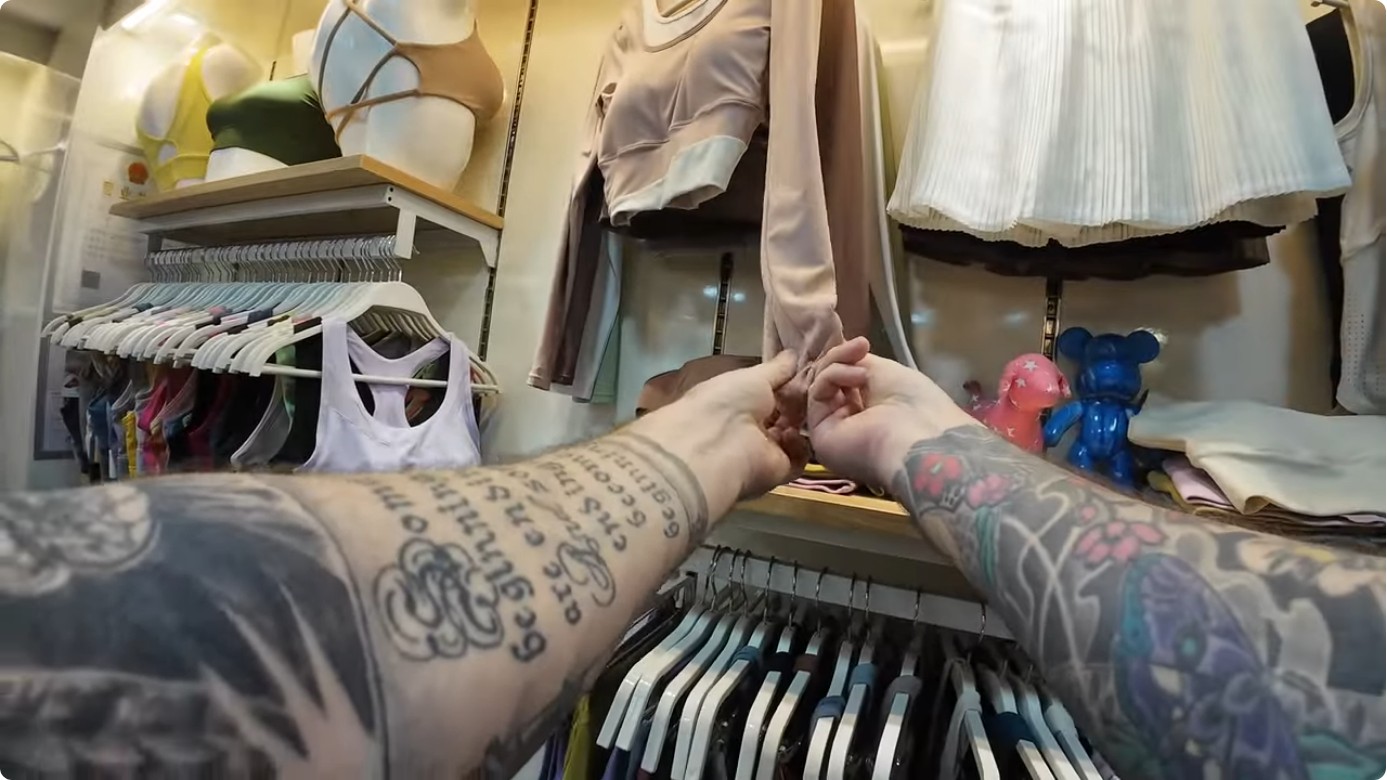
For Custom Production: Cotton is the most printable and embroiderable base fabric due to its stable, non-slippery surface. It accepts discharge and pigment printing beautifully. However, it has significant trade-offs: it wrinkles easily, absorbs moisture (which can add weight), and shrinks considerably if not pre-shrunk (sanforized). For custom orders, you must specify if the fabric is pre-shrunk and confirm the expected shrinkage percentage with your manufacturer to avoid fit issues in your final batch.
Polyester: The Modern Workhorse
Polyester has become the dominant fiber in performance and casual cargo pants. It’s inherently moisture-wicking, dries quickly, resists wrinkles and shrinking, and holds color exceptionally well.
For Custom Production: Polyester’s low moisture regain makes printing more challenging; special plastisol or sublimation inks are required for reliable adhesion. It is less forgiving for intricate embroidery due to its slick surface, though a stable, tight-weave polyester can work well. The major advantage is consistency—polyester garments are less prone to fit distortion after production and shipping. It’s the go-to for brands producing for travel, gyms, or humid climates.
Nylon: The Lightweight Specialist
Nylon (often ripstop nylon) is prized for its high strength-to-weight ratio. It’s lighter than cotton or polyester of similar durability and is frequently treated with a DWR (Durable Water Repellent) finish for outdoor and tactical applications.
For Custom Production: Like polyester, nylon presents printing challenges and is best suited for sublimation (on white or light-colored fabrics) or specific plastisol formulations. Its slick surface can make embroidery placement tricky; a test stitch is always recommended. Nylon is ideal for specialized collections where weight and packability are selling points, such as hiking or adventure travel lines.
Blended Fabrics: The Best of Both Worlds
Most contemporary cargo pants, especially in the activewear and athleisure space, are blends. Combining fibers mitigates weaknesses and enhances performance. The most common blend is cotton-polyester.
| Common Blend | Typical Ratio | Key Benefits | Primary Use Case in Custom Sourcing |
|---|---|---|---|
| Cotton-Polyester | 65/35 or 60/40 (Poly/Cot) | Reduced shrinkage, better wrinkle resistance than pure cotton, good print surface, cost-effective. | The universal standard for fashion and casual workwear cargo pants. A safe, versatile choice for most brands. |
| Polyester-Spandex | 92/8 or 95/5 | Significant 4-way stretch, mobility, moisture-wicking, shape retention. | Athletic and performance cargo pants for gyms, yoga brands, and outdoor activities requiring freedom of movement. |
| Cotton-Nylon | Varies | Added durability and abrasion resistance from nylon, softer hand from cotton. | Heavy-duty workwear and tactical cargos where fabric toughness is paramount. |
Performance Finishes & Specialty Weaves
The base yarn is only part of the story. Technical finishes and weave structures dramatically alter the final product’s capabilities, offering key selling points for your brand.
Stretch: The Mobility Multiplier
The inclusion of spandex (also known as elastane or Lycra) is arguably the single most important differentiator in modern cargo pants. Even a 3-5% addition transforms the garment from a stiff, restrictive piece to a dynamic, mobile one.
- Consideration: Stretch fabrics often require special sewing techniques (e.g., coverstitch seams) to maintain integrity and prevent seam popping. Confirm your manufacturer has the necessary equipment and expertise.
- Custom Impact: Stretch cargos are perfect for brands targeting active consumers. They command a higher price point and justify performance-oriented marketing.
Weave Structures: Ripstop, Canvas, Twill
The weave pattern affects durability, weight, and aesthetic.
- Ripstop: Features reinforced threads in a grid pattern to halt tears from propagating. Lightweight but extremely tough. The standard for military and outdoor gear.
- Canvas: A simple, heavy-duty plain weave. Very durable but stiff. Requires more break-in. Common in workwear.
- Twill: A diagonal weave (like jeans). Drapes better than canvas, shows wear patterns differently, and is often used for fashion-focused cargos.
Technical Finishes: Function Beyond Fabric
Most performance cargos receive post-weaving treatments. You can often request these as part of your ODM specification.
- DWR (Durable Water Repellent): Causes water to bead and roll off. Essential for hiking, fishing, or tactical applications. Note: DWR coatings can wear off with laundering and may need to be reapplied by the end-user.
- Antimicrobial: Treatment to inhibit odor-causing bacteria. A strong value-add for gym and athletic wear.
- abrasion-resistant (e.g., Cordura® panels): Reinforced fabric in high-wear zones (knees, seat). Increases cost but significantly boosts product lifespan and perceived value.
How Fabric Choice Drives Customization & Production
Your material selection has a direct, tangible impact on the customization process, costs, and timeline.
Printing & Embroidery Compatibility
This is a critical decision point.
- Best for Detailed Print: Pre-shrunk 100% cotton or high-cotton-content blends (e.g., 65/35 poly-cot). They accept a wide range of inks (water-based, plastisol) and allow for fine detail.
- Best for Sublimation: 100% polyester or high-poly blends (80%+). Sublimation prints become part of the fabric, offering vibrant, all-over patterns with no hand feel. This is ideal for fashion-forward, all-over-print designs.
- Embroidery: Works on all fabrics but requires a stabilizer. Stiffer fabrics (canvas, heavy cotton) can pucker if not properly stabilized. Very stretchy fabrics (high-spandex) are the most challenging and require a skilled operator and appropriate backing.
Sourcing & Production Implications
When requesting quotes, your fabric specification will be the largest cost driver after quantity.
- Minimum Order Quantities (MOQs): Common, in-stock fabric blends from a manufacturer’s library will have the lowest MOQs (often 50-100 units per style/color). Specifying a rare fabric, a unique composition (e.g., 50/50), or a proprietary mill will increase MOQs significantly, sometimes into the thousands of yards.
- Lead Times: Stock fabrics can be cut and sewn immediately. Custom-sourced or custom-knit fabrics add 4-8 weeks (or more) to the timeline for yarn sourcing, knitting/weaving, dyeing, and finishing.
- Cost: Synthetic fibers (polyester, nylon) are generally less expensive per yard than cotton, but the final garment cost depends on weight (GSM), weave complexity, and finishes. A lightweight, 4-way stretch polyester with DWR will often be more expensive than a basic 12-oz canvas cotton.
Key Questions to Ask Your Manufacturer
Before finalizing your cargo pant spec, get clear answers on these points. This due diligence prevents costly surprises.
- What is the exact fabric composition (by percentage) and weight (in GSM – grams per square meter)? A “heavy” cotton twill can range from 280GSM to 400GSM, dramatically affecting drape and cost.
- Is the fabric pre-shrunk? What is the expected shrinkage rate after the first wash? This is non-negotiable for fit integrity.
- Can you provide a physical fabric swatch and a lab dip (dyed sample) before production? Always approve these in writing.
- What specific thread count and stitch type will be used on the seams? For stretch fabrics, a 4-thread overlock is standard for strength and flexibility.
- What are the standard colorfastness ratings (e.g., AATCC test methods) for dyed fabrics? You need to know if colors will bleed or fade prematurely.
- Do you have experience with [your chosen customization method: e.g., all-over sublimation, thick embroidery] on this specific fabric? Ask to see samples.
Navigating fabric specifications is where the partnership between your brand and your manufacturing partner becomes most valuable. A good OEM/ODM supplier won’t just fill an order; they’ll advise on the optimal fabric-base for your target market, price point, and customization goals, often presenting options from their existing library to save you time and cost.
We manufacture all the styles discussed in this guide — with custom labels, fabric options, and print or embroidery finishing. Tell us what you need.
Also read: The Baseball Jersey Outline: A Buyer’s Guide to Design, Specs, and Custom Manufacturing