
Launching a swimwear line sits at the intersection of fashion, function, and rigorous technical demands. Unlike basic apparel, swimwear must perform under extreme conditions—chlorine, saltwater, UV exposure, and constant stretching—while delivering on aesthetic promise and precise fit. For entrepreneurs, fashion brands, or retailers, this creates a unique set of challenges that begin long before the first design sketch. The core question shifts from “how to make a bikini” to “how to source and manufacture swimwear that is durable, fits a target demographic flawlessly, and meets commercial viability.” Success hinges on understanding the specialized materials, construction techniques, and production partnerships required to bring a product to market that survives the pool and the profit margin.
This guide is built for the buyer, not just the dreamer. We move beyond inspirational branding to the tangible decisions that define a swimwear business: selecting the right fabrics and trims, navigating minimum order quantities (MOQs), establishing quality benchmarks, and effectively communicating with a manufacturing partner. Whether you’re a startup aiming for a niche market or an established brand adding a swim category, the principles of sourcing custom activewear—particularly the technical, high-stakes category of swimwear—are fundamental to your operational success.
The Foundational Pillars of Swimwear: Fabric & Construction
Before engaging any factory, a brand must understand what makes swimwear swimwear. The product category is defined by two non-negotiable elements: performance fabric and robust construction. Your sourcing decisions here will dictate your product’s longevity, customer satisfaction, and cost structure.
Related guide: The Substantial Guide to Thick French Terry Fabric: Properties, Sourcing, and Best Uses
Decoding Swimwear Fabrics: Beyond “Nylon” and “Polyester”
The feel, durability, and cost of your final garment are locked in at the fabric stage. The industry standard is a knitted or woven synthetic blend, primarily:
- Nylon/Spandex (Lycra®): The classic. Offers excellent recovery, soft hand feel, and good chlorine resistance when treated. A common blend is 80% nylon / 20% spandex. Pilling and degradation over time are common pain points if the nylon is low-grade.
- Polyester/Spandex: More chlorine and UV resistant than nylon, often more affordable. It can feel less luxurious and has slightly less stretch recovery. Ideal for high-volume, value-focused lines or performance swim where durability trumps ultra-luxe feel.
- Recycled Polyester (rPET) / Econyl®: The sustainability premium. Made from post-consumer plastic bottles or fishing nets. Performance is comparable to virgin polyester but carries a significant marketing and cost premium. Econyl® is a leading branded fiber with clear chain-of-custody certification.
- PBT (Polybutylene Terephthalate): A type of polyester with exceptional chlorine resistance, often used in competitive swimwear and hotel/resort amenity swimwear where longevity is the primary metric.
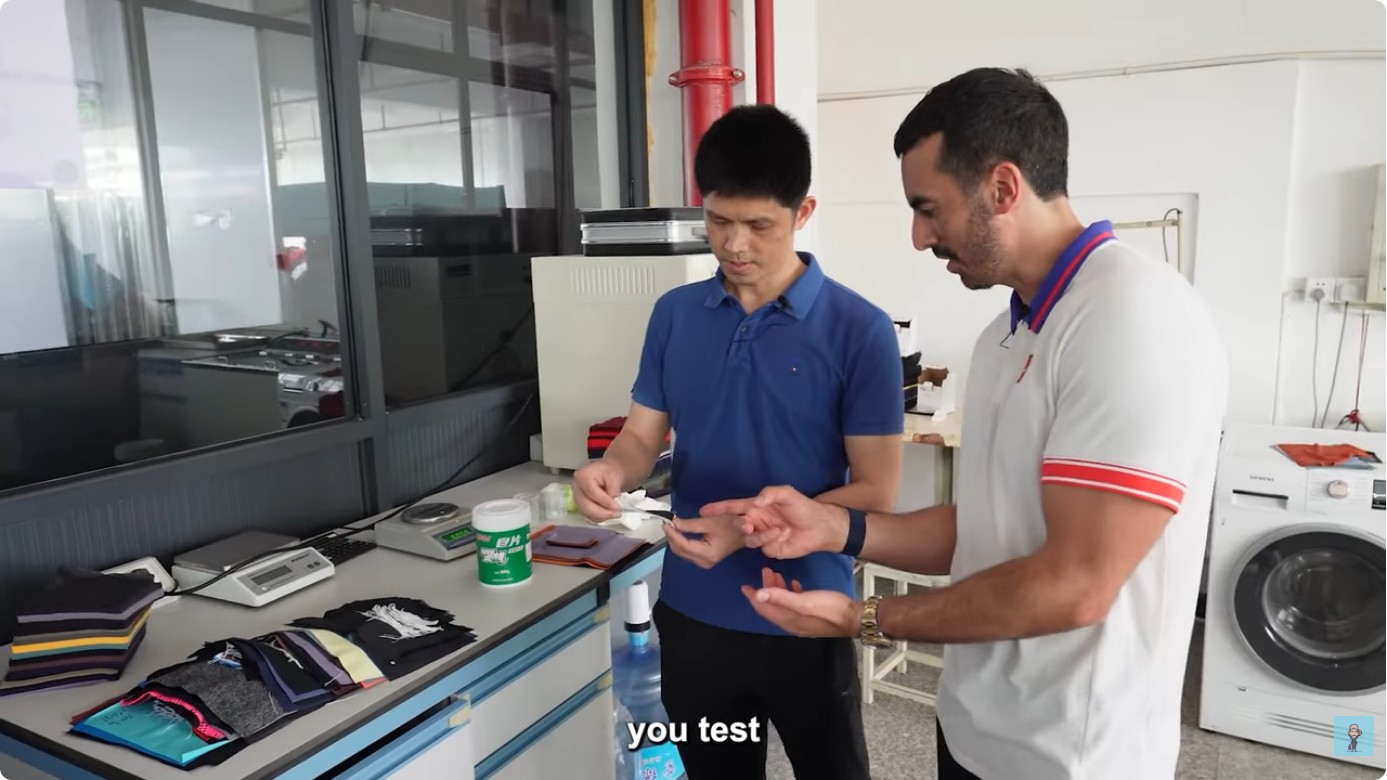
The critical, often overlooked factor: Even within these categories, quality varies wildly. The denier (fabric thickness), yarn quality, and post-treatment (e.g., AATCC tests for colorfastness and chlorine resistance) separate a garment that lasts 10 washes from one that lasts 50. Always request fabric swatches and insist on seeing lab test reports for chlorine resistance, pilling, and colorfastness.
Construction & Trims: The Details That Fail First
Swimwear fails at its seams and attachments. A beautiful fabric is useless if the stitching unravels.

- Stitching: Flatlock stitching is the industry minimum for strength and comfort against skin. For high-stress areas (like bikini ties or athletic one-pieces), a safety stitch or bar tack is mandatory.
- Thread: Must be UV-resistant and polyester or nylon bonded. Cotton thread will rot.
- Lining: Many styles require a separate lining fabric (often a lighter-weight nylon/spandex). This adds cost, complexity, and MOQ considerations. A “self-lined” style uses a heavier, opaque fabric to avoid this layer, simplifying production.
- Trims (Hooks, Zippers, Ties): Must be corrosion-resistant. Plastic or coated metal is standard. For zippers, ask about the pull material (plastic avoids rust) and the brand (YKK is the global benchmark for reliability). Tags and labels should be heat-transfer or thin woven labels to avoid irritation.
Sourcing Strategy: OEM vs. ODM & Finding Your Manufacturer
This is the pivotal business decision. Do you provide the complete design and spec sheet (OEM – Original Equipment Manufacturer), or do you leverage a factory’s existing styles and modify them (ODM – Original Design Manufacturer)?
| Factor | OEM (Your Design) | ODM (Factory’s Design) | |
|---|---|---|---|
| Control & Uniqueness | Full. You own the design, can patent it, and have exclusive production. | Limited. The base style is the factory’s IP. Modifications may be non-exclusive. Higher risk of “copycat” styles appearing elsewhere. | |
| Development Cost & Time | High. Requires tech packs, pattern making, and multiple fit samples. Longer lead time (often 4-6 months for first run). | Low to Medium. Uses existing patterns and molds. Faster time-to-market (can be 6-8 weeks for modifications). | |
| Minimum Order Quantity (MOQ) | Typically Higher. Factories require larger orders to justify the custom pattern and setup cost (often 500-1000 pcs per style/color). | Typically Lower. Can be as low as 100-200 pcs per style, as patterns are already made. | |
| Best For | Established brands with clear design vision, needing IP protection and unique product. | Startups, new market entrants, or brands wanting to test many styles with lower capital risk. |
Where to Find Partners: Industry trade shows (like Intertextile Shanghai for sourcing), B2B platforms (Alibaba, but with extreme diligence), or specialized sourcing agents. For swimwear, look for factories with dedicated “swimwear” or “intimate/apparel” departments. A factory making t-shirts may lack the specialized machinery (e.g., for seamless cup inserts, precise bar tacks) and technical knowledge.
The Critical Communication: Your Tech Pack & Sample Process
Your tech pack is the single most important document you provide. It is the legal and technical contract between your vision and the factory’s output. A vague sketch leads to costly mistakes.
A professional tech pack must include:
- Flat Sketches: Front and back, with all stitching lines, trim placements, and construction notes clearly marked.
- Spec Sheet: A table with precise measurements for every size (XS to XL). Critical points: bust, underbust, waist, hips, torso length. Specify ease (the amount of room built into the garment).
- Bill of Materials (BOM): Exact fabric composition (e.g., “80% Nylon, 20% Lycra®”), fabric weight (gsm – grams per square meter), and fabric code from your vendor. List every trim: zipper brand/model, thread type, label type, hook-and-eye size.
- Color Standards: Use Pantone TPX or TCX codes for fabrics. Do not rely on “light blue.” Provide a physical fabric swatch with your approved color.
- Construction Details: Stitch type (e.g., 4-thread flatlock), seam allowances, finishing instructions (e.g., “raw edge at leg opening”).
The Sample Workflow is Non-Negotiable:
- Fit Sample: Made in a standard, often cheap, fabric. This is the ONLY sample you fit on a real human model. Do not approve fit on a digital dress form. Check range of motion: can the model raise arms, bend over? Does the suit stay in place? Document every fit comment.
- Pre-Production (PP) Sample: Made in the final fabric and trims. This is for final approval of color, hand feel, and construction. Approve this sample before any fabric is cut for production.
- Production Run: The factory production. You or an agent must do an inline inspection at 30-70% completion to catch systematic errors before the entire batch is made.
Key Production Considerations & Tradeoffs for Swimwear
Every sourcing decision involves a tradeoff between cost, quality, speed, and risk.
- MOQs vs. Flexibility: The #1 hurdle for startups. Factories set MOQs to cover setup costs. For a new brand, consider starting with a single, best-selling style in 2-3 core colors to meet a 300-500 piece MOQ, rather than 10 styles in 1 color each. This tests the market with lower inventory risk.
- Fabric Sourcing: Who Supplies? You can (a) supply the fabric yourself (most control, highest logistics burden), (b) have the factory source it (convenience, but you must approve the fabric swatch and test report), or (c) use a fabric the factory recommends (lowest control). Always get a signed fabric approval from your factory stating the exact mill and fabric code.
- Location & Lead Time: China/Vietnam: Low cost, high MOQ, long lead time (3-4 months). Nearshoring (e.g., USA, Mexico, Eastern Europe): Higher cost, lower MOQ possible, faster response, easier QC. For a new business needing agility, a 500-piece MOQ in Mexico may be better than a 2000-piece MOQ in China.
- Certifications: For certain markets (e.g., selling to large retailers, or for specific claims), you may need OEKO-TEX Standard 100 (for harmful substances) or ISO 9001 (quality management). These certifications are held by the factory, not you, and can be a filter for finding reputable partners.
Pre-Shipment Quality Control Checklist
Before your shipment leaves the factory, verify this checklist. Use a third-party inspection service (like SGS, BV, or QIMA) if you cannot visit.
- Fabric & Color: Does the finished garment feel and look like the approved PP sample? Check for color consistency across the batch.
- Measurements: Randomly measure 10% of garments against the spec sheet. Critical: Do not measure laid flat; measure as worn (circumference). Tolerance is usually +/- 0.5 cm.
- Stitching & Seams: Check for loose threads, skipped stitches, and seam integrity. Gently pull at seams.
- Trims: Test all zippers (smooth up/down), ensure ties are secure, check that labels are straight and legible.
- Fit & Appearance: On a mannequin or fit model, check for twisting, puckering, or gaping. Ensure the garment hangs as intended.
- Packaging: Is each item bagged correctly? Are poly bags the right size (avoiding excessive plastic for cost and sustainability)? Are hangtags and packaging materials correct?
Your First Production Order: A Practical Scenario
Let’s say you’re a new brand launching with three women’s one-piece swimsuits. Your sourcing plan might look like this:
- Fabric: Select a 190gsm 80% Nylon/20% Spandex knit from a reputable mill (e.g., Asahi Kasei, Toray). Order a 5-knit development swatch and get a chlorine resistance test report.
- Manufacturer: Source 3-5 ODM-capable factories in Portugal or Mexico (good balance of quality, communication, and MOQ). Request their swimwear lookbooks.
- Design Selection: Choose 3 base styles from a factory’s collection. Request modifications: change neckline on Style A, add a removable strap on Style B, change lining to a specific shade on Style C. Get quotes for 300 units per style, 3 colors (900 total).
- Tech Pack & Sampling: Create detailed tech packs for your modified styles. Budget for 2 rounds of fit samples and 1 PP sample per style. This sampling cost can be $200-$500 per style but is non-refundable credit against the final order.
- Contract: Ensure your purchase order includes: approved fabric and trim details, approved PP sample reference, payment terms (e.g., 30% deposit, 70% before shipment), and QC pass criteria.
This approach de-risks the launch by leveraging existing patterns while still creating a differentiated product line with a manageable initial investment.
Final Questions to Ask Before Committing
Use this shortlist in your final discussions with any potential factory:
- Can you provide contact information for 2-3 current/former swimwear clients as references?
- What is your standard MOQ for a custom color/style, and can it be negotiated for a first order?
- Do you source fabric from specific mills? Can we approve the exact fabric batch before cutting?
- What is your policy on fit sample changes? How many rounds are included in the sampling cost?
- What are your standard payment terms? Do you offer any production milestone payments?
- What is your average defect rate on final inspection, and what is your process for replacing/repairing defective goods?
- Do you have certifications (OEKO-TEX, ISO)? Can you provide copies?
Whether you’re a startup brand or an established retailer, we manufacture custom sportswear at competitive MOQs. Reach out to start your project.
Also read: A Buyer’s Guide to T-Shirt Types: Styles, Fits, and Manufacturing Considerations