
If you’ve ever wondered “where are Adidas shoes made?” you’re looking at one of the most complex global supply chains in consumer goods. The short answer spans continents: Adidas products are manufactured across a network of independent factories in Asia (primarily Vietnam, Indonesia, China, and Cambodia), Europe, and the Americas. For a brand, this global footprint is a strategic asset, balancing cost, capacity, speed, and risk.
But for you—a brand owner, gym operator, or wholesale buyer looking to create your own apparel line—this fact is more than trivia. It’s a masterclass in supply chain management. Understanding why a giant like Adidas chooses specific regions and factories reveals the exact criteria you should use when selecting a manufacturing partner for your custom t-shirts, hoodies, or tracksuits. The goal isn’t to copy Adidas’s model, but to learn from its framework to build a resilient, quality-driven, and cost-effective production strategy for your business.
This guide will first demystify Adidas’s manufacturing landscape, then pivot to the practical, actionable insights you need to evaluate and partner with the right factory for your custom activewear project.
What Matters Most When Sourcing Custom Sportswear
Before diving into regions, let’s establish the core decision pillars that transcend any single brand’s supply chain. Whether you’re producing 500 hoodies for a local gym or 10,000 tracksuits for a retail launch, your success hinges on these interconnected factors:
- Production Capacity & Specialization: Does the factory have the machinery, skilled labor, and volume experience for your product type (e.g., seamless knitwear, heavy fleece, performance synthetics)?
- Quality Control Systems: Are there documented processes for incoming material checks, in-line production inspections, and final AQL (Acceptable Quality Limit) audits?
- Look for adherence to standards like ISO 9001 for quality management.
- Certifications & Compliance: Can they provide proof of ethical labor practices (e.g., Sedex, Fair Labor Association audits), environmental stewardship (GOTS for organic textiles, OEKO-TEX Standard 100 for有害化学物质零排放), and social responsibility?
- Minimum Order Quantities (MOQs) & Flexibility: Do their MOQs align with your business stage? Can they accommodate design iterations or size breakdown variations?
- Communication & Project Management: Is there a dedicated, English-speaking point of contact? How do they manage timelines, sample approvals, and issue resolution?
- Lead Times & Logistics: What is the realistic production-to-delivery window? Do they have established freight forwarding relationships?
A large, multi-brand factory like those in Adidas’s network excels at high-volume, cost-efficient production. However, for many emerging brands and boutique buyers, a more specialized or mid-sized factory often offers better communication, greater flexibility for smaller runs, and more personalized service—even if the per-unit cost is slightly higher. The “best” factory is the one whose capabilities and service model align with your specific project’s scale, complexity, and values.
The Global Manufacturing Map: Lessons from Adidas’s Footprint
Adidas’s shift from China to Vietnam and Indonesia over the past decade reflects broader industry trends. Here’s a breakdown of the key regions and what their prevalence signals for custom apparel sourcing.
Asia: The Volume and Cost Leader
Primary Hubs: Vietnam, Indonesia, China, Cambodia, Bangladesh.
Why Adidas Uses Them: Unmatched scale of production, mature textile ecosystems (from yarn to finished goods), competitive labor costs (though rising), and vast experience with technical sportswear.
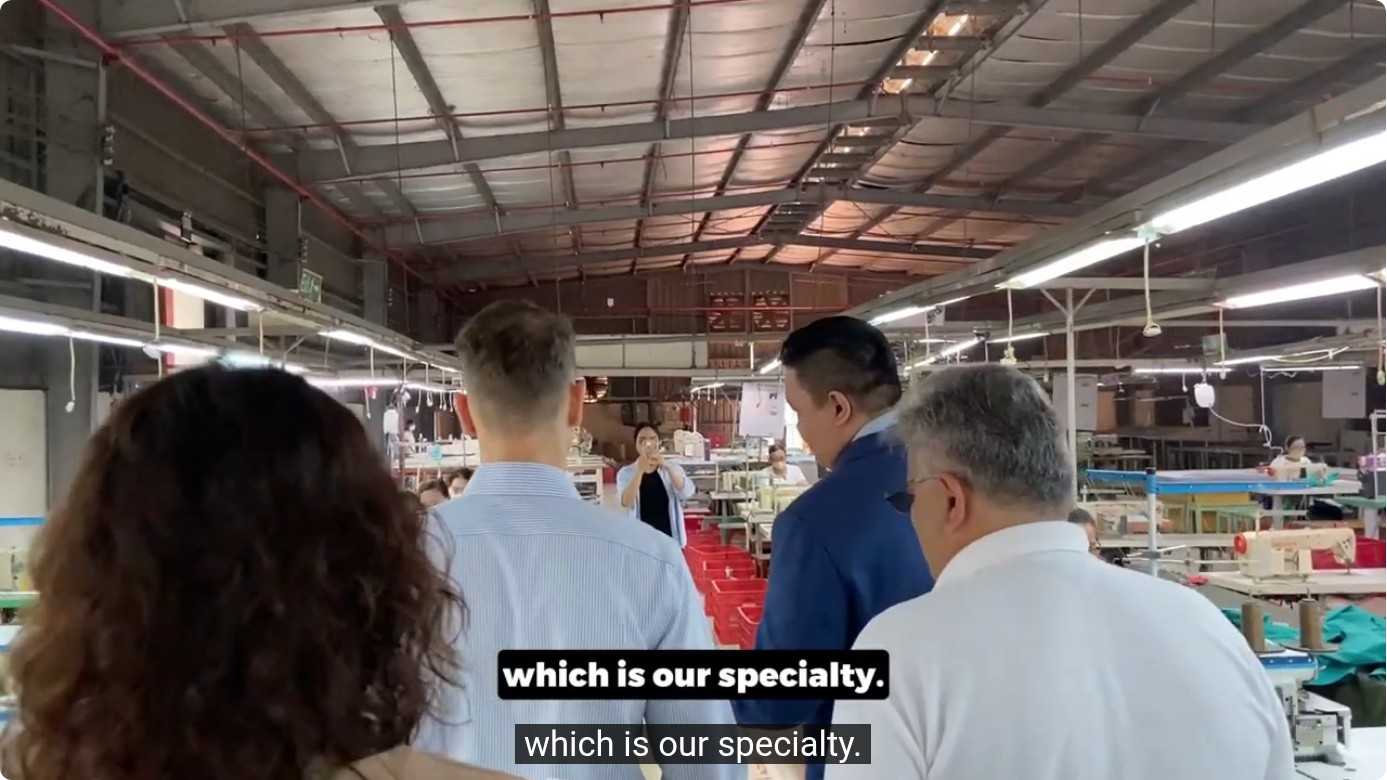
For Your Custom Order: This is where you’ll find the highest capacity for large runs (5,000+ pieces) of standard activewear like basic t-shirts, fleece hoodies, and polyester tracksuits. The trade-off can be higher MOQs, longer lead times (due to port congestion and production queues), and potentially less direct communication.
Key Consideration: Vet factories rigorously for quality consistency. A factory producing for global brands often has the systems in place, but you must verify they apply those standards to all clients. Request a factory audit report or videos of their production lines.
Europe & The Americas: The Speed and “Made-In” Premium
Primary Hubs: Portugal, Italy, Germany, USA, Mexico, Central America.
Why Adidas Uses Them: Proximity to key markets (reducing shipping time and carbon footprint), “Made-in-[Country]” marketing appeal, higher perceived quality for certain fashion-forward lines, and agility for quick-turn collections.
For Your Custom Order: Ideal for brands marketing a “local” or “premium” story, or for businesses needing fast replenishment (e.g., a gym needing 200 new tank tops before a seasonal launch). Expect higher per-unit costs but benefits include:
- Lower MOQs (sometimes as low as 100-300 units).
- Shorter lead times (4-8 weeks vs. 12-16+ from Asia).
- Easier site visits and relationship building.
- Stronger IP protection and easier enforcement of contracts.
OEM vs. ODM: Choosing Your Development Path
This is a critical strategic choice that defines your relationship with a factory.
| Feature | OEM (Original Equipment Manufacturer) | ODM (Original Design Manufacturer) |
|---|---|---|
| Your Role | You provide the complete design (tech packs, patterns, fabric specs). | You select from the factory’s existing styles/patterns and request modifications. |
| Factory Role | Execute your designs precisely. Focus is on production prowess. | Provides design library, makes modifications, advises on manufacturability. |
| Best For | Brands with in-house design teams, unique tech packs, or specific fabric requirements. | Startups, small brands, or those wanting to test the market with lower development cost and risk. |
| IP & Control | You retain full design ownership. Requires clear contracts. | Factory may own the base pattern. You must negotiate rights to the modified design. |
| Timeline & Cost | Longer (sampling cycles), higher upfront development cost. | Faster (existing samples), lower development cost. |
Practical Scenario: A boutique fitness brand wants a unique, proprietary racerback tank with a specific moisture-wicking fabric and a custom neckline. They should pursue OEM with a factory that has expertise in performance knitwear. A local sports league needing 150 customized hoodies with their logo can likely use an ODM approach, selecting a standard hoodie style from a factory’s catalog and adding embroidery.
The Sourcing Checklist: Questions to Ask Any Potential Factory
Move beyond the brochure. Use this list during your due diligence.
- Can you provide three recent client references (preferably in activewear/sportswear) whom I can contact?
- Avoid factories that refuse or provide only generic testimonials.
- What is your standard quality control process from fabric inspection to final packing? Can I see your AQL standard?
- Ask for a copy of their inspection checklist.
- Do you hold any relevant certifications (e.g., WRAP, BSCI, ISO, GOTS)? Are audit reports available?
- Certifications are a baseline, not a guarantee. Ask about the last audit date and any corrective actions.
- What is your typical minimum order quantity (MOQ) for a style like [your product]? Is it negotiable for a first order?
- Be wary of MOQs that seem drastically lower than industry average; it may indicate subpar materials or processes.
- What is your estimated lead time from approved sample to shipment? What factors commonly cause delays?
- A realistic factory will give a range (e.g., 10-12 weeks) and explain buffer factors like fabric sourcing or public holidays.
- How do you manage color matching? Do you use a lab dip process? Is there a fee for multiple dips?
- What are your payment terms? Do you require a deposit? What are the milestones for payment?
- Standard is 30% deposit, 70% before shipment. Be cautious of demands for 100% upfront payment.
- Do you handle international shipping and customs clearance? Can you provide a landed cost estimate?
- Clarity on Incoterms (FOB, EXW, DDP) is essential to avoid hidden fees.
Navigating Tradeoffs: The Reality of Custom Manufacturing
Sourcing is a series of managed compromises. Understanding the common tradeoffs prevents costly surprises.
- Cost vs. Quality &. Ethics: The lowest bid often comes from factories cutting corners on materials, labor conditions, or quality checks. Define your “acceptable” quality level and ethical floor before price shopping. A slightly higher cost from a certified, transparent factory often reduces long-term risks of recalls, reputational damage, and customer returns.
- Speed vs. Cost: Air freight is 4-5x more expensive than sea freight but delivers in days instead of weeks. For seasonal or trend-driven items, the premium may be worth it to capture market timing. For basics, sea freight is standard.
- Volume vs. Flexibility: Large factories offer volume discounts but often have rigid production schedules and high MOQs. Smaller workshops can accommodate last-minute changes and smaller batches but at a higher per-unit price. Your business model (made-to-stock vs. made-to-order) should dictate this choice.
- Distance vs. Control: The farther the factory, the harder and more expensive it is to conduct in-person visits, attend fittings, or resolve urgent issues. Factories in nearshore regions (Mexico, Central America, Eastern Europe) offer a middle ground for North American and European brands.
Frequently Asked Questions by Smart Buyers
Should I try to find the exact factory that makes Adidas shoes?
Almost certainly not. Adidas works with a vast, tiered supplier network. The factories producing its top-tier performance footwear are often exclusive, bound by stringent NDAs and massive volume commitments. Your time is better spent identifying factories that specialize in your product category (apparel, not footwear) at your target volume and price point. The principles of quality, compliance, and communication are universal.
How do I protect my design if I’m working with an ODM factory?
This is a paramount concern. Start with a robust intellectual property (IP) agreement drafted by a lawyer familiar with international manufacturing. The contract should:
- Clearly define the “Work Product” (your modified design).
- State that all IP rights (copyright, design rights) belong solely to you.
- Include confidentiality clauses (NDA) with severe penalties for breach.
- Specify that the factory cannot produce the design for any other client.
For initial engagements, start with a smaller order to build trust before scaling.
What’s the single biggest mistake first-time buyers make?
Under-investing in the sample and approval process. A “sample” is not just a prototype; it’s a legal document that defines the quality standard for your entire order. Insist on a pre-production (PP) sample that is made from the exact approved fabrics and trims, using the final production methods. Approve this sample in writing before any fabric is cut or bulk production begins. Any ambiguity here leads to costly, disputed shipments.
How many samples should I expect to go through?
For a straightforward ODM modification, 1-2 rounds (a first sample and a PP sample) is common. For a complex OEM design with new patterns, 3-4 rounds (fit sample, color & fabric sample, PP sample) is realistic. Budget for this in your timeline and sample fees (factories typically charge for samples beyond the first).
We manufacture all the styles discussed in this guide — with custom labels, fabric options, and print or embroidery finishing. Tell us what you need.