

Custom Embroidered Sweatshirts Manufacturer
OEM & ODM embroidered sweatshirts for brands, teams, corporate buyers, pet businesses and retailers in 30 countries. In-house knitting, cut-and-sew, embroidery and QC — from sketch or tech pack to labelled, packed cartons.
Fexwear is a custom embroidered sweatshirts manufacturer producing OEM and ODM sweatshirts for brands, teams, corporate buyers, pet businesses and retailers in 30 countries. Founded in 2010, we run our own in-house knitting, cut-and-sew, embroidery and quality-control lines, and we take a sweatshirt programme from a rough sketch or a finished tech pack all the way through to labelled, packed cartons — with minimum order quantities starting at 10 pieces.
A sweatshirt is a branding garment before it is a clothing garment. The customer buying a custom embroidered sweatshirt is usually buying visibility — a logo that gets worn, seen and repeated for two years — and the garment is the delivery mechanism. That reframing changes the specification: the thing that matters is not only whether the embroidery survives fifty washes, but whether it still reads as a brand after fifty washes. A small chest logo that threads correctly but sits on a shapeless 240 gsm fleece has failed at its actual job.
This guide covers the four sweatshirt styles we run most, the fabric weights that hold their shape, how embroidery is specified and priced, what bulk pricing actually looks like, sizing, minimum order quantities, and the questions buyers ask most.
Embroidered Sweatshirt Styles We Manufacture
Four core styles, all produced in-house with your design, colours and labels.

Custom Embroidered Sweatshirts
Our custom embroidered sweatshirts come in a range of styles, sizes, and colors to meet any need. Crew neck, the standard of this category, and the version most buyers order when they know exactly what they want.

Pet Embroidered Sweatshirts
Join the trend of pet inclusivity with Fexwear’s custom pet embroidered sweatshirts. These one-of-a-kind designs are a proven seller for pet businesses and are among the most photographed custom garments we produce.

Hooded Sweatshirts
Elevate your team’s style with Fexwear’s custom embroidered hooded sweatshirts. Offered in both zipper and pullover versions, sharing fabric and blocks with our embroidered hoodies programme.

Sweatshirts in Bulk
Looking for a budget-friendly branding solution? Fexwear’s custom embroidered sweatshirts are available in bulk, which is where the unit price moves most and where the embroidery specification matters most.
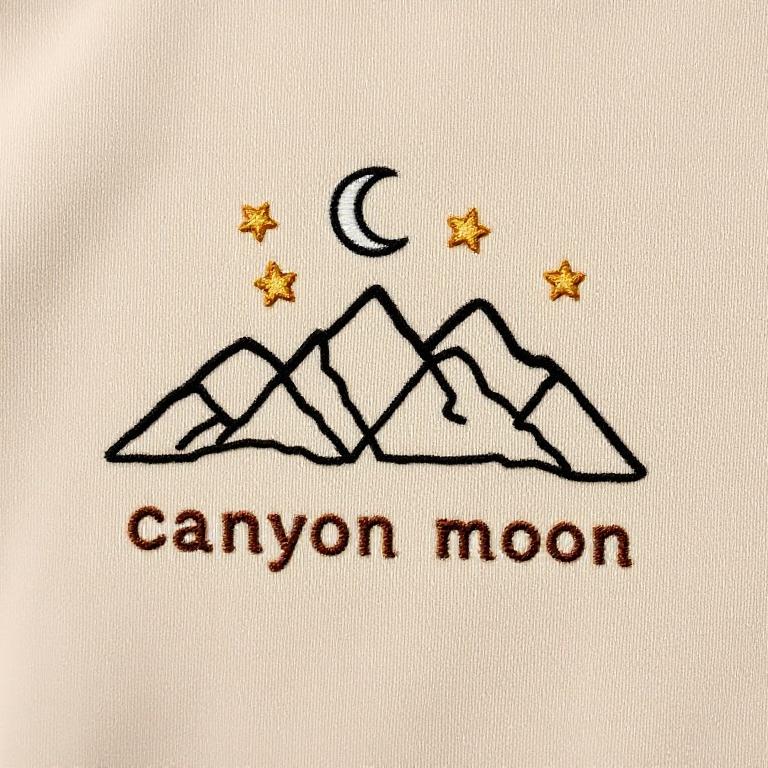
Quality & Durability
Fexwear’s custom embroidered sweatshirts deliver unmatched durability and quality. Crafted from premium fabrics with embroidery that outlasts the garment trend cycle.
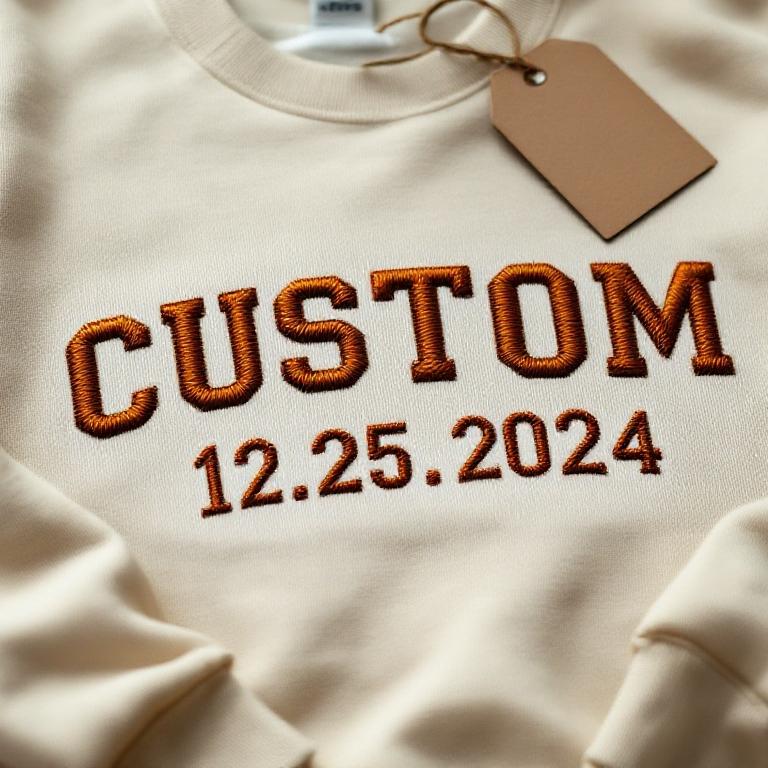
Customization Options
Fexwear offers a wide range of customization options, including various sizes, colors, and styles for your custom embroidered sweatshirts.
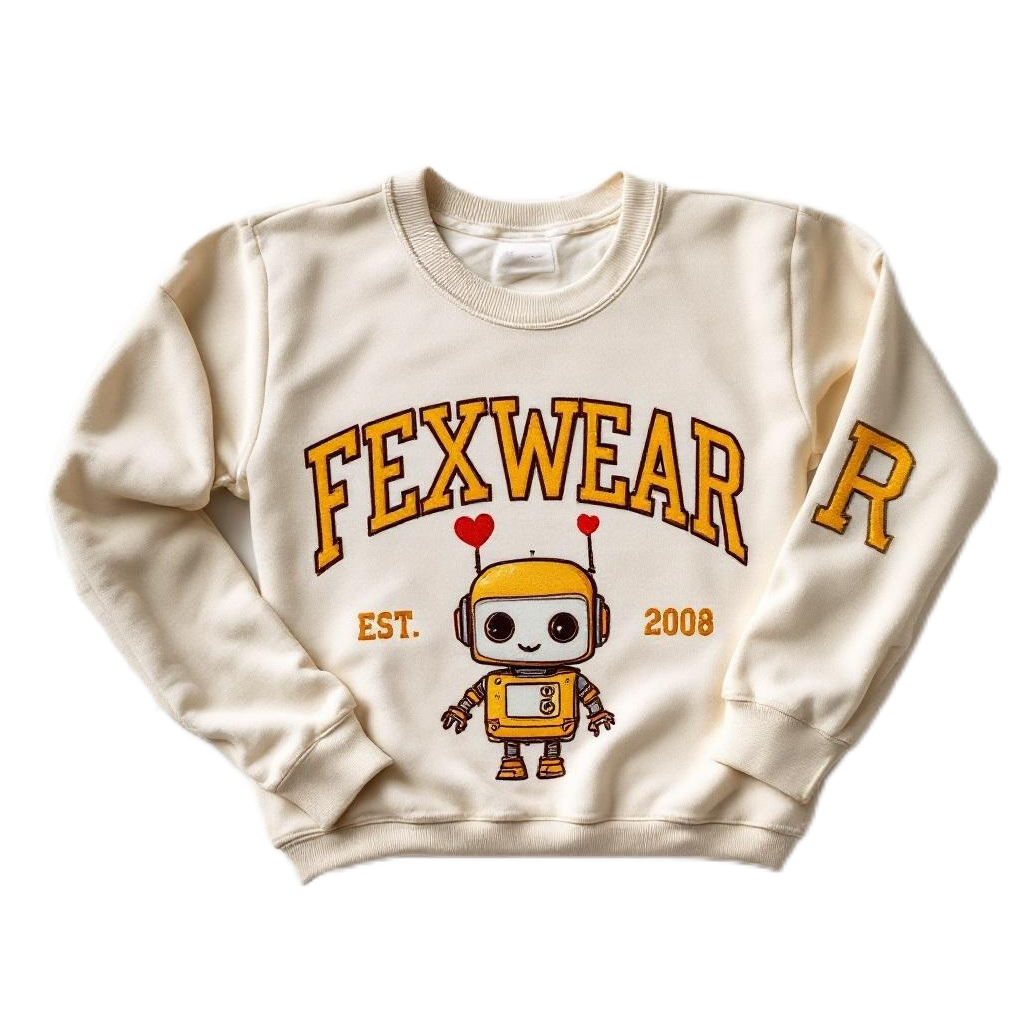
Comfort & Functionality
Fexwear’s sweatshirts are designed to deliver exceptional comfort and functionality, making them ideal for both everyday wear and promotional purposes.
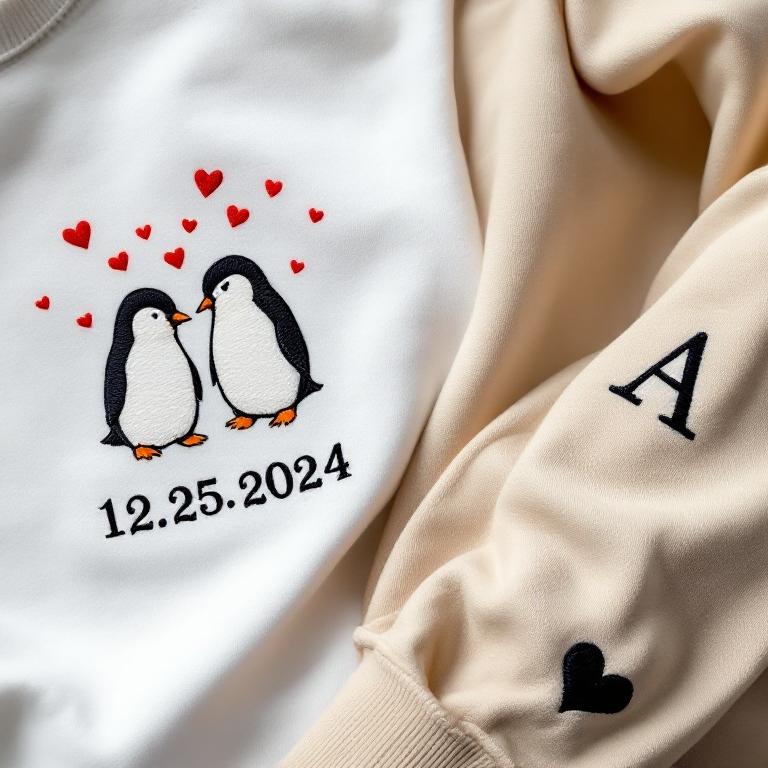
Brand Visibility
Fexwear’s custom embroidered sweatshirts are more than just sportswear — they’re a powerful tool for brand marketing that keeps your logo in front of people for two years.
Sweatshirt Fabric Specifications: Weight, Composition and Hand
Core sweatshirt fabrics
French terry (80% Cotton / 20% Polyester)
The default for an embroidered sweatshirt, and what most buyers expect when they order one. Cotton-rich for comfort, polyester for recovery, and a loopback interior that holds its shape through repeated washing if the seams are properly finished. Our fabric selection guide covers how to spec terry without over-ordering on the wrong weight.
Heavyweight loopback fleece (350–450 gsm)
For a premium or boutique brand, a 400 gsm loopback reads as expensive before anyone looks at the embroidery, and it is dense enough to carry a large chest or back design without distortion. This is the right choice when the sweatshirt is meant to be worn for years rather than given away at an event.
Poly-rich fleece and soft blends
A 240 gsm fleece is fine for a small left-chest logo and wrong for a large back graphic, and it will pill sooner at the elbow. For a bulk promotional run with a small chest design, this is the correct specification at the correct price — but specify the design size as well as the garment weight so we can tell you honestly whether the two are compatible.
Interlock and ribbed trims
Interlock is the right structure if the sweatshirt will be printed as well as embroidered, because it lies flat and holds a crisp edge. Ribbed cuffs and a ribbed hem are the single cheapest way to extend a sweatshirt’s life, because ribbing recovers and stops the sleeve sagging to the elbow and the waist losing its shape. More on how jersey knit is constructed.
Embroidery Specifications
What to send us
Our design support exists for exactly this: send a sketch, a photograph, or a raster file and we will tell you what is achievable in embroidery before you commit. Three things decide whether a design will embroider cleanly — the smallest detail size, the number of colours, and whether fine detail is packed into a small area. A 6 mm detail embroidered at high density will look like a smudge, and we would rather move it to a print than ship it.
Placement for a branding garment
- Left chest — the classic and the smallest useful area. A 90–110 mm wide design is about the limit before the detail closes up. This is the position that still reads after two years.
- Large back — the highest stitch count on a sweatshirt and the most expensive. A simplified back design is often the cheapest way to drop a bulk quote by fifteen percent.
- Sleeve — works well for teams and adds a detail that makes a plain sweatshirt look considered.
Embroidery vs other decoration methods
- Best for
- Left-chest logos, crests, and anything where a premium raised finish is the point
- Why
- Survives everything and reads as the most premium decoration on a sweatshirt, which is the point of a branding garment
- Limit
- Priced by stitch count, so a dense back graphic is the most expensive decoration per unit. Our embroidery types guide breaks down the options
- Best for
- Large back graphics, wordmarks and solid-colour designs at volume
- Why
- Substantially cheaper than embroidery at bulk quantities, and it can carry far more colour at no extra cost — which is why most bulk promotional runs use it
- Limit
- Has hand-feel and sits on the surface. Full comparison in our printing methods guide
- Best for
- All-over and photographic designs on a light poly-rich sweatshirt
- Why
- Vibrant, natural results with zero hand-feel and no risk of cracking
- Limit
- Not available on cotton-rich terry, and the most expensive per unit at low quantities
Sweatshirt construction details
Beyond decoration, three details decide whether a sweatshirt holds up over the two-year cycle a branding garment has to survive. Ribbed cuffs and hem recover, so the sleeve does not sag. A two-panel back carries the shoulder seams properly and does not twist after washing. And flatlock or coverstitched seams sit flat rather than leaving a ridge on a garment people wear against skin for hours. Our sewing stitch guide covers the options.
Sizing and Fit
Fit options
Oversized / boxy
Deliberate ease through the body and a dropped shoulder. The look most streetwear and brand buyers want, and it hides a grading error better than a fitted cut.
Standard retail fit
Follows the body with a small ease allowance. The right choice for a corporate or team range where the size chart is all the buyer sees.
Fitted / tapered
Skims the body with a tapered leg. A premium look, and the least forgiving across a wide size range.
Body and sleeve length
Two measurements decide whether a sweatshirt looks right: the body length from shoulder seam to hem, and the sleeve length from shoulder to cuff. Both change with fit, and both are what a customer notices first. Specify them in the tech pack rather than saying “regular fit”, and we will build to the numbers. Our sizing and measurement blueprint covers what to send us, and the grading guide explains how the block is built.
Matching sets and pet garments
For a matching pair or a branded outfit, the detail worth spending on is the colour match between the pieces, not the embroidery. Two pieces of the same style in the same colourway must come from the same dye lot, and we verify that before cutting. For pet garments, specify the neck opening as a measurement rather than a size — a pet sweatshirt sized S/XL by the owner’s dog’s weight is a coin flip, whereas a 32–46 cm neck range is not.
Quality Control and Compliance
Inspection points
Embroidery & fabric checks
- Dense design test — the intended design embroidered on the intended fabric and inspected under tension, which is what catches a puckered chest before bulk.
- Stitch quality audit — skipped stitches, thread breaks, loose ends and uneven density are all fail conditions.
- Position consistency — a chest logo has to sit in the same place on every piece in the run, measured against the approved sample rather than by eye.
- Backing check — where a design is dense, we confirm the backing is present and correct, because it is invisible until the garment is washed a dozen times.
Garment & packing
- Pilling rub test — at the elbow and cuff, because that is where a customer sees it first.
- Dimensional stability — samples washed and re-measured, since embroidery distorts with the fabric when it shrinks.
- Colour consistency — panels compared against the approved sample under daylight, which is what catches a shade drift between dye lots.
- Retail-ready packing — folded to size, polybagged, size and care labelled, and barcoded with GTIN or UPC where the market requires it.
Bulk Minimum Order Quantity and Pricing
How bulk pricing works
For a bulk run the unit price moves on two axes. The first is volume per style and colour: the drop happens in steps, and the biggest step is usually at a few hundred pieces. The second is decoration choice: at bulk quantities a screen-printed back graphic often costs less per unit than a small embroidered chest logo, because embroidery is priced by stitch count and does not benefit from volume the way screen setup does. The wholesale buyer guide covers how experienced buyers structure these tiers.
What actually drives unit price
Embroidery is priced per thousand stitches, so a small left-chest logo and a full back graphic can differ three-fold on the same sweatshirt. A simplified back design is often the cheapest way to drop a bulk quote by fifteen percent.
A 400 gsm heavyweight loopback costs meaningfully more than a 240 gsm fleece, and it is also what allows a dense chest design to sit flat. Cheaper fabric plus a reprint is usually more expensive than heavier fabric.
At a few hundred pieces, screen printing a large back graphic is often cheaper per unit than embroidering a small chest logo. If you are buying for visibility rather than for premium feel, it is worth asking us to quote both.
A five-size run costs more per piece than a two-size run. For a bulk promotional order, two or three well-chosen sizes with higher units each is usually cheaper per wearable garment.
Custom size labels, sublimated logos, or woven sew labels add real cost at low volume; sublimated tags add almost nothing.
Volume tiers
The drop in unit price happens in steps, not smoothly, and the biggest step is usually at a few hundred pieces per style. Practical advice for embroidered sweatshirts specifically: get the artwork digitised and stitched on a fabric sample before the bulk order, because embroidery is the one decoration that cannot be adjusted late.
Order Timeline: Enquiry to Delivery
Working backwards from a launch date
We review your design and artwork, confirm the fabric weight against the density of the embroidery, and give a costed quote.
Your design is digitised into embroidery files, and we produce a sample with the actual stitch on the actual fabric. Allow three to five days for a standard sample.
Samples come back with your written approval. Embroidery cannot be adjusted after production starts without re-digitising, so this is the week to settle the design.
Knitting, cutting, sewing, embroidery and finishing. Two to four weeks is typical for a moderate order; dense back graphics run longer because machine time is the constraint.
AQL inspection including the embroidery audit, packing to your spec, and dispatch. Air freight is around a week; sea freight to Europe or the US runs three to five weeks.
Plan on roughly ten to twelve weeks from enquiry to delivery. If your date is immovable, tell us in the first conversation — we would rather decline a rushed order than ship something that arrives without time for your own quality check.
Why Customize Embroidered Sweatshirts From Us?
What we guarantee
- Exceptional quality — Fexwear offers exceptional quality, ensuring that each custom embroidered sweatshirt is durable and looks good for the two-year cycle a branding garment has to survive.
- Limitless customization — complete freedom in design and personalization, allowing complete freedom in design and colour.
- Full-service manufacturing — clothing design, material sourcing, sample making, bulk production and international shipping under one roof.
Range extensions
- Over 15 years manufacturing sportswear, with MOQ from 10 pieces per style.
- In-house knitting, cut-and-sew, embroidery, sublimation and QC — one supplier, one responsibility.
- Our embroidered hoodies programme shares fabric and blocks, so a combined sweatshirt and hoodie range lowers your development cost per style.
- Our outerwear case study shows the same supply-chain approach applied to a full outerwear range.
Frequently Asked Questions
What is your minimum order quantity?
Minimum order quantities start at 10 pieces per style and colour, genuinely per design rather than per order, so you can develop several styles at ten pieces each. Practical minimums rise once you add a full size run or several colourways. Sample cost is credited against your first bulk order.
Can you match our colours exactly?
Yes. We dye to your exact Pantone reference and check against a physical swatch under daylight viewing, because monitor colour is the most common source of disputes. Saturated shades can shift slightly between dye lots, so we recommend a lab dip for those.
What artwork file format do you need?
Vector files — AI, EPS or PDF — give the best results. For sublimation all-over prints, a high-resolution raster file at 300 dpi at final size is acceptable. We can work from a rough sketch if you are early in the process.
Can you ship to our country?
We ship to 30 countries and can arrange both air and sea freight. We produce retail-ready packing and barcodes where your market requires them, so tell us your destination in the first enquiry.
Contact Us
|
|