
If you’re researching “where are Nike clothes made,” you’re likely looking beyond simple geography. You’re probing the mechanics of a global supply chain, understanding cost structures, quality control points, and perhaps benchmarking against your own sourcing ambitions. For a brand or buyer, knowing that a giant like Nike manufactures across dozens of countries isn’t just trivia—it’s a lesson in scaling production, managing risk, and the critical importance of partnership with your factory.
This article will first map the realities of Nike’s manufacturing footprint, based on their own public disclosures. Then, we’ll pivot to the more actionable question for you: what does this complex model mean for a brand seeking to manufacture custom activewear? We’ll dissect the key factors—like factory specialization, minimum order quantities (MOQs), and quality systems—that separate a dedicated OEM/ODM partner from a general trader, and how to evaluate them for your project.
Deconstructing the Nike Manufacturing Model
Nike does not own its primary manufacturing factories. Instead, it operates a vast network of hundreds of independent contract manufacturers across the globe. This model, common in the apparel industry, allows for flexibility and scalability but places immense emphasis on vendor management, compliance, and logistics. Their publicly available sustainability and impact reports list contract factories in over 40 countries, with the highest concentration in Asia.
The Geographic Breakdown: Where the Stitching Happens
Production is fluid, shifting based on cost, capacity, trade policies, and product type. However, historical and recent data shows clear regional hubs:
- Vietnam: The single largest manufacturing base for Nike, often accounting for over 50% of its footwear and a significant portion of apparel. Its ecosystem of skilled suppliers and mature infrastructure makes it a go-to for volume.
- China: Still a major player, particularly for higher-complexity items and specific product lines, though its share has gradually decreased in favor of Vietnam and Indonesia.
- Indonesia: A critical and growing hub, especially for apparel and footwear, known for competitive pricing and a large workforce.
- Other Asian Countries: Thailand, Sri Lanka, Bangladesh, and Pakistan handle specific garment categories, often where particular yarns or knits are indigenous.
- Americas: Limited, higher-cost production exists in the U.S., Mexico, and Brazil, primarily for quick-response or specific market-duty reasons.
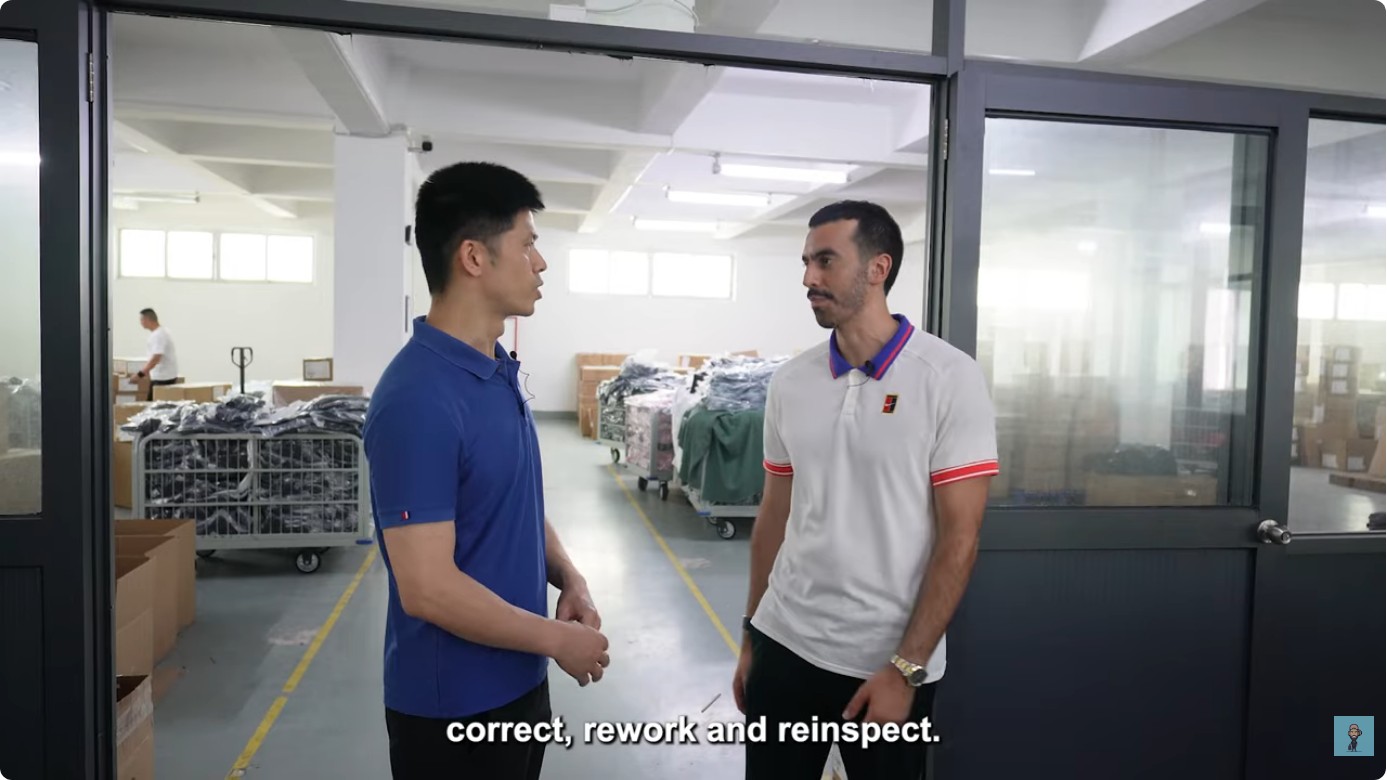
The key takeaway: Nike’s supply chain is not a single factory but a tiered, managed network. They work with large, Tier-1 contract manufacturers who may themselves sub-contract specific processes (like knitting or dyeing) to Tier-2 and Tier-3 facilities. For a custom brand, this highlights that your primary relationship is with a managing manufacturer, not necessarily every single process.
What Nike’s Scale Means for the Custom Brand Owner
Nike’s model is optimized for their scale—millions of units, dozens of styles per season. Your custom project—whether it’s 500 hoodies for a gym or 5,000 tracksuits for a fashion label—operates under a different set of rules. This is where understanding the differences between a dedicated OEM/ODM manufacturer and a general trading company becomes crucial.
Dedicated OEM/ODM Factory vs. General Trading Company
A trading company acts as a middleman. They take your order, source fabric and factory capacity from various suppliers, and manage the process. A dedicated OEM (Original Equipment Manufacturer) or ODM (Original Design Manufacturer) factory owns or leases its production lines, stocks core materials, and has in-house pattern makers and sample rooms. Here’s a practical comparison:
| Factor | Dedicated OEM/ODM Factory | General Trading Company |
|---|---|---|
| Control & Visibility | Direct oversight of production floor, quality checkpoints, and schedule. | Relies on third-party QC and communication through the trader; less transparency. |
| Minimum Order Quantity (MOQ) | Often lower and more flexible, as they fill their own lines. Can range from 200-1000 units depending on process. | May have higher MOQs or be constrained by the factories they can access for small runs. |
| Lead Time | More predictable, as material sourcing and production are in-house or with long-term partners. | Can be longer and less certain due to coordinating multiple parties. |
| Cost Structure | Factory-direct pricing; margin is in production efficiency. | Includes a trading markup on top of factory costs. |
| Problem Resolution | Issues are solved at the source by technical teams. | Communication loops are longer; trader may lack technical depth. |
| Intellectual Property | Clearer IP protection with a contractual factory relationship. | Higher risk of design leakage through multiple exposed entities. |
Key Production Considerations Beyond “Where”
For your custom project, the country is less important than the specific factory’s capabilities and systems. A poor factory in Vietnam will underperform an excellent one in Bangladesh. Vet your partner on these criteria:
1. Vertical Capability & Specialization
Does the factory knit its own jersey, dye it, cut, and sew under one roof? Or do they outsource knitting and dyeing? A more vertically integrated factory reduces logistics errors and quality risks. Ask: “Can you handle the full process from fabric to finished garment for this specific product (e.g., a performance fleece hoodie)?”
2. Certifications & Compliance
For activewear, certifications are non-negotiable for many buyers. Verify:
- ISO 9001: General quality management.
- WRAP, BSCI, or SMETA: Social compliance and ethical labor standards.
- OEKO-TEX Standard 100: Tests for harmful substances in textiles.
- GOTS (Global Organic Textile Standard): If using organic cotton.
These aren’t just badges; they represent audited systems. A factory without basic certifications is a high-risk partner for any serious brand.
3. Technical Development Strength
The sample stage is where 80% of fit and construction issues are resolved. A strong OEM/ODM will have:
- In-house pattern makers and sample machinists.
- The ability to work from a tech pack, a sketch, or to co-develop a design from your concept.
- Proficiency with your target garment’s construction (e.g., flatlock seams for performance wear, heavy-duty zippers for cargo pants).
Request to see samples of similar past work, not just catalog photos.
A Practical Sourcing Checklist
Before you commit to a manufacturer, verify the following. Treat this as a pre-production audit:
- Factory Visit or Virtual Audit: Can you see their production floor, sample room, and warehouse? If not in-person, a detailed live video walkthrough is essential.
- Material Sourcing: Do they stock core fabrics (e.g., 100% cotton jersey, polyester fleece), or must you source and ship fabric to them? Who guarantees the fabric’s weight, composition, and shrinkage?
- MOQ Reality: Get the MOQ in writing for your specific style. Is it per color? Per size? Understand what drives it (fabric minimums, dye lot, cutting efficiency).
- Quality Control Plan: Ask for their standard QC checklist. At what stages do they inspect (incoming fabric, pre-production sample, mid-production, final)? Who performs it?
- Communication Protocol: Who is your dedicated project manager? What is their response time expectation? Time zone differences must be managed proactively.
- Logistics & Incoterms: Who handles freight, customs clearance, and duties? Is the quote FOB (factory) or DDP (delivered to your door)? This dramatically impacts cost and risk.
Conclusion: It’s About the Partner, Not Just the Postcode
The answer to “where are Nike clothes made” is a network. For your custom sportswear project, you are not building a network; you are selecting a single, capable partner to build your product. The location should be a secondary consideration to the factory’s technical skill, communication integrity, and system robustness. A transparent, specialized OEM/ODM in Vietnam, Bangladesh, or Pakistan can deliver exceptional results for your brand at a viable MOQ. A disconnected trading company in any country can create a logistical nightmare.
Frequently Asked Questions
Q: Should I choose a factory in the same country as my main market to save on shipping?
A: Not necessarily. For most custom activewear, production costs far outweigh shipping costs from Asia. A factory in Vietnam or China may offer a 30% lower unit cost, easily offsetting sea freight. Air freight is for samples or emergencies. Prioritize manufacturing quality and cost over proximity, unless you have ultra-fast turnaround needs.
Q: What is a realistic MOQ for custom hoodies or tracksuits?
A: For a dedicated OEM with standard fabrics in stock, MOQs can start at 300-500 pieces per style/color. Complex items with custom fabric development (e.g., a unique knitted pattern) may require 1,000+. Always get a quote based on your exact spec.
Q: How do I ensure quality when I can’t visit the factory?
A: Insist on a detailed pre-production sample (“counter sample”) made from your approved fabric. Use a third-party inspection company like Intertek or SGS for a mid-production and final random inspection. The cost of an inspection is minimal compared to a full rejected shipment.
Whether you’re a startup brand or an established retailer, we manufacture custom sportswear at competitive MOQs. Reach out to start your project.
[…] Related guide: Where Are Nike Clothes Made? And What It Means for Your Custom Sportswear Sourcing […]