
When you search “where was Nike made,” you’re typically looking for a simple list of countries. But for a brand manager, product developer, or wholesale buyer, the real question is deeper: what does Nike’s global manufacturing strategy reveal about the economics, logistics, and quality control of producing modern activewear? Understanding the “why” behind the locations is crucial for anyone sourcing custom sportswear, as it highlights the trade-offs between cost, capacity, expertise, and risk that you will navigate with your own factory partner.
Nike does not own most of its manufacturing; it operates a vast network of independent contract factories. This model is standard for the industry. Analyzing Nike’s supply chain isn’t about copying it, but about learning the principles that dictate where and how sportswear is produced at scale. This knowledge empowers you to ask the right questions, set realistic expectations for your OEM/ODM project, and build a resilient sourcing strategy for your brand.
The Geographic Footprint: More Than a Map
Nike’s products are made in over 40 countries, but production is heavily concentrated in a few key regions. The distribution isn’t static; it’s a dynamic response to tariffs, labor costs, infrastructure, and geopolitical factors. For a custom brand, this map is a lesson in diversification and risk management.
Primary Manufacturing Hubs: Vietnam, China, and Indonesia
Historically and currently, these three nations form the core of Nike’s (and the global athletic apparel) production capacity.
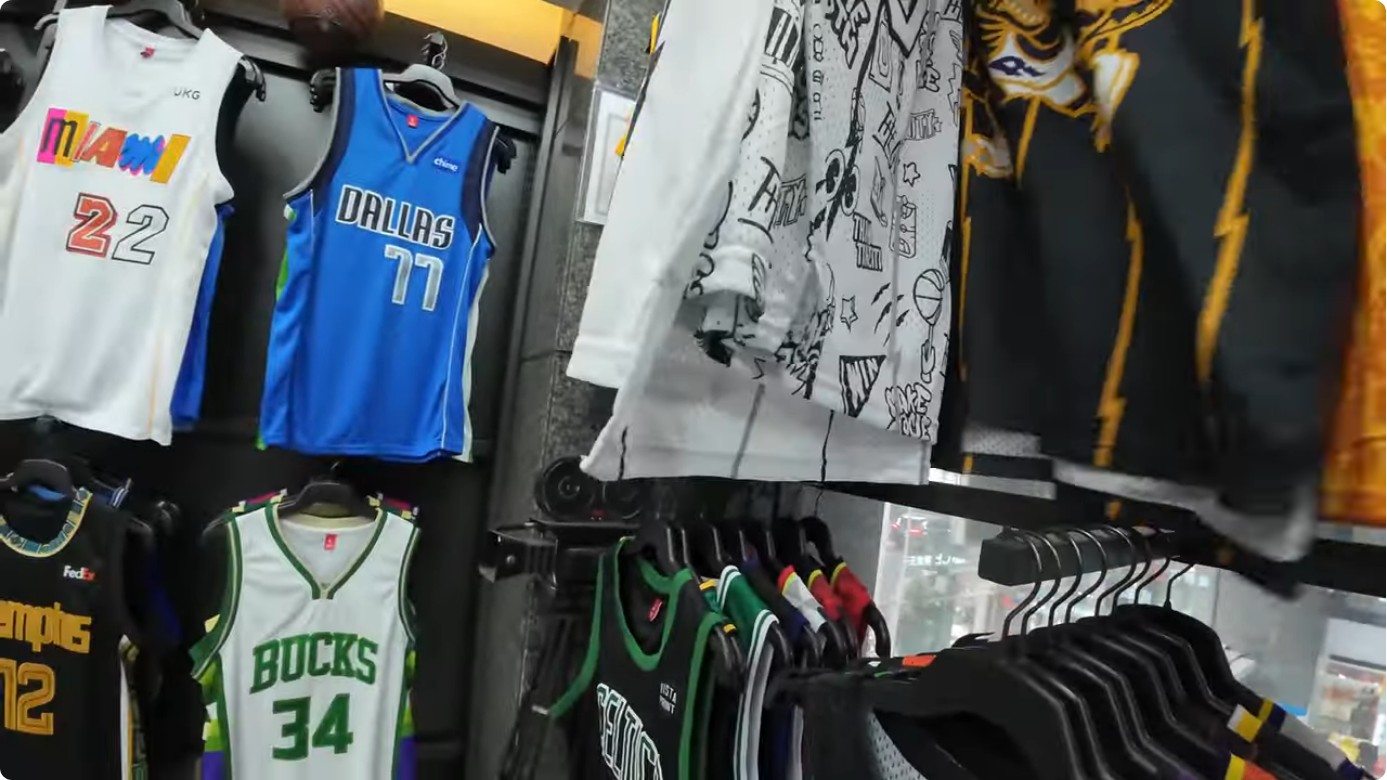
- Vietnam: The largest single source for Nike footwear and apparel. Its rise is a textbook case of industrial migration. Post-2018 U.S.-China trade tensions accelerated shifts here. Vietnam offers a skilled workforce, competitive labor costs, and strong government support for the textile/garment industry. For buyers, this means access to high-volume, cost-effective production, but also intense competition for factory capacity, especially for peak seasons.
- China: Still a critical node, particularly for complex footwear components, high-tech materials, and certain apparel categories. China’s advantage lies in its unparalleled vertical integration—from synthetic fiber production to advanced knitting and finishing. Sourcing from China can offer shorter lead times for complex tech packs and access to specialized materials, but often at a higher base cost than Vietnam and with greater tariff exposure for some Western markets.
- Indonesia: A major hub for apparel and footwear, known for robust garment engineering and growing technical capabilities. It serves as a strategic alternative within Southeast Asia, often with slightly different cost structures and capacity availabilities than Vietnam.
Secondary and Strategic Regions
A resilient supply chain requires alternatives. Nike utilizes factories in:
- India, Sri Lanka, Bangladesh, Cambodia: Primarily for basic apparel (t-shirts, sweatshirts) where cost is the primary driver. These regions offer very low labor costs but can present challenges in quality consistency, infrastructure reliability, and ethical compliance audits. For a custom brand, this tier is where MOQs (Minimum Order Quantities) might be lowest, but due diligence on factory standards is paramount.
- Americas (USA, Mexico, Central America): Used for North American market quick-response programs, premium lines, and to reduce logistics carbon footprints. Production here is significantly more expensive but offers “nearshoring” benefits: faster shipping, easier communication, avoidance of import tariffs, and a “Made-in-USA” marketing angle. For custom orders with tight deadlines or a domestic branding story, this is a key option.
- Europe (Portugal, Italy, Turkey): Centers for high-end, fashion-forward, or technically advanced apparel. Italian factories are renowned for precision and premium materials. Turkish factories offer a strategic bridge between Europe and Asia with strong craftsmanship in denim and knits. These locations cater to brands where brand prestige and detail outweigh pure cost pressure.
For an authoritative overview of global textile and apparel trade flows, the OECD’s work on global value chains provides essential context.
From “Made” to “Sourced”: The OEM/ODM Reality
The phrase “where was Nike made” simplifies a complex web of ownership. Nike designs; hundreds of independent factories manufacture. This is the OEM (Original Equipment Manufacturer) model. Many of these same factories also engage in ODM (Original Design Manufacturer) work, where they propose design and technical solutions to brands.
For your custom project, this means:
- Your factory’s location dictates its core competencies. A factory in Guangzhou, China, might be an expert in seamless bonding and performance membranes. A factory in Porto, Portugal, might excel at organic cotton jersey and subtle garment dyeing. Your tech pack must align with a factory’s geographical and historical expertise.
- Logistics are part of the cost. A “low” FOB (Free On Board) price from Vietnam can be offset by longer sea freight times and higher inventory carrying costs versus a higher-priced order from Mexico. This is a fundamental calculation in global sourcing strategy.
- Compliance is non-negotiable. Nike publishes a Manufacturing Map and Sustainability Report. While you may not have its scale, you must expect your factory to provide equivalent transparency: valid certifications (e.g., WRAP, BSCI, ISO), audit reports, and wage/benefit records. The “where” determines the local regulatory environment and common audit standards.
What This Means for Your Custom Sourcing Decision
When you’re selecting a factory for your custom tracksuits, hoodies, or performance tees, “where it’s made” should be your first filter, not an afterthought. Here is a practical framework.
| Region | Primary Strength | Typical MOQ Range | Key Consideration |
|---|---|---|---|
| China (Coastal) | Complex tech, vertical integration, speed for tech fabrics | Medium-High (500-2k+ units/style) | Tariff exposure; communication usually excellent; high quality consistency for advanced items. |
| Vietnam | High-volume, cost-effective footwear & apparel; skilled garment construction | Medium-High (1k-5k+ units/style) | High demand; lead times can stretch; excellent for standard performance apparel. |
| India/Bangladesh | Basic knits, denim, very low-cost basics | Low-Medium (300-1.5k units/style) | Infrastructure and quality control variability; rigorous auditing essential. |
| Central America (Guatemala, etc.) | Quick response for US market, decent quality for basics | Medium (800-3k units/style) | Tariff benefits (CAFTA); higher labor cost than Asia; good for “domestic” branding. |
| Portugal/Italy | Premium fashion, technical innovation, sustainability focus | Low-Medium (200-1k units/style) | High cost per unit; exceptional quality and design partnership; short lead times to EU/US. |
The Buyer’s Checklist: Questions to Ask Before Production
Based on the lessons from giants like Nike, here is a checklist for your custom manufacturing inquiry. The answers will tell you if a factory is a true partner or just a price quote.
Helpful tip: The Grey Oversized Hoodie: A Strategic Sourcing Guide for Brands & Buyers
- Specify Your Origin: “Which specific factory and city will produce my order?” (Avoid vague “made in Vietnam” answers). Request the factory’s audit certificate directly.
- Probe Capacity & Expertise: “What is your monthly capacity for [hoodies/track pants] in my desired fabric? Can you show me samples of similar products you’ve made for other clients?”
- Clarify the Value Chain: “Do you source the fabric/knit yourself, or do I need to provide it?” (This is a major cost and quality lever). If they source, ask for mill certifications.
- Detail Compliance: “What is your process for forced labor due diligence? Can you provide the last 3 third-party audit reports?”
- Map the Logistics: “What is the all-in cost to door (DDP) to [Your Warehouse City]? What is the realistic production + shipping timeline?”
- Define Quality Gates: “What is your pre-production process (lab dips, fit samples, PP samples)? Who bears the cost of remakes if samples fail?”
Scenario: Sourcing a Custom Performance Hoodie
Let’s apply this. You need 2,000 custom performance hoodies with a moisture-wicking, recycled polyester fleece.
- Path A (Cost-Focused): You source to a factory in Ho Chi Minh City, Vietnam, that specializes in fleece. MOQ matches. FOB price is low. Trade-off: 45-day sea freight lead time. You must trust the factory’s recycled content certification. You need a strong local agent for quality control visits.
- Path B (Quality & Speed-Focused): You source to a specialized ODM in Lisbon, Portugal. They propose a proprietary recycled French terry they already use for EU brands. MOQ is 1,000, which works. FOB is 40% higher, but air freight is 15 days. You get a superior hand-feel and a “designed in Europe” story. The factory handles all fabric sourcing with full transparency.
- Path C (Tech-Integrated): You work with an ODM in Guangdong, China, that can integrate a waterproof, breathable membrane into the hoodie’s front panel—a feature you want. Their MOQ is 3,000. This path is about accessing a technical capability that doesn’t exist elsewhere at scale.
There is no single “best” place. The best place is the one whose strengths align with your brand’s priorities: cost, speed, technical innovation, or story.
Final Considerations for the Modern Buyer
The landscape is shifting again. New factors are now as critical as labor cost:
- Resilience Over Lowest Cost: Brands are now deliberately splitting orders across 2-3 regions (e.g., 50% Vietnam, 30% Central America, 20% China) to mitigate disruption risk. This increases complexity but is becoming a standard strategic move.
- Sustainability by Location: Some regions (e.g., parts of Europe, Japan) have more developed renewable energy grids and chemical management infrastructure. If your brand’s ESG claims are central, the manufacturing country’s environmental regulations matter.
- The Talent Gap: In traditional hubs like China, an aging workforce and rising wages are pushing factories towards automation and higher-value products. In newer hubs like Myanmar or Ethiopia, the challenge is a lack of skilled supervisors and engineers, impacting consistency.
Where Was Nike Made? The Takeaway for Your Brand
The answer is “everywhere, strategically.” Your task is to define your own strategy. Is your priority minimizing unit cost for a high-volume staple? Look to Vietnam or established Central American hubs. Are you launching a limited-edition, tech-heavy collaboration? Target specialized factories in China, Korea, or Portugal. Is “Made in USA” a non-negotiable part of your brand identity? Your pool of qualified factories will be smaller, more expensive, but potentially more aligned with premium storytelling.
The goal is to move from “where was Nike made” to “where should MY product be made, and with which factory partner?” That conversation starts with understanding the global map, knowing your own brand’s non-negotiables, and demanding transparency from any potential manufacturer.
Need custom versions of any style covered here? Our sportswear factory handles everything from tech pack review to bulk delivery. Request a sample or quote.