
If you’re a brand owner, retailer, or buyer searching for “where are Nike hoodies made,” you’re likely investigating more than just a geography answer. You’re probing the blueprint of a multi-billion dollar supply chain to understand what makes a premium hoodie scalable, consistent, and cost-effective. The direct answer is that Nike hoodies are manufactured across a vast, tiered global network, primarily in countries like Vietnam, China, Indonesia, Thailand, and Cambodia. However, this headline only scratches the surface. The real insight for any business sourcing activewear lies not in replicating a giant’s footprint, but in understanding the decision architecture behind those locations—and how that knowledge applies to your own custom manufacturing strategy.
This article moves beyond a list of countries. We will deconstruct the factors that determine a factory’s role in producing a high-volume hoodie, from cost structures and skill specialization to compliance and logistics. Then, we’ll pivot to the critical question for your business: what does this mean for you when choosing a manufacturing partner for your own custom hoodie, sweatshirt, or tracksuit line?
The Nike Supply Chain Map: A Study in Specialization and Risk Diversification
Nike doesn’t own most of its factories; it contracts with a complex web of independent manufacturers. This model, common in apparel, is driven by capital efficiency and flexibility. The geographic distribution is a calculated balance of:
You may also like: Beverly Hills Polo Club vs. Ralph Lauren: A Manufacturer’s Guide for Brand Buyers
- Labor Cost & Skill: Vietnam and Indonesia have become hubs for mid-to-high complexity assembly due to experienced workforces and competitive wage scales relative to China.
- Scale & Infrastructure: China still hosts massive, vertically integrated facilities capable of handling extreme volume and rapid turnaround, supported by deep textile and trim ecosystems.
- Trade Policy & Tariffs: Production location is heavily influenced by international trade agreements. For instance, factories in Cambodia or Bangladesh may be chosen for specific markets to leverage preferential trade status.
- Compliance & Risk Management: Diversifying across at least 10+ countries mitigates risk from local disruptions (political, environmental, or labor-related) and allows the brand to enforce its Manufacturing Standards across diverse regulatory environments.
For a custom brand, this model is instructive. It demonstrates that there is no single “best” country. The optimal choice is a matrix of your product’s technical requirements, target market, order size, and ethical priorities.
Decoding the Factory: What Really Matters for Your Custom Hoodie Order
When you move from analyzing Nike’s chain to selecting your own OEM/ODM partner, you shift from observer to participant. The key evaluation criteria become operational and strategic. Here is a comparative framework for the factors that define a capable sportswear factory.
| Factor | What It Means for Your Order | Key Questions to Ask |
|---|---|---|
| Minimum Order Quantity (MOQ) | Dictates your initial cash outlay and inventory risk. Large-scale factories serving brands like Nike often have MOQs in the thousands per style/color, which is prohibitive for new brands or small retailers. | What is the MOQ for our specific hoodie style (fabric weight, construction)? Is there flexibility for a first order? |
| Technical Capability & Equipment | Hoodies involve more than cutting and sewing. They require expertise in ribbing, kangaroo pocket insertion, drawstring attachment, and handling heavier knits. A factory’s machinery (flatlock, coverstitch, automated cutting) defines quality consistency. | Can you produce the specific stitch types (e.g., 3-needle flatlock) and finishes we require? Do you have in-house garment dyeing capabilities? |
| Quality Control (QC) Systems | This is non-negotiable. Look for established, multi-stage QC: incoming fabric inspection, inline sewing checks, and final random inspection. Ask about their AQL (Acceptable Quality Limit) standard, typically AQL 2.5 for major defects in consumer apparel. | Walk me through your QC process from fabric to packed goods. Who conducts it? What is your defect rate history for fleece/knits? |
| Lead Time & Production Scheduling | Lead time is the sum of fabric sourcing (if not in stock), cutting, sewing, finishing, and shipping. A transparent factory will break this down. Rush orders often require a premium and can compromise quality. | What is your standard lead time for a 500-unit hoodie order? How much notice do you need for fabric sourcing? |
| Certifications & Compliance | Certifications like ISO 9001 (quality management), WRAP (Worldwide Responsible Accredited Production), or BSCI (Business Social Compliance Initiative) signal a commitment to ethical and process standards. These are often requested by larger retailers. | What social compliance audits do you undergo? Can you provide your latest report? Are you compliant with restricted substance lists (RSL)? |
The Trade-off: Specialized Sportswear Factory vs. General Trading Company
This is a pivotal decision. A trading company acts as a middleman, coordinating multiple factories. A dedicated sportswear OEM/ODM manufacturer owns or directly manages its production lines.
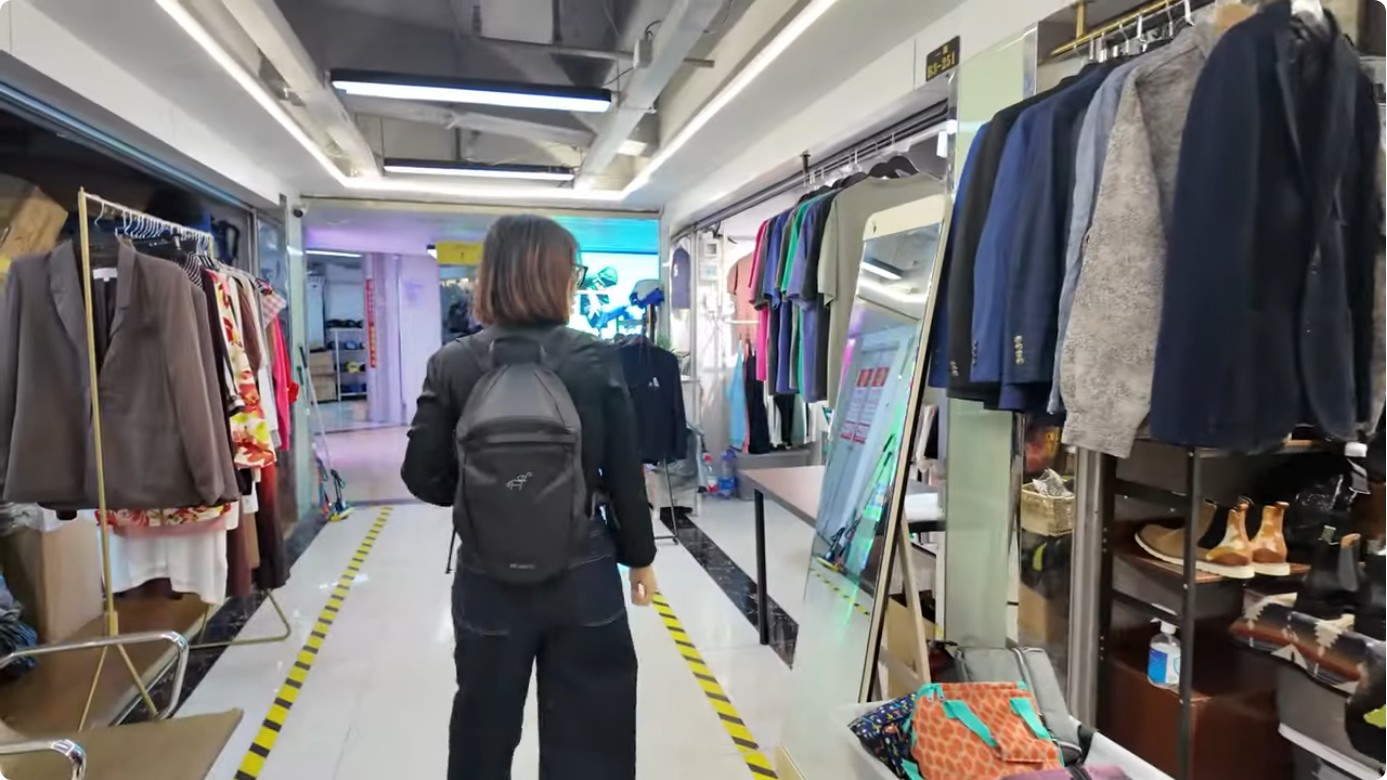
Choosing a Trading Company might offer:
- A wider apparent range of product types (they can source anything).
- Potentially lower MOQs by aggregating orders across clients.
- Simplified communication (one point of contact).
But you sacrifice:
- Direct Control: Quality issues become a blame game between you, the trader, and the factory.
- Technical Depth: The trader may not understand the nuances of fleece shrinkage, rib consistency, or dyeing techniques for performance fabrics.
- Intellectual Property Risk: Your designs and specifications are passed through more hands.
- Cost Transparency: Markups are hidden, making true cost analysis difficult.
Choosing a Specialized Sportswear Factory offers:
- Deep Expertise: They live and breathe activewear construction. Their patterns, grading, and sample-making are refined for performance and wear.
- Integrated Workflow: Often, design (ODM), pattern-making, sampling, and production are under one roof, drastically reducing communication errors and lead time.
- Direct QC Oversight: Problems are identified and solved at the source by engineers who know the process.
- Material Sourcing Power: They have established relationships with fabric mills for specific fleece, French terry, or performance knits, often securing better pricing and consistent quality.
The tradeoff is typically higher MOQs and less flexibility for wildly diverse product categories. You are paying for specialization and reliability.
Your Action Plan: Vetting a Manufacturing Partner
Armed with the context of global manufacturing, here is a practical checklist to evaluate potential partners for your custom hoodie project.
- Audit Their Portfolio: Request and physically inspect samples of past hoodie work. Check seam strength, pocket alignment, ribbing elasticity, and overall drape. Don’t just look at photos.
- Probe the Supply Chain: Ask where their key fabrics and trims come from. A reputable factory will name trusted suppliers or mills. Be wary if they are vague.
- Visit or Video Tour: If possible, an on-site visit is the gold standard. If not, request a detailed live video walkthrough of their production floor, cutting room, and QC station.
- Discuss Scalability: “Can you handle a 5,000-piece order if this succeeds?” Their answer reveals their true capacity and long-term viability as a partner.
- Clarify All Costs: Get a detailed proforma invoice breaking down: fabric cost per meter/yard, trim cost, cutting cost, sewing cost per piece, finishing, and packaging. Understand what triggers price changes (e.g., fabric price fluctuation clauses).
- Test Their Communication: Gauge their responsiveness and English proficiency during the quoting phase. Poor communication before an order is a strong predictor of problems during production.
So, Where Should *Your* Hoodies Be Made?
This is the central question your search has led you to. The answer is not a country, but a profile. Your ideal manufacturer is likely:
- A facility with proven expertise in heavyweight knits and fleece.
- Willing to work within your required MOQ, even if it means they are running a smaller batch line.
- Transparent about their own supply chain for fabrics and dyes.
- Equipped with modern, well-maintained sewing machines capable of handling thick seams without skipped stitches.
- Able to provide a physical sample that meets your quality and fit expectations before full production.
Whether that factory is in Vietnam, Pakistan, or Central America depends on the specific combination of the factors in the table above that best fits your business model. A small direct-to-consumer brand might find a nimble, certified factory in Portugal or Mexico ideal for lower MOQs and faster shipping to the US/EU. A larger brand might look to Bangladesh or Cambodia for extreme cost efficiency on very high volumes, but must invest heavily in third-party QC auditing.
Beyond the Label: Building a Manufacturing Partnership
Thinking like Nike means seeing manufacturing as a strategic pillar, not just a cost center. It means valuing consistency, innovation in fabric and fit, and a shared commitment to quality. For your brand, the goal is to find a partner whose capabilities align with your vision and growth stage.
This requires moving the conversation from “where are they made” to “how are they made, and by whom?” The “where” is a symptom of the “how.” A great factory in a higher-cost country can often outperform a poor factory in a low-cost country due to better training, processes, and oversight. Your focus should be on the systems and expertise that create a great hoodie, not just the geopolitical label on the tag.
If you’re looking to source or customize any of the styles mentioned above, our factory offers low MOQ OEM/ODM production with full sampling support. Get a free quote today.
Related guide: The Sourcing Guide to Super Heavyweight Hooded Sweaters: Why Russia’s Knitwear Heritage Matters for Your Brand