

Custom Activewear Manufacturer — Leggings, Tees, Outerwear & Sets
OEM & ODM activewear for lifestyle brands, retailers, influencers and fitness platforms in 30 countries. In-house knitting, cut-and-sew, sublimation and QC — from sketch or tech pack to labelled, packed cartons.
Fexwear is a custom activewear manufacturer producing OEM and ODM leggings, tees, outerwear and matching sets for lifestyle brands, retailers, influencers and fitness platforms in 30 countries. Founded in 2010, we run our own in-house knitting, cut-and-sew, sublimation and quality-control lines, and we take an activewear programme from a rough sketch or a finished tech pack all the way through to labelled, packed cartons — with minimum order quantities starting at 10 pieces.
Activewear is the hardest category to make well, because one garment has to work in two completely different contexts. The same legging has to survive a 45-minute studio session and then look correct in a coffee shop, on a train, and in a photograph. That dual demand is what separates a successful activewear line from a gym line with a lifestyle spin on it, and it changes almost every specification that matters.
The mistake we see most often is a brand that specifies gym fabric for a lifestyle product. Performance fabric reads as athletic under a camera and looks like sportswear everywhere else. This guide covers what we actually run: the product families, the fabric constructions that work across both contexts, sizing for a body range that is wider than sportswear, minimum order quantities and pricing, private label packaging, and the questions buyers ask most.
Custom Activewear We Manufacture
Four core product families, all produced in-house with your artwork, colours and labels.

Tees & Tops
Performance tees, long sleeves, tanks and crop tops in both technical knits and cotton-rich blends, so one order can cover a training line and a lifestyle line without splitting the supplier.

Leggings & Bottoms
Full-length and cropped leggings, bike shorts, joggers and wide-leg pants. High-rise and mid-rise waistbands, four-way stretch, and recovery tested so they hold shape through a full day of wear.

Outerwear
Hoodies, zip jackets, gilets and windbreakers that bridge studio and street. French terry, loopback fleece and lightweight water-resistant shells, sized to layer over a base layer without bulk.

Matching Sets & Workout Accessories
Two-piece and three-piece sets sold as a single SKU. The highest-attach-rate product in activewear, and the one where colour consistency between pieces matters most.
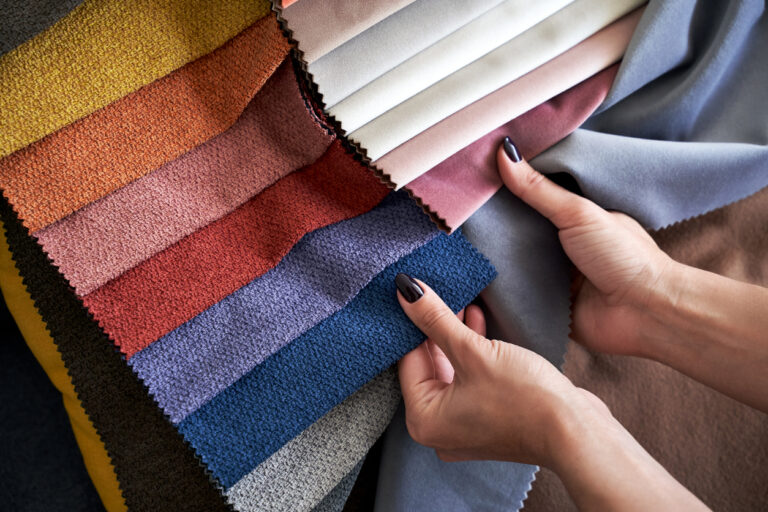
Functional Fabric
Four-way stretch knits with a cotton-soft hand, moisture-wicking and quick-dry finishes, chosen so the fabric reads as athleisure rather than as sportswear.
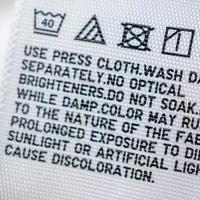
Advanced Techniques
Heat-transfer woven labels, sublimated tags, screen-printed neck prints and size tabs, produced in-house so label minimums never stall your launch.
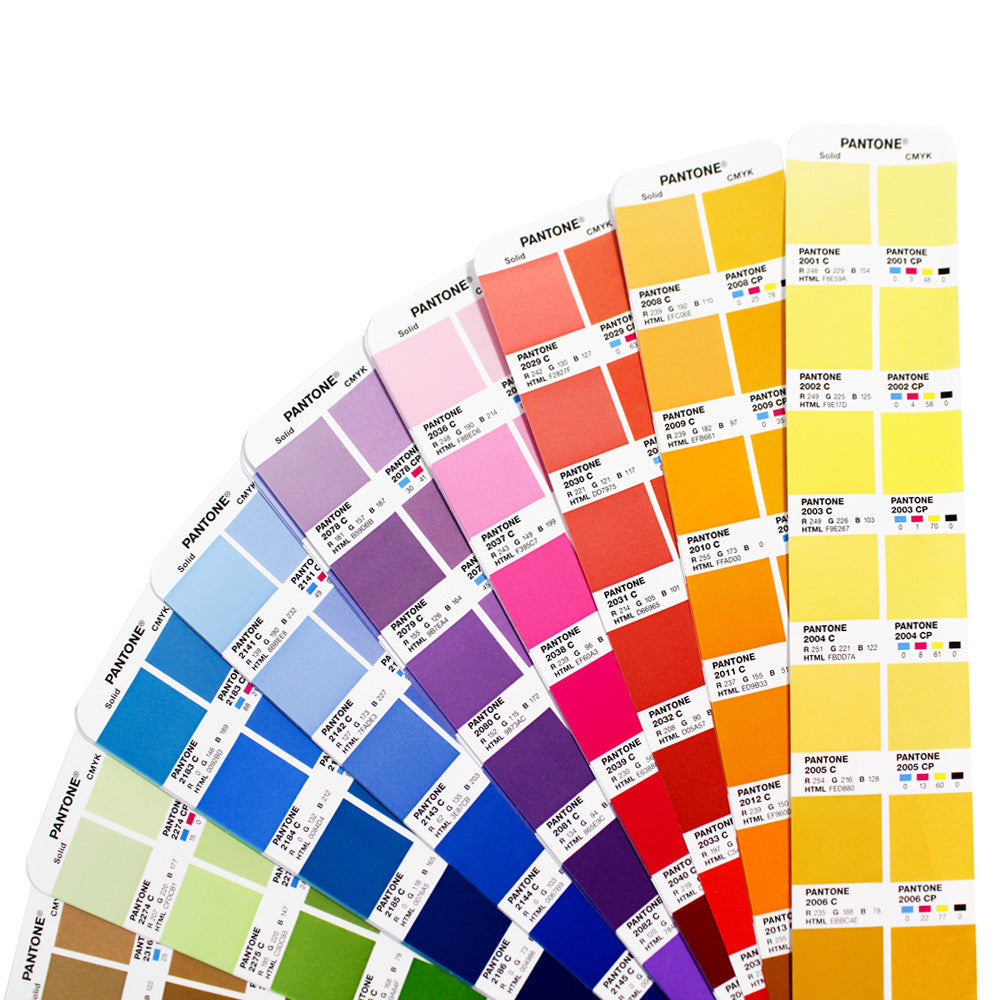
Pantone matching
Fabrics dyed to your exact Pantone reference and checked against a physical swatch under daylight, so the colour you approved is the colour that ships.
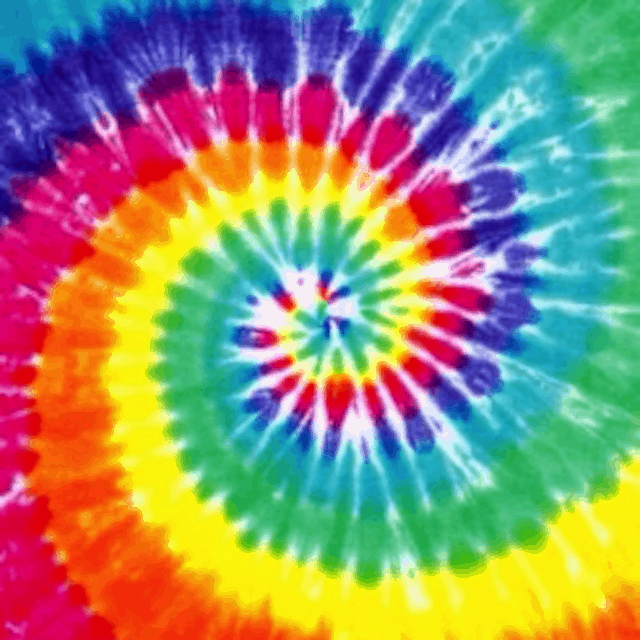
Sublimation dyed
Full-panel and all-over prints with no crack, no peel and no hand-feel change, which is why it is the default print method for graphic-heavy activewear.
sublimation dyed
Full-panel and all-over prints with no crack, no peel and no hand-feel change, which is why it is the default print method for graphic-heavy activewear. Our OEM and ODM services provide custom-made activewear with high-quality sublimation dyeing, ensuring vibrant and durable colours.
Activewear Fabric Specifications: Weight, Composition and Hand
Performance knits for the training half of the range
Polyester-spandex (Polyester 78 / Elastane 22)
The workhorse for any activewear line that has to perform. Cheap relative to nylon, available in any colour, and easy to source recycled versions of. The elastane versus nylon trade-off applies here as it does everywhere: above roughly 20% elastane the fabric gets grippy and matte, below 15% it bags out faster. 22% is the balance most of our activewear clients settle on.
Cotton-rich blends (Cotton 60 / Poly 35 / Elastane 5)
This is the fabric most lifestyle activewear is actually made from, and it is the one that gets specified wrongly. It feels and photographs like clothing, which is the point — but it pills at the hip and seat, and it absorbs sweat rather than wicking it. Use it for the lifestyle half of the range, not for the training half. More detail on fabric types for custom sportswear.
Nylon-spandex (Nylon 82 / Elastane 18)
Softest and most expensive hand, with the best recovery of the three. Worth it for a premium or seamless line, and worth it for leggings that need to survive a full day of wear without bagging at the knee. More on how jersey knit is constructed in the knit guide.
Fabric structures worth specifying
Interlock and ribbed knits
Interlock is the right structure for fitted tops and sets because it lies flat and takes an all-over sublimation print without distortion. Ribbed knits with higher elastane give a second-skin compression fit and hide minor waistband and hem lines.
French terry and loopback fleece
The main options for hoodies and joggers in this category, and what an activewear customer expects on a sweatshirt. Both hold shape through repeated washing if the seams are properly finished, and both take a chest print well. Our fabric selection guide covers how to spec terry and fleece without over-ordering the wrong weight.
Finishes worth specifying
Moisture-wicking finish
Our 100% polyester quick-dry, moisture-wicking fabric efficiently pulls sweat away from your body. Lightweight, ultra-soft, and anti-pilling — specify it explicitly, because it is close to standard but not universal.
Anti-pilling finish
Important on fleece and terry, which is where pilling shows first on the waistband and cuff. For a lifestyle line this matters more than for a gym line, because customers photograph the garment rather than just wear it.
Environmentally certified fibres
Recycled polyester (rPET), recycled nylon or bio-based elastane. We hold BSCI, WRAP, SEDEX and SMETA for labour and social audit, OEKO-TEX for material safety, and ISO-based quality management. If retail compliance needs documented sustainability credentials, ask which certificate covers which fabric.
Construction & Decoration Details
Advanced techniques and branding
Create your own private label to establish and grow your brand. Choose from heat transfer labels, sublimated logos, or woven sew labels — all three are produced in-house, so label minimums never hold up your launch. A complete private label programme also covers size and care labels in your own wording, hangtags, retail packaging, barcodes and a branded polybag.
Customization and colour matching
Create custom activewear with fabrics dyed to match your exact Pantone colour reference, ensuring precision and consistency across every piece in the collection. This matters more in activewear than in most categories, because a brand’s signature colour is often the only thing identifying it — and a set whose two pieces came from different dye lots is an immediate return.
Seams and waistbands
Coverstitched flatlock seams sit flat against the skin and eliminate the ridge a normal overlock leaves, which matters for leggings and fitted tops worn against skin. For waistbands, specify the construction rather than the width: a fold-back elastic band with flatlock topstitch, a two-layer bonded band with silicone gripper, or a ruched elastic band with internal drawcord. Our sewing stitch guide covers the options in more detail.
Printing methods compared
- Best for
- Solid-colour logos, text and high-opacity graphics
- Why
- Plastisol inks hold their hand and opacity, and the per-unit cost drops sharply above a few hundred pieces
- Limit
- Cannot reproduce photographic gradients without looking flat
- Best for
- All-over prints, photographic panels and gradient-heavy graphics
- Why
- Ink bonds with the fabric under heat and pressure, so it becomes part of the garment rather than sitting on top — vibrant, durable, and soft to the touch
- Limit
- Requires polyester-dominant fabric. Full comparison in our printing methods guide
- Best for
- Small runs of complex artwork or full-colour images on small quantities
- Why
- No screen setup, so it is fast on short runs
- Limit
- Cost per unit is higher than screen printing, so it is a sampling and short-run tool
Sizing, Fit and Grading
Build a real tech pack
A tech pack that actually gets sampled first time needs measurement charts, not just garment images. Minimum we need: body measurement chart by size, finished garment measurements, and the intended fit described in words. Our sizing and measurement blueprint walks through building one from scratch.
Choose a fit, then hold to it
Compression fit
Skims the body, high elastane content, sized close to the body. Harder to fit across a wide size range; expect a tighter tolerance.
Standard retail fit
Follows the body with a small ease allowance. The safest choice for first runs and for marketplaces where the size chart is the only thing a buyer sees.
Relaxed / oversize
Deliberate ease through the body, and the fit most activewear customers actually want. Because they wear it every day, not three times a week.
Grading and size runs
Standard grading follows XS through 3XL with roughly 4–5 cm chest and waist increments, but the right increments for your product depend on the market and the cut. For activewear leggings, size to the waist and hip more aggressively than the chest, because that is where customers feel fit. Tell us the fabric before the pattern is graded, not after: a pattern graded on a woven behaves completely differently when cut from a four-way stretch knit. We can also supply a graded size set of your own, or work from your existing block.
Quality Control and Compliance
Stretch and wash testing
Physical tests
- Stretch recovery test — stretch and release each fabric, measuring residual deformation. Under 3% residual is our floor for a legging that holds its shape.
- Opacity / forward-fold test — light-table test on every pale and mid-tone fabric, including two layers overlapped.
- Burst and tear test — focused on seams and gussets, the highest-risk joinery points.
- Dimensional stability — sample garments washed and re-measured, which is the test that catches the label that shrinks.
Colour & packing
- Colour fastness to wash and sweat — sublimated prints tested to confirm the ink does not migrate or fade.
- Dye-lot consistency — a matching-set check, because the two pieces must come from the same dye lot.
- Retail-ready packing — folded to size, polybagged, tagged and barcoded with GTIN or UPC as required. If you sell through a marketplace, tell us in the first enquiry.
Minimum Order Quantity, Pricing and Volume Tiers
What actually drives unit price
Collaborating with 30+ partners across material sourcing and garment production, but fabric remains the biggest cost lever. Nylon-spandex at 190 gsm is roughly double the cost of a cotton-rich blend at the same weight.
Sublimation of an all-over panel costs meaningfully more than a single-colour screen print, but the per-unit cost falls as coverage rises.
Gussets, flatlock seams, bonded panels, lined pockets and special waistbands each add a setup and a sewing operation.
A five-size run costs more per piece than a two-size run because setup time and panel changes both grow.
Label creation adds real cost at low volume; sublimated tags add almost nothing.
Volume tiers
The drop in unit price happens in steps, not smoothly, and the biggest step is usually at a few hundred pieces per style. The wholesale buyer guide covers how buyers structure these tiers and where the real breakpoints fall. Practical advice: get the fabric and fit approved on a sample, then order your first real run in the sizes you actually sell.
Private Label, OEM and ODM
ODM versus OEM
You supply the design, fabric specification and artwork; we manufacture to it. The right choice when you already have a proven product and want to scale it.
You choose from our existing library of constructions and we adapt them to your brand. Faster and cheaper for a first run, and lower risk if the product is untested, but the fit and fabric are ours rather than yours.
If your line overlaps with gym wear, yoga wear or cycling clothing, the same block often serves more than one of them, which reduces your development cost across the range. Outerwear can also share blocks with our embroidered hoodies and embroidered sweatshirts programmes.
Order Timeline: Enquiry to Delivery
Working backwards from a launch date
We review your design, confirm the fabric, give a costed quote and confirm what can be produced at your quantity.
From sketch to sample: you send artwork or a sketch, we produce a sample for approval. Allow three to five days for a standard sample, longer for a complex one.
Samples come back with your written approval. Fit changes after approval mean a second sample, so it pays to be specific in the first round.
Knitting, cutting, sewing, printing and finishing. Two to four weeks is typical for a moderate order; complex multi-style programmes run longer.
AQL inspection, packaging, and dispatch. Air freight is around a week; sea freight to Europe or the US runs three to five weeks.
Plan on roughly ten to twelve weeks from enquiry to delivery for a standard programme. If your date is immovable, tell us in the first conversation — we would rather decline a rushed order than ship something that arrives without time for your own quality check.
Active Sportswear Suppliers
What we specialise in
- Multi-category production — specializing in customizing cycling apparel, running gear, sports team uniforms, sublimated jerseys, and other activewear categories.
- Cost-effective solutions — collaborating with 30+ partners to help lower costs in material sourcing, garment production, label creation, and international shipping.
- Premium materials — offering 50+ high-quality fabrics in stock, all BSCI test certified.
Service & quality
- Comprehensive OEM & ODM services — sublimation patterns, free design, sampling, logo creation, label production, packaging and shipment.
- Quality assurance — a skilled QC team performing three rounds of inspections for every item.
- Efficiency and flexibility — fast turnaround times, small MOQ options, and a 100% satisfaction guarantee.
Frequently Asked Questions
What is your minimum order quantity for custom activewear?
Minimum order quantities start at 10 pieces per style and colour, genuinely per design rather than per order, so you can develop four styles at ten pieces each. Practical minimums rise once you add a five-size run or three colourways.
Can you make activewear that works for both training and everyday wear?
Yes, and that is usually the right way to build an activewear line rather than choosing one fabric for everything. Specify a performance poly-spandex for the training half and a cotton-rich blend for the lifestyle half, and we will keep the colour matching consistent across both so the collection still reads as one brand.
Are the fabrics opaque when worn?
We test every fabric on a light table, stretched and also with two layers overlapped to simulate a forward fold. For pale and mid-tones we recommend a skin-tone backing behind the garment. We will not label a fabric as squat-proof if it fails the test, and we will show you the swatch before you commit.
Do you match Pantone colours across a whole collection?
Yes, and we check against a physical swatch under daylight because monitor colour is the most common source of disputes. For a matching set we also verify both pieces come from the same dye lot, since a set is usually returned immediately if the two pieces do not match.
What artwork file format do you need?
Vector files — AI, EPS or PDF — give the best results. For sublimation all-over prints, a high-resolution raster file at 300 dpi at final size is acceptable. We can work from a rough sketch if you are early in the process.
How long does sampling take?
Three to five working days for a standard sample, longer for complex constructions. Sample cost is credited against your first bulk order.
Do you offer recycled or sustainable fabric options?
Recycled polyester (rPET), recycled nylon and bio-based elastane are available on request. If recycled content is part of your brand positioning, flag it early because documentation and certification lead times add to the schedule. We hold BSCI, WRAP, SEDEX and SMETA, plus OEKO-TEX and ISO-based quality management.
Can you ship to our country?
We ship to 30 countries and can arrange both air and sea freight. We produce retail-ready packaging and barcodes where your market requires them.
Can I reorder the same line next season?
Yes. If the fabric is stocked or routinely sourced in our in-house production, lead times are predictable and reorders match the original run. We keep your pattern, trims and artwork on file, and we hold block patterns and trims so a repeat order lands on the same fit.
Contact Us
|
|