
Custom Leather Jacket Manufacturer
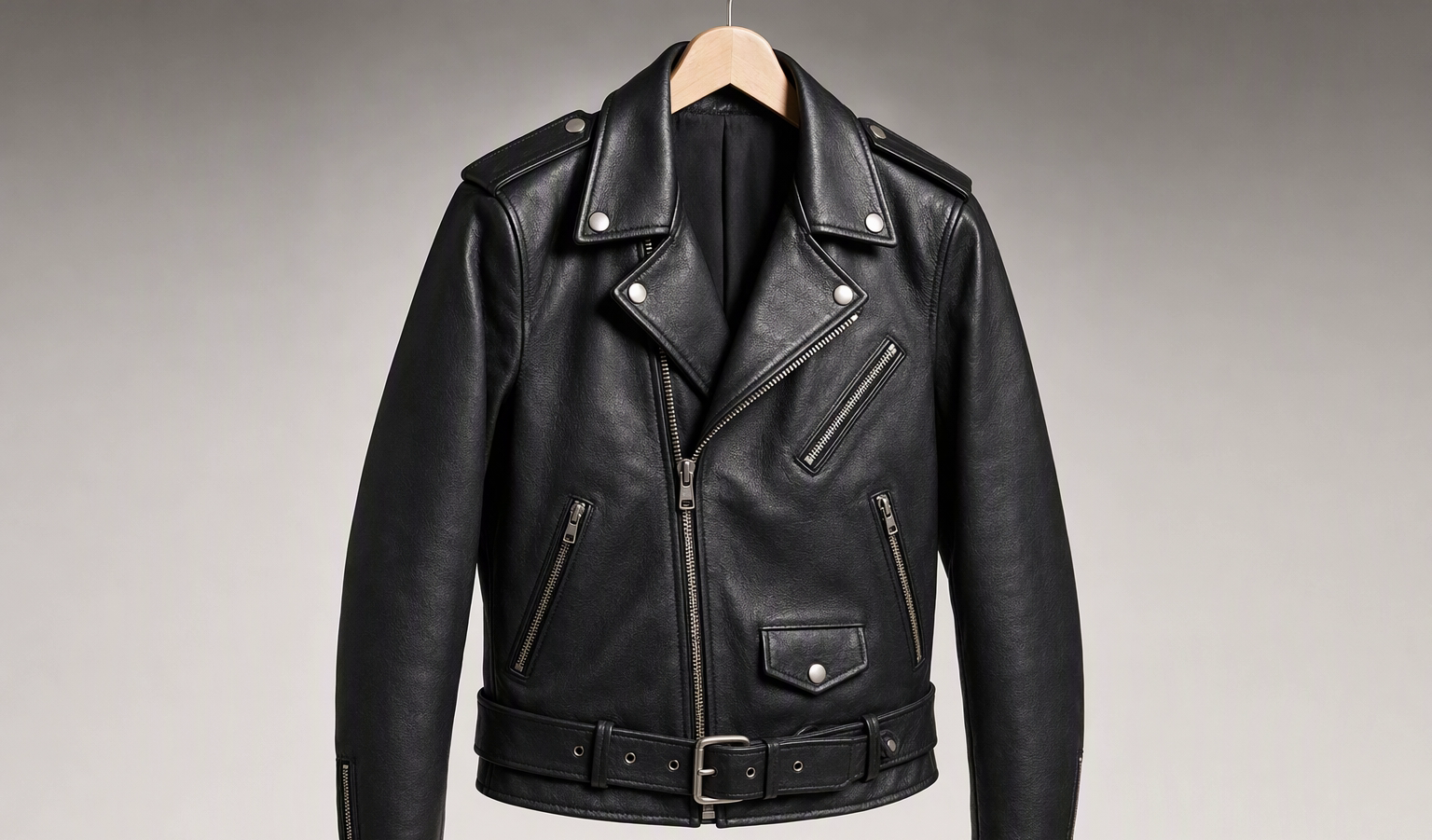
Fexwear is a custom leather jacket manufacturer producing biker, racer, bomber and trucker jackets in real cow, sheep and goat leather as well as premium vegan and faux leather – with the hardware, quilting and finishing that define a great jacket. With low MOQ, custom patterns and finishes, we help fashion, streetwear and moto brands build jackets people keep for decades.
This guide covers real vs faux leather, the hardware and construction that matter, and how to brief a leather jacket.
How to choose a custom leather jackets manufacturer
A low unit price means little if quality drifts between batches or the supplier disappears when something goes wrong. When you shortlist custom leather jackets suppliers, judge them on control and communication as much as cost:
- Real factory vs middleman – can they show production lines and control the process?
- Fabric knowledge – they should advise on GSM, blend and finish for your use case.
- Sample discipline – a proper pre-production sample before bulk.
- Decoration durability – logos that survive washing; ask how they test.
- Sizing & grading – consistent measurements across the size run.
- Lead-time honesty – realistic dates beat optimistic ones.
A practical test: ask each supplier for a fabric swatch card and a recent sample of comparable custom leather jackets. A real factory produces both quickly and can explain every choice; a reseller stalls or forwards generic photos. Also ask who owns the sewing lines – if the answer is vague, you’re paying a middleman’s margin on top of the risk.
Finally, weigh responsiveness against price. A supplier 5%% cheaper who takes a week to answer will cost you more in missed seasons than a partner who replies the same day. The brands that win treat their manufacturer as part of the team, not a line item.
Where to source: Fexwear vs Alibaba vs local
| Channel | Pros | Cons |
|---|---|---|
| Fexwear (direct factory) | In-house control, low MOQ, free design, direct pricing | Pre-production sampling takes a few days |
| Alibaba / marketplace | Huge choice, low list prices | Variable quality, middlemen, hard to verify, MOQ surprises |
| Local manufacturer | Fast shipping, easy visits | Higher unit cost, limited fabrics & decoration |
The risks of sourcing from Alibaba (and how to avoid them)
- Middlemen posing as factories – many ‘manufacturers’ subcontract, adding cost and cutting you off from the line.
- Inconsistent, uncontrollable quality – it varies between suppliers and even between batches.
- Sample-vs-bulk bait-and-switch – the approved sample looks great, the bulk quietly changes.
- No accountability after payment – chasing fixes or refunds is slow and often fruitless.
- Misrepresented materials & certifications – claims that can’t be backed by certificates.
- MOQ and price surprises – list prices that jump once tooling and labels are added.
Alibaba can work if you verify the factory, insist on a pre-production sample and arrange independent QC – but a direct in-house manufacturer gives you comparable pricing with real production control and accountability on every batch.
Leather jacket styles we make
- Biker / moto jackets
- Racer & cafe-racer styles
- Bomber & flight jackets
- Trucker & western styles
- Oversized & cropped fashion jackets
- Vegan & faux-leather jackets
A leather jacket is engineered, not just cut. The leather weight and hand, the pattern and paneling, the quality of zips and snaps, the quilting at shoulders, and the lining all decide whether a jacket feels premium or cheap. We build on proper jacket blocks and specify each component, because a jacket is a high-value piece customers judge in the hand.
2026 trends
- Oversized & cropped moto silhouettes
- Matte & nappa soft leathers
- High-quality vegan leather
- Suede & shearling panels
- Minimal hardware, clean lines
Construction & spec options
Every custom leather jackets is a set of decisions – pick each, or let us recommend a build for your price point:
| Spec | Options |
|---|---|
| Style | Biker, racer, bomber, trucker, cropped |
| Leather | Cow, sheep, goat, or PU/vegan |
| Weight | 0.6-1.2 mm leather |
| Hardware | Zips, snaps, D-rings, studs |
| Lining | Quilted, viscose, or none |
Leather weight and type change everything: sheep is soft and drapes for fashion jackets, cow is tough for moto, goat balances both. We match the hide to the style, and choose metal hardware that won’t corrode or break – the two things that make a jacket feel expensive or disposable.
Fabrics & GSM
Choose the leather for the jacket:
| Fabric | Typical weight | Best for |
|---|---|---|
| Cowhide | 0.8-1.2 mm | Durable moto & biker |
| Sheep / lamb nappa | 0.6-0.8 mm | Soft fashion jackets |
| Goat | 0.7-0.9 mm | Balanced, tough & soft |
| PU / vegan leather | varies | Cruelty-free & lower cost |
What is GSM and how to choose fabric weight
GSM (grams per square metre) is the fabric’s weight – the biggest driver of how a garment feels. Lower GSM is lighter and cooler; higher GSM is denser, more opaque and more premium. For custom leather jackets, matching the weight to how it’s worn and washed is what separates a product people reorder from one they return.
| GSM range | Feel | Best for |
|---|---|---|
| 120-160 GSM | Very light, breathable | Summer & performance |
| 160-220 GSM | Mid-weight, soft | Everyday & lifestyle |
| 220-300 GSM | Heavy, structured | Premium & streetwear |
| 300+ GSM | Thick, luxe drape | Designer heavyweight |
Leather is measured in millimetres, not GSM: 0.6-0.8mm is soft and drapey for fashion, 0.9-1.2mm is heavy and protective for moto. We match thickness to the jacket’s purpose so it wears and ages as intended.
Blank vs private-label vs custom vs POD
| Model | What it is | Best for |
|---|---|---|
| Blank wholesale | Unbranded, you print | Fast, low-cost starts |
| Private label | Your fabric, fit & colours to spec | A signature product |
| Custom cut & sew | Developed from scratch | Full control & differentiation |
| Print-on-demand | Per-unit, no stock | Zero-risk testing |
Most brands start with blanks to test demand, then move to private label once a style sells. We support all paths, and many clients run two or three at once across different parts of a catalogue.
Decoration & branding options
| Method | Durability | Best for |
|---|---|---|
| Screen printing | High | Bold logos, bulk, spot colours |
| DTG (digital) | Medium-High | Detailed, multi-colour, small runs |
| Embroidery | Very high | Premium chest & label marks |
| Dye-sublimation | Permanent | All-over polyester performance prints |
| Heat transfer | Medium | Fast, low-cost, small batches |
On leather, branding is tactile – embossed or debossed logos, a metal zip pull, a woven inner label, quilted shoulder panels. These subtle, durable details signal quality far more than a printed logo, and we spec them so the jacket reads premium without shouting.
MOQ, sampling & lead time
We keep MOQs low so you can test before committing. Sampling runs in stages – a proto sample, a fit sample, then a pre-production (PP) sample that locks fabric, colour and decoration. Standard samples turn around in days; bulk typically takes a few weeks once the PP sample is approved. Sample fees are usually credited against your bulk order, so testing costs little beyond the wait.
When planning quantities, order enough of your confident styles to reach the flat part of the price curve, and keep experimental pieces at the minimum. Reordering proven sellers is cheap and fast because the pattern and decoration files already exist – so let demand, not a guess, drive your second order.
What drives the cost
- Fabric & GSM – performance and heavyweight fabrics cost more.
- Quantity – unit price falls as order size grows.
- Decoration – print size, colour count and embroidery complexity.
- Custom trims – woven labels, special elastics and packaging.
- Fit development – multiple sample rounds add time and cost.
- Logistics – destination, Incoterms and shipping method.
The quoted garment price is only part of the real cost. On top of it sits decoration, custom trims, packaging and freight, so always ask for a landed per-unit figure for the fully-branded product rather than comparing bare garment prices. Unit cost also falls with quantity, but not linearly – there’s a steep drop between a tiny test order and a real run, then it flattens, so order enough to reach the flat part for confident styles while keeping unproven ones at low MOQ.
What to send us for an accurate quote
Include: style reference or sketch, target fabric & GSM, size range and measurement chart, colours, logo artwork (vector if possible) and print method, quantity, and target price. No tech pack yet? Send a photo or a competitor example and our design team will build it with you. The more specific your brief, the tighter the price and the shorter the sample turnaround.
A clear brief also protects you: most disputes in apparel sourcing trace back to an ambiguous spec, not a bad factory. Nail the measurements, the colour codes and the decoration method up front and the whole order runs smoother.
Sizing & measurement
Leather barely stretches back once it gives, so fit must be right from the first wear – snug but not tight, with the right shoulder and sleeve length. We fit on a model with real leather and provide precise measurements, because a jacket that fits wrong can’t be broken in to fix it.
Sizing is a profit lever, not a detail: a garment that runs small or stretches unevenly drives returns, and returns eat margin twice – once in shipping, once in the unsellable unit. The fix is a clear, honest size chart with real garment measurements, consistent grading, and a fit sample checked on a body.
Quality control
Every run is checked at three points – pre-production (approved PP sample and materials), inline (during sewing and printing), and final inspection before packing. We inspect to an AQL standard (commonly 2.5 major / 4.0 minor defects for apparel) and photograph key checkpoints so you can see what we saw. You approve the PP sample, and that sample becomes the standard the whole order is judged against.
Sustainable options
For vegan positioning we offer high-quality PU and plant-based leathers that avoid animal products; for real leather, sourcing and tanning matter, and chrome-free or lower-impact tanning is available. We’ll help you choose between durability, ethics and cost deliberately.
If sustainability matters to your buyer, decide early: recycled-polyester and organic-cotton options are the easiest wins and both can be certified. The key is paperwork – a GOTS or GRS scope certificate plus a transaction certificate for your specific order – because that’s what lets you legally and credibly put the claim on your hangtag.
Common mistakes to avoid
- Cheap PU that cracks and peels within a season
- Wrong leather weight for the style
- Hardware that breaks or rusts
- Ignoring that leather doesn’t stretch back – bad fit is permanent
- No lining or finishing in a premium-priced jacket
The most common thread behind all of these is skipping the sample or over-ordering an unproven style. Test broadly with small quantities, watch what actually sells, then concentrate your budget on the winners – suppliers who push you to commit to volume before you have sales data are optimising for their schedule, not your cash flow.
Who we manufacture for
- Fashion & streetwear labels
- Moto & biker brands
- Vegan / cruelty-free labels
- Costume, film & music
- Boutique & DTC sellers
A moto brand needs tough cowhide with heavy hardware; a fashion label wants soft nappa in an oversized cut; a vegan brand needs premium faux leather that doesn’t peel. We set hide, weight, hardware and lining to each brand’s positioning.
Why brands choose Fexwear
- Real & premium vegan leathers
- Proper jacket blocks & fit
- Quality hardware & finishing
- Low MOQ for emerging brands
- Durable construction that ages well
The short version: you get factory-direct economics with the guidance of a partner who has made the mistakes so you don’t have to. We’ll tell you when a fabric will pill, when a print method is wrong for the garment, and when an order size is unrealistic – and we’ll still make it happen when you’re right.
Order timeline: enquiry to delivery
| Stage | Typical time |
|---|---|
| Enquiry & quote | 1-2 days |
| Proto / fit sample | 3-7 days |
| PP sample approval | 3-5 days |
| Bulk production | 2-4 weeks |
| QC & packing | 3-5 days |
| Shipping (air/sea) | 3-30 days by method |
Working to a launch date or a seasonal drop? Tell us the deadline up front and we’ll build the schedule backwards from it so you’re not air-freighting in a panic.
How to start
- Share style, leather & hardware
- We source leather & build a sample
- Approve fit & hand-feel
- Bulk production, QC & worldwide shipping
Real vs faux leather: the decision that shapes everything
The first choice in a leather jacket is real hide or high-quality faux, and it drives cost, ethics, durability and positioning. Real leather (cow, sheep, goat) ages beautifully, develops a personal patina and lasts decades – but costs more and isn’t cruelty-free. Modern PU and plant-based vegan leathers have closed much of the quality gap and let a brand market cruelty-free – but cheap PU cracks and peels within a season, which is the failure that gives faux a bad name. The answer isn’t ‘real is always better’; it’s choosing the right material for your price point and values, and never using cheap PU on a jacket sold as premium.
Hardware and construction: where a jacket’s quality shows
Customers judge a leather jacket by the parts that aren’t leather – the zip that should glide and not snag, the snaps and D-rings that shouldn’t rust or pull off, the quilting at the shoulders, the stitching that should be even and strong, and the lining that should finish the inside as well as the outside looks. Skimping here is the fastest way to make a real-leather jacket feel cheap. We specify quality hardware and finishing as deliberately as the hide, because that’s what makes a jacket feel like it was worth the price.
Request a quote
Tell us your custom leather jackets, fabric and quantity and we’ll come back with pricing, MOQ and a timeline. Related: custom tank tops, white label and contact Fexwear →
Break-in and how leather ages
Real leather’s magic is that it gets better with wear – it moulds to the body, softens, and develops a patina unique to the owner. That’s a selling point worth communicating, but it also means the initial fit should be snug-but-comfortable, because leather relaxes slightly and doesn’t bounce back. Faux leather won’t age the same way; it holds its look but doesn’t develop character. Choosing real vs faux is partly choosing what kind of product life you want your customer to experience.
Lining and comfort
The difference between a jacket you wear all day and one that stays on the hanger is often the inside. A well-planned lining – viscose, quilted panels, or a soft finish – makes the jacket comfortable, warm and easy to slip on, and hides the construction. Cheap jackets skip the lining or use scratchy polyester that pills inside. We specify lining and internal finishing as carefully as the outside, because that’s what premium feels like against the body.
Care and longevity
A leather jacket is a long-term product, and its lifespan depends on care – conditioning to keep the hide supple, storing on a wide hanger, protecting from prolonged damp, and cleaning with leather-specific products rather than a washing machine. We provide care guidance with every jacket so the piece lasts for years, which matters both for the customer’s experience and for a brand that positions on durability and value.
Sizing and fit for leather
Leather has almost no give, so a jacket must fit correctly from the first wear – across the shoulders, through the chest and in sleeve length – because it can’t be broken into the right shape the way fabric can. We fit on a model with the actual leather and provide precise measurements, since a mis-sized leather jacket is a return you can’t fix with a wash cycle.
Building a leather capsule
Leather is a high-value, low-frequency purchase, so a focused capsule – one hero biker, one bomber, maybe a cropped or oversized fashion piece – in a tight colour and leather edit sells better than a sprawling range. Each jacket needs its own pattern and hardware, so depth is expensive; a considered capsule keeps quality high and inventory manageable. We help you plan a range where every piece earns its place.
The vegan leather quality spectrum
‘Vegan leather’ covers everything from peeling cheap PU to premium plant-based and high-grade microfiber leathers that genuinely last. The failure mode that gives faux a bad name is bargain PU that cracks within a season – which is fine for a fast-fashion price point but fatal for a brand selling premium. If you position cruelty-free, the material must match the promise. We offer a range of vegan leathers at different grades so you can hit your price without embarrassing the brand.
Zips, seams and construction
A leather jacket takes real stress at the seams and zip, so construction is where cheap jackets fail. Heavy-duty YKK-grade zips that glide, reinforced and bar-tacked stress points, and proper seam finishing keep a jacket together for years; a zip that snags or a seam that splits ends the garment early. We specify robust hardware and construction because a leather jacket is bought to last and judged on whether it does.
Pricing and the value of a leather jacket
Leather jackets carry high material and hardware costs, so the honest path is to price on real quality – the hide, the hardware, the lining – and let the durability justify it. Customers understand a premium leather jacket costs more; what they resent is paying a premium price for cheap PU and flimsy hardware. We help you build a jacket whose quality is obvious in the hand, so the price is self-explanatory.
Why leather is a loyalty category
A leather jacket is a considered, high-value purchase that a customer keeps for years – and returns to the brand for. Get the fit, hide and hardware right and you earn a customer who buys the second jacket, recommends the first, and trusts everything you release. That loyalty is why leather rewards quality obsessively: the jacket is worn, photographed and talked about for a decade, and every detail you skimp on is visible for that whole time.
Styling the hero piece
A leather jacket is often a customer’s statement piece, so it’s worth styling deliberately – the right collar, hardware finish and silhouette that flatters and photographs. Building one hero jacket properly, in a considered colour and leather, sells better than five mediocre ones. We help you design a jacket that becomes the anchor of your range and the piece your brand is known for.
Glossary
| Term | Meaning |
|---|---|
| GSM | Grams per square metre – fabric weight |
| Tech pack | Spec sheet with measurements, fabrics & artwork |
| Proto / fit / PP sample | Prototype, fit-check and pre-production samples |
| Sublimation | All-over dye print fused into polyester |
| Serging / overlock | Seam finishing that prevents fraying |
| AQL | Acceptable Quality Level – inspection standard |
| Incoterms | Shipping terms like FOB, EXW, DDP |
| Cut & sew | Fully custom from fabric roll, not printing blanks |
Frequently Asked Questions
What leather jackets can you make?
Biker, racer, bomber, trucker, cropped and oversized jackets in real and vegan leather.
Do you work with real and faux leather?
Yes – cow, sheep and goat hide, plus premium PU and plant-based vegan leathers.
What's the MOQ for custom leather jackets?
Low MOQ for emerging brands; leather jackets are premium pieces so runs are often smaller.
How do I choose the leather weight?
0.6-0.8mm for soft fashion jackets, 0.9-1.2mm for durable moto – we advise per style.
Can you emboss or add custom hardware?
Yes – debossed/embossed logos, custom zip pulls, studs and woven labels.
Does leather stretch?
It gives slightly but doesn't return, so fit must be right from the first wear.
Do you offer vegan leather jackets?
Yes – high-quality cruelty-free options that avoid the peeling of cheap PU.