
Plus Size Clothing Manufacturer
Fexwear is a plus size clothing manufacturer producing extended-size activewear, leggings, sports bras, tops, dresses and everyday wear – engineered on proper plus-size blocks, not just scaled-up small patterns. With low MOQ, squat-proof fabrics and inclusive grading, we help brands build ranges that actually fit and flatter a fuller figure.
This guide covers why plus-size fit is different, the fabrics and construction that matter, and how to brief an inclusive range.
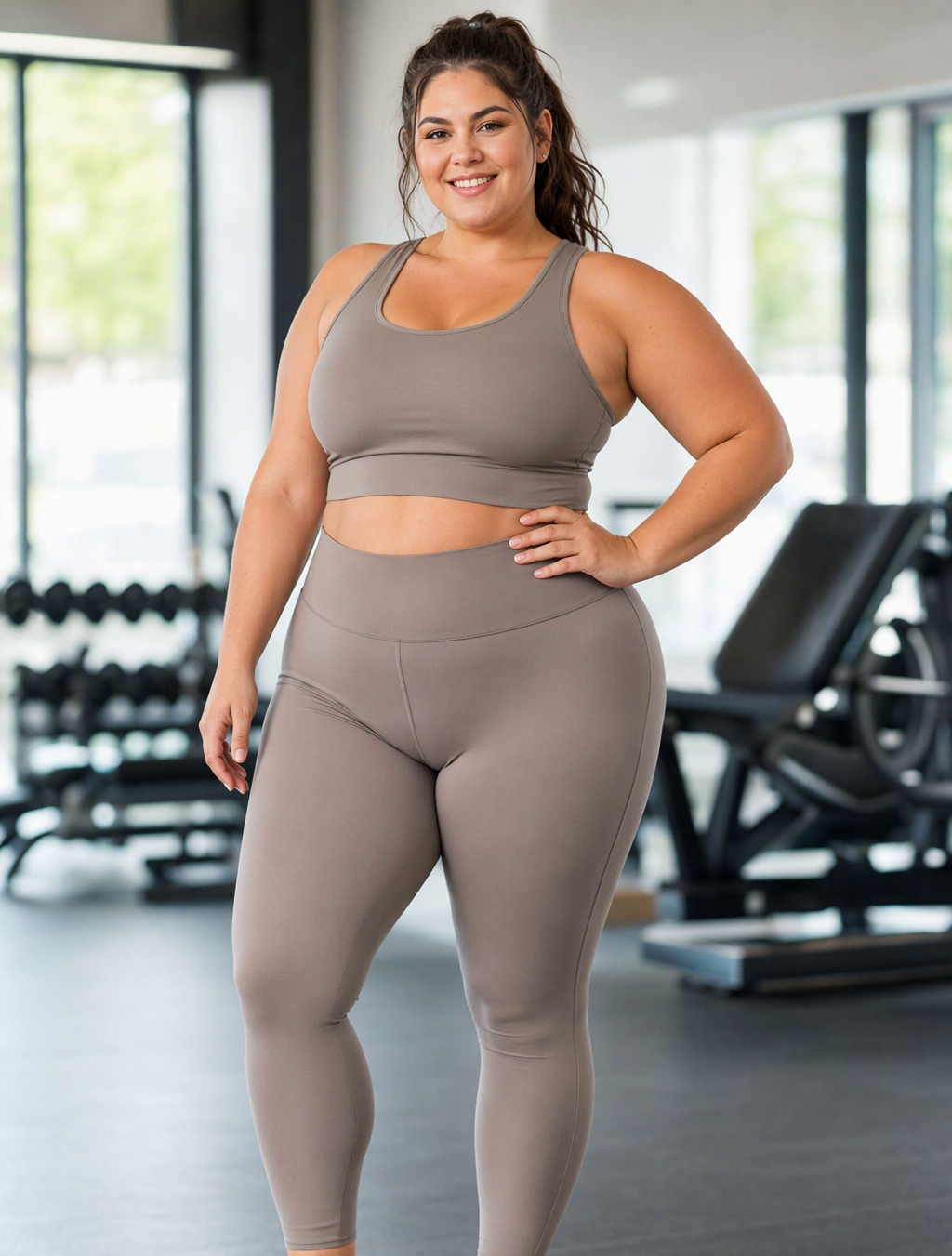
How to choose a plus size clothing manufacturer
A low unit price means little if quality drifts between batches or the supplier disappears when something goes wrong. When you shortlist plus size clothing suppliers, judge them on control and communication as much as cost:
- Real factory vs middleman – can they show production lines and control the process?
- Fabric knowledge – they should advise on GSM, blend and finish for your use case.
- Sample discipline – a proper pre-production sample before bulk.
- Decoration durability – logos that survive washing; ask how they test.
- Sizing & grading – consistent measurements across the size run.
- Lead-time honesty – realistic dates beat optimistic ones.
A practical test: ask each supplier for a fabric swatch card and a recent sample of comparable plus size clothing. A real factory produces both quickly and can explain every choice; a reseller stalls or forwards generic photos. Also ask who owns the sewing lines – if the answer is vague, you’re paying a middleman’s margin on top of the risk.
Finally, weigh responsiveness against price. A supplier 5% cheaper who takes a week to answer will cost you more in missed seasons than a partner who replies the same day. The brands that win treat their manufacturer as part of the team, not a line item.
Where to source: Fexwear vs Alibaba vs local
| Channel | Pros | Cons |
|---|---|---|
| Fexwear (direct factory) | In-house control, low MOQ, free design, direct pricing | Pre-production sampling takes a few days |
| Alibaba / marketplace | Huge choice, low list prices | Variable quality, middlemen, hard to verify, MOQ surprises |
| Local manufacturer | Fast shipping, easy visits | Higher unit cost, limited fabrics & decoration |
The risks of sourcing from Alibaba (and how to avoid them)
- Middlemen posing as factories – many ‘manufacturers’ subcontract, adding cost and cutting you off from the line.
- Inconsistent, uncontrollable quality – it varies between suppliers and even between batches.
- Sample-vs-bulk bait-and-switch – the approved sample looks great, the bulk quietly changes.
- No accountability after payment – chasing fixes or refunds is slow and often fruitless.
- Misrepresented materials & certifications – claims that can’t be backed by certificates.
- MOQ and price surprises – list prices that jump once tooling and labels are added.
Alibaba can work if you verify the factory, insist on a pre-production sample and arrange independent QC – but a direct in-house manufacturer gives you comparable pricing with real production control and accountability on every batch.
Plus size garments we make
- Plus size leggings & joggers
- Sports bras & support tops
- Tees, tanks & tunics
- Dresses & skirts
- Everyday & loungewear sets
- Swimwear & rash guards
The biggest mistake in plus-size manufacturing is grading up a straight-size pattern. That shifts seams and proportions into the wrong places and the garment fits badly. Proper plus-size design uses dedicated blocks that account for a fuller bust, hip and waist – where seams sit, how much support a bra needs, and how a waistband should sit without digging. We pattern for the body, not just scale it.
2026 trends
- Squat-proof, high-compression leggings
- Supportive, no-dig waistbands & straps
- Inclusive extended sizing as standard
- Butterky-soft brushed fabrics
- Matching bra + legging sets
Construction & spec options
Every plus size clothing is a set of decisions – pick each, or let us recommend a build for your price point:
| Spec | Options |
|---|---|
| Garment | Legging, bra, tee, dress, set, swim |
| Fabric | High-recovery poly-spandex, brushed knit, cotton-elastane |
| Support | Wide waistband, adjustable straps, bonded edges |
| Fit | Dedicated plus blocks, full bust/hip grading |
| Finish | Flatlock seams, gusset, no-dig elastic |
Comfort engineering is everything: a wide, non-rolling waistband, adjustable and padded straps, flatlock seams to prevent chafing, and a gusset for fit and movement. These details are what make a plus-size customer keep buying from a brand that ‘gets it’.
Fabrics & GSM
Choose fabrics that support and last:
| Fabric | Typical weight | Best for |
|---|---|---|
| High-recovery poly-spandex | 240-300 GSM | Squat-proof, compressive leggings |
| Brushed knit | 220-280 GSM | Soft everyday & lounge |
| Cotton-elastane | 180-220 GSM | Tees, dresses & sets |
| Bonded / seamless knit | varies | No-dig edges & support |
What is GSM and how to choose fabric weight
GSM (grams per square metre) is the fabric’s weight – the biggest driver of how a garment feels. Lower GSM is lighter and cooler; higher GSM is denser, more opaque and more premium. For plus size clothing, matching the weight to how it’s worn and washed is what separates a product people reorder from one they return.
| GSM range | Feel | Best for |
|---|---|---|
| 120-160 GSM | Very light, breathable | Summer & performance |
| 160-220 GSM | Mid-weight, soft | Everyday & lifestyle |
| 220-300 GSM | Heavy, structured | Premium & streetwear |
| 300+ GSM | Thick, luxe drape | Designer heavyweight |
For plus-size leggings, higher GSM with strong recovery is essential – it keeps them squat-proof and stops them going baggy. We test opacity under stretch and recovery, because sheerness and sagging are the two most common complaints in the category.
Blank vs private-label vs custom vs POD
| Model | What it is | Best for |
|---|---|---|
| Blank wholesale | Unbranded, you print | Fast, low-cost starts |
| Private label | Your fabric, fit & colours to spec | A signature product |
| Custom cut & sew | Developed from scratch | Full control & differentiation |
| Print-on-demand | Per-unit, no stock | Zero-risk testing |
Most brands start with blanks to test demand, then move to private label once a style sells. We support all paths, and many clients run two or three at once across different parts of a catalogue.
Decoration & branding options
| Method | Durability | Best for |
|---|---|---|
| Screen printing | High | Bold logos, bulk, spot colours |
| DTG (digital) | Medium-High | Detailed, multi-colour, small runs |
| Embroidery | Very high | Premium chest & label marks |
| Dye-sublimation | Permanent | All-over polyester performance prints |
| Heat transfer | Medium | Fast, low-cost, small batches |
Decoration should be comfortable against skin – soft heat labels and flat prints rather than scratchy sewn-in tags. Sublimation works well on the performance knics used for leggings and bras.
MOQ, sampling & lead time
We keep MOQs low so you can test before committing. Sampling runs in stages – a proto sample, a fit sample, then a pre-production (PP) sample that locks fabric, colour and decoration. Standard samples turn around in days; bulk typically takes a few weeks once the PP sample is approved. Sample fees are usually credited against your bulk order, so testing costs little beyond the wait.
What drives the cost
- Fabric & GSM – performance and heavyweight fabrics cost more.
- Quantity – unit price falls as order size grows.
- Decoration – print size, colour count and embroidery complexity.
- Custom trims – woven labels, special elastics and packaging.
- Fit development – multiple sample rounds add time and cost.
- Logistics – destination, Incoterms and shipping method.
The quoted garment price is only part of the real cost. On top of it sits decoration, custom trims, packaging and freight, so always ask for a landed per-unit figure for the fully-branded product rather than comparing bare garment prices. Unit cost also falls with quantity, but not linearly – there’s a steep drop between a tiny test order and a real run, then it flattens, so order enough to reach the flat part for confident styles while keeping unproven ones at low MOQ.
What to send us for an accurate quote
Include: style reference or sketch, target fabric & GSM, size range and measurement chart, colours, logo artwork (vector if possible) and print method, quantity, and target price. No tech pack yet? Send a photo or a competitor example and our design team will build it with you. The more specific your brief, the tighter the price and the shorter the sample turnaround.
Sizing & measurement
Genuine inclusivity means a real size curve, not an afterthought. We grade dedicated plus blocks across an extended range with a detailed size chart, so fit is consistent from size 1X to 5X and customers can trust the label.
Sizing is a profit lever, not a detail: a garment that runs small or stretches unevenly drives returns, and returns eat margin twice – once in shipping, once in the unsellable unit. The fix is a clear, honest size chart with real garment measurements, consistent grading, and a fit sample checked on a body.
Quality control
Every run is checked at three points – pre-production (approved PP sample and materials), inline (during sewing and printing), and final inspection before packing. We inspect to an AQL standard (commonly 2.5 major / 4.0 minor defects for apparel) and photograph key checkpoints so you can see what we saw. You approve the PP sample, and that sample becomes the standard the whole order is judged against.
Sustainable options
Recycled-polyester and organic-cotton options are available across plus-size ranges too – inclusive and sustainable aren’t mutually exclusive, and your customer increasingly expects both.
If sustainability matters to your buyer, decide early: recycled-polyester and organic-cotton options are the easiest wins and both can be certified. The key is paperwork – a GOTS or GRS scope certificate plus a transaction certificate for your specific order – because that’s what lets you legally and credibly put the claim on your hangtag.
Common mistakes to avoid
- Grading up a straight-size pattern instead of using plus blocks
- Leggings that go sheer or baggy (low recovery)
- Digging waistbands and straps
- Scratchy labels and chafing seams
- Token extended sizing (only 1-2 extra sizes)
The most common thread behind all of these is skipping the sample or over-ordering an unproven style. Test broadly with small quantities, watch what actually sells, then concentrate your budget on the winners – suppliers who push you to commit to volume before you have sales data are optimising for their schedule, not your cash flow.
Who we manufacture for
- Plus-size activewear & fashion brands
- Body-positive & inclusive labels
- Curvy-fit boutiques & DTC sellers
- Lingerie & shapewear brands
- Fitness & gym-wear lines
- Mainstream brands adding extended sizes
A body-positive activewear brand needs squat-proof, no-dig leggings as the hero; a curvy fashion label needs well-cut dresses that flatter; a mainstream brand adding extended sizes needs consistent grading to their existing range. We set blocks, fabric and sizing to each brief.
Why brands choose Fexwear
- Dedicated plus-size blocks (not scaled-up patterns)
- Squat-proof, high-recovery fabrics
- Comfort engineering (no-dig, flat seams)
- Genuine extended, consistent sizing
- Low MOQ for inclusive brands
The short version: you get factory-direct economics with the guidance of a partner who has made the mistakes so you don’t have to. We’ll tell you when a fabric will pill, when a print method is wrong for the garment, and when an order size is unrealistic – and we’ll still make it happen when you’re right.
Order timeline: enquiry to delivery
| Stage | Typical time |
|---|---|
| Enquiry & quote | 1-2 days |
| Proto / fit sample | 3-7 days |
| PP sample approval | 3-5 days |
| Bulk production | 2-4 weeks |
| QC & packing | 3-5 days |
| Shipping (air/sea) | 3-30 days by method |
Working to a launch date or a seasonal drop? Tell us the deadline up front and we’ll build the schedule backwards from it so you’re not air-freighting in a panic.
How to start
- Share styles & target size range
- Choose fabric, support & finishing
- Approve a fit sample on a plus-size model
- Bulk production, QC & worldwide shipping
Why ‘scaled-up small sizes’ fails plus-size customers
It’s the most common shortcut in the industry and the reason so many plus-size garments disappoint: taking a straight-size pattern and just making it wider. But a fuller body isn’t a larger version of a smaller one – the proportions, the bust and hip shaping, where seams should sit and how much support a strap needs are all different. A properly designed plus block redistributes ease and support where it’s actually needed. Customers feel the difference immediately, and that’s why inclusive brands built on real blocks earn fierce loyalty while scaled-up ranges get one purchase and a bad review.
The comfort details that drive repeat purchases
In plus-size apparel, repeat buys are earned on comfort, not just looks. A wide waistband that doesn’t roll or dig, padded adjustable straps, flatlock seams that don’t chafe, a proper gusset, and fabric with real recovery so it holds its shape all day – these are the details a customer notices by hour three, and they’re what make her come back. We engineer these deliberately because in this category, comfort is the retention strategy.
Request a quote
Tell us your plus size clothing, fabric and quantity and we’ll come back with pricing, MOQ and a timeline. Related: custom tank tops, white label and contact Fexwear →
Fabric recovery and opacity: the two non-negotiables
In plus-size activewear, two failures dominate complaints: leggings going sheer and going baggy. Both are fabric problems. Squat-proof opacity means enough GSM and the right knit that the fabric doesn’t turn translucent under stretch; recovery means the elastane snaps back instead of sagging by midday. We test both – opacity under extension and recovery after repeated stretch – and specify high-recovery poly-spandex so the leggings hold shape and coverage through a full day. Get these right and returns drop and reviews climb.
Fit and support engineering
Comfort is the retention strategy in plus-size apparel. A wide, non-rolling waistband that doesn’t dig, padded adjustable straps that don’t cut in, flatlock seams that don’t chafe, and a proper gusset for fit and movement – these are engineered, not assumed. A bra needs real support structure, not just a wider band. We design these details deliberately because in this category, a customer who’s comfortable becomes a customer who’s loyal.
Building a genuinely inclusive size range
True inclusivity is a size curve, not a token 1X-2X bolted onto a straight-size run. It means dedicated plus blocks with correct bust, waist and hip proportions, graded consistently across an extended range, with a detailed size chart customers can trust. When the sizing is predictable, a customer buys again – and again – because they finally know what fits. We build that consistency into every reorder.
The community and retention advantage
Plus-size customers are intensely loyal to brands that genuinely fit them, and vocal in communities when they find one. That loyalty is earned entirely on product – real blocks, squat-proof fabric, comfortable finishing – because those customers have been let down so many times before. Build the fit right and you don’t just get a sale, you get repeat purchases and word-of-mouth that a marketing budget can’t buy.
Fabric and GSM for plus-size comfort
Plus-size garments live or die on fabric. Too light and leggings go sheer and tops cling; too thin and everything loses shape. We specify higher-GSM, high-recovery knits that give real coverage, smooth the silhouette and hold their shape all day – and brushed, soft finishes that feel good against skin for hours. Fabric is the first decision in this category, not a cost line to minimise.
Decoration and finishing that stays comfortable
Skin contact is constant in plus-size apparel, so finishing matters more than decoration. We use printed, itch-free labels, flatlock seams, and soft elastics, and when we do add graphics we choose methods that stay supple rather than a stiff plastic patch that chafes. The goal is a garment you can wear all day without noticing it – which is exactly what earns loyalty.
Building a full plus-size collection, not a token capsule
Genuine inclusivity means a complete wardrobe – leggings, bras, tops, dresses, sets, swim, loungewear – all on the same trusted blocks, not three styles bolted onto an straight-size range. When a plus-size customer can build an entire wardrobe from one brand that fits reliably, they stop shopping around. We help you extend a real, coherent collection rather than a checkbox.
Fit sampling on real bodies
The only way to trust a plus-size fit is to sample it on a plus-size model, not a mannequin or a straight-size sample. We build fit samples and check stretch, coverage, support and comfort on the body before you approve bulk, because the failures in this category – sheerness, digging, bagging – only show up under real wear. That one step protects the whole order.
Plus-size swim and shapewear
Swim and shaping are high-demand, high-anxiety categories for plus figures, and they reward the same engineering as activewear: full lining for opacity and confidence, supportive structure, secure straps and no-dig edges. Done properly, a plus-size customer who has given up on swim becomes a devoted repeat buyer. We build these on real blocks with the coverage and support the category demands.
Pricing and value in plus-size
Plus-size garments use more fabric and often more complex construction, so they legitimately cost a little more to make – but customers rightly resist ‘plus-size tax’ pricing that charges more for the same thing. The right approach is to price on real material and engineering, and to deliver enough quality and fit that the value is obvious. We help you build a range that’s fair on cost and undeniable on quality.
The squat test, in practice
‘Squat-proof’ sounds like marketing, but it’s a concrete test we run: stretch the fabric over a curved form and check it stays opaque, then wear-test for recovery so it doesn’t bag at the knee by afternoon. Passing both means leggings that hold coverage and shape through a real workout and a real wash cycle. For a plus-size customer who has been burned by sheer, sagging leggings before, this is the single most important quality signal – and the one that earns a five-star review and a repeat order.
The size chart is the trust signal
In plus-size apparel, a detailed, honest size chart is often the deciding factor at checkout – it’s the difference between a hesitant first order and a confident one. Real garment measurements, not vanity sizing, let a customer trust the fit before it arrives, which cuts returns and builds the confidence that drives repeat purchases. We help you publish an accurate chart tied to the actual blocks we grade.
Glossary
| Term | Meaning |
|---|---|
| GSM | Grams per square metre – fabric weight |
| Tech pack | Spec sheet with measurements, fabrics & artwork |
| Proto / fit / PP sample | Prototype, fit-check and pre-production samples |
| Sublimation | All-over dye print fused into polyester |
| Serging / overlock | Seam finishing that prevents fraying |
| AQL | Acceptable Quality Level – inspection standard |
| Incoterms | Shipping terms like FOB, EXW, DDP |
| Cut & sew | Fully custom from fabric roll, not printing blanks |
Frequently Asked Questions
What plus size clothing can you make?
Leggings, sports bras, tops, dresses, loungewear sets and swimwear in extended sizes.
Do you use proper plus-size patterns?
Yes – dedicated plus blocks with correct bust/hip grading, not scaled-up straight sizes.
Are your leggings squat-proof?
We test opacity under stretch and use high-recovery fabric so leggings stay opaque and hold shape.
What size range can you grade?
A genuine extended range (e.g. 1X to 5X or custom) with a detailed size chart.
What's the MOQ?
Low MOQ so inclusive and emerging brands can start and scale.
How do you prevent digging and chafing?
Wide no-dig waistbands, padded adjustable straps, flatlock seams and a proper gusset.
Do you offer sustainable plus-size fabrics?
Yes – recycled-polyester and organic-cotton options with documentation.