
Private Label Fitness Apparel Manufacturer – Australia
Launching an activewear brand in Australia? Fexwear is a private label fitness apparel manufacturer producing leggings, sports bras, tanks, hoodies and matching sets – at direct factory pricing, with low MOQ and shipping to Australia. Here’s the honest part: most ‘Made in Australia’ activewear is manufactured overseas and finished locally. Going direct to the factory is how Australian brands get better margins and real control.
This guide covers the reality of Australian activewear sourcing, the fabrics that matter (squat-proof, wicking), branding, MOQ, and shipping to AU including FBA and DTC.
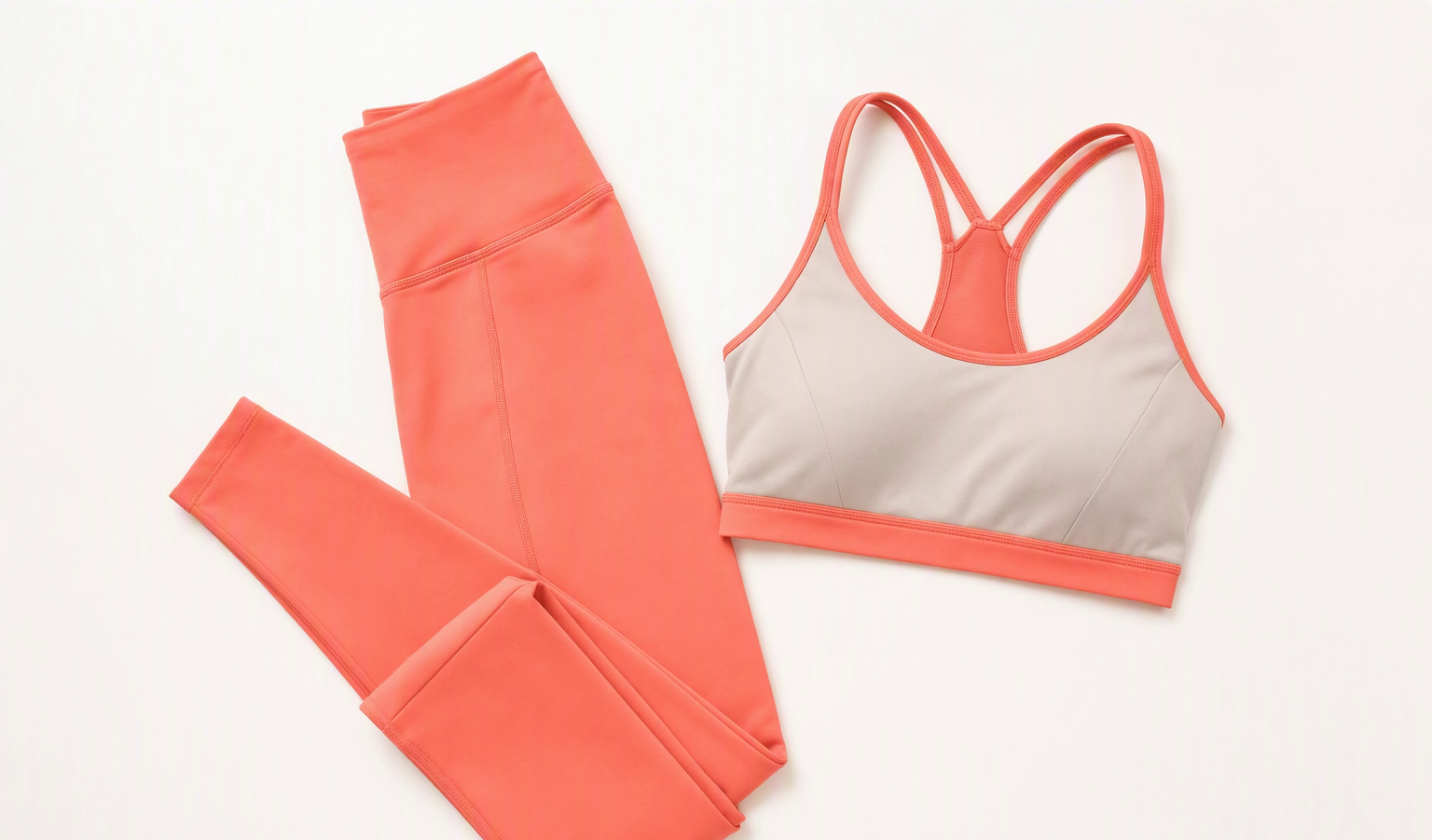
How to choose a private label fitness apparel manufacturer
A low unit price means little if quality drifts between batches. When you shortlist private label fitness apparel suppliers, verify these first:
- Real factory vs middleman – can they show production lines and control the process?
- Fabric knowledge – a good manufacturer advises on GSM, blend and finish for your use case.
- Sample discipline – a proper pre-production sample before bulk.
- Decoration durability – logos that survive washing; ask how they test.
- Sizing & grading – consistent measurements across the size run.
- Communication & lead-time honesty – realistic dates beat optimistic ones.
For Australian founders the trap is paying an Australian ‘manufacturer’ who is really an importer adding a margin. Ask directly: do you own the factory, and can I see it? A genuine manufacturer will show production lines and quote factory pricing; a reseller will be vague and price like one. Going direct is how AU brands fund better fabric instead of middlemen.
Where to source: Fexwear vs Alibaba vs local
| Channel | Pros | Cons |
|---|---|---|
| Fexwear (direct factory) | In-house control, low MOQ, free design, direct pricing | Pre-production sampling takes a few days |
| Alibaba / marketplace | Huge supplier choice, low list prices | Variable quality, middlemen, hard to verify, MOQ surprises |
| Local manufacturer | Fast shipping, easy visits | Higher unit cost, limited fabrics & decoration |
The risks of sourcing from Alibaba (and how to avoid them)
- Middlemen posing as factories – many ‘manufacturers’ are trading companies that subcontract, adding cost and cutting you off from the line.
- Inconsistent, uncontrollable quality – it varies between suppliers and even between batches; without your own QC, defects reach customers.
- Sample-vs-bulk bait-and-switch – the approved sample looks great, the bulk quietly changes fabric, GSM or stitching.
- No accountability after payment – chasing fixes or refunds is slow and often fruitless.
- Misrepresented materials & certifications – claims that can’t be backed by certificates.
- MOQ and price surprises – list prices that jump once tooling, labels and colours are added.
Alibaba can work if you verify the factory, insist on a pre-production sample and arrange independent QC – but a direct in-house manufacturer gives you comparable pricing with real production control and accountability on every batch.
Activewear we private label we manufacture
- Leggings & tights (squat-proof, high-waist)
- Sports bras & bra tops
- Tanks, tees & singlets
- Hoodies, jumpers & joggers
- Matching sets & gym wear
- Recycled-polyester sustainable options
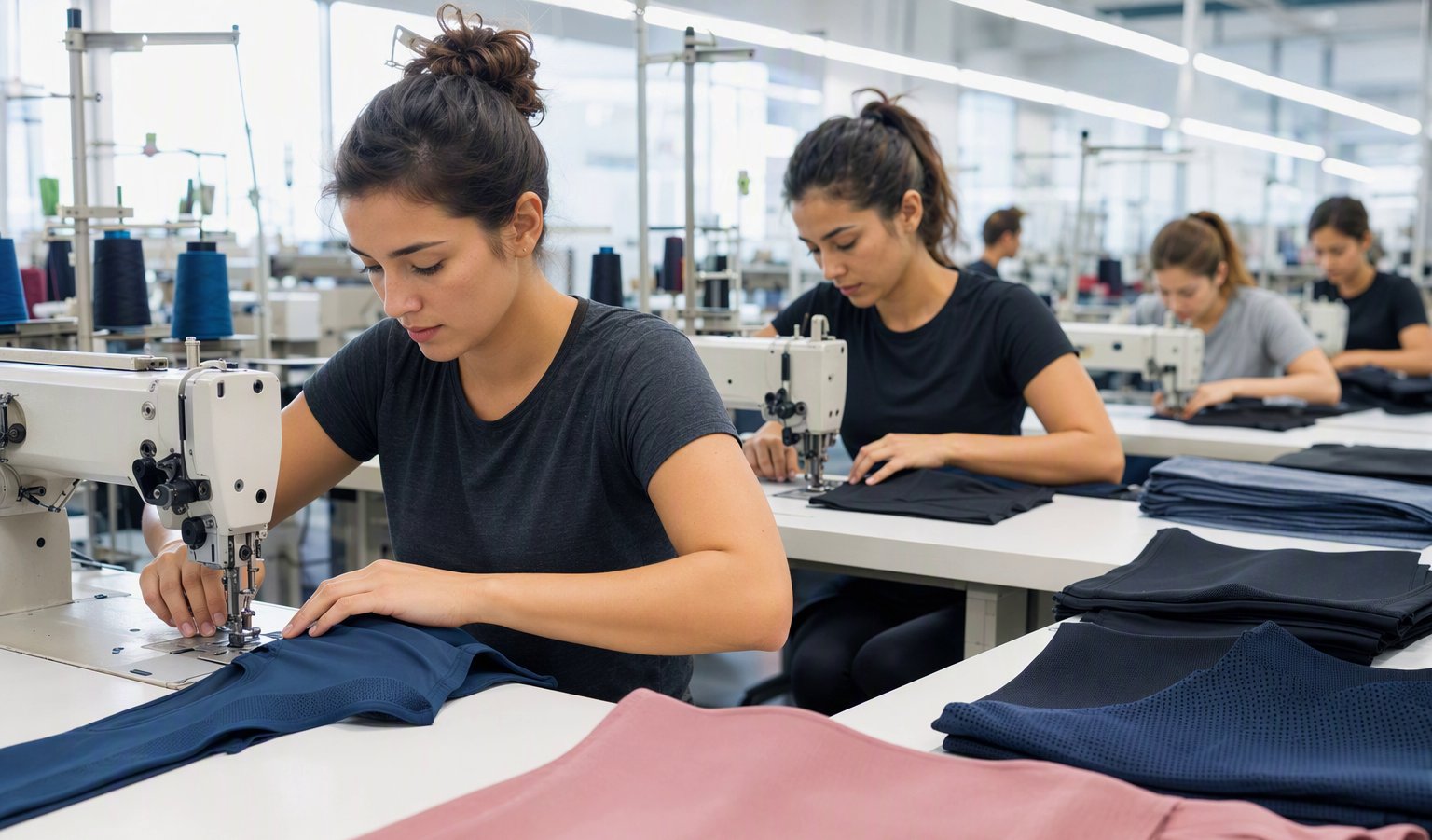
Start with a focused, coherent range – one legging, one bra, one tank, one hoodie in matching colours – rather than a sprawling catalogue. A tight launch range tests faster, looks more intentional on your store, and lets you put your budget behind quality instead of breadth.
2026 trends
- Squat-proof, high-waist leggings
- Seamless knit sets
- Recycled fabric as standard
- Matching bra + legging sets
- Earth tones & neutrals in AU lifestyle activewear
Construction & spec options
Every private label fitness apparel is a set of decisions – pick each, or let us recommend a build for your price point:
| Spec | Options |
|---|---|
| Garment | Leggings, bra, tank, hoodie, jogger, set |
| Fit | High-waist, scrunch, seamless, cropped |
| Fabric | 4-way stretch, brushed, recycled poly |
| Opacity | Squat-proof (tested) |
| Trims | Waistband, heat label, seam |
Fabrics & GSM
Australian activewear needs fabric that performs and photographs well:
| Fabric | Typical weight | Best for |
|---|---|---|
| Poly-spandex 4-way stretch | 220-280 GSM | Squat-proof leggings |
| Nylon-spandex | 180-240 GSM | Premium soft feel |
| Brushed seamless knit | varies | Seamless sets & bras |
| Recycled polyester (GRS) | 180-260 GSM | Eco activewear |
For AU activewear we favour high-recovery poly-spandex and brushed knits in the 220-280 GSM band – heavy enough to be squat-proof and opaque, light enough to breathe in a hot studio. Fabric weight and recovery are the two specs we’d protect first if a budget forces trade-offs.
What is GSM and how to choose fabric weight
GSM (grams per square metre) is the fabric’s weight – the biggest driver of how a garment feels. Lower GSM is lighter and cooler; higher GSM is denser, more opaque and more premium.
| GSM range | Feel | Best for |
|---|---|---|
| 120-160 GSM | Very light, breathable | Summer & performance |
| 160-220 GSM | Mid-weight, soft | Everyday & lifestyle |
| 220-300 GSM | Heavy, structured | Premium & streetwear |
| 300+ GSM | Thick, luxe drape | Designer heavyweight |
For leggings, mid-to-high GSM with strong recovery and a squat test is what stops sheerness and bagging – we test opacity before you commit.
Blank vs private-label vs custom vs POD
| Model | What it is | Best for |
|---|---|---|
| Blank wholesale | Unbranded, you print | Fast, low-cost starts |
| Private label | Your fabric, fit & colours to spec | A signature product |
| Custom cut & sew | Developed from scratch | Full control & differentiation |
| Print-on-demand | Per-unit, no stock | Zero-risk testing |
Most brands start with blanks to test demand, then move to private label once a style sells. We support all paths.
For AU brands the smart sequence is: launch a focused private-label range (your fabric, fit and branding) to own the quality story, reorder winners by sea, and reserve POD only for designs you can’t justify stocking. Private label is where margin and brand both live.
Decoration & branding options
| Method | Durability | Best for |
|---|---|---|
| Screen printing | High | Bold logos, bulk, spot colours |
| DTG (digital) | Medium-High | Detailed, multi-colour, small runs |
| Embroidery | Very high | Premium chest & label marks |
| Dye-sublimation | Permanent | All-over polyester performance prints |
| Heat transfer | Medium | Fast, low-cost, small batches |
Custom woven or heat labels, embroidery, silicone grip and branded packaging make each piece unmistakably yours – the finish customers expect from premium AU brands.
Premium AU activewear brands lean on subtle branding – tonal silicone grips, heat labels and small embroidered marks – rather than loud prints, because it photographs clean and feels high-end. We’ll help you pick decoration that matches the premium positioning your customers expect.
MOQ, sampling & lead time
We keep MOQs low so you can test before committing. Sampling runs in stages – a proto sample, a fit sample, then a pre-production (PP) sample that locks fabric, colour and decoration. Standard samples turn around in days; bulk typically takes a few weeks once the PP sample is approved.
Low MOQ matters in Australia because local inventory is expensive. Start with a tight, well-tested range, sell through, and reorder – rather than sinking cash into a warehouse of unproven SKUs. Our sampling-to-reorder loop is built around exactly that lean approach.
Start with a small air-shipped order to test the market, then move to sea freight for reorders once you know your sellers. That two-step keeps your cash light early and your unit costs low later – the leanest way to launch activewear in Australia.
What drives the cost
- Fabric & GSM – performance and heavyweight fabrics cost more.
- Quantity – unit price falls as order size grows.
- Decoration – print size, colour count and embroidery complexity.
- Custom trims – woven labels, special elastics and packaging.
- Fit development – multiple sample rounds add time and cost.
- Logistics – destination, Incoterms and shipping method.
For AU activewear, the meaningful cost is in the fabric and the finish, not the sewing. A squat-proof, high-recovery knit with flatlock seams and a proper gusset costs more than a thin generic legging – and it’s exactly what stops returns and drives reviews. Spend on the fabric and the construction; save on middlemen by going direct.
What to send us for an accurate quote
Include: style reference or sketch, target fabric & GSM, size range and measurement chart, colours, logo artwork (vector if possible) and print method, quantity, and target price. No tech pack yet? Send a photo or a competitor example and our design team will build it with you.
Send the styles, target fabric or hand-feel, colours, your logo, sizes and quantities, and your destination in Australia. With that we can quote product plus a realistic landed cost including freight – so there are no surprises once the order ships.
Sizing & measurement
We grade a full AU size run and provide a size chart; squat-proof opacity and stretch recovery are tested so sizing stays consistent across batches.
Australian shoppers expect a clear, consistent size chart and true-to-label fit. We grade to an AU-friendly block and give you a publishable size chart, so customers order right first time – which matters enormously for leggings, where fit drives both returns and reviews.
One more AU-specific point: sizing. Australian bodies and expectations span a wide range, so a genuinely inclusive size run – plus a clear, honest size chart – is a competitive advantage, not a checkbox. We grade across the full range and keep the fit consistent batch to batch so your customers come back to the same reliable size.
Quality control
Every run is checked at three points – pre-production (approved PP sample and materials), inline (during sewing and printing), and final inspection before packing. You approve the PP sample, and that sample becomes the standard the whole order is judged against.
We test the specs that matter for activewear before bulk: squat-proof opacity, stretch recovery, pilling grade and seam strength. You approve a sample that’s actually been put under tension, so the leggings you sell in Australia don’t turn sheer or baggy after a few wears.
Sustainable options
We offer recycled-polyester activewear and lower-impact dyeing; ask for GRS/OEKO-TEX certificates to back any sustainability claim on your AU label.
Common mistakes to avoid
- Believing ‘Made in Australia’ without checking where it’s produced
- Leggings that are sheer (no squat test)
- No size chart, so returns spike
- Over-ordering before testing demand
- Choosing fabric by price, ignoring recovery & pilling
The costly ones: trusting a ‘Made in Australia’ claim without checking the factory, launching with too many SKUs, and skipping squat-testing. Fix all three by going direct, starting narrow, and approving a sample you’ve actually tested under stretch.
Who we manufacture for
- Australian activewear & lifestyle brands
- Gyms, Pilates & studio owners
- Fitness influencers & DTC sellers
- Amazon AU & Shopify sellers
- Teams & events
Influencers and studios want fast, small, branded drops; DTC brands want scalable quality with consistent replenishment. Both need low MOQ at the start and reliability at reorder – which is exactly the direct-factory model we run for the Australian market.
Why brands choose Fexwear
- Direct factory pricing – better margins
- Low MOQ to start and scale
- Squat-proof, performance fabrics
- Full private-label branding
- Reliable shipping to AU, FBA & DTC
Direct factory pricing, squat-proof fabric you can stand behind, full private-label finishing and Australia-ready logistics – so an Australian activewear brand can compete on quality and margin without the middleman tax.
Order timeline: enquiry to delivery
| Stage | Typical time |
|---|---|
| Enquiry & quote | 1-2 days |
| Proto / fit sample | 3-7 days |
| PP sample approval | 3-5 days |
| Bulk production | 2-4 weeks |
| QC & packing | 3-5 days |
| Shipping (air/sea) | 3-30 days by method |
From approved sample to docked stock in Australia is typically 4-8 weeks depending on freight. Tell us your launch date and we’ll reverse-plan the sample, bulk and shipping milestones so you’re not air-freighting in a panic to make a drop.
How to start
- Send styles, fabrics, colours, logo, quantity
- We build a branded sample to check fit & opacity
- Approved order goes to manufacturing with QC
- Air/sea freight, FBA/DTC prep and delivery to AU
Request a quote
Tell us your private label fitness apparel, fabric and quantity and we’ll come back with pricing, MOQ and a timeline. Related: custom tank tops, gym wear and how to measure & size. Contact Fexwear →
The ‘Made in Australia’ reality
Australia has strict rules for origin claims: under the Australian Consumer Law, a ‘Made in Australia’ claim requires that the product was manufactured in Australia with a substantial (50%+) share of production costs incurred locally, and the green-and-gold Australian Made logo is a licensed trademark. In practice, most Australian activewear is designed in Australia but manufactured offshore. Being upfront about this – and going direct to the factory – is how honest brands source without overpaying middlemen.
Because you can’t legally claim ‘Made in Australia’ for offshore production, the winning play is to own it honestly: ‘Designed in Australia, ethically manufactured’ with real quality and fabric specs. That framing is both compliant and increasingly respected – customers reward transparency far more than a stretched origin claim.
Once you’re honest about offshore production, the conversation shifts to what customers actually reward: quality fabric, real testing, ethical production and fast local delivery. That’s a story an Australian brand can own confidently – and one we help you document and fulfil.
Shipping to Australia: options & lead times
| Method | Typical door-to-door | Best for |
|---|---|---|
| Air freight | 5-10 days | Small/urgent orders |
| Sea freight (LCL/FCL) | 25-40 days | Bulk, better cost |
| DDP (delivered, duty paid) | as above | Hassle-free for first-timers |
We can quote FOB or DDP to Australian destinations, prepare Amazon FBA labelling and carton requirements, and support direct-to-consumer fulfilment. Remember GST/duty applies on import – we’ll flag it in the quote.
Freight is where many first orders go wrong on cost. Air is fast but pricey per kg; sea is cheap but slow and needs a minimum volume to be efficient. For most AU startups the sweet spot is a small air order to launch, then sea for the reorder once you know your sellers. We’ll model both so your landed cost is predictable.
If you sell on Amazon AU, FBA has strict labelling and carton requirements; getting them wrong means rejected shipments and costly relabelling. We prepare FBA-compliant labelling and cartons at the factory so your stock is accepted on arrival, and can split a shipment between FBA and your own DTC warehouse.
Squat-proof & performance testing for leggings
The #1 complaint with activewear is sheerness. We test opacity under stretch (squat test), fabric recovery, pilling resistance and seam strength (flatlock seams, gusset), and use high-GSM four-way-stretch or brushed fabrics so leggings stay opaque and hold shape. You approve a sample squat-tested to your standard before bulk.
Squat-proof isn’t a fabric you buy, it’s a result you test. We check opacity under extension, recovery after stretch, and pilling grade, and we build leggings with a proper gusset and flatlock seams so they don’t camel-toe or chafe. Get it right on the sample and the returns rate follows.
Recovery is the quiet half of squat-proof: a legging can be opaque standing and sheer when stretched over a glute. We test opacity under extension, not just flat, and choose high-recovery knits that snap back instead of bagging at the knee – the two failures that drive activewear returns.
How Australian activewear brands actually compete with the big labels
An emerging Australian activewear brand isn’t going to outspend Nike or Lululemon on marketing, and it shouldn’t try to. What it can win on is specificity and quality that the big labels can’t be bothered with: a legging engineered to be genuinely squat-proof for a real body, a fit that suits Australian sizing rather than a global compromise, a colour palette and aesthetic that reflects a local lifestyle, and a founder who actually answers messages. That’s a defensible position, and it starts with the product – which means the fabric and the factory you choose are the brand’s real foundation, not its logo.
The second edge is speed and closeness. A big label runs eighteen-month ranges; a lean Australian brand can drop a small, well-made collection, listen to customers, and reorder the winners in weeks. That responsiveness is only possible with a manufacturer who supports low MOQ and fast reorders and ships reliably to Australia – which is precisely the model we built for AU founders. Competing on fabric quality, fit, community and agility beats competing on ad budget every time.
The full cost picture for an Australian activewear launch
The quote you get from a factory is the beginning of the cost, not the end. To know your real margin, build up the landed cost: the garment itself, your branding (labels, heat marks, packaging), freight to Australia (air for speed, sea for cost), plus Australian GST and any duty on import, and finally your fulfilment – whether that’s 3PL fees, FBA storage and referral fees, or your own postage. Founders who price off the bare garment number are the ones surprised at tax time. Model the landed figure per unit first, then set retail from there.
Cash flow matters as much as margin at the start. Air freight is fast but expensive per kilo, so a common pattern is to launch with a small air order to hit a date, then move reorders to sea freight once you know your best sellers – trading a little speed for a much better unit cost on volume. Pair that with low MOQ and a tight, focused range, and you keep your cash light while still offering premium, squat-proof product that earns the repeat buys.
Choosing fabrics that survive Australian sun, sweat and washing machines
Australian conditions are hard on activewear: intense UV, heavy sweat, and a hot wash after every session. That combination punishes cheap fabric fast – colours fade, elastane breaks down and loses its recovery, and light knics go sheer. So the fabric brief for an AU brand should start with durability: colourfast dyes that hold up in sun and wash, high-quality elastane that recovers rather than droops, and a weight that stays opaque under sweat and stretch. For outdoor training, a UPF rating is a genuine selling point, not a gimmick. Get the fabric right for these conditions and your leggings and bras keep their fit and look through a full year of hard use – which is exactly what turns first-time buyers into repeat customers and keeps your return rate low.
Glossary
| Term | Meaning |
|---|---|
| GSM | Grams per square metre – fabric weight |
| Tech pack | Spec sheet with measurements, fabrics & artwork |
| Proto / fit / PP sample | Prototype, fit-check and pre-production samples |
| Sublimation | All-over dye print fused into polyester |
| Serging / overlock | Seam finishing that prevents fraying |
| AQL | Acceptable Quality Level – inspection standard |
| Incoterms | Shipping terms like FOB, EXW, DDP |
| Cut & sew | Fully custom from fabric roll, not printing blanks |
Frequently Asked Questions
Are your fitness clothes made in Australia?
Most 'Made in Australia' activewear is manufactured overseas and finished locally. Fexwear is a direct factory producing private-label fitness apparel at genuine factory cost.
Do you ship to Australia?
Yes – we export to Australian brands by air or sea and can prepare shipments for Amazon FBA, direct-to-store or DTC.
What's the MOQ?
We support low MOQ, ideal for Australian startups, gyms, studios and influencers testing a line.
What fabrics do you use?
Squat-proof four-way stretch, moisture-wicking poly-spandex, brushed seamless knits and recycled-polyester options.
Can you handle my branding?
Yes – custom woven/heat labels, embroidery, print and packaging, plus your colours and trims.
How long to get stock in Australia?
Sampling in days; bulk in a few weeks plus freight – with a realistic timeline before you commit.
Can you do recycled activewear?
Yes – GRS-certified recycled polyester options with certificates to back your claims.