
Eco-Friendly & Ethical Apparel Manufacturer
Building a sustainable clothing line? Fexwear is an eco-friendly apparel manufacturer offering organic cotton, recycled polyester, Tencel/lyocell and hemp fabrics, low-impact dyeing and printing, and ethical production – so the sustainability claims on your labels are backed by what actually goes into the garment.
This guide explains the sustainable fabrics available, the certifications that matter (and how to verify them), what ‘ethical’ really means, and how to avoid greenwashing when you choose a manufacturer.
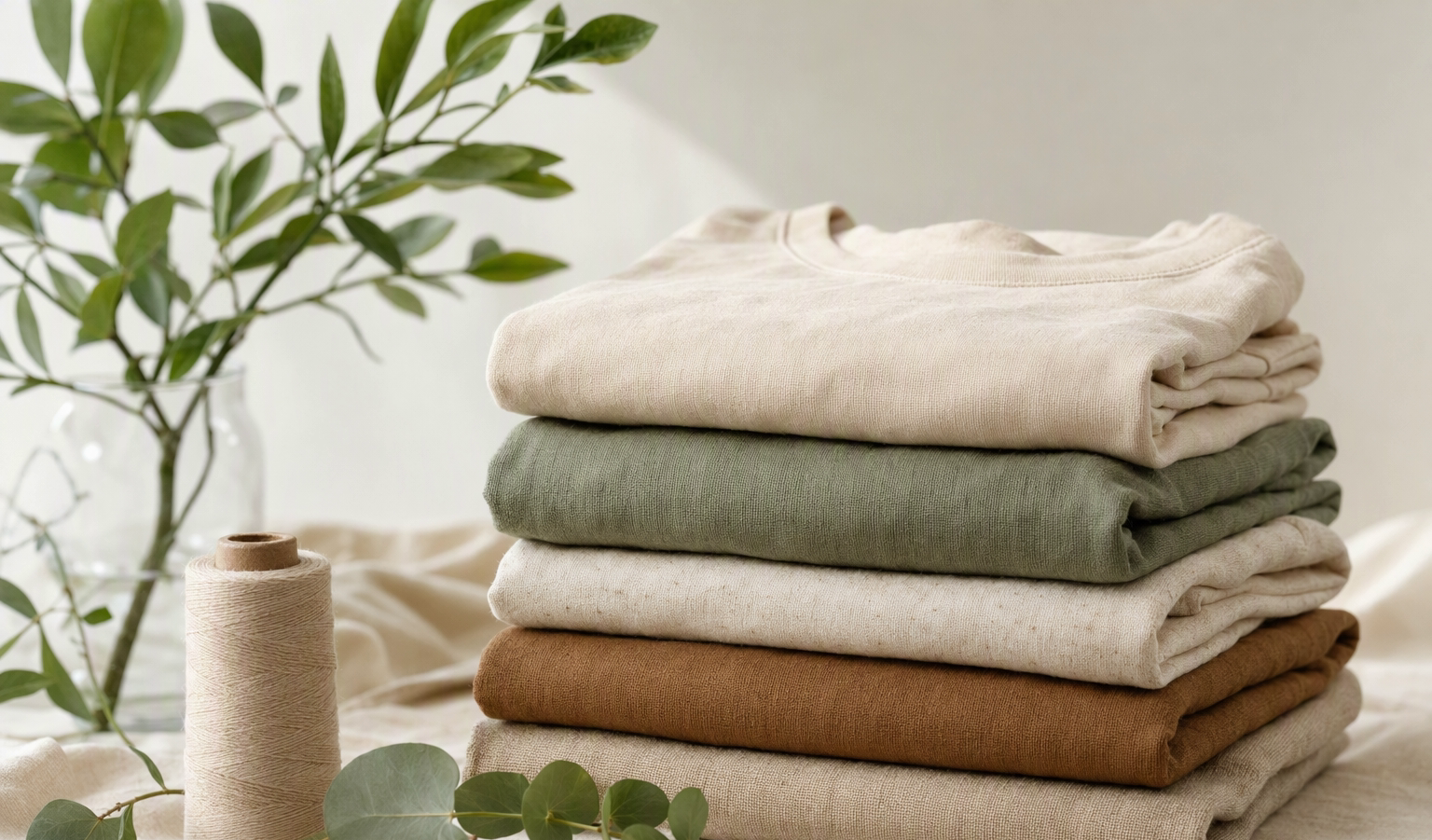
How to choose a sustainable clothing manufacturer
A low unit price means little if quality drifts between batches. When you shortlist sustainable clothing suppliers, verify these first:
- Real factory vs middleman – can they show production lines and control the process?
- Fabric knowledge – a good manufacturer advises on GSM, blend and finish for your use case.
- Sample discipline – a proper pre-production sample before bulk.
- Decoration durability – logos that survive washing; ask how they test.
- Sizing & grading – consistent measurements across the size run.
- Communication & lead-time honesty – realistic dates beat optimistic ones.
The real test of an eco manufacturer is whether they can show you paper. Ask to see their GOTS or GRS scope certificate and, crucially, whether they can issue a Transaction Certificate for your order. A factory that sells ‘organic’ but can’t produce a TC is selling you a marketing word, not a certified material – and that’s a risk your brand carries, not theirs.
Where to source: Fexwear vs Alibaba vs local
| Channel | Pros | Cons |
|---|---|---|
| Fexwear (direct factory) | In-house control, low MOQ, free design, direct pricing | Pre-production sampling takes a few days |
| Alibaba / marketplace | Huge supplier choice, low list prices | Variable quality, middlemen, hard to verify, MOQ surprises |
| Local manufacturer | Fast shipping, easy visits | Higher unit cost, limited fabrics & decoration |
The risks of sourcing from Alibaba (and how to avoid them)
- Middlemen posing as factories – many ‘manufacturers’ are trading companies that subcontract, adding cost and cutting you off from the line.
- Inconsistent, uncontrollable quality – it varies between suppliers and even between batches; without your own QC, defects reach customers.
- Sample-vs-bulk bait-and-switch – the approved sample looks great, the bulk quietly changes fabric, GSM or stitching.
- No accountability after payment – chasing fixes or refunds is slow and often fruitless.
- Misrepresented materials & certifications – claims that can’t be backed by certificates.
- MOQ and price surprises – list prices that jump once tooling, labels and colours are added.
Alibaba can work if you verify the factory, insist on a pre-production sample and arrange independent QC – but a direct in-house manufacturer gives you comparable pricing with real production control and accountability on every batch.
Eco apparel we produce we manufacture
- Organic cotton tees & basics
- Recycled-polyester activewear
- Tencel / lyocell woven & knit
- Hemp & hemp-blend garments
- Recycled-cotton & circular pieces
- Eco hoodies, joggers & sets
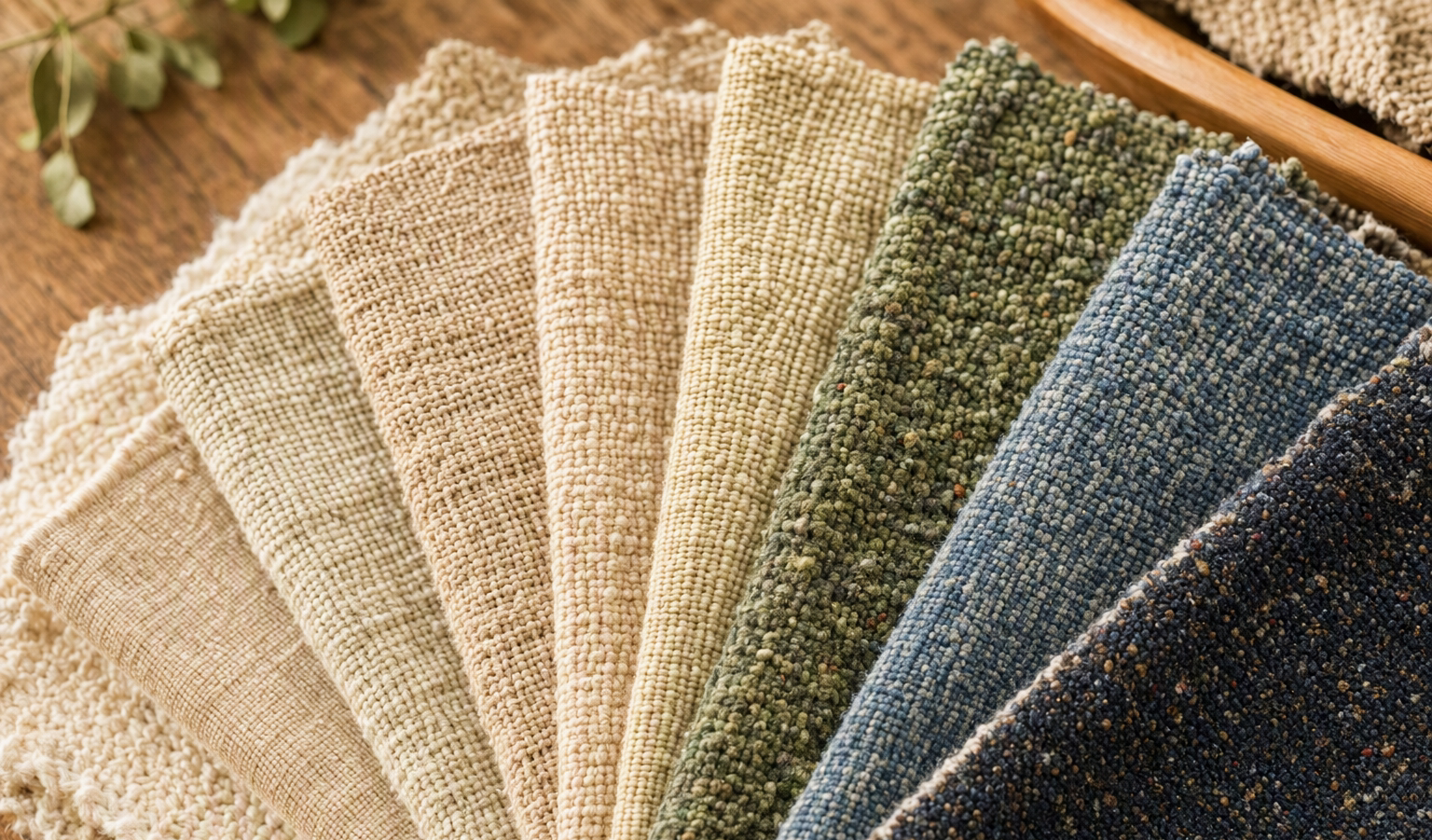
Most brands start with one hero sustainable piece – an organic cotton tee or a recycled-polyester legging – and expand as they learn what their customers value. Starting narrow lets you certify properly and tell a specific, believable story instead of a vague ‘eco’ one.
2026 trends
- Recycled polyester as default in activewear
- Organic cotton in basics & streetwear
- Mono-material designs for recyclability
- Water-based / low-impact prints & dyes
- Traceable supply chains with certificates
Construction & spec options
Every sustainable clothing is a set of decisions – pick each, or let us recommend a build for your price point:
| Spec | Options |
|---|---|
| Fibre | Organic cotton, recycled poly, Tencel, hemp |
| Certification | GOTS, GRS/RCS, OEKO-TEX, BSCI/WRAP |
| Fabric build | Jersey, fleece, woven, seamless |
| Dye/print | Reactive, water-based, low-impact |
| Packaging | Recycled & plastic-free options |
Fabrics & GSM
Choose the fibre that matches your sustainability goals:
| Fabric | Typical weight | Best for |
|---|---|---|
| Organic cotton (GOTS) | 140-240 GSM | Basics & lifestyle tees |
| Recycled polyester (GRS) | 140-220 GSM | Activewear & performance |
| Tencel / lyocell | 120-200 GSM | Soft drape, breathable |
| Hemp & blends | 180-280 GSM | Durable, low-water |
GSM still matters on eco lines – a heavyweight organic tee reads as premium just as a conventional one does. We carry certified fabrics across the weight range, so sustainability never means settling for a thin, cheap-feeling garment.
What is GSM and how to choose fabric weight
GSM (grams per square metre) is the fabric’s weight – the biggest driver of how a garment feels. Lower GSM is lighter and cooler; higher GSM is denser, more opaque and more premium.
| GSM range | Feel | Best for |
|---|---|---|
| 120-160 GSM | Very light, breathable | Summer & performance |
| 160-220 GSM | Mid-weight, soft | Everyday & lifestyle |
| 220-300 GSM | Heavy, structured | Premium & streetwear |
| 300+ GSM | Thick, luxe drape | Designer heavyweight |
Sustainable doesn’t mean thin – we offer everything from light organic jersey to heavyweight recycled fleece, so your garment feels premium while meeting your eco brief.
Blank vs private-label vs custom vs POD
| Model | What it is | Best for |
|---|---|---|
| Blank wholesale | Unbranded, you print | Fast, low-cost starts |
| Private label | Your fabric, fit & colours to spec | A signature product |
| Custom cut & sew | Developed from scratch | Full control & differentiation |
| Print-on-demand | Per-unit, no stock | Zero-risk testing |
Most brands start with blanks to test demand, then move to private label once a style sells. We support all paths.
Decoration & branding options
| Method | Durability | Best for |
|---|---|---|
| Screen printing | High | Bold logos, bulk, spot colours |
| DTG (digital) | Medium-High | Detailed, multi-colour, small runs |
| Embroidery | Very high | Premium chest & label marks |
| Dye-sublimation | Permanent | All-over polyester performance prints |
| Heat transfer | Medium | Fast, low-cost, small batches |
Use water-based and low-impact printing and dyeing to keep decoration cleaner; pair with recycled or minimal packaging to back your brand’s story.
Pair your sustainable fabric with sustainable decoration: water-based and PVC-free prints, recycled-content labels and minimal packaging. A GOTS-certified tee finished with a heavy plastic transfer and plastic wrap undercuts the story – we help you keep every element consistent with the claim.
MOQ, sampling & lead time
We keep MOQs low so you can test before committing. Sampling runs in stages – a proto sample, a fit sample, then a pre-production (PP) sample that locks fabric, colour and decoration. Standard samples turn around in days; bulk typically takes a few weeks once the PP sample is approved.
Certified fabrics run in minimum mill quantities, so allow more lead time than conventional fabric, and try to consolidate colours to hit those minimums efficiently. Planning your palette early is the single easiest way to keep an eco line affordable at low volumes.
Certified fabrics and low-impact processes add lead time, so plan your eco launches a little earlier than a conventional order. The upside is that once a certified material is approved, reorders are straightforward and the paperwork is already in place – so your claims stay consistent across every batch.
What drives the cost
- Fabric & GSM – performance and heavyweight fabrics cost more.
- Quantity – unit price falls as order size grows.
- Decoration – print size, colour count and embroidery complexity.
- Custom trims – woven labels, special elastics and packaging.
- Fit development – multiple sample rounds add time and cost.
- Logistics – destination, Incoterms and shipping method.
Sustainable apparel costs more mainly because of certified fibre and lower-impact processing, not because factories are expensive. The good news is the premium is concentrated where customers look: the main fabric. You can keep a garment genuinely certified while trimming cost on linings, trims and packaging – so the claim stays true without the price staying high.
What to send us for an accurate quote
Include: style reference or sketch, target fabric & GSM, size range and measurement chart, colours, logo artwork (vector if possible) and print method, quantity, and target price. No tech pack yet? Send a photo or a competitor example and our design team will build it with you.
Tell us the product, the fibre you want (organic cotton, recycled poly, Tencel, hemp), the certifications you need to carry, and your quantities. That lets us source the right certified material and quote realistically, rather than defaulting to whatever’s in stock.
Sizing & measurement
We grade a full size run and provide a size chart; certified organic and recycled fabrics behave like conventional ones when properly pre-shrunk and finished.
Sustainable fabric isn’t a compromise on fit. We grade certified organic and recycled fabrics exactly like conventional ones – pre-shrunk, colourfast and consistent across the size run – so an eco line can be as well-made as any premium one.
Quality control
Every run is checked at three points – pre-production (approved PP sample and materials), inline (during sewing and printing), and final inspection before packing. You approve the PP sample, and that sample becomes the standard the whole order is judged against.
Sustainable production still has to pass the same hard tests: colourfastness, shrinkage, seam strength and pilling. Certified fibre doesn’t guarantee a well-made garment, so we inspect eco orders to the same AQL standard as any other – the environmental story is in addition to quality, never instead of it.
Sustainable options
Ask any manufacturer for the valid certificate and a Transaction Certificate (TC) for your specific order – GOTS for organic, GRS/RCS for recycled content, OEKO-TEX for harmful-substance testing, BSCI/SMETA/WRAP for ethical labour. That’s what makes a claim auditable.
Common mistakes to avoid
- ‘Eco’ claims with no certificate to back them
- No transaction certificate for the order
- Vague terms like ‘green’ or ‘natural’ with no specifics
- No visibility into who made the garment
- Choosing a fabric that can’t be recycled or traced
The classic error is buying a small quantity of ‘eco’ fabric without the certificate, then making a claim you can’t prove. Always confirm the certification covers the exact material and order. Another: over-mixing fibres, which looks sustainable but makes the garment hard to recycle – mono-material or certified-blend designs are the genuinely circular choice.
Who we manufacture for
- Sustainable & slow-fashion brands
- Activewear lines using recycled fabric
- Organic cotton basics & streetwear
- B-corp and impact-driven labels
Whether you’re a slow-fashion label, an activewear brand going recycled, or a mainstream brand adding a responsible capsule, the documentation discipline is the same: certified inputs, an auditable process, and paperwork that backs every claim you print.
Why brands choose Fexwear
- Certified organic & recycled fabrics
- Low-impact dyeing & printing
- Ethical, auditable production
- Documentation to back your claims
- Low MOQ for emerging eco brands
We make sustainability practical rather than performative: certified materials where they count, low-impact processes where feasible, and the documentation you need to back every claim – so an emerging eco brand can launch credibly without a corporate compliance team.
Order timeline: enquiry to delivery
| Stage | Typical time |
|---|---|
| Enquiry & quote | 1-2 days |
| Proto / fit sample | 3-7 days |
| PP sample approval | 3-5 days |
| Bulk production | 2-4 weeks |
| QC & packing | 3-5 days |
| Shipping (air/sea) | 3-30 days by method |
Certified fabrics can have longer lead times because they run in mill minimums and require documentation. Build an extra week or two into your eco launch versus a conventional order, and consolidate colours to clear minimums efficiently. Planning the palette early protects both your timeline and your budget.
Allow extra lead time for certified materials and any third-party audit you want in the loop. Build it into your launch calendar and the eco line ships as reliably as a conventional one – the planning is simply done a little earlier.
How to start
- Define target fabrics & certifications
- We source certified materials & share certificates
- Sample & approve hand-feel and colourfastness
- Ethical production with QC and documentation
Request a quote
Tell us your sustainable clothing, fabric and quantity and we’ll come back with pricing, MOQ and a timeline. Related: custom tank tops, gym wear and how to measure & size. Contact Fexwear →
Certification deep-dive: what each one actually proves
| Certification | Scope | You need it when |
|---|---|---|
| GOTS | Organic fibre content + processing + social | Selling ‘organic cotton’ |
| GRS / RCS | Recycled content + chain of custody + social | Selling ‘recycled polyester’ |
| OEKO-TEX 100 | Finished fabric tested for harmful substances | Any skin-contact garment |
| bluesign | Low-impact chemical & resource processing | Premium eco positioning |
| BSCI / SMETA | Social & labour audit (not product) | Proving ethical factory |
| Fair Trade | Fair wages & premiums to workers | Ethical-brand positioning |
A certificate alone isn’t enough for a specific order – ask for the Transaction Certificate (TC) that ties certified volume to your batch.
It helps to separate the two families of certification: material certificates (GOTS, GRS, OEKO-TEX) prove what the fabric is and what’s in it; social audits (BSCI, SMETA, WRAP) prove how and by whom it was made. Most credible eco brands carry one from each family – a recycled fabric from a factory with no labour audit is only half the story.
A note on chain of custody: a scope certificate proves a factory is certified; a transaction certificate proves the specific metres in your order came from that certified production. Buyers increasingly ask for the TC, and putting it on file protects you if a claim is ever challenged – so we help you collect it at order stage, not after.
Building a credible claim (and avoiding greenwashing)
- Match every on-product claim to a document: ‘organic’ → GOTS scope certificate + TC; ‘recycled’ → GRS TC.
- Avoid blanket words like ‘eco’ or ‘sustainable’ with no specifics.
- State percentages and fibre content accurately on care/label.
- Disclose where and by whom it was made – traceability is the strongest proof.
- Back packaging claims (recycled/plastic-free) with supplier documentation.
Under consumer-law regimes (Australia’s ACL, the EU’s green-claims rules, the FTC Green Guides in the US), vague environmental claims can be legally actionable, not just embarrassing. Specificity is your defence: name the fibre, the percentage, the certification and the scope. We’ll help you gather the documentation so your claims are defensible before they’re printed.
Keep your claims narrow and true. ‘Made with 60% GRS-certified recycled polyester’ is specific, provable and still compelling – far safer than a sweeping ‘100% sustainable’ you can’t document. Precision reads as credibility to both regulators and customers.
Fabric selection by product
| Product | Recommended sustainable fabric |
|---|---|
| Everyday tees | Organic cotton jersey 180-220 GSM |
| Activewear | GRS recycled polyester + elastane |
| Hoodies / sweats | Organic cotton fleece or recycled-cotton blend |
| Woven / shirting | Tencel lyocell or hemp blend |
| Socks / underwear | Organic cotton with certified elastane |
Choosing the right certified fibre per product keeps your sustainability real without overpaying where it doesn’t matter.
Don’t over-certify where it doesn’t matter and under-specify where it does. A high-sweat gym tee needs certified recycled polyester for performance and story; a casual woven shirt may be better served by Tencel for drape and low water use. Matching the sustainable fibre to the actual product keeps cost rational while making every claim true.
Match fibre to function and to the story your buyer cares about. Organic cotton wins on soft basics; recycled polyester wins on performance and durability; Tencel wins on drape and low water use. A thoughtful eco line uses different certified fibres for different products rather than forcing one ‘green’ fabric everywhere.
What ‘sustainable clothing’ really means across the product’s life
A garment’s environmental footprint isn’t decided by one thing – it’s the sum of the whole lifecycle, and the fibre is only the first chapter. Organic cotton avoids the pesticides and water intensity of conventional cotton; recycled polyester keeps plastic bottles out of landfill and uses less energy than virgin poly; Tencel is made in a closed-loop process that recovers its solvents. But the fabric choice is followed by dyeing and finishing (where most of the water and chemicals in a garment’s life are used), then transport, then how long the garment lasts, and finally whether it can be recycled at all. A genuinely sustainable product makes sensible decisions at every one of those stages, not just the headline fibre.
This is why we push back on vague ‘eco’ positioning. A thin recycled tee that falls apart in a year, dyed with heavy-metal colours and shipped half-empty, is worse than a durable conventional one. Sustainability that holds up means certified materials, low-impact dyeing and printing, packaging that doesn’t undo the story, and above all a garment built to last – because the most sustainable item is the one you don’t have to replace. We help you make those choices deliberately and document them so your claims are real.
The real cost of going eco and how to keep it viable
Certified and low-impact materials usually carry a premium – often somewhere in the range of ten to twenty percent – and the honest question isn’t how to avoid it but where to spend it. The answer is to concentrate the premium where customers look and where it matters: the main fabric and the claims you’ll advertise. You can keep a garment genuinely certified while trimming cost on linings, internal trims and packaging, so the sustainability is real and the price stays sellable.
The other lever is planning. Certified fabrics run in mill minimums, so consolidating colours and committing to a slightly larger fabric order per colour lowers your effective cost far more than haggling on the cut-and-sew price. Brands that treat their eco line as a considered, planned collection – not a handful of one-off ‘green’ styles – get both better pricing and a more credible story, because the certification and the volume line up instead of fighting each other.
Where a sustainability claim is really tested: wear, wash and end-of-life
The most sustainable garment is the one that lasts, because replacement is where a lot of a product’s true footprint hides. So a recycled or organic fabric still has to survive real use – colour that doesn’t fade, seams that don’t split, a knit that doesn’t pill after a few washes. We hold eco orders to the same durability testing as any premium line, because a ‘sustainable’ tee that dies in three months helps no one. The other end matters too: a garment made from a single fibre, or a certified blend that can actually be separated, is far easier to recycle at end-of-life than a clever mix that looks green but ends up in landfill. Designing for both longevity and recyclability is the part of sustainability that’s easy to skip and hard to fake – and it’s where the real credibility lives.
Glossary
| Term | Meaning |
|---|---|
| GSM | Grams per square metre – fabric weight |
| Tech pack | Spec sheet with measurements, fabrics & artwork |
| Proto / fit / PP sample | Prototype, fit-check and pre-production samples |
| Sublimation | All-over dye print fused into polyester |
| Serging / overlock | Seam finishing that prevents fraying |
| AQL | Acceptable Quality Level – inspection standard |
| Incoterms | Shipping terms like FOB, EXW, DDP |
| Cut & sew | Fully custom from fabric roll, not printing blanks |
| GOTS | Global Organic Textile Standard |
| GRS | Global Recycled Standard |
| OEKO-TEX | Harmful-substance testing |
| TC | Transaction Certificate per order |
Frequently Asked Questions
What sustainable fabrics can you produce in?
Organic cotton, recycled polyester (from post-consumer bottles), Tencel/lyocell, hemp and cotton-recycled blends.
Which certifications should I look for?
GOTS (organic), GRS/RCS (recycled content), OEKO-TEX 100 (harmful substances) and social audits like BSCI or WRAP.
Can you prove the recycled or organic content?
Request the supplier's certificate and a Transaction Certificate (TC) for your order – that's what backs a claim.
What makes manufacturing 'ethical'?
Safe conditions, fair wages, verified audits (BSCI/SMETA/WRAP) and traceable supply chains.
Is eco apparel more expensive?
Usually a modest premium (often 10-20%) for certified fabrics and low-impact processing.
Do you offer low-impact printing and dyeing?
Yes – water-based and low-impact options reduce chemical and water use versus conventional processes.
What's the MOQ for sustainable apparel?
We support low MOQ on certified styles so smaller brands can build responsibly; certified materials can add lead time.